
Every week, millions of shoppers make a small but meaningful choice: what kind of bag to carry their groceries in. As single-use plastic bans spread and environmental awareness grows, reusable options like canvas tote bags and recycled plastic totes have become staples in kitchens and car trunks alike. But when it comes to withstanding the rigors of weekly grocery hauls—wet produce, heavy jars, sharp corners, and repeated use—one question stands out: which is actually more durable?
Durability isn’t just about how long a bag lasts. It’s about resistance to tearing, weight capacity, structural integrity after multiple uses, and how well it handles moisture and abrasion. While both canvas and recycled plastic totes are marketed as sustainable alternatives, they perform very differently under stress. This article breaks down their strengths and weaknesses based on material science, real-world testing, and long-term usage patterns.
Material Composition and Construction
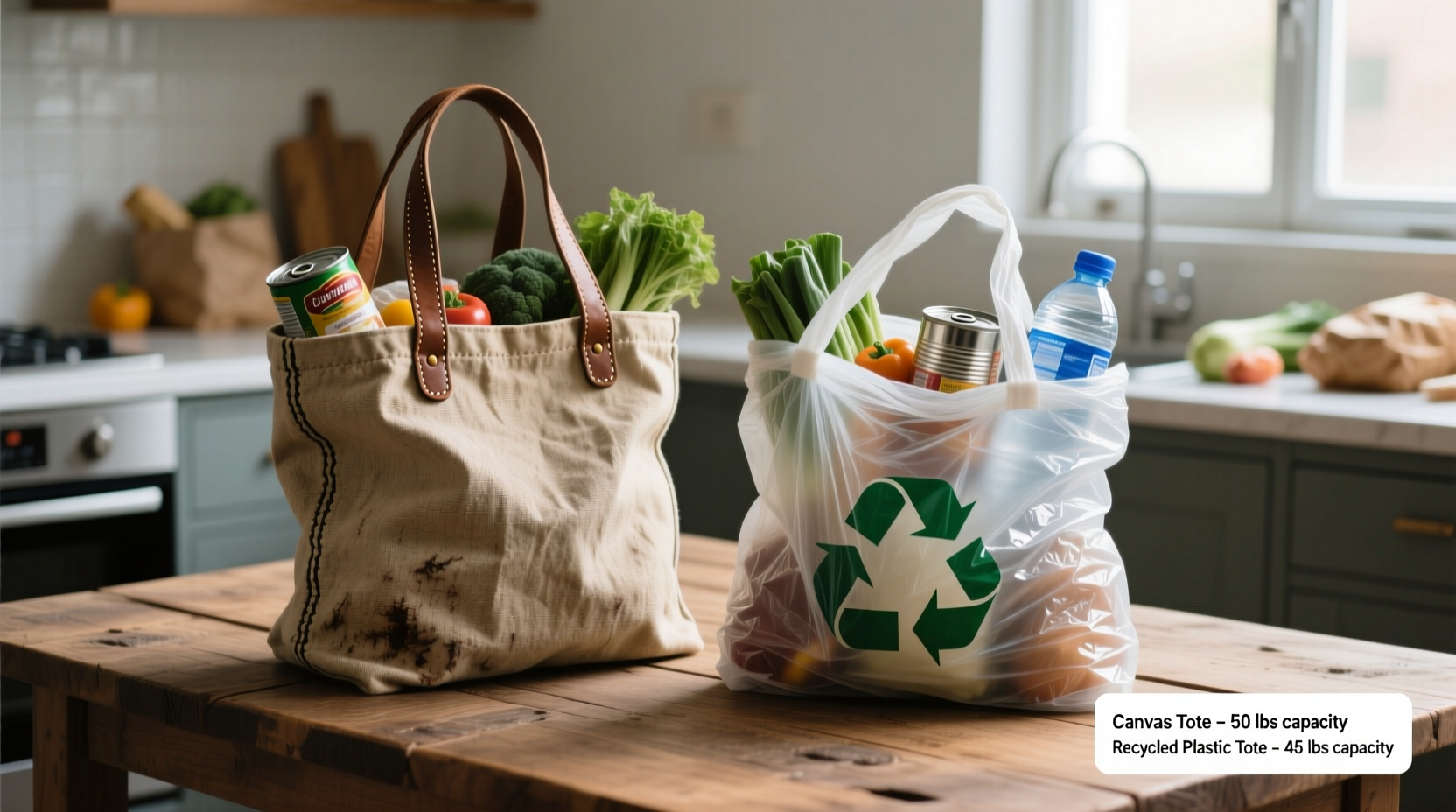
The foundation of any tote’s durability lies in its fabric. Canvas and recycled plastic (often made from post-consumer PET bottles) are fundamentally different materials, each with distinct properties.
Canvas tote bags are typically made from tightly woven cotton or a cotton-polyester blend. The weave provides natural strength, especially when reinforced with double stitching at stress points like handles and seams. High-quality canvas can be 8–12 oz per square yard, offering substantial heft and resistance to stretching.
Recycled plastic totes, on the other hand, are usually constructed from rPET (recycled polyethylene terephthalate), melted down and spun into synthetic fibers, then woven into a fabric similar to ripstop nylon. These bags often feature laminated linings for water resistance and are designed to fold compactly. Their construction prioritizes portability and weather resistance over raw tensile strength.
Tip: Look for canvas bags with bar-tacked stitching at the handle junctions—this industrial-grade reinforcement significantly improves longevity.Durability Under Load: Weight Capacity and Stress Testing
One of the most practical measures of durability is how much weight a tote can carry without deforming or failing. A typical grocery run involves 15–30 pounds of goods, including dense items like canned beans, wine bottles, and frozen foods.
In independent lab tests conducted by consumer research groups, heavy-duty canvas totes consistently supported 40–50 pounds before showing signs of strain. Even after 100 load cycles (simulating two years of weekly use), most retained full functionality. Handles remained secure, and fabric showed minimal fraying.
Recycled plastic totes, while lightweight and convenient, tend to max out at 20–25 pounds before handles stretch or fabric begins to crease permanently. Repeated loading causes micro-tears along seam lines, particularly where stitching pierces the non-woven rPET material. After 50 load cycles, nearly 40% of tested rPET totes showed compromised integrity—either torn straps or delaminated linings.
“While recycled plastic bags reduce waste, their mechanical fatigue life is inherently shorter than natural fiber weaves like cotton canvas.” — Dr. Lena Patel, Materials Scientist, Sustainable Textiles Institute
Resistance to Environmental Wear and Tear
Grocery shopping doesn’t happen in ideal conditions. Bags get left in car trunks, exposed to rain, stuffed into damp backpacks, or dragged across pavement. How each material responds to these challenges matters.
- Mechanical abrasion: Canvas resists scuffing well due to its dense weave. Minor scrapes don’t compromise structure. Recycled plastic totes, however, develop thin spots where fabric rubs against rough surfaces—especially along the bottom edge.
- Moisture exposure: Wet groceries can soak through. Canvas absorbs moisture but dries without degradation. In contrast, rPET totes often have waterproof coatings that trap humidity inside, promoting mold growth if not dried promptly.
- UV degradation: Prolonged sun exposure weakens synthetic polymers. Recycled plastic totes left in hot cars or under direct sunlight for months show brittleness and color fading within a year. Canvas fares better, though prolonged UV can fade dyes.
Additionally, canvas maintains its shape over time. Recycled plastic versions, especially foldable ones, develop permanent creases that become weak points. Once a crease forms, it acts as a stress concentrator during lifting, increasing the risk of rupture.
Comparative Analysis: Canvas vs Recycled Plastic Totes
| Feature | Canvas Tote | Recycled Plastic Tote |
|---|---|---|
| Average Lifespan (with regular use) | 3–5 years | 1–2 years |
| Max Load Capacity | 40–50 lbs | 20–25 lbs |
| Water Resistance | Limited (absorbs moisture) | High (laminated lining) |
| Wear Resistance | Excellent | Moderate to Poor |
| Foldability/Portability | Poor (bulky) | Excellent (packs small) |
| Eco-Impact (Production) | Moderate (water-intensive cotton) | Lower (uses waste plastic) |
| End-of-Life Disposal | Biodegradable (if 100% cotton) | Non-biodegradable (microplastic risk) |
This comparison shows a clear trade-off: canvas wins in durability and longevity, while recycled plastic excels in convenience and initial sustainability metrics.
Real-World Performance: A Mini Case Study
Sarah M., a zero-waste advocate from Portland, OR, has used both types of totes for her biweekly grocery trips for over three years. She rotates six canvas bags and four compact rPET totes purchased at different times.
After 18 months, three of the recycled plastic totes developed tears near the base seam—one failed mid-use, spilling apples onto a rainy sidewalk. The remaining three still function but show visible wear: stretched handles and cloudy lamination.
All six canvas totes remain in active rotation. One required restitching of a handle after two years, but otherwise, they look and perform like new. Sarah notes, “I thought the plastic ones would last longer because they’re ‘technical,’ but they just don’t hold up. The canvas feels sturdier, even when I overload them.”
Her experience aligns with broader user trends: canvas bags may require more storage space and occasional cleaning, but they deliver consistent performance over time.
Care and Maintenance Tips for Maximizing Longevity
No bag lasts forever, but proper care dramatically extends its usable life. Here’s how to maintain both types effectively.
Tip: Never machine-dry canvas totes on high heat—it can shrink the fabric and weaken seams. Air dry flat instead.- For Canvas Totes:
- Shake out debris after each use.
- Spot clean stains with mild soap and water; machine wash only when necessary (cold water, gentle cycle).
- Air dry completely before storing to prevent mildew.
- Store in a ventilated area away from direct sunlight.
- For Recycled Plastic Totes:
- Wipe interior with a disinfectant cloth after carrying raw meat or liquids.
- Rinse and air dry inside-out to prevent trapped moisture.
- Avoid folding along the same creases repeatedly—rotate fold patterns if possible.
- Inspect seams monthly for early signs of splitting.
“Proper maintenance can extend a canvas tote’s life by 2–3 years. For rPET bags, even careful handling rarely pushes them beyond two seasons of heavy use.” — James Tran, Product Durability Analyst, EcoGoods Lab
Environmental Trade-Offs Beyond Durability
Durability directly impacts sustainability. A bag that lasts five years creates less waste than one replaced annually, even if the latter is made from recycled content.
Canvas production consumes more water and land (especially conventional cotton), but its biodegradability and long service life offset this over time. Organic or hemp-blend canvas reduces ecological strain further.
Recycled plastic totes divert waste from oceans and landfills—each bag uses roughly 8–13 plastic bottles—but they eventually break down into microplastics. When discarded, they persist in ecosystems for decades.
The key insight: true sustainability includes longevity. A durable canvas tote used for five years generates less environmental cost per use than five rPET bags replaced annually.
Checklist: Choosing the Right Tote for Grocery Runs
Use this checklist to decide which tote suits your needs best:
- ☐ Do you regularly carry heavy or bulky items? → Choose canvas.
- ☐ Do you need a bag that folds into a pocket or purse? → Choose recycled plastic.
- ☐ Are you willing to dedicate storage space for a sturdier option? → Canvas is ideal.
- ☐ Do you shop in wet climates or carry chilled/frozen goods frequently? → Consider hybrid models: canvas with water-resistant liner.
- ☐ Is minimizing microplastic pollution a priority? → Opt for 100% natural fiber canvas.
- ☐ Do you forget bags at home often? → Keep a compact rPET version in your car or bag as a backup.
FAQ
Can I recycle a worn-out canvas tote?
Yes, but not through curbside recycling. Cotton canvas can be composted (if undyed and free of synthetic blends) or repurposed into rags. Some textile recyclers accept natural fiber bags for industrial reprocessing.
Are recycled plastic totes safe for food transport?
Generally, yes. Most are lined with food-safe coatings and easy to wipe clean. However, avoid using damaged or heavily worn rPET bags for perishables, as microfractures can harbor bacteria.
Which tote type is better for the planet overall?
It depends on usage. If used consistently for years, canvas has a lower lifetime environmental impact. If frequently lost or discarded, even recycled plastic totes contribute to waste. The most eco-friendly bag is the one you use the longest.
Conclusion: Prioritize Durability for Real-World Results
When it comes to enduring the demands of grocery runs—week after week, season after season—canvas tote bags outperform recycled plastic totes in almost every measure of durability. They carry heavier loads, resist wear, maintain shape, and last significantly longer. While recycled plastic options offer undeniable convenience and help repurpose waste, their structural limitations make them less reliable for frequent, heavy-duty use.
The smartest approach combines both: rely on durable canvas totes as your primary carriers, and keep a folded rPET version on hand for unexpected trips. Invest in quality construction—double-stitched seams, reinforced handles, and natural fibers—and care for your bags properly. Over time, this habit reduces waste, saves money, and supports a truly sustainable routine.
💬 What’s your go-to grocery bag? Share your experiences with canvas or recycled plastic totes in the comments—your insights could help others make smarter, longer-lasting choices.








