
When a recipe calls for powdered citric acid—common in home canning, sour candies, or molecular gastronomy—and the pantry comes up empty, many cooks face uncertainty. While citric acid is prized for its pure, sharp tang and pH-lowering power, it’s not always on hand. Fortunately, several effective substitutes exist that deliver similar acidity, preservation benefits, and flavor balance. Understanding these alternatives empowers home cooks and food preservers to maintain safety and quality without relying on specialty ingredients. Whether you're making jam, pickling vegetables, or crafting homemade bath bombs, knowing which ingredient can step in—and how to adjust for differences in strength and moisture content—is essential.
Definition & Overview
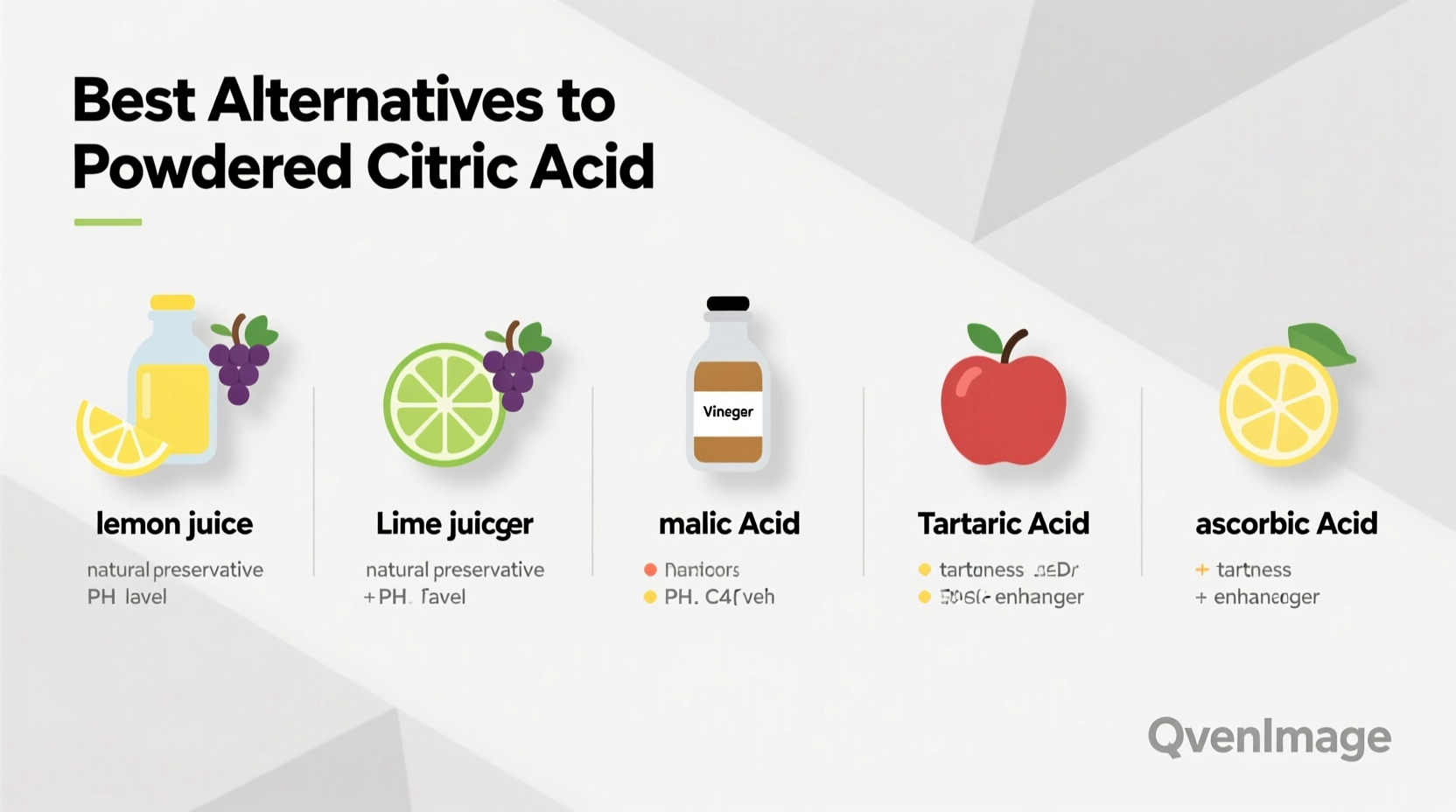
Citric acid is a weak organic acid naturally found in citrus fruits, especially lemons and limes. In its powdered form, it is a white, crystalline substance extracted and purified from fermented carbohydrates, typically using *Aspergillus niger*, a type of mold. This industrial process yields a concentrated, shelf-stable acid used widely in food preservation, beverage formulation, and culinary science.
In home kitchens, powdered citric acid is most commonly used during water bath canning to ensure a safe pH level in high-acid foods like tomatoes, salsas, and fruits. It prevents the growth of harmful bacteria such as *Clostridium botulinum*. Beyond safety, it enhances tartness in recipes where fresh citrus juice might dilute consistency or add unwanted flavors. Its neutral profile allows precise control over acidity without altering color or aroma significantly.
However, due to supply issues, regional availability, or dietary preferences (such as avoiding fermentation-derived products), many seek natural or readily available replacements. The ideal substitute should match citric acid’s primary functions: lowering pH, inhibiting microbial growth, stabilizing color, and contributing clean sourness.
Key Characteristics of Citric Acid
| Property | Description |
|---|---|
| Flavor Profile | Bright, sharp, clean sourness; no bitterness or aftertaste |
| pH Level | Around 3.1 in solution; highly acidic |
| Form | Fine white powder; odorless |
| Solubility | Highly soluble in water |
| Culinary Functions | Preservation, pH adjustment, antioxidant, flavor enhancer, gelling aid (in pectin recipes) |
| Shelf Life | Indefinite when stored in a cool, dry place |
| Heat Stability | Stable under normal cooking temperatures |
Top Alternatives to Powdered Citric Acid
While no substitute replicates citric acid perfectly, several ingredients provide comparable acidity and functional benefits. The choice depends on the application—canning, flavoring, or chemical reaction—and whether liquid or dry form is acceptable.
Lemon Juice (Fresh or Bottled)
Fresh lemon juice is the most accessible and widely used alternative. Containing approximately 5–6% citric acid by weight, it delivers natural acidity along with subtle citrus notes. It is particularly effective in canning, sauces, and dressings.
Conversion: 1 tablespoon of fresh lemon juice ≈ 1/4 teaspoon of powdered citric acid.
For canning purposes, the USDA and National Center for Home Food Preservation recognize bottled lemon juice as a reliable substitute because its acidity is standardized (pH around 2.0–2.5). Fresh-squeezed juice may vary in acidity, posing risks in low-acid preservation if not properly tested.
Tip: When using lemon juice in canning, opt for commercially bottled juice rather than freshly squeezed for consistent acidity and food safety.
Lime Juice
Lime juice contains slightly more citric acid than lemon juice—about 6–7%—and offers a sharper, more floral tartness. It works well in tropical salsas, chutneys, and seafood preserves.
Conversion: 1 tablespoon lime juice ≈ 1/4 teaspoon citric acid powder.
Like lemon juice, use bottled lime juice for canning to ensure predictable pH levels. Avoid key lime juice unless specified, as its composition differs slightly.
Vinegar (White or Distilled)
Distilled white vinegar (5% acetic acid) is a common household staple and viable substitute in pickling and preserving. However, it imparts a distinct vinegar tang absent in citric acid.
Conversion: 1 tablespoon white vinegar ≈ 1/4 teaspoon citric acid powder.
This substitution works best when flavor compatibility is acceptable. For example, in dill pickles or relishes, vinegar complements other spices. But in fruit preserves or light-colored dishes, it may darken appearance and alter taste.
\"In traditional Eastern European canning, vinegar has long been used in lieu of citric acid, though chefs note the trade-off in flavor neutrality.\" — Dr. Elena Petrova, Food Science Historian, University of Warsaw
Tartaric Acid (Cream of Tartar)
Tartaric acid, known commercially as cream of tartar, is a byproduct of winemaking. It has a clean, sour taste but is less acidic than citric acid by volume.
Conversion: 1 teaspoon cream of tartar ≈ 1/2 teaspoon citric acid powder.
It performs well in small-batch jams and syrups but is less effective in large-scale canning due to lower solubility and milder pH impact. Additionally, it may crystallize in cold solutions, affecting texture.
Ascorbic Acid (Vitamin C)
Ascorbic acid is often used to prevent browning in cut fruits and adds mild acidity. While not as strong as citric acid, it contributes antioxidant properties and some pH reduction.
Conversion: 1,000 mg ascorbic acid ≈ 1/4 teaspoon citric acid (functionally, though not equally acidic).
It is best combined with another acid (like lemon juice) in canning applications. On its own, it does not sufficiently lower pH for safe water bath processing.
Yogurt or Sour Cream (for flavor only)
These are not suitable for canning or pH control but can mimic tanginess in cooked dishes, marinades, or baked goods where acidity supports leavening or tenderization.
They contain lactic acid, which provides a creamy sourness different from citric acid’s brightness. Use only when moisture addition is acceptable and preservation is not required.
Comparison with Similar Ingredients
Understanding how substitutes differ from citric acid helps avoid culinary missteps. Below is a comparison highlighting functional distinctions:
| Substitute | Acidity Strength vs. Citric Acid | Flavor Impact | Suitable for Canning? | Liquid or Dry Form |
|---|---|---|---|---|
| Lemon Juice (bottled) | ≈ 80% | Noticeable citrus note | Yes, preferred over fresh | Liquid |
| Lime Juice | ≈ 85% | Sharp, floral | Yes, if bottled | Liquid |
| White Vinegar | ≈ 70% | Strong, pungent | Yes, in savory pickles | Liquid |
| Cream of Tartar | ≈ 60% | Mild, wine-like | Limited; not ideal alone | Dry |
| Ascorbic Acid | ≈ 50% | Nearly neutral | No, must be combined | Dry |
| Yogurt | ≈ 30% | Creamy, fermented | No | Liquid |
Practical Usage Guidelines
Using substitutes effectively requires attention to both function and format. Here’s how to apply them correctly across common scenarios:
Canning Tomatoes and Salsas
To safely can low-acid tomatoes (pH above 4.6), added acid is mandatory. If citric acid is unavailable:
- Use 2 tablespoons of bottled lemon juice per quart of tomatoes.
- Alternatively, use 4 tablespoons of 5% white vinegar per quart—but expect a noticeable flavor shift.
- Do not rely solely on ascorbic acid or cream of tartar for this purpose.
The goal is to bring the final product pH below 4.6. Lemon juice is preferred for minimal flavor intrusion compared to vinegar.
Making Jams and Preserves
In high-pectin fruits, citric acid boosts gel formation and brightens flavor. Substitutions:
- Add 1 tablespoon lemon juice per 4 cups of fruit at the start of cooking.
- Combine 1/2 teaspoon cream of tartar with 1 tablespoon water if avoiding liquids.
- Adjust sweetness accordingly, as reduced acidity may require less sugar.
Homemade Gummy Candies or Sour Coatings
For confectionery uses requiring intense tartness:
- Replace 1/4 tsp citric acid with equal parts freeze-dried lemon powder (check label for concentration).
- Use a mix of 1 part ascorbic acid + 1 part tartaric acid for layered sourness.
- Avoid liquid forms, which can cause clumping or spoilage.
Pro Tip: For sour sugar coatings, blend 1 teaspoon citric acid substitute (like lemon powder) with 1/4 cup superfine sugar. Dust over baked goods or candies before setting.
Marinades and Brines
Acids tenderize proteins and carry flavor. Substitute freely based on desired profile:
- Lemon or lime juice: ideal for poultry, seafood, and vegetables.
- Vinegar: better suited for robust meats like pork shoulder or beef brisket.
- Cream of tartar dissolved in warm water: useful in dairy-free buttermilk substitutes (1 cup milk + 1 tsp cream of tartar = buttermilk analog).
Variants and Forms of Substitutes
Many alternatives come in multiple forms, each with pros and cons:
Fresh vs. Bottled Citrus Juice
Fresh juice varies in acidity due to ripeness, season, and variety. Bottled versions are pasteurized and standardized, making them safer for canning. Always choose unsweetened, additive-free brands.
Powdered Citrus Products
Freeze-dried lemon, lime, or orange powders offer concentrated flavor and acidity in dry form. They dissolve easily and work well in dry mixes, spice rubs, or instant drink blends. Check labels: some contain anti-caking agents or sugars.
Food-Grade Acids in Bulk
Tartaric, malic, and fumaric acids are available from specialty suppliers. Malic acid, found in apples, provides a lingering sourness useful in sour candies. Fumaric acid is stronger and longer-lasting but less soluble. These are advanced options for experienced home chemists or artisanal producers.
Storage and Shelf Life of Alternatives
Unlike citric acid, which lasts indefinitely when sealed and dry, substitutes have limitations:
- Lemon/lime juice (opened): Refrigerate and use within 6–12 months.
- Vinegar: Stable for years, but may develop haze; still safe.
- Cream of tartar: Store in airtight container; may clump but remains usable.
- Ascorbic acid: Degrades over time, especially when exposed to heat or light. Replace every 1–2 years for optimal potency.
- Powdered citrus: Use within 12–18 months for peak flavor.
Store all dry acids in dark glass jars away from moisture. Label containers clearly to avoid confusion.
Practical Tips & FAQs
Can I use vinegar instead of citric acid in canning?
Yes, but only in recipes where its flavor is appropriate. Use 4 tablespoons of 5% vinegar per quart. Avoid in light-colored fruits or delicate sauces, as it may discolor or overpower.
Is lemon juice as effective as citric acid for killing bacteria?
Bottled lemon juice is sufficiently acidic (pH ≤ 2.5) to ensure safety in high-acid canning. Fresh juice is not recommended due to variable acidity.
Why do some recipes call for both citric acid and lemon juice?
This combination maximizes flavor complexity and ensures adequate pH reduction. Citric acid provides punch, while lemon juice adds aromatic depth.
Can I make my own citric acid at home?
Not practically. While citrus juices contain citric acid, extracting the pure compound requires lab-grade equipment and chemical processes. Home methods yield inconsistent results and pose contamination risks.
Are there any health concerns with citric acid substitutes?
Natural alternatives like lemon juice and vinegar are generally safe. Those with acid reflux may need to moderate intake. Ascorbic acid in high doses (>2,000 mg/day) may cause gastrointestinal discomfort.
What’s the best dry substitute for citric acid?
Cream of tartar is the most accessible dry option, though less potent. For higher intensity, use malic acid or commercial sour salt blends (often a mix of citric, malic, and salt).
Summary & Key Takeaways
Powdered citric acid plays a critical role in food safety and flavor enhancement, but it is not irreplaceable. With proper knowledge, common kitchen ingredients can serve as effective substitutes across various applications.
- Bottled lemon juice is the top choice for canning, offering reliable acidity and mild flavor.
- White vinegar works in savory pickles but alters taste and color.
- Cream of tartar is a dry alternative, best used in baking or small-batch preserves.
- Ascorbic acid prevents browning but must be paired with stronger acids for safe canning.
- Always prioritize food safety: Never assume freshness equals potency; use tested conversions and standardized products when preserving.
Keep a backup supply of bottled lemon juice or cream of tartar in your pantry. These versatile ingredients bridge the gap when citric acid is unavailable—ensuring your preserves stay safe, vibrant, and delicious.









