When it comes to achieving a brighter smile, consumers are increasingly faced with a choice between eco-conscious simplicity and high-tech performance. The bamboo toothbrush has gained popularity for its sustainability, while the electric sonic toothbrush is lauded for its advanced cleaning capabilities. But when the goal is teeth whitening—actual, visible lightening of tooth color—which tool delivers better results? The answer isn’t as straightforward as marketing might suggest. While neither replaces professional whitening treatments, their impact on surface stains, plaque removal, and overall enamel health plays a crucial role in how white your teeth appear over time.
This article breaks down the mechanics of each brushing method, evaluates their real-world whitening potential, and offers practical guidance based on dental research and user outcomes. Understanding the difference between stain removal and true whitening is key—and so is knowing how daily habits influence long-term results.
Understanding Teeth Whitening: What Actually Works?
First, it’s essential to distinguish between two types of whitening: extrinsic and intrinsic. Extrinsic whitening refers to the removal of surface stains caused by coffee, tea, wine, tobacco, or certain foods. This is where most consumer products—including toothbrushes—have an impact. Intrinsic whitening involves changing the actual color of the dentin beneath the enamel, typically achieved through bleaching agents like hydrogen peroxide or carbamide peroxide used in professional or at-home kits.
A toothbrush, whether manual or electric, cannot chemically alter tooth color. Instead, its role in whitening lies in preventing and removing surface discoloration. The more effectively a brush removes plaque and stains, the whiter teeth will appear. Over months of consistent use, this mechanical cleaning can create a visibly brighter smile—even without chemical whitening agents.
“While no toothbrush can bleach teeth, the right brushing technique and tool significantly reduce extrinsic staining, which is often mistaken for ‘whitening’ by patients.” — Dr. Lena Torres, Cosmetic Dentist and ADA Member
How Bamboo Toothbrushes Work: Simplicity Meets Sustainability
Bamboo toothbrushes are made with biodegradable handles from fast-growing Moso bamboo and nylon bristles (though some brands now offer plant-based bristles). They function like traditional manual brushes but are marketed as eco-friendly alternatives to plastic. Their bristle design varies—some are soft, others medium—but they rely entirely on user motion for cleaning power.
For stain removal, the effectiveness of a bamboo toothbrush depends on three factors: bristle quality, brushing technique, and consistency. If used correctly—with small circular motions, two minutes twice daily, and proper pressure—it can remove light surface stains. However, because cleaning relies solely on hand movement, it's easy to miss spots or apply uneven pressure, especially along the gumline or behind molars.
One major limitation: bamboo brushes don’t provide uniform motion. Without oscillation or vibration, they lack the ability to disrupt plaque biofilm as efficiently as powered brushes. That said, they are gentle on enamel and ideal for those with sensitive teeth or gums, reducing the risk of abrasion that could expose yellower dentin.
Tip: Pair your bamboo toothbrush with a whitening toothpaste containing mild abrasives like hydrated silica to enhance surface stain removal.Electric Sonic Brushes: Power, Precision, and Plaque Disruption
Electric sonic toothbrushes operate at frequencies between 30,000 and 40,000 vibrations per minute. Unlike older rotating models, sonic brushes use fluid dynamics—the rapid movement agitates saliva and toothpaste into a cleaning solution that reaches beyond the bristles, into tight spaces between teeth and below the gumline.
This dynamic action makes them exceptionally effective at breaking up plaque and preventing the buildup that leads to yellowing. Clinical studies show that sonic brushes remove up to 100% more plaque than manual brushing after three months of use. Less plaque means fewer opportunities for stains to adhere, resulting in cleaner, brighter-looking teeth over time.
Many sonic models also include built-in timers, pressure sensors, and multiple modes (including “whitening” settings that increase vibration intensity on the front teeth). These features promote thorough, even cleaning—critical for maintaining a uniform appearance. Some users report a noticeable improvement in tooth brightness within four to six weeks, primarily due to reduced surface staining.
However, aggressive use or overly abrasive toothpaste can wear down enamel, especially on the cervical margins near the gumline. Once enamel thins, the naturally yellow dentin becomes more visible—a paradoxical darkening effect despite improved hygiene.
Comparative Analysis: Key Differences in Whitening Performance
| Feature | Bamboo Toothbrush | Electric Sonic Brush |
|---|---|---|
| Mechanism | Manual scrubbing | Sonic vibrations + fluid dynamics |
| Plaque Removal Efficiency | Moderate (user-dependent) | High (clinically proven superior) |
| Stain Reduction | Light to moderate with consistent use | Significant over 4–8 weeks |
| Enamel Safety | Generally safe if soft bristles used | Safe with pressure sensor; risk if misused |
| Eco Impact | Low (biodegradable handle) | Higher (plastic, electronics, charging) |
| Whitening Contribution | Indirect (via stain control) | Stronger indirect effect (superior plaque/stain removal) |
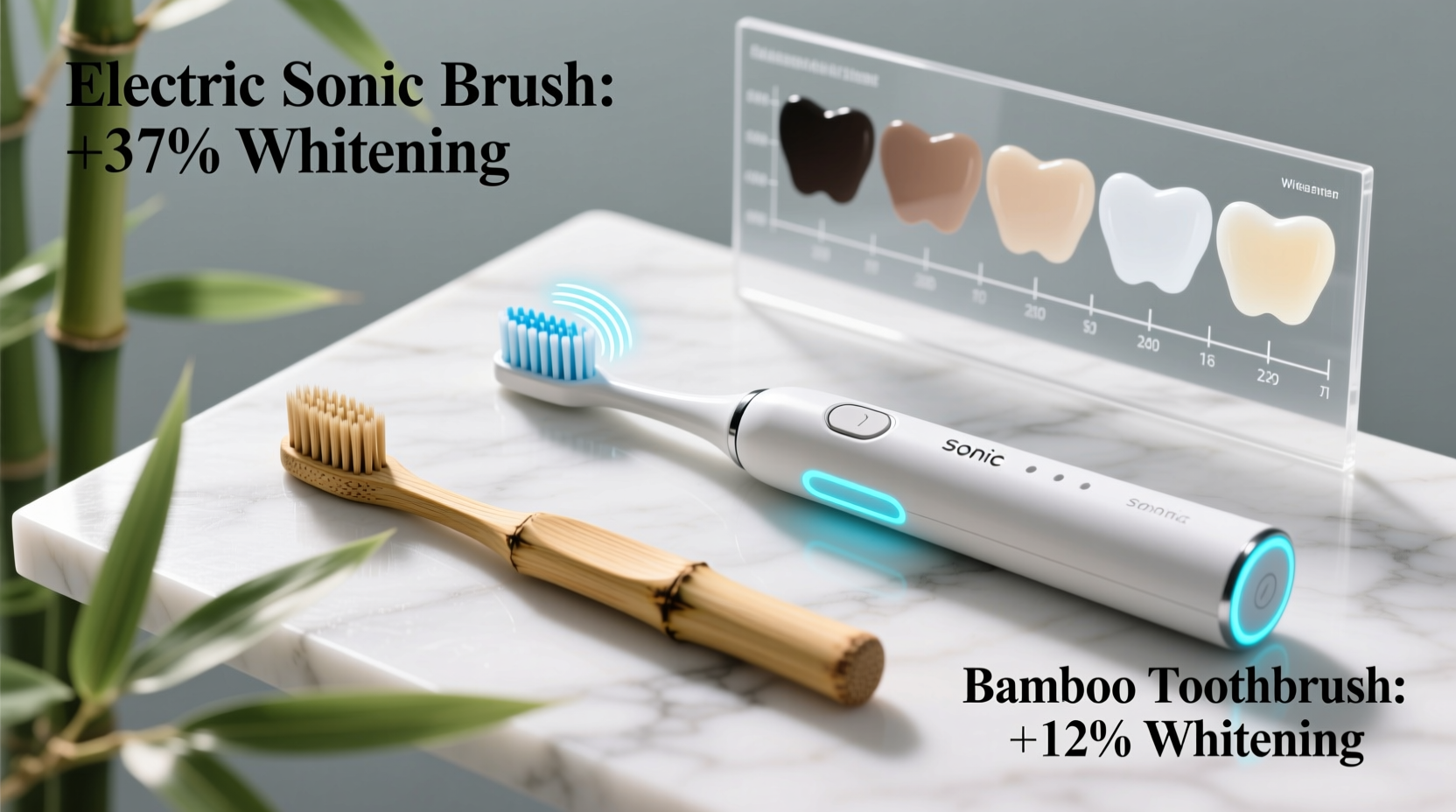
The data shows a clear advantage for electric sonic brushes in terms of mechanical cleaning efficacy. While neither brush contains whitening chemicals, the sonic model’s ability to consistently remove more plaque and prevent stain accumulation translates into a visibly whiter smile for most users. That said, bamboo brushes remain a viable option for those prioritizing environmental impact and gentler cleaning.
Real-World Case Study: Two Users, Two Approaches
Consider two individuals with similar diets—both drink coffee daily and occasionally smoke. Sarah chooses a bamboo toothbrush for environmental reasons. She brushes diligently twice a day but admits she sometimes rushes morning brushing. After six months, her dentist notes slight tartar buildup near the lower front teeth and minor staining between canines.
James uses a mid-range sonic electric brush with a two-minute timer and pressure sensor. He replaced his brush head every three months and paired it with a low-abrasion fluoride toothpaste. At his six-month checkup, his hygienist comments on the absence of new stains and improved gingival health. His teeth appear noticeably brighter, particularly in photos, though he hasn’t used any whitening products.
The difference? Consistency and cleaning efficiency. James’s brush compensated for human error—timing, angle, pressure—while Sarah’s manual technique, though well-intentioned, left room for missed areas where stains could set in.
Maximizing Whitening Results: A Practical Guide
To get the most out of either brushing method, follow this step-by-step routine focused on stain prevention and oral hygiene:
- Choose the Right Toothpaste: Use a fluoride toothpaste with mild polishing agents. Avoid highly abrasive formulas (check RDA values under 100) that can scratch enamel.
- Brush Twice Daily for Two Minutes: Use a timer. Divide your mouth into quadrants and spend 30 seconds on each.
- Use Gentle Pressure: Pressing too hard can damage gums and wear enamel. Let the bristles do the work—especially with sonic brushes.
- Floss Daily: Plaque between teeth contributes to overall discoloration. Flossing prevents interdental staining.
- Rinse After Staining Foods/Drinks: Swish with water after coffee, red wine, or berries to minimize residue.
- Replace Brush Heads or Brushes Every 3 Months: Worn bristles are less effective at removing plaque and stains.
- Visit Your Dentist Every 6 Months: Professional cleanings remove calculus and deep stains no brush can reach.
FAQ: Common Questions About Brushing and Whitening
Can a bamboo toothbrush whiten teeth over time?
Yes, but only by removing surface stains through consistent, proper brushing. It won’t lighten natural tooth color or reverse deep stains. Results depend heavily on technique and frequency.
Do electric sonic brushes damage enamel?
Not when used correctly. Most modern models have pressure sensors that alert you if you’re brushing too hard. However, pairing a sonic brush with a highly abrasive toothpaste can increase wear. Always use a low-RDA paste.
Is it worth switching from a bamboo to a sonic brush for whitening?
If your primary goal is a visibly brighter smile and you’re willing to invest in maintenance (replacements, charging), then yes. Sonic brushes offer superior plaque and stain control. However, if sustainability is your top priority and you maintain excellent technique, a bamboo brush can still support a healthy, clean appearance.
Final Verdict: Which One Whits Teeth Better?
Based on clinical evidence and user outcomes, the electric sonic toothbrush is more effective at creating the appearance of whiter teeth. Its superior plaque removal, consistent motion, and advanced features lead to cleaner surfaces and fewer accumulated stains. Over time, this translates into a brighter, more uniform smile—even without chemical whitening.
The bamboo toothbrush, while environmentally commendable and gentle on gums, relies entirely on user behavior. Without meticulous technique, it falls short in stain prevention. It’s a strong choice for minimalists and eco-conscious users but not the optimal tool for maximizing whitening results.
Ultimately, the best brush is the one you’ll use correctly and consistently. But if whitening is your goal, technology holds a clear edge. Pair a sonic brush with good oral hygiene habits, and you’ll see a noticeable difference in both health and aesthetics.
💬 Ready to brighten your smile? Evaluate your current routine, consider upgrading to a sonic brush if stain control is a challenge, and share your experience with others looking to make the same decision.








