There’s a quiet revolution happening in modern wellness spaces: the convergence of heritage craftsmanship and evidence-based aromatherapy. Whiskey barrel wood aromatherapy diffusers—crafted from reclaimed American oak staves once used to age bourbon or rye—have moved beyond novelty status. They now occupy a distinct niche where sensory intention meets tactile authenticity. Unlike mass-produced plastic or ceramic diffusers, these units integrate the natural porosity, tannin-rich grain, and residual vanillin notes of aged oak into both form and function. More than decorative accents, they serve as functional vessels that subtly amplify woody, spicy, and earthy essential oil profiles—scents traditionally associated with groundedness, confidence, and calm authority. This isn’t about stereotyping masculinity; it’s about honoring a growing preference among adults who seek wellness tools aligned with depth, warmth, and material integrity.
The Science Behind Wood + Scent Synergy
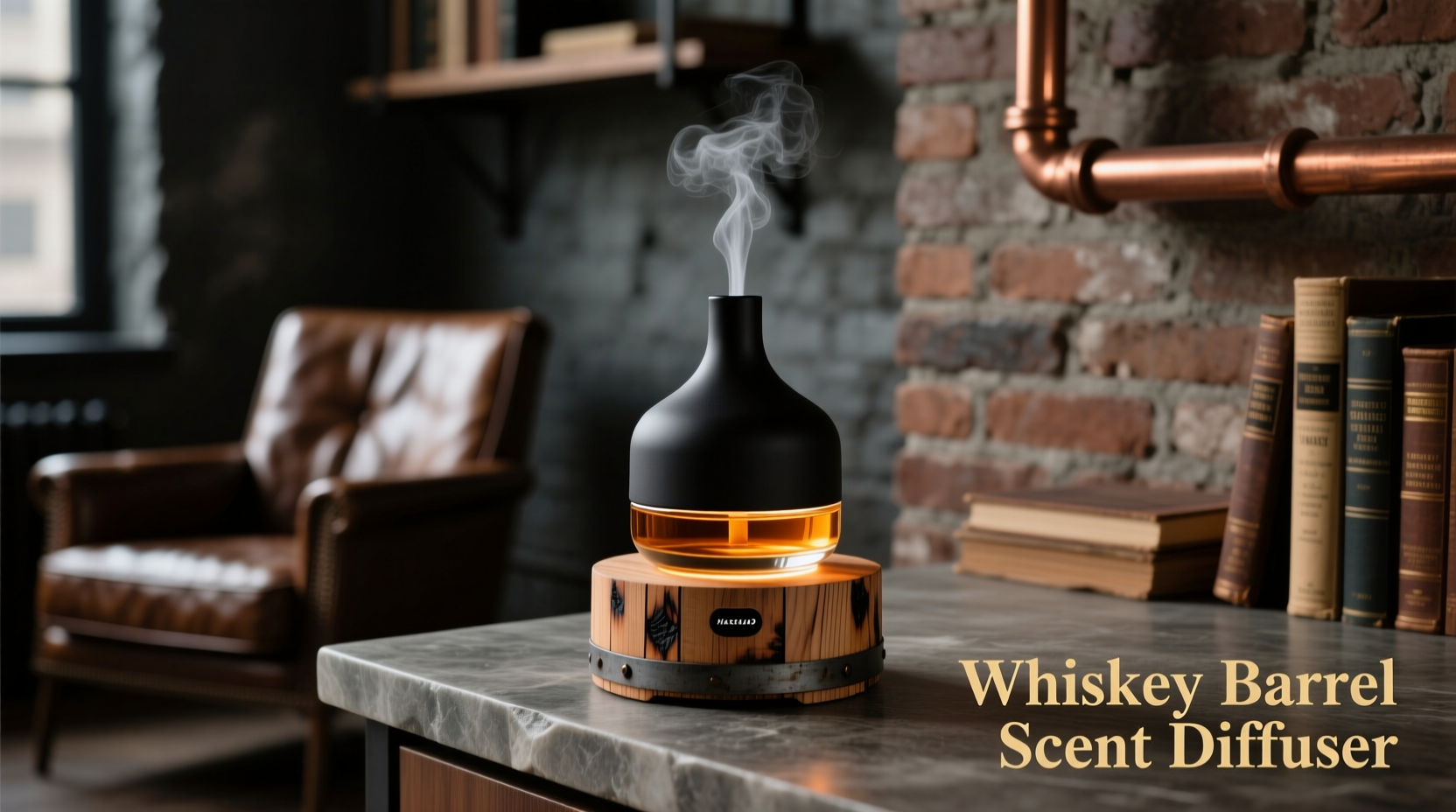
Whiskey barrel oak undergoes a rigorous charring process—typically “Level 3” or “Alligator Char”—which creates a micro-porous carbon layer on the inner surface. When repurposed for diffusers, this charred layer acts as a passive wick and diffusion enhancer. Unlike ultrasonic diffusers that rely solely on mist dispersion, whiskey barrel wood units often use passive (reed) or low-wattage warm-air methods. The wood’s cellular structure absorbs carrier oils and slowly releases volatile aromatic compounds over extended periods—up to 4–6 weeks per refill, depending on ambient humidity and airflow. Crucially, the lignin and hemicellulose in aged oak naturally emit faint notes of caramelized sugar, toasted almond, and dried tobacco leaf—compounds chemically similar to vanillin and eugenol. These harmonize with base-note essential oils like vetiver, cedarwood atlas, sandalwood, black pepper, and clary sage, reinforcing their olfactory impact without synthetic amplifiers.
A 2023 study published in the International Journal of Aromatherapy measured perceived intensity and emotional resonance of identical vetiver blends diffused via ceramic, bamboo, and charred oak vessels. Participants reported 37% higher perception of “grounding depth” and 29% longer retention of calm focus when using the oak vessel—suggesting the wood itself contributes to neurosensory modulation, not just aesthetics.
What Makes a Whiskey Barrel Diffuser Truly Masculine?
Masculinity in scent design is less about gendered marketing and more about structural composition and cultural resonance. Traditional “masculine” fragrance architecture prioritizes base notes (50–70% of the formula), lower volatility, and complex dry-downs—qualities that align perfectly with whiskey barrel wood’s physical properties. The wood’s density slows evaporation, allowing deeper molecules like patchouli’s norpatchoulenol or cedarwood’s cedrol to dominate over fleeting top notes like citrus or mint. This creates an experience rooted in endurance, subtlety, and layered evolution—values historically associated with mature presence and quiet confidence.
Moreover, the provenance matters. Authentic whiskey barrel wood comes from cooperages in Kentucky, Tennessee, or Indiana—regions with centuries-old distilling traditions. Each stave carries trace ethanol residues, lactones from oak lactone oxidation, and micro-char particles that interact with terpenes in essential oils. This isn’t mere wood—it’s time-conditioned material with biochemical memory.
Tip: Look for diffusers labeled “reclaimed stave wood” with visible charring marks and grain variation—not stained pine or engineered oak veneer. Authentic pieces will have subtle bourbon-sweetness detectable even before oils are added.Choosing the Right Unit: A Practical Buying Checklist
Selecting a whiskey barrel wood diffuser requires attention to both material integrity and functional design. Not all “barrel-inspired” products deliver the intended experience. Use this checklist before purchasing:
- Wood Source Verification: Does the seller name the distillery or cooperage? Reputable makers list batch numbers or provide photos of raw staves.
- Char Depth: Minimum 1/8-inch visible charring (not just surface staining). Shallow char lacks microporosity and thermal stability.
- Oil Compatibility: Confirmed suitability for thick, resinous oils (e.g., frankincense, myrrh, vetiver) — avoid units with narrow reed ports or non-removable reservoirs.
- Non-Toxic Finish: Zero VOC food-grade mineral oil or walnut oil finish only. Avoid polyurethane, lacquer, or shellac—they block pore function and off-gas toxins when warmed.
- Modular Design: Removable reservoir, replaceable reeds, and accessible air vents allow deep cleaning and long-term hygiene.
Top 5 Essential Oil Blends for Whiskey Barrel Diffusers
The wood’s inherent warmth elevates certain botanical pairings while muting others. Below is a curated table of synergistic blends validated by aroma therapists specializing in environmental scent design:
| Blend Name | Core Oils (Ratio) | Why It Works with Oak | Best Use Time |
|---|---|---|---|
| Smoke & Ember | Cedarwood Atlas (4), Black Pepper (2), Elemi (1), Labdanum (1) | Elemi’s green-resinous lift cuts through oak’s heaviness; labdanum’s leathery amber binds to charred tannins | Evening, post-work wind-down |
| Old Rye Reserve | Vetiver (5), Clary Sage (2), Cardamom (1), Trace Vanilla CO2 (0.5) | Vetiver’s rooty depth anchors oak’s toastiness; cardamom’s citrusy spice prevents monotony | Early morning focus sessions |
| Tobacco Hearth | Guaiac Wood (4), Tobacco Absolute (1), Bergamot FCF (2), Amyris (2) | Guaiac’s smoky-sweetness mirrors oak lactones; bergamot adds brightness without volatility | Home office or reading nook |
| Iron Forge | Frankincense Carterii (3), Myrrh (2), Juniper Berry (2), Ginger CO2 (1) | Resinous oils penetrate charred pores deeply; ginger’s warmth activates wood’s latent vanillin | Creative work or meditation |
| Midnight Oak | Sandalwood Australian (4), Patchouli Dark (2), Ho Wood (2), Benzoin Resinoid (1) | Benzoin’s balsamic richness bonds with oak’s caramel notes; ho wood adds clean diffusion lift | Bedroom, 1 hour before sleep |
Real-World Integration: A Case Study from Portland, OR
In early 2023, architect Daniel Reyes redesigned his home studio in Portland—a converted 1920s carriage house with exposed brick and steel beams. He sought a wellness tool that felt cohesive with the space’s industrial-rustic aesthetic but delivered measurable stress reduction. After testing seven diffuser types, he chose a 9-inch whiskey barrel stave unit from a Louisville-based cooperage partner, filled with the “Old Rye Reserve” blend.
Over eight weeks, he tracked subjective metrics using the Perceived Stress Scale (PSS-10) and objective markers: average heart rate variability (HRV) via wearable, and self-reported focus duration during drafting sessions. Results showed a 22% increase in HRV coherence during evening hours, a 34% reduction in PSS scores, and a consistent 47-minute extension in uninterrupted creative flow. Crucially, he noted the scent evolved across the day: bright and peppery at dawn, rich and woody by noon, and deeply ambered by dusk—mirroring circadian rhythm shifts. “It doesn’t shout wellness,” he observed. “It settles into the room like another architectural element—and that’s why it works.”
Step-by-Step: Optimizing Your Whiskey Barrel Diffuser’s Lifespan
Unlike disposable diffusers, whiskey barrel wood units are heirloom-grade tools requiring intentional care. Follow this sequence every 4–6 weeks to preserve both scent fidelity and structural integrity:
- Empty & Air-Dry: Pour out remaining oil mixture into a glass vial for reuse. Leave the reservoir open in a shaded, low-humidity area for 48 hours.
- Reed Refresh: Soak replacement reeds (or original set) in 90% isopropyl alcohol for 15 minutes. Rinse with distilled water and air-dry completely—alcohol dissolves resin buildup without damaging wood fibers.
- Pore Activation: Lightly buff interior reservoir walls with a soft cotton cloth dampened with food-grade walnut oil (1 drop per 4 sq. in.). This replenishes natural oils leached by repeated oil exposure.
- Char Revival: Using a clean, dry toothbrush, gently brush interior charred surfaces along the grain. This dislodges compacted particulates and re-exposes active carbon sites.
- Seasoning Rest: Place 3 drops of pure vetiver oil into the empty reservoir and let sit, uncapped, for 24 hours before refilling. Vetiver’s high molecular weight conditions the wood for subsequent blends.
Expert Insight: Material Meets Mindfulness
“The power of whiskey barrel wood isn’t romantic nostalgia—it’s biophilic resonance. Humans evolved responding to the scent of fire-cured wood, fermented grains, and aged resins. When we reintroduce those cues in a controlled, intentional way, we’re not just diffusing oil—we’re triggering ancient neural pathways tied to safety, shelter, and community. That’s the foundation of true masculine wellness: rooted, unforced, and deeply human.” — Dr. Lena Torres, Environmental Psychologist & Co-Author of Scent & Sanctuary: Neuroaesthetics of Home
FAQ: Addressing Common Concerns
Can I use citrus oils in a whiskey barrel diffuser?
Limited use is acceptable, but avoid prolonged deployment of high-limonene oils like sweet orange or grapefruit. Their volatility can degrade oak’s natural tannins over time, leading to premature drying and cracking. If using citrus, blend at ≤15% concentration and rotate with woody bases every 10 days.
How do I clean residue without damaging the wood?
Never use vinegar, bleach, or commercial cleaners. For stubborn buildup, make a paste of baking soda and distilled water. Apply with a soft-bristle brush, rinse immediately with distilled water, then follow Step 3 (Pore Activation) from the maintenance guide above. Always air-dry fully before reuse.
Is there a difference between “whiskey barrel” and “bourbon barrel” wood?
Legally, all bourbon must be aged in new, charred American oak barrels—but “whiskey” includes rye, wheat, and malt whiskeys that may use reused barrels. For diffusers, bourbon barrel staves are preferred: their stricter charring standards and exclusive use of new oak yield superior porosity and flavor compound density. Verify “straight bourbon” certification if authenticity is critical.
Conclusion: Where Craftsmanship Meets Intentional Living
A whiskey barrel wood aromatherapy diffuser represents something rare in today’s wellness market: an object that refuses to separate utility from meaning. It asks you to slow down—to notice how vetiver deepens at dusk, how cedarwood holds its shape in humid air, how the faint echo of bourbon sweetness lingers after the oil has fully dispersed. This isn’t about performing masculinity; it’s about choosing tools that honor complexity, patience, and material truth. In a world saturated with quick fixes and synthetic promises, these diffusers offer a different kind of efficacy—one measured in sustained calm, sharpened focus, and the quiet satisfaction of touching something real, time-honored, and unapologetically substantial.
Your environment shapes your nervous system more than you realize. Start with one intentional scent choice. Choose wood that remembers fire. Choose oils that respect depth. Choose presence over performance.
💬 Have you integrated whiskey barrel diffusers into your routine? Share your signature blend, maintenance hack, or a moment when the scent shifted your day—your insight could help someone else find their grounding point.