In recent years, bamboo toothbrushes have become a staple in eco-conscious households. Touted as a green alternative to traditional plastic brushes, they appear in zero-waste stores, online marketplaces, and even mainstream supermarkets. But behind the appealing natural aesthetic lies a pressing question: Are bamboo toothbrushes genuinely more sustainable than their plastic counterparts, or are they simply part of a growing wave of environmental marketing without substantial impact?
To answer this, we need to look beyond surface-level claims. Sustainability isn’t just about biodegradability—it’s about full lifecycle analysis, including sourcing, manufacturing, transportation, use, and end-of-life disposal. This article examines the environmental footprint of both bamboo and plastic toothbrushes, evaluates the science, and offers practical guidance for making informed choices.
The Plastic Problem: Why Change Was Needed
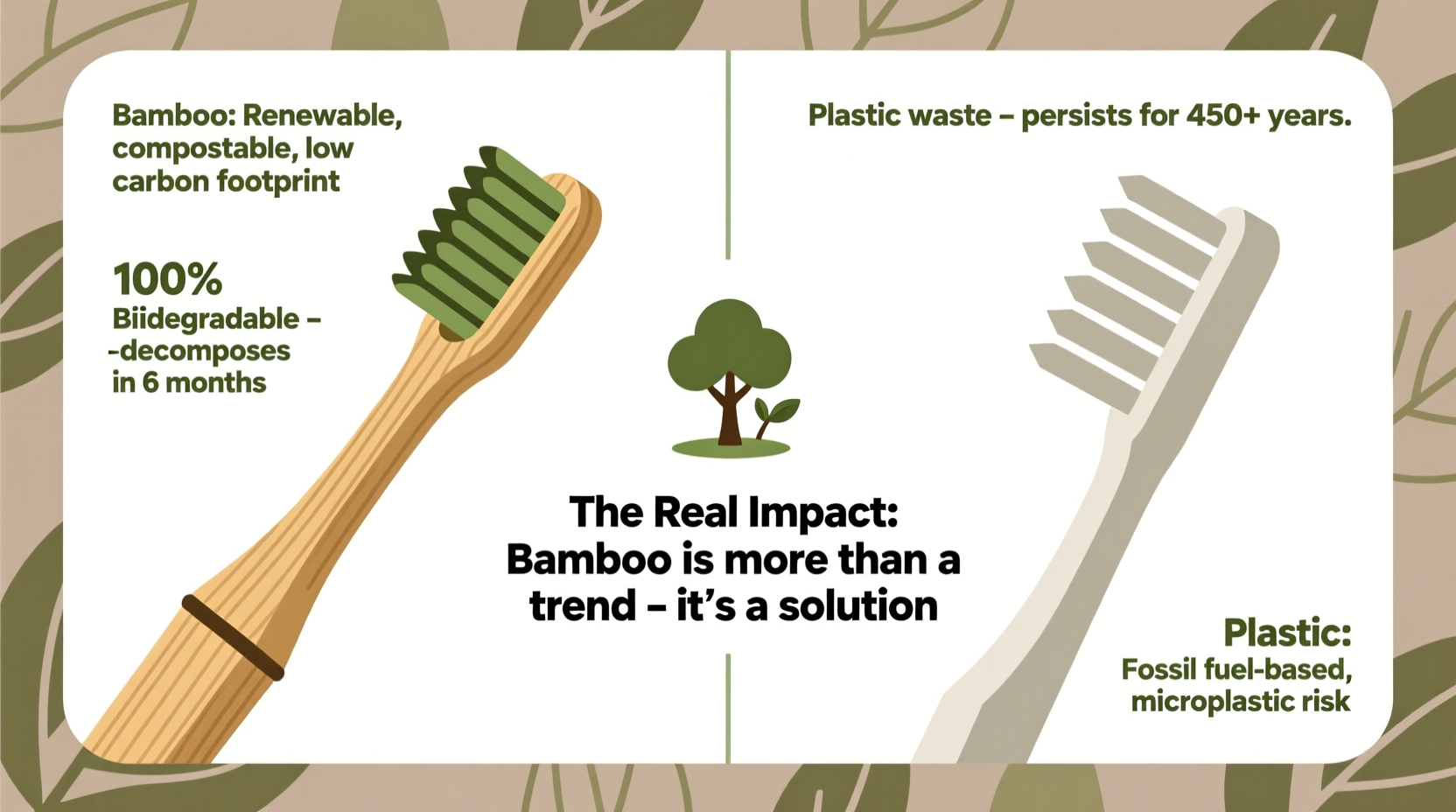
Every year, over 3.5 billion plastic toothbrushes are produced globally—most ending up in landfills or oceans. In the United States alone, an estimated 1 billion plastic brushes are discarded annually. Since they’re typically made from polypropylene and nylon (both petroleum-based plastics), they can take up to 500 years to decompose.
These non-biodegradable materials contribute to microplastic pollution, harming marine life and entering the food chain. Even recycling programs struggle with toothbrushes due to mixed materials and small size, rendering most unrecyclable. The urgency for alternatives is clear, but not all solutions are equally effective.
Bamboo Toothbrushes: Anatomy of an Eco-Friendly Claim
Bamboo toothbrushes are usually made from Moso bamboo, a fast-growing species that requires no irrigation, pesticides, or fertilizers. It regenerates quickly—some varieties grow up to 91 cm (36 inches) per day—making it one of the most renewable resources on Earth.
The handles are crafted from solid bamboo stalks, shaped into ergonomic forms. Bristles, however, remain a challenge. Most bamboo toothbrushes still use nylon bristles because natural bristles (like boar hair) are less hygienic and inconsistent in quality. Some brands now offer bio-based bristles derived from castor bean oil, though these are not always fully compostable.
Tip: Before composting your bamboo toothbrush, remove the bristles with pliers—most are still plastic and must be disposed of separately.Lifecycle Comparison: Bamboo vs. Plastic
A true sustainability assessment requires examining each stage of a product’s life. Below is a comparative breakdown:
| Stage | Plastic Toothbrush | Bamboo Toothbrush |
|---|---|---|
| Raw Material Sourcing | Petroleum extraction (non-renewable, high carbon emissions) | Bamboo farming (renewable, low water/chemical input) |
| Manufacturing | Energy-intensive molding and extrusion | Lower energy use; handcrafting common |
| Transportation | Often locally produced in Western countries | Frequently shipped from Asia, increasing carbon footprint |
| Use Phase | Durable, long-lasting | Similar lifespan (~3 months); may degrade if left wet |
| End of Life | Non-biodegradable; rarely recycled | Handle compostable; bristles often not |
| Overall Environmental Impact | High (persistent waste, fossil fuel dependence) | Lower, but not zero (transport, mixed materials) |
While bamboo clearly wins in raw material renewability and end-of-life potential, its benefits can be offset by long-distance shipping and improper disposal. A bamboo brush shipped from China to Europe generates significantly more transport emissions than a locally-made plastic one. Still, when properly managed, bamboo remains the less harmful option overall.
Greenwashing or Genuine Progress?
The rise of bamboo toothbrushes has coincided with increased consumer demand for “eco” products. Unfortunately, this has also led to greenwashing—where brands exaggerate environmental benefits to boost sales.
Some companies label their brushes as “100% biodegradable” despite using standard nylon bristles. Others package bamboo brushes in plastic blister packs, negating much of the environmental benefit. Transparency in labeling and third-party certifications (like FSC or OK Compost) are essential for verifying claims.
“Just because a product looks natural doesn’t mean it’s sustainable. Consumers need to look at the entire system—from farm to disposal.” — Dr. Lena Patel, Environmental Scientist at the Sustainable Materials Institute
Moreover, bamboo cultivation isn’t inherently sustainable everywhere. In some regions, monoculture bamboo plantations have replaced native forests, reducing biodiversity. Ethical sourcing and responsible farming practices matter as much as the material itself.
Real-World Impact: A Mini Case Study
In 2020, a community initiative in Bristol, UK, launched a campaign called “Brush Green,” encouraging residents to switch to bamboo toothbrushes. Over 18 months, 12,000 households participated, collectively replacing an estimated 72,000 plastic brushes.
The city partnered with a brand that used compostable packaging and bio-based bristles. Used brushes were collected quarterly and processed at a local industrial composting facility after bristle removal. Soil tests from composted brush handles showed no toxicity and contributed organic matter to urban gardens.
However, the program faced challenges. Only 68% of participants remembered to remove bristles before disposal. And while carbon emissions from production were lower, the brushes were imported from Vietnam, adding 1.2 kg CO₂e per unit in transport emissions. Despite this, the net environmental benefit was positive—especially in reducing plastic waste.
The case illustrates that bamboo toothbrushes can make a difference, but only when supported by proper infrastructure and consumer education.
How to Maximize the Sustainability of Your Toothbrush Choice
Switching to a bamboo toothbrush is a step forward, but it’s not enough on its own. To ensure your choice has real impact, follow these best practices:
- Check the bristles: Opt for models with bio-based or compostable bristles (e.g., castor bean nylon). Avoid standard nylon unless you can recycle it separately.
- Look at packaging: Choose brands that use paper, cardboard, or compostable wraps. Avoid plastic-coated boxes or vacuum-sealed packs.
- Support local producers: If available, buy from regional manufacturers to reduce shipping emissions.
- Dispose responsibly: Remove bristles with pliers before composting the handle. Store used brushes in a dry place until disposal.
- Extend usage: Replace only every 3–4 months, or when bristles fray—don’t discard prematurely.
Checklist: Choosing a Truly Sustainable Toothbrush
- ✅ Handle made from sustainably harvested bamboo (FSC-certified preferred)
- ✅ Bristles labeled as bio-based or compostable (not standard nylon)
- ✅ Packaging is plastic-free and recyclable/compostable
- ✅ Manufacturer discloses supply chain and carbon footprint
- ✅ Produced regionally or with carbon-offset shipping
- ✅ Third-party certifications (e.g., OK Compost, B Corp, Leaping Bunny for cruelty-free)
Emerging Alternatives and the Future of Oral Care
Beyond bamboo, new innovations are emerging. Some startups are developing fully compostable toothbrushes made from bioplastics like PLA (polylactic acid) derived from cornstarch. Others are experimenting with replaceable head systems, similar to electric toothbrushes, to minimize waste.
One Dutch company has introduced a brush with a reusable bamboo handle and detachable, compostable bristle heads—effectively cutting waste by 70%. Another uses algae-based bioplastics that degrade within two years in home compost.
While these technologies are promising, scalability and cost remain barriers. For now, bamboo toothbrushes represent the most accessible and widely available sustainable option for everyday consumers.
FAQ: Common Questions About Bamboo Toothbrushes
Can I compost my bamboo toothbrush at home?
Yes, but only after removing the bristles. The bamboo handle will decompose in a home compost pile within 4–6 months under moist, aerated conditions. Nylon bristles must go in general waste or a specialized recycling program if available.
Do bamboo toothbrushes harbor bacteria more easily than plastic?
Not necessarily. Bamboo has natural antimicrobial properties, but like any material, it can develop mold if left in damp environments. Rinse thoroughly after use and store upright in a dry area. Replacing every 3 months also reduces bacterial buildup.
Are bamboo toothbrushes more expensive?
Typically, yes. A single bamboo toothbrush costs between $2–$5, compared to $0.50–$1 for a plastic one. However, buying in bulk or subscribing to eco-brands can reduce costs. Over a year, the difference amounts to roughly $20–$30—less than a single dental cleaning.
Conclusion: A Step Forward, Not a Final Solution
Bamboo toothbrushes are more sustainable than plastic ones—but with important caveats. Their renewability, biodegradability, and lower carbon footprint during production make them a better environmental choice overall. Yet, their impact depends heavily on how they’re made, transported, and disposed of.
They are not a magic fix, nor should they be seen as a standalone solution to plastic pollution. Rather, they represent a shift in consumer awareness and a willingness to adopt more responsible habits. When paired with proper disposal, ethical purchasing, and broader waste reduction efforts, bamboo toothbrushes can play a meaningful role in reducing single-use plastic waste.
The real danger isn’t in adopting bamboo brushes—it’s in treating them as a guilt-free trend without understanding their limitations. True sustainability requires ongoing scrutiny, systemic change, and personal responsibility.
💬 Ready to make the switch? Start by checking your current toothbrush’s ingredients and packaging. Share your journey toward sustainable oral care in the comments below—what worked, what didn’t, and what you’d recommend to others.








