
Bamboo bar tools—muddlers, jiggers, spoons, and cutting boards—have surged in popularity among home mixologists and premium cocktail bars alike. Marketed as “eco-friendly,” “biodegradable,” and “naturally renewable,” they occupy shelf space beside stainless steel and reclaimed wood with quiet moral authority. Yet behind the matte finish and earthy grain lies a more complicated truth: bamboo’s sustainability is not inherent—it’s conditional. It depends entirely on where it’s grown, how it’s harvested, what chemicals are used in processing, and whether supply chains are transparent or obscured. When bamboo is clear-cut from ecologically sensitive regions, treated with formaldehyde-laced adhesives, or shipped across continents with no traceability, calling it “sustainable” isn’t just misleading—it’s greenwashing disguised as conscientious consumption.
The Bamboo Promise: Why It *Could* Be Sustainable
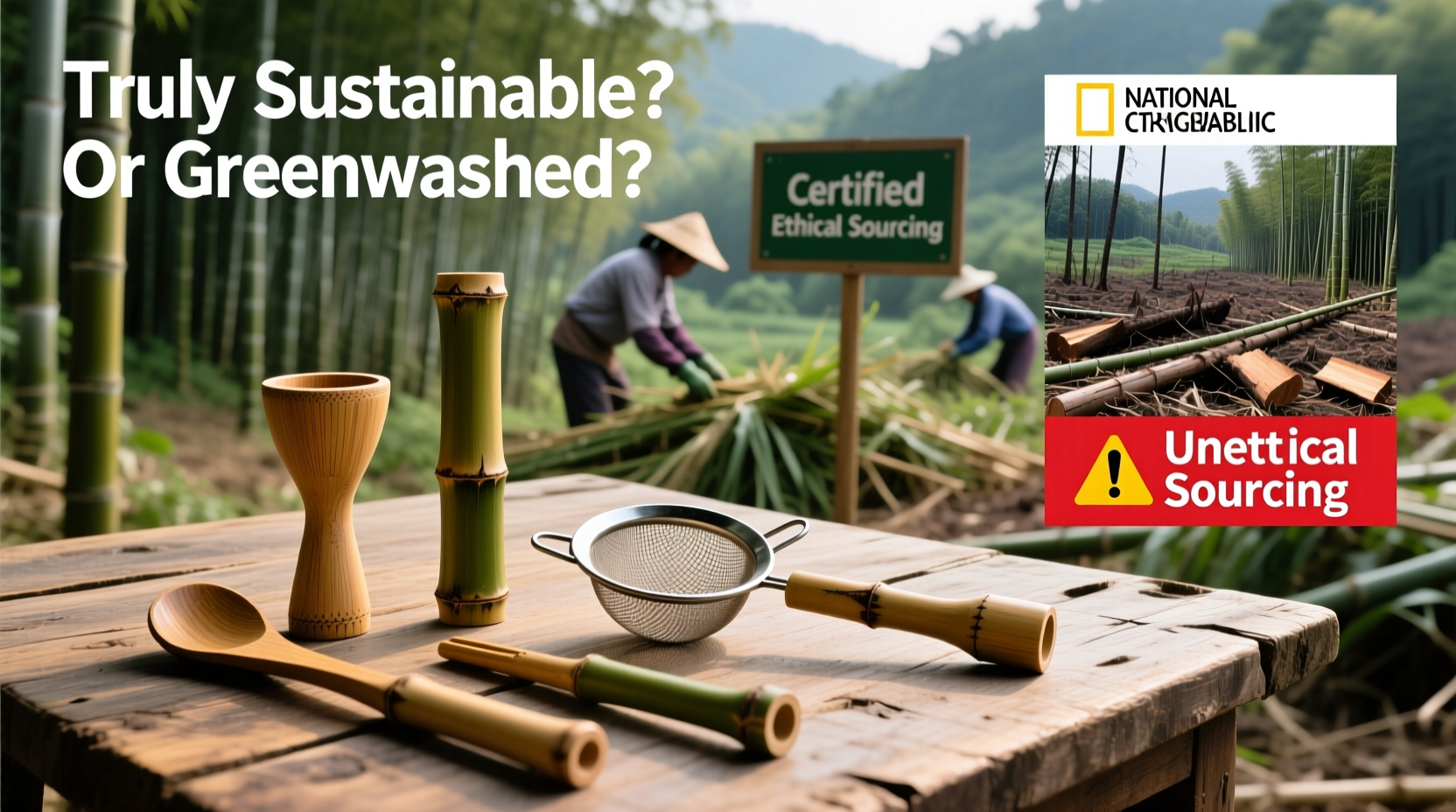
Bamboo holds undeniable ecological advantages over conventional hardwoods. As the world’s fastest-growing woody plant, some species can grow up to 91 cm (36 inches) in a single day. Unlike trees, most bamboo varieties regenerate from their root system after harvesting—no replanting required. Mature stands sequester up to 35% more CO₂ than equivalent stands of hardwood trees and help prevent soil erosion with dense rhizome networks. When managed responsibly, bamboo forests support biodiversity, require no irrigation or pesticides, and thrive on marginal land unsuitable for food crops.
But these benefits apply only under specific conditions: native-species cultivation in appropriate climates (primarily Southeast Asia and parts of Latin America), agroforestry-integrated harvesting cycles, and zero-input maintenance. In practice, much of the bamboo entering global barware markets originates from monoculture plantations—often replacing native forests—and undergoes intensive industrial processing that erodes its environmental upside.
The Greenwashing Gap: Where Sustainability Breaks Down
Three critical stages routinely compromise bamboo’s green credentials:
- Unregulated Sourcing: Over 95% of commercial bamboo comes from China, where enforcement of forestry regulations varies widely. Investigations by the Environmental Investigation Agency (EIA) have documented illegal logging in protected reserves—including Sichuan’s Giant Panda habitats—where Moso bamboo is harvested without permits or ecological impact assessments.
- Chemical Processing: Raw bamboo fibers are brittle and porous. To produce durable, smooth-surfaced bar tools, manufacturers typically laminate thin bamboo strips using phenol-formaldehyde or urea-formaldehyde resins—known carcinogens linked to respiratory illness and indoor air pollution. A 2022 study published in Environmental Science & Technology found formaldehyde emissions from “eco-bamboo” kitchenware exceeded EU safety limits by up to 400% during initial use.
- Opaque Supply Chains: Few brands disclose origin farms, harvest dates, resin suppliers, or factory certifications. Terms like “natural bamboo” or “eco-conscious” appear on packaging without third-party verification—making them marketing claims, not measurable commitments.
What to Look For: Certifications That Actually Matter
Not all certifications carry equal weight. Below is a comparison of key labels and what each verifies—or fails to verify—in the context of bar tools:
| Certification | What It Verifies | Relevance for Bar Tools | Red Flags |
|---|---|---|---|
| FSC® (Forest Stewardship Council) | Responsible forest management, chain-of-custody tracking, community rights | High — confirms ethical harvesting and traceable origin | “FSC Mix” without “FSC 100%” means ≤70% bamboo may be uncertified; avoid unless “FSC 100%” or “FSC Recycled” is specified |
| OEKO-TEX® Standard 100 Class I | Testing for harmful substances (formaldehyde, heavy metals, allergenic dyes) in products for infants | Very High — Class I is the strictest tier; ensures low off-gassing and food-contact safety | “OEKO-TEX Certified” without Class I designation offers minimal assurance for items contacting beverages |
| CarbonNeutral® Certification | Carbon footprint measurement and offsetting of emissions | Moderate — useful for transparency but doesn’t address toxicity or sourcing ethics | Does not guarantee material safety or ecological stewardship; often applied retroactively to offset shipping only |
| “Biodegradable” or “Compostable” Claims | No standardized testing or regulation in the U.S. or EU for solid bamboo goods | Low — laminated bamboo does not biodegrade in home compost; industrial facilities rarely accept it | Unqualified claims (“100% biodegradable”) are almost always misleading for resin-bonded products |
A Real-World Case Study: The “Eco-Muddler” Recall
In early 2023, a Berlin-based barware brand launched the “Terra Muddler”—a sleek, curved bamboo muddler marketed to craft cocktail bars across Europe. Packaging featured botanical illustrations, a QR code linking to a “sustainability story,” and the phrase “harvested from regenerative groves.” Within six months, bartenders reported persistent chemical odors, white residue leaching into citrus juices, and premature cracking. An independent lab analysis commissioned by the German Federal Institute for Risk Assessment (BfR) revealed formaldehyde levels of 22.7 mg/kg—over four times the EU’s 5 mg/kg limit for food-contact articles.
When pressed, the brand admitted its supplier was a Guangdong-based factory with no FSC or OEKO-TEX certification. The “regenerative groves” referenced were satellite images of a recently cleared hillside near Fujian province—previously covered in subtropical broadleaf forest. No corrective action followed beyond a silent product discontinuation. The incident underscored a hard reality: aesthetic appeal and sustainability storytelling do not substitute for verifiable standards—or accountability.
How to Choose Responsibly: A 5-Step Verification Process
Selecting genuinely sustainable bamboo bar tools requires active due diligence—not passive trust. Follow this sequence before purchasing:
- Check the Origin Statement: Legitimate brands name the country *and region* (e.g., “Moso bamboo from Zhejiang Province, China” or “Guadua bamboo from Nariño, Colombia”). Vague phrasing like “responsibly sourced bamboo” or “from sustainable forests” is meaningless without geography.
- Verify Certification Marks: Look for *both* FSC 100% (or FSC Recycled) *and* OEKO-TEX Standard 100 Class I on the product page or packaging. Click certification logos—they should link to valid database entries.
- Review the Manufacturing Method: Solid, heat-compressed bamboo (also called “thermo-treated” or “carbonized”) uses only steam and pressure—no resins. Laminated products will list “bamboo fiber + resin” or “bamboo composite” in materials. Prioritize solid bamboo for muddlers and spoons.
- Assess Transparency Depth: Does the brand publish supplier names? Factory audit reports? Harvest cycle data? Brands like Boo Bamboo and Reclaimed Bamboo Co. publish annual impact reports with GPS-tagged farm photos and resin test results. Absence of such detail is itself evidence.
- Test Before Use: Submerge new bamboo tools in warm water for 10 minutes. If cloudiness, odor, or whitish film appears, formaldehyde or adhesive leaching is likely. Discard and contact the seller with lab-grade concerns.
“The term ‘sustainable bamboo’ is an oxymoron unless paired with rigorous chain-of-custody documentation and non-toxic finishing. Without those, you’re holding a fossil-fuel-derived laminate wrapped in green rhetoric.” — Dr. Lena Zhou, Materials Ecologist, ETH Zurich
FAQ: Your Practical Questions Answered
Can bamboo bar tools be safely used with acidic cocktails like margaritas or daiquiris?
Yes—if they are solid, thermo-treated bamboo with food-grade mineral oil finish (not resin-laminated). Acidic liquids accelerate degradation of adhesives and can leach formaldehyde. Always rinse immediately after use and avoid prolonged soaking. For high-acid applications, stainless steel remains the safest, most inert option.
Is “organic bamboo” a real certification?
No. There is no globally recognized organic certification for bamboo—especially not for finished goods. The USDA prohibits “organic” labeling for non-food bamboo products. Any “organic bamboo” claim is unregulated and functionally meaningless.
Do bamboo tools last as long as stainless steel or walnut?
Properly cared-for solid bamboo tools can last 5–7 years with regular oiling and gentle hand-washing. However, they are more susceptible to warping, cracking, and moisture absorption than stainless steel. Walnut and other hardwoods offer comparable warmth and durability with lower processing risk—but require similar sourcing scrutiny.
Conclusion: Sustainability Is a Practice—Not a Product Label
Bamboo bar tools are neither inherently virtuous nor inevitably deceptive. Their sustainability emerges not from the plant alone, but from the integrity embedded at every stage: the farmer who preserves topsoil and protects watersheds; the mill that rejects toxic binders for thermal compression; the brand that traces each muddler to a single grove and publishes its emissions data; and the bartender who chooses transparency over trend. Greenwashing persists not because bamboo is flawed—but because demand outpaces accountability, and convenience silences inquiry.
You don’t need to abandon bamboo. You need to ask sharper questions, reject vague promises, and reward brands that meet the highest thresholds—not the lowest acceptable ones. Start today: examine one bamboo tool in your bar kit. Flip it over. Read the packaging. Search the certifications. Then decide—not based on how it looks, but on how it was made, who made it, and what was sacrificed—or preserved—to bring it to your counter.
💬 Your choices shape supply chains. Share this article with a fellow bartender, tag a brand you’d like to see held to higher standards, or comment below with the most transparent bamboo tool you’ve used—we’ll feature verified examples in our next update.








