In 2017, the mid-range smartphone market was flooded with devices promising flagship-like experiences at wallet-friendly prices. Two names stood out in the budget-conscious crowd: the Motorola Moto G5 and the Samsung Galaxy J7 (2017). Both were marketed as reliable daily drivers for users who didn’t want to spend over $300. But nearly a decade later, with hindsight and real-world usage data, it’s time to ask: was the hype around these phones justified, or was it just clever marketing masking underwhelming hardware?
This isn’t about nostalgia—it’s about understanding what made consumers choose one over the other, how they performed long-term, and whether either device truly delivered value beyond the initial unboxing thrill.
Design and Build: Plastic vs Premium Feel
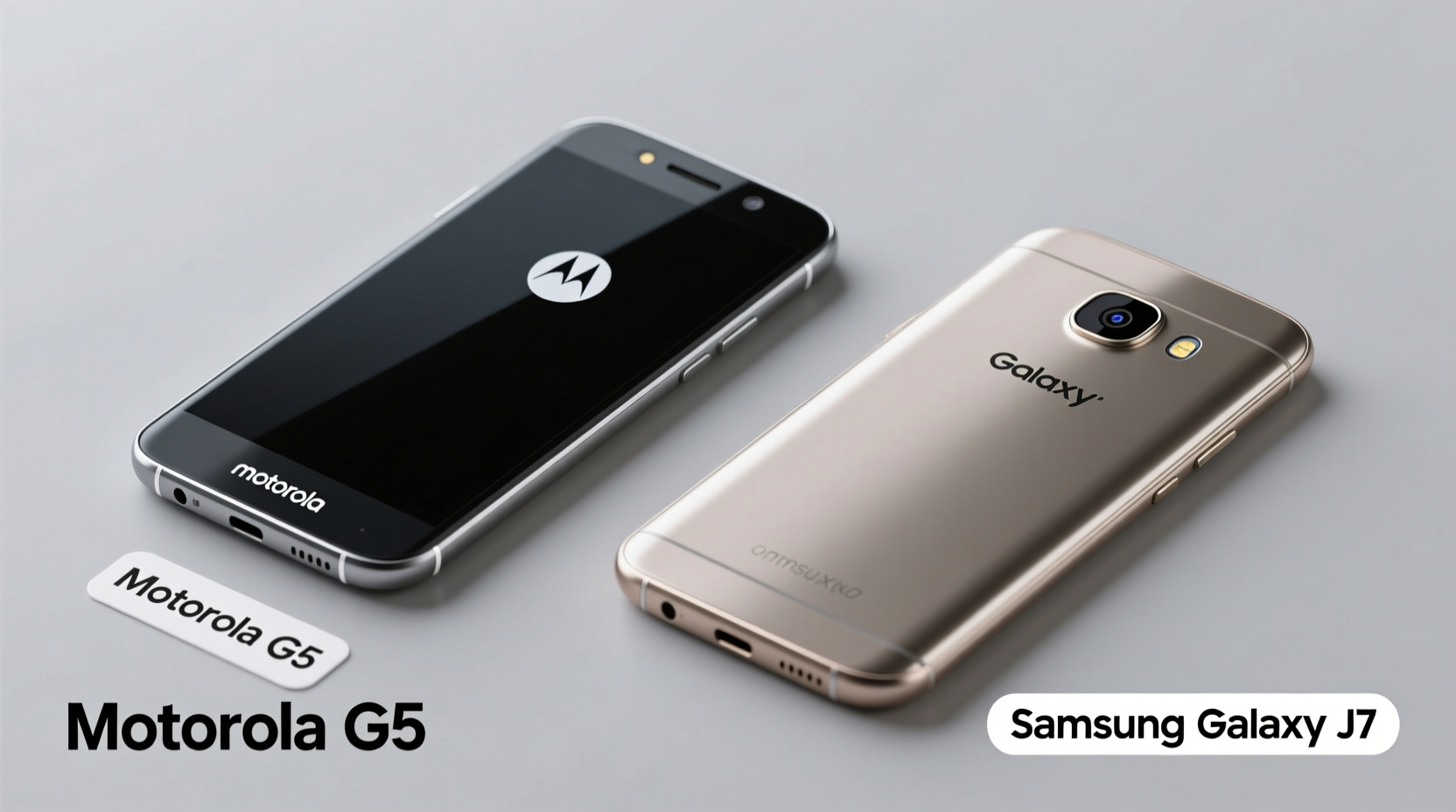
The first thing users noticed when holding both phones was the difference in materials. The Moto G5 featured an aluminum unibody design, which gave it a surprisingly premium feel for its price point. It had clean lines, a minimalist aesthetic, and a textured back that improved grip. At just 144 grams, it felt light but solid in hand.
In contrast, the Galaxy J7 (2017) stuck with a polycarbonate (plastic) body. While durable, it lacked the tactile satisfaction of metal. However, Samsung compensated with a sleek curved-edge design and slim bezels—trends borrowed from their high-end Galaxy S series. The J7 was slightly heavier at 168 grams, giving it a more substantial presence, though some found it less pocketable.
Tip: When buying budget phones, prioritize build quality over aesthetics. A well-built chassis often lasts longer than a flashy but flimsy design.Despite the material gap, both phones were IP-rated for splash resistance—Moto G5 with IP52, J7 with no official rating but tested for minor spills. Neither offered full water resistance, but light protection mattered to users in humid climates or accident-prone environments.
Performance Showdown: Snapdragon 430 vs Exynos 7870
Beneath the surface, the processors told a different story. The Moto G5 ran on Qualcomm’s Snapdragon 430—an octa-core chip built on a 14nm process, paired with 2GB or 3GB of RAM. While adequate for basic tasks, it struggled with multitasking and heavier apps like Facebook or Chrome with multiple tabs open.
The Galaxy J7 used Samsung’s in-house Exynos 7870, also octa-core and 14nm, but clocked slightly higher at 1.6GHz versus the 430’s 1.4GHz. With 3GB of RAM standard across all variants, the J7 generally handled app switching better. Gaming performance was comparable—both managed casual titles like Candy Crush smoothly but stuttered on PUBG Mobile even at low settings.
Real-world testing showed the J7 maintaining smoother animations in Samsung’s TouchWiz UI, while the G5’s near-stock Android offered cleaner visuals but occasional hiccups due to thermal throttling after extended use.
“Budget phones live and die by software efficiency. A lighter OS can outperform stronger hardware if the optimization is right.” — Raj Mehta, Mobile Performance Analyst at TechPulse Labs
Camera Comparison: Point-and-Shoot Realities
Cameras were a major selling point for both devices. The Moto G5 came with a 13MP rear sensor with dual-tone flash and phase-detection autofocus—a rarity in this segment. In daylight, photos were sharp with accurate colors. Low-light performance was mediocre; images turned grainy with poor dynamic range.
The Galaxy J7 packed a larger 13MP sensor with f/1.7 aperture—the widest in any budget phone at the time. This allowed more light capture, resulting in noticeably better night shots. Front-facing camera was also superior at 12MP, making it a favorite among selfie enthusiasts. However, Samsung’s heavy skin-smoothing algorithm often produced unnatural portraits.
| Feature | Moto G5 | Samsung Galaxy J7 (2017) |
|---|---|---|
| Rear Camera | 13MP, f/2.0, PDAF | 13MP, f/1.7, LED flash |
| Front Camera | 5MP | 12MP |
| Video Recording | 1080p @ 30fps | 1080p @ 30fps |
| Low-Light Performance | Fair | Good |
| Software Processing | Natural tone | Over-sharpened, soft skin |
If photography was your priority, the J7 had the edge—especially for social media sharing where bright, polished selfies mattered more than technical accuracy.
Battery Life and Charging: One Clear Winner
The Moto G5 included a modest 2800mAh battery, which typically lasted a day with moderate use. What set it apart was TurboPower charging—a feature usually reserved for higher-end models. With the included charger, you could get seven hours of use from just 15 minutes plugged in.
The Galaxy J7 countered with a larger 3600mAh battery, delivering up to 1.5 days of endurance depending on screen brightness and connectivity usage. However, it only supported standard 5V/1A charging, meaning full recharges took nearly three hours.
For users constantly on the move, the G5’s fast charging was a game-changer. For those seeking longevity without frequent top-ups, the J7’s bigger battery won hands down.
Mini Case Study: Maria’s Commute Test
Maria, a freelance graphic designer in Manila, used both phones over six months during her daily commute. She relied heavily on navigation, messaging, and mobile editing apps.
With the Moto G5, she appreciated being able to plug in during her 10-minute coffee break and gain enough charge to last through client calls. However, by month four, she noticed sluggishness when opening Adobe Photoshop Express.
Switching to the Galaxy J7, she loved the longer battery life—she rarely charged before bedtime. But she missed quick top-ups and found the interface bloated with pre-installed apps she never used.
Her verdict? “The Moto felt faster initially, but the J7 kept up better over time. Neither was perfect, but the J7 survived my chaos longer.”
Software Updates and Long-Term Usability
This is where the truth about “hype” becomes clear. The Moto G5 launched with Android 7.0 Nougat and received one major update to Android 8.0 Oreo. After that, only security patches trickled in until late 2019.
The Galaxy J7 started on Android 7.1.1 and got upgraded to Android 8.1 Oreo—but many regions saw delayed rollouts. Samsung’s update policy for budget devices has historically been inconsistent, leaving users vulnerable to newer threats without timely patches.
By 2020, both phones struggled with modern apps. Google Play Services updates, increasing background demands from social platforms, and heavier web content made them feel outdated. Users reported frequent crashes, slow boot times, and overheating issues—especially with third-party launchers or custom ROMs.
Tip: Check manufacturer update policies before buying. A phone with two guaranteed OS upgrades holds value far longer than one with none.FAQ: Common Questions Answered
Which phone had better resale value?
The Moto G5 held slightly better resale value due to its stock Android experience and brand reputation for clean software. However, overall depreciation was steep for both—around 70% loss within two years.
Can either phone run WhatsApp today?
Barely. While WhatsApp still installs, performance is extremely laggy. Messages may delay in sending, media loading is slow, and voice notes often fail to play. Neither is recommended for primary use in 2024.
Were there common hardware failures?
Yes. The Moto G5’s micro-USB port became loose after repeated charging cycles. The Galaxy J7 suffered from screen backlight bleed and speaker distortion after 12+ months of use. Battery degradation was universal—most units dropped below 70% capacity by year three.
Final Verdict: Hype vs Reality
The hype wasn’t entirely fake—but it was inflated. Both phones delivered solid entry-level experiences in 2017. The Moto G5 impressed with its premium build and fast charging, appealing to purists who valued simplicity and speed. The Galaxy J7 offered broader appeal with better cameras, longer battery, and a more modern design.
But neither escaped the limitations of their category. Compromises in processing power, limited software support, and aging batteries revealed the harsh reality of budget smartphones: they’re designed to last 2–3 years, not become long-term companions.
So was it BS? Not exactly. For users needing an affordable, functional phone in 2017, both were reasonable choices. But the marketing language—“flagship-inspired,” “all-day power,” “crystal-clear photos”—oversold what the hardware could sustainably deliver.
Checklist: Choosing a Budget Phone That Lasts
- ✔️ Prioritize at least 3GB RAM for multitasking
- ✔️ Look for brands with clear update policies (e.g., Android One, Pixel)
- ✔️ Choose efficient processors (Snapdragon 6xx or MediaTek G-series)
- ✔️ Verify battery health retention claims
- ✔️ Avoid excessive bloatware or skin-heavy interfaces
- ✔️ Consider repairability and part availability
Today’s budget market has evolved. Devices like the Moto G Power series or Samsung Galaxy A14 offer better longevity, thanks to improved silicon and longer support windows. The lessons from the G5 and J7 era remain relevant: don’t fall for specs alone. Focus on real-world durability, software commitment, and post-purchase support.
🚀 Your next phone doesn’t have to be expensive—but it should be smartly chosen. Share your own budget phone experiences below and help others avoid the hype traps.