Frizzy ends are a common frustration for people with curly hair. Despite embracing natural texture, flyaways, split ends, and dryness can make even the healthiest-looking curls appear unkempt. Many turn to heavy creams, butters, or serums for a quick fix—only to weigh down their waves or invite buildup over time. The good news? You don’t need a thick product slathered on your ends to achieve smooth, polished curls. With the right techniques, tools, and light-handed care, you can effectively conceal frizz while preserving bounce, volume, and definition.
Understanding Why Curly Hair Gets Frizzy at the Ends
The ends of your hair are the oldest part of the strand. They’ve endured months—or years—of exposure to heat, sun, friction, and chemical processing. Unlike the roots, which benefit from natural scalp oils, the ends receive little moisture, making them prone to dryness and breakage. In curly hair, this is amplified by the hair’s structure: tight coils and spirals prevent sebum from traveling down the shaft, leaving ends vulnerable.
Additionally, curly hair has a raised cuticle layer compared to straight hair. This makes it more porous and susceptible to environmental humidity, which causes strands to swell and frizz. When the cuticle lifts, light scatters unevenly, creating that fuzzy halo effect around the lower half of your curls.
Tip: Avoid rubbing your ends with a regular cotton t-shirt or towel—microfiber or a soft cotton pillowcase reduces friction and prevents cuticle damage.Lightweight Alternatives to Heavy Products
Heavy products may temporarily smooth the surface, but they often lead to greasy roots, limp curls, and product buildup that dulls shine. Instead, opt for lightweight formulas that hydrate without weighing hair down.
- Aloe vera gel: A natural humectant that defines curls and smooths edges without residue.
- Leave-in conditioners (spray format): Lightweight mists deliver hydration precisely where needed—especially mid-lengths to ends.
- Water-based curl creams: Look for formulas where water is the first ingredient and avoid silicones like dimethicone if buildup is a concern.
- Oil spritzes: A blend of argan, jojoba, or grapeseed oil in a spray bottle adds shine and seals moisture with just 1–2 pumps.
The key is application: use products sparingly and focus only on the lower third of your hair. Apply with scrunching or praying hands motion to encourage curl clumping, not coating each strand individually.
Step-by-Step: How to Apply Lightweight Products Without Weighing Down Curls
- Start with soaking wet hair after conditioning.
- Apply a dime-sized amount of leave-in conditioner from ears down.
- Fill a spray bottle with water and 2 drops of oil; mist ends lightly.
- Use a small amount of curl cream emulsified with water between palms before applying.
- Scrunch upward gently to encourage curl formation and minimize frizz.
- Diffuse on low heat or air-dry in a loose pineapple (high ponytail) to protect ends overnight.
Styling Techniques That Hide Frizz Naturally
How you style your curls can do more for frizz control than any product. Strategic manipulation of curl patterns and tension helps tuck unruly ends into defined spirals.
Twist-Outs and Braid-Outs for Smoother Ends
These styles stretch the curl pattern slightly, allowing ends to blend seamlessly into the curl formation. After washing and moisturizing, divide damp hair into 6–8 sections and twist or braid each one. Allow to dry completely, then unravel and fluff gently at the roots. The result? Defined waves or looser curls with ends tucked neatly into the pattern.
The “Praying Hands” Squeeze Method
After applying product, press sections of hair between flat palms from root to tip. This compresses the cuticle and encourages multiple curls to clump together. Larger clumps mean fewer individual strands escaping as frizz.
Overnight Protection: Silk Pineapple Method
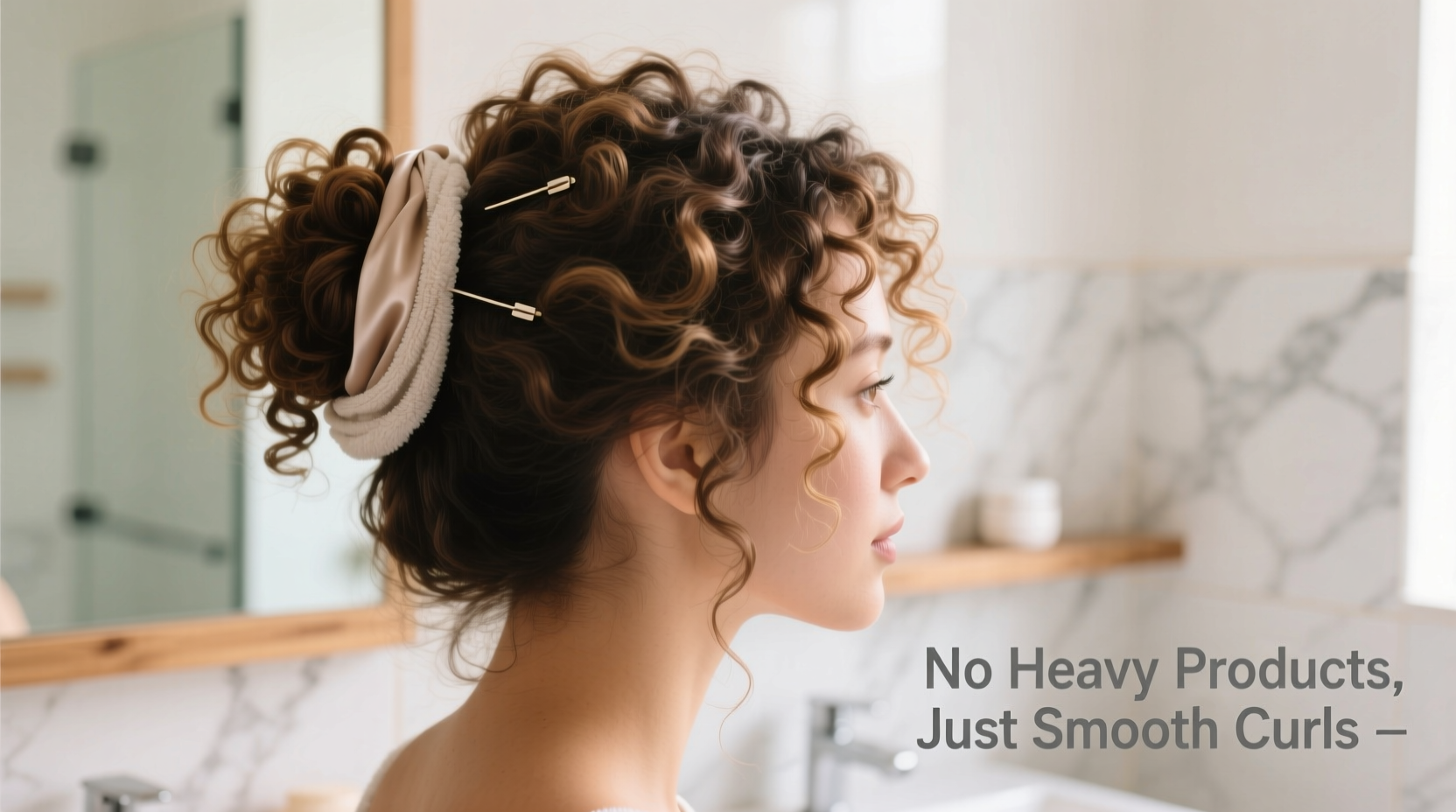
Sleeping with hair loose exposes ends to friction from cotton pillowcases, causing daily micro-tears. Instead, gather hair into a loose high ponytail (pineapple) using a silk scrunchie and wrap it in a silk scarf or bonnet. This keeps ends elevated and protected, reducing tangling and static.
“Curly hair doesn’t need heaviness to look polished—it needs cohesion. Clump curls together, and frizz disappears into the pattern.” — Tasha Reynolds, Curl Specialist & Educator
Tools and Accessories That Minimize Frizz Without Product Buildup
The right tools can make a dramatic difference in managing frizz—without adding anything to your hair.
| Tool | Benefit | Best For |
|---|---|---|
| Wide-tooth comb | Detangles gently without breaking curls or lifting cuticles | Damp hair post-conditioning |
| Finger diffuser attachment | Dries hair evenly while preserving curl shape and reducing puffiness | All curl types, especially 3A–4C |
| Silk scrunchies | Hold hair without creasing or snagging delicate ends | Pineapples, half-up styles |
| Microfiber towel or t-shirt | Reduces friction during drying vs. cotton towels | Initial water absorption post-wash |
| Creamy edge brush (boar bristle blend) | Lays down baby hairs and flyaways using natural oils from scalp | Finishing touch on second-day hair |
Mini Case Study: Reducing Frizz in Type 3B Hair
Maya, a 28-year-old teacher with type 3B curls, struggled with frizzy ends that made her hair look messy by midday. She had been using a thick shea butter cream daily, but noticed her curls lost volume and became greasy within hours. After consulting a stylist, she switched to a routine focused on lightweight hydration and mechanical smoothing.
Her new regimen: rinse with cool water to seal the cuticle, apply a spray leave-in, use a quarter-sized amount of water-based curl cream only on the bottom half of her hair, and diffuse with a finger diffuser. At night, she adopted the silk pineapple method. Within two weeks, her ends appeared smoother, her curls held definition longer, and she no longer needed touch-ups with heavy serums.
The change wasn’t due to a miracle product—it was consistent technique and reduced product load.
Do’s and Don’ts for Frizz-Free Ends
| Do | Don’t |
|---|---|
| Use a microfiber towel to blot excess water | Rub hair vigorously with a cotton towel |
| Apply products to soaking wet hair | Apply creams to dry hair (can cause pilling) |
| Refresh curls with water + leave-in mix in a spray bottle | Use heavy pomades to tame second-day frizz |
| Trim ends every 8–12 weeks | Wait until split ends travel up the shaft |
| Seal ends with 1 drop of oil after drying | Apply oil before styling (can block moisture absorption) |
FAQ
Can I use a flat iron occasionally to smooth frizzy ends?
You can, but only with precautions. Use a heat protectant, set the iron to no more than 300°F (150°C), and glide once over small sections. Overuse leads to increased porosity and long-term damage. Better alternatives include blow-drying with a diffuser or using roller sets for temporary smoothing.
Why do my ends get frizzy even when I don’t use products?
Frizz isn’t always caused by product absence—it’s often due to lack of moisture retention or mechanical damage. Even clean, product-free hair can become frizzy if it’s dehydrated or exposed to friction. Focus on internal hydration, protective styling, and gentle handling.
Is there a way to hide frizz without touching my hair all day?
Yes. Preventative styling is key. Try half-up styles, clip-backs, or accessorizing with headbands or scarves to pull ends away from view. Also, maintaining a healthy curl routine from wash to dry reduces the need for constant re-styling.
Checklist: Daily & Weekly Habits to Conceal Frizzy Ends
- ✅ Gently detangle with fingers or wide-tooth comb on wet, conditioned hair
- ✅ Use only lightweight, water-based leave-ins and creams
- ✅ Diffuse or air-dry in a pineapple to preserve curl integrity overnight
- ✅ Refresh with a water-oil-leave-in spray instead of reapplying heavy products
- ✅ Sleep on a silk pillowcase or wear a silk bonnet
- ✅ Trim split ends every 2–3 months
- ✅ Avoid touching hair throughout the day (transfers oil and causes frizz)
Conclusion
Hiding frizzy ends in curly hair doesn’t require heavy creams or constant product layering. It requires understanding your hair’s needs and responding with precision—not excess. By focusing on lightweight hydration, smart styling techniques, and protective habits, you can keep your curls looking defined and healthy without sacrificing movement or volume. Smoothness comes not from weight, but from cohesion, care, and consistency.
💬 Ready to transform your curl routine? Start tonight with a silk pineapple and a spritz of water. Share your frizz-free journey in the comments below!