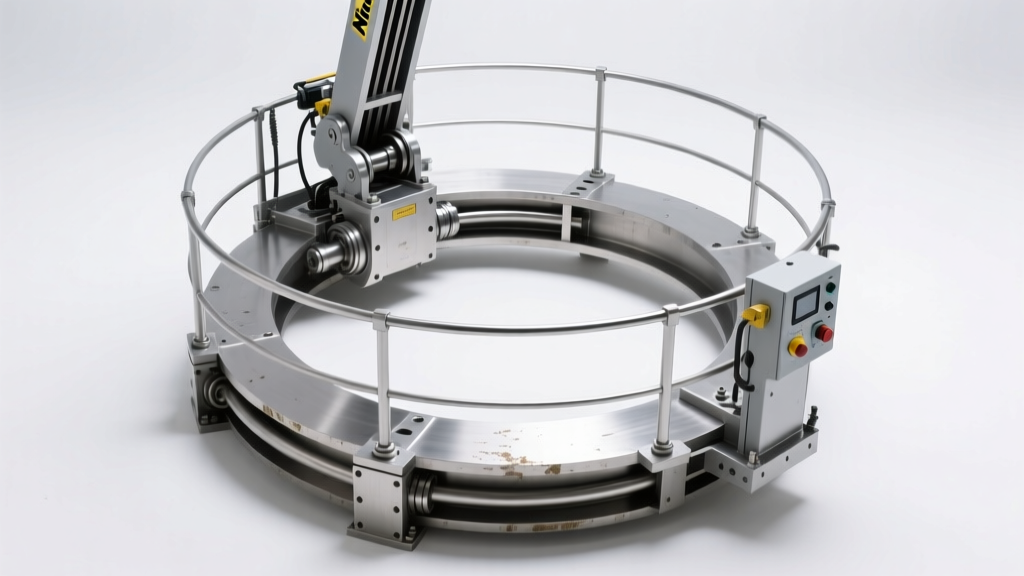
Types of Earthquake Isolators
In modern building design, especially in seismically active regions, earthquake isolators play a critical role in structural safety and resilience. These advanced engineering systems are designed to decouple a building from the ground motion during an earthquake, significantly reducing the transfer of seismic energy into the structure. By acting as flexible or movable interfaces between the foundation and the superstructure, earthquake isolators for buildings allow controlled horizontal displacement while maintaining vertical load support. This ensures that the building remains stable and intact even under intense ground shaking. There are several types of isolators, each with unique mechanisms and performance characteristics tailored to different structural needs and seismic conditions.
Elastomeric Bearings
Composed of alternating layers of rubber and steel plates, these bearings provide both flexibility and strength. The rubber layers absorb lateral seismic forces like a spring, while the steel plates ensure vertical stability and load-bearing capacity.
Advantages
- High vertical stiffness with excellent horizontal flexibility
- Natural damping properties due to rubber hysteresis
- Low maintenance and long service life
- Cost-effective and widely available
- Simple installation and proven track record
Limitations
- Limited energy dissipation without added damping
- Performance degrades over time due to aging and environmental exposure
- Not ideal for very tall or heavy structures without modification
Best for: Mid-rise buildings, hospitals, schools, and essential facilities in moderate seismic zones
Sliding Bearings
These isolators use low-friction sliding interfaces—typically involving materials like PTFE (Teflon), polished stainless steel, or lead-rubber composites—to allow horizontal movement during seismic events. Energy is dissipated through friction at the sliding surface.
Advantages
- Effective for large lateral displacements
- Simple mechanical principle with reliable performance
- Can be combined with recentering mechanisms
- Resistant to fatigue from repeated movements
Limitations
- Lower inherent damping compared to elastomeric systems
- Potential for permanent displacement if no recentering feature is included
- Requires precise manufacturing and alignment
- Friction properties can change with temperature and wear
Best for: Bridges, industrial facilities, and structures requiring large displacement capacity
Hybrid Isolators
Combining the best features of elastomeric and sliding systems, hybrid isolators integrate damping mechanisms such as viscous fluids, metallic yield dampers, or friction devices to enhance energy absorption and control residual displacement.
Advantages
- Superior energy dissipation and damping performance
- Can be engineered for self-recentering behavior
- Highly customizable for specific structural demands
- Improved performance in strong and prolonged earthquakes
Limitations
- Higher initial cost and complexity
- May require specialized installation and inspection
- More components mean potential for increased maintenance
Best for: Critical infrastructure (e.g., nuclear plants, data centers), high-rise buildings, and projects in high-seismic zones
Frequency-Dependent Isolators
These advanced systems utilize smart materials such as shape memory alloys or viscoelastic polymers whose stiffness and damping properties change dynamically based on the frequency of seismic input, allowing adaptive response to varying earthquake characteristics.
Advantages
- Adaptive performance across a broad spectrum of seismic frequencies
- Potential for real-time response optimization
- High damping efficiency under resonant conditions
- Emerging technology with future scalability
Limitations
- Limited commercial availability and field experience
- Higher cost and technical complexity
- Requires ongoing research and standardization
- Not yet widely adopted in mainstream construction
Best for: Research facilities, next-generation infrastructure, and experimental seismic protection systems
| Type | Damping Capacity | Displacement Capacity | Maintenance Needs | Best Application |
|---|---|---|---|---|
| Elastomeric Bearings | Moderate | Medium | Low | Residential, schools, hospitals |
| Sliding Bearings | Low to Moderate | High | Moderate | Bridges, industrial structures |
| Hybrid Isolators | High | High | Moderate to High | Critical infrastructure, high-rises |
| Frequency-Dependent | Variable (Adaptive) | Medium to High | High (Research Phase) | Advanced research, future-proofing |
Expert Tip: When selecting earthquake isolators, consider not only the seismic zone but also the building’s occupancy, importance, and expected performance level. Hybrid systems are increasingly favored for essential facilities due to their superior energy dissipation and recentering capabilities.
Models of Earthquake Isolators
Earthquake isolation systems are engineered using various modeling approaches to simulate how structures respond during seismic events. Each model incorporates distinct physical principles, mathematical formulations, and mechanical behaviors to predict the performance of isolators under dynamic loading conditions. These models help engineers design safer, more resilient buildings by reducing the transmission of seismic energy from the ground to the structure.
Contiguous Models
Definition: Contiguous models assume that the motion of the superstructure (building) and the ground beneath it is synchronized—meaning both move in phase until an external disturbance, such as an earthquake, disrupts this harmony.
Key Characteristics: In this approach, earthquake isolators are not treated as independent components. Instead, their influence is integrated into the overall structural system through equivalent stiffness and damping parameters. This simplification allows for faster computation and is often used in preliminary design stages.
Applications: Best suited for symmetric buildings on stable ground where differential movements between the base and superstructure are minimal. However, it may not accurately capture complex interactions in high-seismic zones or irregular structures.
Non-Concurrent Models
Definition: Unlike contiguous models, non-concurrent models recognize that the ground and the structure can experience different motions during an earthquake. The isolator acts as a buffer, experiencing displacement that differs from both the foundation and the building above.
Key Characteristics: These models account for time-lagged or spatially varying ground motions, making them ideal for analyzing asymmetrically isolated systems or those subjected to wave propagation effects across large foundations.
Limits: While effective at predicting overall structural response, they do not detail internal mechanical behavior within the isolator itself—such as shear deformation in elastomeric bearings or sliding mechanics in friction pendulum systems.
Piecewise Decoupling Models
Definition: One of the most widely adopted approaches in practical engineering, piecewise decoupling models break down the entire system into separate substructures—such as the isolated base, superstructure, and isolator layer—and analyze each independently.
Methodology: By neglecting dynamic coupling between components (i.e., assuming minimal interaction), these models simplify complex equations of motion. Each part is solved individually and then recombined to estimate the total system response.
Advantages & Trade-offs: Offers a balance between accuracy and computational efficiency. Although they introduce some estimation errors due to ignored coupling effects, they remain effective for a wide range of isolator types, including laminated rubber bearings, sliding isolators, and hybrid systems.
Numerical Discretization Models
Definition: These advanced models use numerical methods like the Finite Element Method (FEM) to discretize the isolator and surrounding structure into small elements for detailed simulation.
Capabilities: Enable high-fidelity analysis of stress distribution, material nonlinearity, contact mechanics, and geometric complexity within isolators. They are particularly valuable for evaluating innovative or custom-designed isolation units with intricate shapes or composite materials.
Use Cases: Commonly used in research and development to optimize new isolator designs, validate experimental results, and simulate extreme loading scenarios. Their ability to model dynamic behavior under real-time seismic inputs makes them indispensable for performance-based design.
Experimental Models
Definition: Experimental models rely on physical testing rather than theoretical or computational simulations. These tests are conducted either in controlled laboratory environments using shake tables or through full-scale field monitoring of existing isolated structures.
Data Collection: Sensors measure displacement, acceleration, strain, and force responses during simulated or actual earthquakes. This empirical data provides critical validation for analytical and numerical models.
Importance: Especially crucial when theoretical predictions fall short in capturing real-world safety margins, material degradation, long-term durability, or unexpected failure modes. Experimental results often inform code updates and certification standards for seismic devices.
| Model Type | Accuracy Level | Best Use Case | Limitations |
|---|---|---|---|
| Contiguous Models | Medium | Preliminary design of symmetric structures | Assumes uniform motion; ignores isolator-specific behavior |
| Non-Concurrent Models | High | Asymmetric systems with differential ground motion | Does not predict internal isolator mechanics |
| Piecewise Decoupling Models | Medium-High | General-purpose design and analysis | Introduces errors due to decoupling assumptions |
| Numerical Discretization Models | Very High | Research, innovation, and complex geometries | Computationally intensive; requires expertise |
| Experimental Models | Extremely High (Empirical) | Validation, certification, real-world performance | Expensive and time-consuming; limited scalability |
Important: No single model provides a complete picture of seismic isolator performance. Engineers often combine multiple modeling approaches—using numerical simulations validated by experimental data and simplified methods for routine design. Selecting the appropriate model depends on project scale, budget, safety requirements, and regulatory standards. Always ensure that models are calibrated with real-world data where possible to enhance reliability and public safety.
Industrial Applications of Earthquake Isolators
Earthquake isolators are advanced structural engineering solutions designed to protect buildings and infrastructure from seismic forces. By decoupling a structure from ground motion, these systems absorb and dissipate energy, significantly reducing the transfer of destructive vibrations. Their application spans across various sectors, ensuring safety, continuity of operations, and preservation of assets in earthquake-prone regions worldwide.
Residential Buildings
In seismic zones, residential safety is paramount. Earthquake isolators are increasingly integrated into homes—from single-family houses to multi-unit apartment complexes. These systems reduce the lateral forces transmitted to the structure during an earthquake, minimizing structural stress and preventing catastrophic failures.
- Protects load-bearing walls, foundations, and internal finishes from cracking
- Enhances occupant safety by reducing the risk of collapse or ejection of debris
- Allows for safer evacuation and post-event habitability
- Ideal for high-density urban housing and hillside residences vulnerable to ground shifting
Key benefit: Preserves both life and property with minimal retrofitting disruption
Commercial Buildings
Skyscrapers, office towers, and mixed-use developments in earthquake zones rely on isolators as a core part of their structural design. These systems are now standard practice in modern high-rise construction, especially in countries like Japan, New Zealand, and parts of the United States.
- Reduces inter-story drift, protecting glass facades, elevators, and mechanical systems
- Maintains structural integrity under prolonged or repeated seismic events
- Minimizes business interruption by preventing damage to interiors and IT infrastructure
- Supports higher occupancy safety ratings and insurance incentives
Pro insight: Base-isolated commercial towers often remain operational immediately after moderate quakes
Bridges and Transportation Infrastructure
Bridges are lifelines during and after seismic events, making their resilience critical for emergency response and economic continuity. Earthquake isolators are installed at bridge piers and abutments to allow controlled movement while maintaining stability.
- Enables flexible movement without fracturing concrete or steel supports
- Prevents deck unseating and collapse during strong ground motion
- Reduces repair costs and downtime following seismic activity
- Used in cable-stayed, arch, and overpass designs in high-risk zones
Critical advantage: Ensures post-earthquake access for emergency vehicles and supply routes
Hospitals and Healthcare Facilities
Hospitals must remain fully functional during and after earthquakes. Earthquake isolators are essential in safeguarding not only the building but also sensitive medical equipment and patient care environments.
- Protects life-support systems, imaging machines (MRI, CT scanners), and surgical suites
- Prevents dangerous spills of chemicals or pharmaceuticals due to equipment displacement
- Maintains power, water, and HVAC functionality through reduced structural damage
- Required by building codes in many countries for new medical facility construction
Life-saving impact: Isolated hospitals can serve as emergency response hubs when others fail
Historical and Cultural Buildings
Many heritage structures—such as churches, museums, and government landmarks—were built before modern seismic codes existed. Retrofitting with earthquake isolators allows preservation of architectural integrity while enhancing safety.
- Minimally invasive installation beneath existing foundations or at critical joints
- Protects irreplaceable artifacts, murals, and structural elements from vibration damage
- Complies with conservation standards by avoiding major structural alterations
- Successfully used in UNESCO World Heritage Sites and ancient monuments
Preservation value: Balances cultural heritage protection with modern safety requirements
Warehouses and Inventory Centers
Large-scale distribution centers and storage facilities house high-value inventory and tall racking systems vulnerable to seismic tipping. Earthquake isolators stabilize the entire structure, reducing horizontal acceleration.
- Prevents collapse of pallet racks and storage shelving during shaking
- Protects sensitive electronics, pharmaceuticals, and perishable goods
- Reduces insurance premiums and downtime after seismic events
- Enables rapid resumption of logistics operations post-quake
Operational benefit: Maintains supply chain continuity in disaster scenarios
Engineering Insight: When selecting earthquake isolators, consider the site-specific seismic hazard, soil conditions, and building use. Base isolators such as elastomeric bearings, sliding pendulum systems, and friction dampers each offer unique advantages depending on the application. For critical infrastructure, a hybrid system combining multiple technologies often provides optimal performance and redundancy.
| Application | Isolator Type | Key Benefits | Expected Performance |
|---|---|---|---|
| Residential Buildings | Laminated Rubber Bearings | Cost-effective, easy installation, noise reduction | Reduces seismic force by 50–70% |
| Commercial High-Rises | Friction Pendulum Systems (FPS) | High durability, self-centering, low maintenance | Up to 80% reduction in acceleration |
| Bridges | Sliding Isolators with Restoring Force | Handles large displacements, corrosion-resistant | Maintains functionality after major quakes |
| Hospitals | Hybrid Elastomeric-Friction Systems | Precision stability, equipment protection | Near-zero downtime post-event |
| Historical Structures | Low-Profile Isolation Pads | Minimal visual impact, reversible retrofit | Preserves original structure integrity |
| Warehouses | Flat Sliding Bearings | Scalable, suitable for large footprints | Prevents inventory loss and racking failure |
Additional Considerations
- Maintenance Requirements: Most isolators require minimal upkeep, but periodic inspections are recommended to ensure long-term performance
- Installation Timing: Easier and more cost-effective during new construction, though retrofitting is viable with proper engineering
- Regulatory Compliance: Many countries mandate seismic isolation for critical infrastructure under updated building codes
- Cost-Benefit Ratio: While initial investment is higher, the long-term savings in repair costs and operational continuity are substantial
- Environmental Resilience: Modern isolators are designed to withstand extreme temperatures, moisture, and chemical exposure
Choosing Earthquake Isolators: A Comprehensive Guide for Structural Resilience
Selecting the right seismic isolators is a critical engineering decision that directly impacts a building's ability to withstand seismic events. The goal is to achieve an optimal balance between safety, performance, cost, and constructability. While general principles apply, the final choice must be tailored to the specific project requirements, local building codes, and regional seismic hazard profiles. This guide outlines the key factors engineers, architects, and project managers should evaluate when specifying seismic isolation systems.
Safety & Compliance Note: Seismic isolator selection must comply with local building codes (such as ASCE 7, IBC, or Eurocode 8) and be performed by qualified structural engineers. Improper selection or installation can compromise structural integrity during an earthquake.
1. Seismic Risk Level and Regional Hazard Assessment
The foundation of any isolator selection process is a thorough understanding of the seismic risk at the project site. This involves more than just identifying the seismic zone—it requires a detailed analysis of:
- Local seismic design category and peak ground acceleration (PGA) values from official hazard maps
- Historical earthquake data, including frequency, magnitude, and fault proximity
- Soil conditions and site amplification effects (e.g., soft soils may increase shaking intensity)
- Proximity to active fault lines and potential for near-fault pulse effects
High-risk zones typically require isolators with superior energy dissipation capabilities and larger displacement capacities, such as lead-rubber bearings (LRBs) or friction pendulum systems (FPS). In moderate or low-risk areas, simpler and more economical options like high-damping rubber bearings (HDRBs) may suffice.
2. Building Use, Importance, and Performance Objectives
The function and criticality of the structure significantly influence the performance requirements of the isolation system. Buildings are often categorized by their importance factor, which dictates the level of protection needed:
- Critical Facilities: Hospitals, emergency operations centers, fire stations, and data centers must remain operational after an earthquake. These structures demand isolators with enhanced durability, higher damping ratios, and greater displacement capacity to minimize damage and downtime.
- Essential Infrastructure: Schools, government buildings, and transportation hubs benefit from isolation systems that protect both structural and non-structural components (e.g., ceilings, piping, equipment).
- Commercial & Residential Buildings: While still requiring safety, these structures may prioritize cost-effectiveness and architectural integration, allowing for more flexible isolator choices.
Performance-based design approaches often specify post-earthquake functionality goals, directly influencing isolator selection and system redundancy.
3. Cost Considerations: Initial Investment vs. Lifecycle Value
Cost is a major factor, but it should be evaluated over the entire lifecycle of the building rather than just initial installation:
- Initial Costs: Conventional sliding bearings or low-damping elastomeric isolators are generally less expensive to manufacture and install compared to advanced systems like hybrid or triple friction pendulum bearings.
- Long-Term Savings: High-performance isolators, such as elastomeric or hybrid systems, may have higher upfront costs but can significantly reduce earthquake-induced damage, lowering repair costs, insurance premiums, and business interruption risks—especially in high-seismic regions.
- Maintenance Costs: Some isolators require periodic inspection or re-tensioning. Friction-based systems may need surface maintenance, while elastomeric bearings typically require minimal upkeep.
A cost-benefit analysis considering probable seismic losses over 50–100 years often justifies investing in higher-performance isolators for critical or long-life structures.
4. Space Availability and Architectural Integration
Seismic isolators are typically installed at the base of a structure, requiring dedicated space within the foundation or substructure. Designers must account for both plan footprint and vertical clearance:
- Plan Dimensions: Some isolators, like large-diameter elastomeric bearings, require significant floor area, which can affect column layout and foundation design.
- Vertical Clearance: Systems like friction pendulum bearings or sliding isolators may require additional height between the foundation and superstructure to accommodate movement and support components.
- Compact Solutions: In space-constrained urban projects or retrofits, compact isolators such as high-load elastomeric bearings or modular sliding systems are preferred to avoid compromising architectural design or structural efficiency.
For example, lead-rubber isolators offer excellent performance but require more space than high-damping rubber bearings, making them less suitable for tight sites unless planned early in the design phase.
5. Local Availability and Supply Chain Considerations
Procurement logistics play a crucial role in project timelines and quality assurance:
- Regional Manufacturers: Choosing isolators produced locally reduces shipping costs, import duties, and lead times—often critical in fast-track or post-disaster reconstruction projects.
- Code Compliance: Local manufacturers are typically more familiar with national and regional seismic codes, ensuring that products meet all regulatory requirements and certification standards.
- Technical Support: Domestic suppliers can provide on-site assistance, installation training, and faster response to technical queries, improving coordination and reducing errors.
- Quality Control: Proximity allows for easier inspection of manufacturing processes and material testing, enhancing confidence in product reliability.
In remote or developing regions, reliance on imported isolators may introduce delays and increase vulnerability to supply chain disruptions.
| Isolator Type | Best Suited For | Space Requirements | Cost Level | Key Advantages |
|---|---|---|---|---|
| Lead-Rubber Bearings (LRB) | High-seismic zones, critical facilities | High (large diameter, moderate height) | High | Excellent energy absorption, self-centering, proven performance |
| High-Damping Rubber Bearings (HDRB) | Moderate seismic zones, commercial buildings | Moderate | Medium | Good damping, low maintenance, cost-effective |
| Friction Pendulum System (FPS) | Tall buildings, long-period structures | Moderate (compact footprint) | High | Stable performance, large displacement capacity, temperature insensitive |
| Sliding Bearings (e.g., PTFE-based) | Low-risk areas, retrofits, bridges | Low to Moderate | Low | Inexpensive, simple design, easy installation |
| Hybrid Isolators | Specialized applications, high-performance needs | Varies | Very High | Combines benefits of multiple technologies (e.g., damping + sliding) |
Expert Tip: Engage with isolator manufacturers early in the design phase. Many offer free technical consultations, finite element modeling support, and custom solutions tailored to your project’s unique constraints and performance goals.
Additional Recommendations
- Perform dynamic time-history analysis to validate isolator performance under realistic earthquake scenarios
- Ensure compatibility between isolators and surrounding structural elements (e.g., restraints, dampers, moat details)
- Plan for long-term monitoring and inspection access to assess isolator condition over time
- Consider future adaptability—can the system be upgraded or replaced if seismic risk increases?
- Document all isolator specifications, installation procedures, and warranties for facility management
Selecting the right earthquake isolator is not a one-size-fits-all decision. It requires a multidisciplinary approach that balances engineering performance, economic feasibility, and practical constructability. By carefully evaluating seismic risk, building function, cost, space, and supply chain factors, design teams can implement a seismic isolation system that enhances safety, protects investments, and ensures resilience for decades to come.
Frequently Asked Questions About Seismic Isolators
Q1: How do seismic isolators work during an earthquake?Seismic isolators are advanced engineering components designed to protect structures from earthquake damage by decoupling the building from ground motion. During an earthquake, these devices absorb and dissipate seismic energy through controlled deformation. Instead of transferring destructive forces directly into the structure, isolators allow the building to move horizontally in a more flexible, damped manner. This significantly reduces acceleration and stress on structural elements, preserving both the integrity of the building and the safety of its occupants and contents.
Commonly installed at the base of a structure (known as base isolation), they act as a buffer between the foundation and the superstructure, enabling independent movement and minimizing damage caused by violent shaking.
Q2: What are the common types of seismic isolators?There are several types of seismic isolators, each engineered for specific performance requirements and environmental conditions. The most widely used include:
- Lead-Rubber Bearings (LRB): Composed of layers of rubber and steel with a lead core, these provide both flexibility and energy dissipation. The lead core yields during shaking, absorbing energy while the rubber provides lateral resilience.
- Elastomeric Isolators: Made from laminated rubber and steel plates, these offer high vertical stiffness with flexibility in horizontal movement. They are ideal for lighter structures or where minimal damping is needed.
- Sliding Isolators: Utilize friction pendulum or flat sliding surfaces to allow controlled lateral displacement. These systems often incorporate curved surfaces that return the building to its original position after shaking (re-centering capability).
- Hybrid Systems: Combine features of multiple isolator types—such as rubber bearings with sliding mechanisms—to optimize performance for complex or high-risk environments.
The selection depends on factors like building weight, location, seismic hazard level, and desired performance objectives.
Q3: Are seismic isolators effective for all types of buildings?While seismic isolators are highly effective, they are not universally applicable to every structure without careful engineering assessment. However, they are successfully used in a wide range of critical and sensitive buildings, including:
- Hospitals: To ensure continuous operation during and after earthquakes.
- Schools and Public Buildings: For enhanced occupant safety and reduced repair costs.
- Commercial High-Rises: To protect investments and maintain functionality post-event.
- Bridges and Elevated Transit Systems: To prevent collapse and maintain transportation links.
- Historical and Heritage Structures: Where preservation is key and structural modifications must be minimal.
Effectiveness depends on proper design, installation, and integration with the overall structural system. Lighter or flexible structures may benefit more than very stiff or irregular ones, which require customized solutions.
Q4: Do seismic isolators require maintenance?Most modern seismic isolators are built for long-term durability and require minimal maintenance due to their passive design. However, regular inspection is recommended to ensure continued performance:
- Lead-Rubber Bearings: Should be inspected every 5–10 years for signs of cracking, bulging, or degradation of rubber layers, especially in harsh environmental conditions.
- Sliding and Friction-Based Systems: May need periodic checks for debris accumulation, wear on sliding surfaces, or lubrication status (if applicable).
- Hybrid and Advanced Systems: Might include monitoring sensors that alert engineers to performance changes or damage.
In general, isolators are designed to last the lifespan of the building (50+ years) under normal conditions. Post-earthquake inspections are crucial to assess any potential damage and ensure readiness for future events.
Q5: How do retrofitted buildings benefit from seismic isolators?Retrofitting existing buildings with seismic isolators—known as seismic base isolation retrofitting—offers a powerful way to enhance earthquake resilience without demolishing or heavily modifying the structure. This approach involves installing isolators between the existing foundation and the building superstructure, often requiring temporary jacking of the building.
Key benefits include:
- Improved Safety: Dramatically reduces the risk of structural collapse and non-structural damage (e.g., broken windows, falling ceilings).
- Preservation of Functionality: Critical facilities like hospitals and emergency centers remain operational after seismic events.
- Cost-Effective Upgrades: Compared to full structural reinforcement, isolation retrofitting can be more economical and less disruptive.
- Minimal Aesthetic Impact: Especially valuable for historical buildings where appearance must be preserved.
Successful retrofit projects have been implemented worldwide, proving that even older constructions can achieve modern seismic performance standards with the right engineering approach.