Facial rollers have surged in popularity over the past decade, becoming a staple in skincare routines across social media, luxury spas, and drugstore beauty aisles. From cool jade to rose quartz and stainless steel versions, these handheld tools promise everything from reduced puffiness to tighter skin and improved product absorption. But behind the glowing testimonials and influencer endorsements lies a pressing question: Do facial rollers actually deliver measurable results, or are they simply a soothing ritual with no real dermatological impact?
The answer isn’t binary. While facial rollers may not replace medical-grade treatments like lasers or injectables, they do offer tangible short-term benefits and subtle long-term advantages when used correctly. Understanding the science behind their effects—and separating marketing hype from reality—can help you decide whether this tool deserves a permanent spot on your vanity.
The Science Behind Facial Rolling: Lymphatic Drainage and Circulation
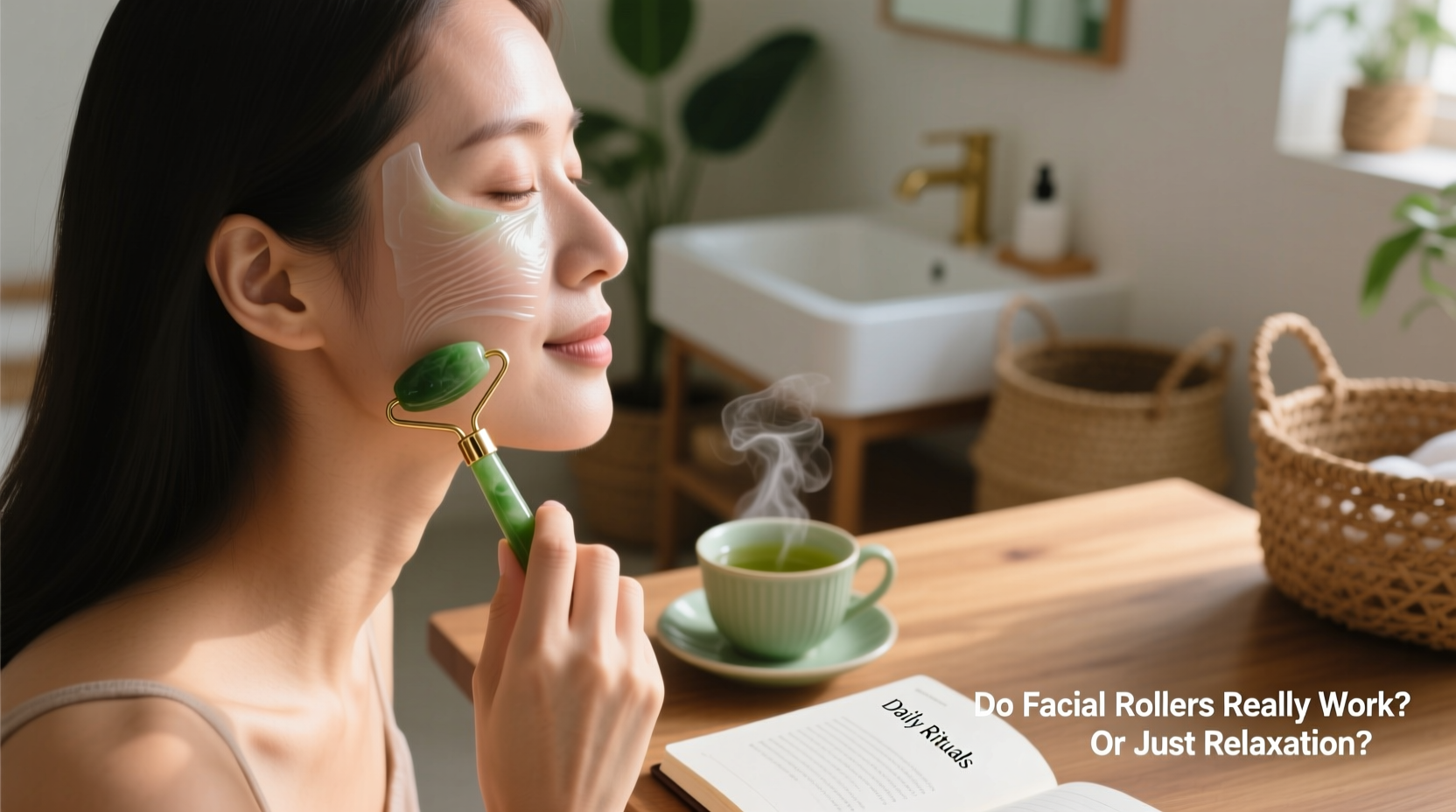
At the core of facial roller efficacy is the concept of lymphatic drainage. The lymphatic system helps remove waste, excess fluid, and toxins from tissues. Unlike the circulatory system, which has the heart to pump blood, the lymphatic system relies on muscle movement and manual stimulation to function efficiently.
Facial rolling applies gentle pressure along specific pathways—primarily under the eyes, jawline, and neck—encouraging fluid movement toward lymph nodes located near the ears and collarbones. This can reduce morning puffiness, especially around the eyes, by helping drain stagnant fluid.
“Manual lymphatic drainage techniques, including facial rolling, can temporarily reduce edema and improve facial contour,” says Dr. Nina Singh-Radcliff, a board-certified dermatologist based in New York. “It’s not magic—it’s physiology.”
In addition to fluid movement, rolling increases microcirculation. When blood flow improves, more oxygen and nutrients reach skin cells. This can result in a temporary glow and may support collagen production over time. A 2018 study published in *Clinical, Cosmetic and Investigational Dermatology* found that consistent facial massage improved skin elasticity and firmness after six weeks, though the sample size was small and not roller-specific.
Short-Term Benefits: What You Can Expect Immediately
While long-term anti-aging claims remain debated, the immediate effects of facial rolling are well-documented and widely experienced:
- Puffiness reduction: Especially noticeable in the morning, rolling helps move excess fluid away from delicate under-eye areas.
- Enhanced radiance: Increased circulation brings fresh blood to the surface, giving skin a natural flush and healthy appearance.
- Better product penetration: When used after applying serums or oils, rolling can aid in even distribution and deeper absorption by gently pushing products into the skin.
- Muscle relaxation: The repetitive motion reduces tension in facial muscles, particularly beneficial for those who clench their jaw or hold stress in their forehead.
Long-Term Effects: Can Rolling Prevent Aging?
This is where skepticism grows. Proponents claim that regular use tightens skin, minimizes fine lines, and lifts sagging contours. However, clinical evidence supporting these claims is limited.
Collagen and elastin—the proteins responsible for skin’s firmness and resilience—are produced deep within the dermis. While increased circulation might create a slightly more favorable environment for cell turnover, there’s no robust research proving that rolling alone stimulates significant collagen synthesis.
That said, consistency matters. Like facial yoga or massage, repeated mechanical stimulation may contribute to mild toning over months. Think of it as low-impact exercise for the face: it won’t transform your structure, but it may help maintain tone and delay visible signs of laxity.
A 2020 consumer trial conducted by a cosmetic research group found that participants who rolled daily for eight weeks reported improved skin texture and perceived firmness. Yet, researchers noted that placebo effects and increased skincare adherence (e.g., using better products during rolling) likely played a role.
Realistic Expectations vs. Marketing Hype
Brands often market facial rollers as “non-invasive facelifts” or “at-home contouring.” These phrases are misleading. A roller will not lift jowls, erase deep wrinkles, or replace professional treatments like radiofrequency therapy or ultrasound tightening.
Instead, consider facial rolling a complementary practice—an enhancement to your routine rather than a standalone solution.
How to Use a Facial Roller Effectively: A Step-by-Step Guide
Using a facial roller incorrectly can negate its benefits or even cause irritation. Follow this science-backed method for optimal results:
- Cleanse your face. Start with a clean canvas to avoid pushing dirt into pores.
- Apply a serum or facial oil. Use a slippery medium to prevent tugging. Hyaluronic acid serums or facial oils work best.
- Begin at the center of the face. Use upward and outward motions, following lymphatic pathways.
- Under-eyes: Gently roll from inner corner to outer corner, then down toward the jaw.
- Cheeks: Start at the nose and roll outward toward the ears.
- Forehead: Roll from the center outward, then upward toward the hairline.
- Jawline and neck: Move from chin down along the jaw to the lymph nodes below the ears, then down the neck.
- Spend 3–5 minutes total. Overuse can lead to inflammation.
- Sanitize after each use. Wipe with alcohol or mild soap to prevent bacterial buildup.
Types of Facial Rollers: Which One Works Best?
Not all rollers are created equal. Material, design, and cooling properties influence performance. Here's how common types compare:
| Material | Benefits | Drawbacks | Best For |
|---|---|---|---|
| Jade | Natural cooling; lightweight; traditional appeal | Can crack; porous if low quality | Daily de-puffing |
| Rose Quartz | Holds cold longer; denser feel; aesthetic appeal | Heavier; more expensive | Evening relaxation |
| Stainless Steel | Highest thermal retention; hygienic; durable | Metallic feel; less \"natural\" branding | Professional or clinical use |
| Plastic/Gel-Filled | Affordable; freezer-safe | Less effective; may contain chemicals | Beginners or budget users |
Experts generally recommend stone rollers (jade or rose quartz) for home use due to their balance of weight, cooling ability, and ease of cleaning. Stainless steel models are gaining traction among estheticians for their superior hygiene and temperature control.
Mini Case Study: Sarah’s Experience After 6 Weeks of Daily Rolling
Sarah, a 38-year-old marketing executive, struggled with chronic under-eye puffiness and dull skin. She began using a rose quartz roller every morning after cleansing and applying vitamin C serum. She followed proper technique, storing the roller in the fridge and rolling for about four minutes daily.
After two weeks, she noticed her eyes looked less swollen upon waking. By week six, colleagues commented that her skin appeared brighter. While she didn’t see dramatic wrinkle reduction, she felt her jawline looked slightly more defined, possibly due to reduced fluid retention and improved posture from mindful morning rituals.
Importantly, Sarah also became more consistent with her overall skincare routine because rolling gave her a dedicated “me-time” moment. This behavioral shift likely contributed as much to her results as the physical effects of the tool itself.
Checklist: Getting the Most Out of Your Facial Roller
To ensure you’re using your facial roller effectively and safely, follow this checklist:
- ✅ Cleanse skin before rolling
- ✅ Use a slip-friendly product (oil, serum, or gel)
- ✅ Store in the fridge for enhanced depuffing
- ✅ Roll upward and outward, following lymphatic flow
- ✅ Focus on high-puff zones: under-eyes, cheeks, jawline
- ✅ Limit sessions to 3–5 minutes
- ✅ Clean the roller weekly with soapy water or alcohol wipe
- ✅ Be patient—visible improvements take 4+ weeks
- ❌ Avoid rolling over active acne or broken skin
- ❌ Don’t press too hard or drag aggressively
Expert Insight: What Dermatologists Say
Dr. Alicia Kim, a cosmetic dermatologist in Los Angeles, offers a balanced perspective:
“Facial rollers aren’t medical devices, but they’re not useless either. They provide mild lymphatic stimulation and encourage mindfulness in skincare. I tell my patients: if it makes you feel good and you use it consistently, it’s worth having. Just don’t expect it to replace retinoids or sunscreen.”
She emphasizes that the psychological benefit—taking time for self-care—shouldn’t be underestimated. Stress reduction alone can improve skin health by lowering cortisol levels, which are linked to breakouts and accelerated aging.
Frequently Asked Questions
Can facial rollers really reduce wrinkles?
No device can eliminate wrinkles through surface rolling alone. However, consistent use may improve skin elasticity and reduce the appearance of fine lines over time by boosting circulation and supporting product absorption. It’s a supportive measure, not a corrective one.
How often should I use a facial roller?
Daily use is safe and recommended for best results. Many people incorporate it into their morning or evening routine. If you have sensitive skin or rosacea, limit use to 3–4 times per week to avoid irritation.
Are cheap facial rollers effective?
Some affordable rollers made from plastic or low-grade stone may lack durability or cooling efficiency. However, if properly cleaned and used gently, even budget options can offer basic benefits like temporary depuffing. Prioritize smooth surfaces and ergonomic design over brand names.
Conclusion: Function Meets Self-Care
So, do facial rollers really work? Yes—but with caveats. They are not miracle workers, nor are they mere placebo tools. Their value lies in the intersection of physiological benefit and psychological wellness. They reduce puffiness through lymphatic support, enhance radiance via improved circulation, and amplify the effectiveness of your favorite skincare products.
More importantly, they invite ritual. In a world of fast-paced living and digital overload, taking three minutes each day to gently roll across your face is an act of presence. That mindfulness, combined with subtle physical improvements, makes facial rollers more than just a trend—they’re a sustainable form of holistic self-care.
🚀 Ready to give it a try? Grab your roller tonight, pop it in the fridge, and start tomorrow with a refreshed face and a calmer mind. Share your experience or ask questions in the comments—we’d love to hear how it transforms your routine.