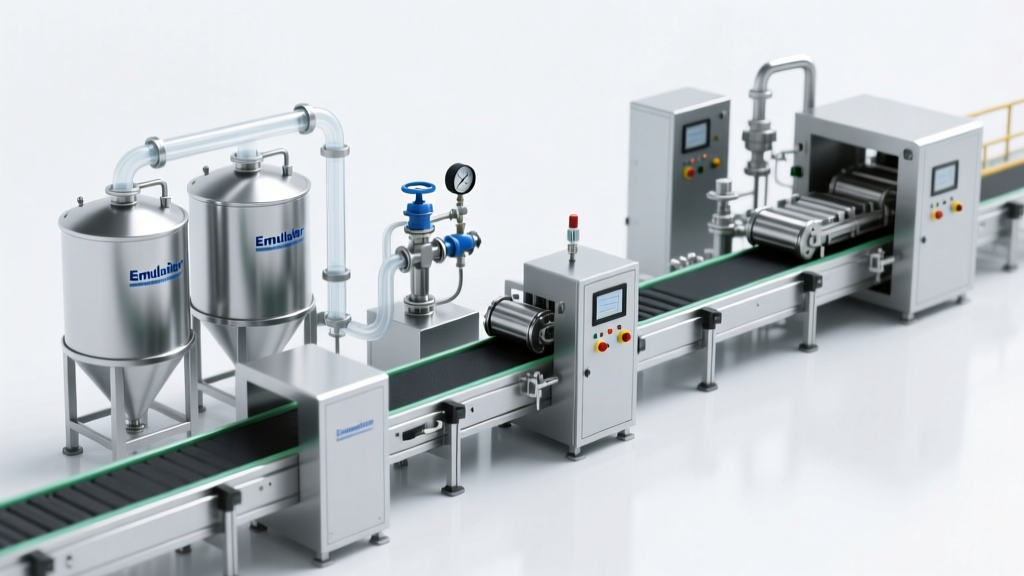
Types of Asphalt Emulsifier Factory Products
An asphalt emulsifier is a chemical additive that enables the stable blending of asphalt and water by reducing surface tension. These emulsifiers are essential in road construction, maintenance, and surface treatments, allowing for cold application methods that reduce energy consumption and emissions. The type of emulsifier used significantly affects compatibility, curing time, adhesion, and performance in various environmental and geological conditions.
Anionic Emulsifiers
Carrying a negative electrical charge, anionic emulsifiers are ideal for use with acidic aggregates like quartz, sandstone, and gravel. They are widely used in hot mix asphalt and base layer applications due to their reliability and cost-effectiveness.
Advantages
- Simplicity: Their straightforward chemical composition allows for efficient manufacturing and consistent quality control.
- Stability: Excellent compatibility with high-viscosity asphalt, resulting in long shelf life and reduced risk of premature breaking.
- Versatility: Suitable for a wide range of acidic mineral aggregates commonly found in natural deposits.
Limitations
- Limited adhesion to basic aggregates like limestone.
- Slower setting times compared to cationic types.
- Performance drops in high-humidity environments.
Best for: Base layers, chip seals, and regions with abundant acidic aggregates
Cationic Emulsifiers
Positively charged, cationic emulsifiers bond effectively with negatively charged basic aggregates such as limestone and dolomite. They are the go-to choice for high-performance paving projects where strong adhesion and fast curing are critical.
Advantages
- Superior Bonding: Forms strong chemical bonds with basic aggregates, enhancing pavement durability and resistance to stripping.
- All-Weather Workability: Performs reliably in damp or rainy conditions, making it ideal for projects with tight timelines.
- Controlled Setting: Offers customizable break times (rapid, medium, or slow set), allowing precise application control.
Limitations
- Higher production cost due to complex synthesis.
- Requires careful pH management during formulation.
- Potential incompatibility with certain acidic aggregates.
Best for: Surface courses, high-traffic roads, and areas with limestone-based subbases
Nonionic Emulsifiers
Neutral in charge, nonionic emulsifiers are not influenced by the electrical properties of aggregates. This makes them universally compatible and especially useful in specialized or sensitive applications where charge interactions must be avoided.
Advantages
- Universal Compatibility: Works with both acidic and basic aggregates without adverse reactions.
- Quick-Breaking Formulations: Ideal for fog seals, rejuvenators, and dust control where rapid evaporation is desired.
- Flexible Formulation: Stable across a broad range of asphalt-to-water ratios, enabling customized emulsion properties.
Limitations
- Weaker film strength compared to ionic types.
- Less effective in high-stress structural layers.
- Limited availability and higher cost in some markets.
Best for: Maintenance treatments, fog seals, recycling agents, and environmentally sensitive zones
Amphoteric (Zwitterionic) Emulsifiers
Advanced emulsifiers that can exhibit both positive and negative charges depending on pH. Though less common, they offer dynamic adaptability in complex or variable aggregate environments.
Advantages
- Adaptive Charge: Can switch between cationic and anionic behavior based on environmental conditions.
- High Compatibility: Suitable for mixed or unknown aggregate types.
- Innovative Applications: Used in smart emulsions and responsive paving systems.
Limitations
- Very high cost and limited production scale.
- Requires expert formulation and precise pH control.
- Niche market with limited technical support.
Best for: Complex urban projects, mixed aggregate zones, and research-driven applications
| Type | Charge | Aggregate Compatibility | Setting Speed | Best Application | Durability |
|---|---|---|---|---|---|
| Anionic | Negative | Acidic (sand, gravel) | Slow to Medium | Base layers, chip seals | Good |
| Cationic | Positive | Basic (limestone, dolomite) | Rapid to Slow (adjustable) | Surface courses, high-traffic roads | Excellent |
| Nonionic | Neutral | Universal | Very Fast | Fog seals, rejuvenation | Fair to Good |
| Amphoteric | Variable | Adaptive | Adjustable | Complex or mixed conditions | Very Good |
Expert Tip: When selecting an emulsifier, always conduct a compatibility test with the local aggregate and asphalt source. Even small variations in mineral composition can significantly impact emulsion stability and pavement performance.
Environmental Note: Nonionic and cationic emulsifiers are increasingly favored in eco-sensitive areas due to their lower environmental impact and ability to support cold-mix technologies that reduce carbon emissions.
Key Features of Asphalt Emulsifier Factory Products
Asphalt emulsifiers are essential additives in modern road construction and maintenance, enabling the efficient dispersion of asphalt in water to form stable emulsions. Selecting the right emulsifier is critical to achieving durable, high-performance asphalt mixtures under diverse environmental and operational conditions. The following key product features should be carefully evaluated to ensure reliability, compatibility, and long-term performance across various paving applications.
Stability and Shelf-Life
Anionic Emulsifiers
Known for their chemically stable molecular structure, anionic emulsifiers typically offer a longer shelf life—often exceeding 6 months when stored properly. Their negative charge contributes to strong repulsion forces between particles, reducing coalescence and phase separation over time. This makes them ideal for large-scale projects with extended material storage requirements.
Cationic Emulsifiers
Cationic emulsifiers, which carry a positive charge, demonstrate superior stability in cold climates. They remain effective at temperatures as low as 0°C, preventing premature breaking or gelling during winter storage and transport. This cold-weather resilience makes them a preferred choice in northern regions or seasonal construction cycles.
Proper storage conditions—such as maintaining temperatures between 5°C and 35°C, avoiding direct sunlight, and using sealed containers—can further extend the usable life of any emulsifier type.
Compatibility with Aggregates
The chemical interaction between emulsifiers and aggregates is a determining factor in adhesion, cohesion, and overall pavement durability. Mismatched combinations can lead to poor coating, stripping, or reduced bond strength.
| Emulsifier Type | Aggregate Compatibility | Common Applications |
|---|---|---|
| Anionic | Acidic aggregates (e.g., granite, quartzite) | Surface dressings, chip seals in warm climates |
| Cationic | Basic aggregates (e.g., limestone, basalt) | Hot and cold mix asphalt, tack coats, prime coats |
| Nonionic | Neutral or mixed aggregates | Specialized mixes, recycled asphalt pavements (RAP) |
Selecting the correct emulsifier based on aggregate chemistry ensures optimal coating efficiency, faster curing, and enhanced resistance to moisture damage.
Breaking and Setting Time
The breaking and setting behavior of asphalt emulsions directly affects workability, application speed, and final strength development. Emulsifiers are engineered to control the rate at which water evaporates and asphalt particles coalesce.
Quick-Breaking Emulsifiers
These emulsifiers promote rapid water release and asphalt particle aggregation, resulting in fast setting times (typically within 5–30 minutes). Ideal for surface treatments like seal coats and microsurfacing, where quick traffic reopening is essential. They minimize aggregate displacement and improve early strength gain.
Slow-Breaking Emulsifiers
Designed for longer workability, these emulsifiers delay the breaking process (up to several hours), allowing more time for mixing, spreading, and compaction. Perfect for large-scale road construction, cold recycling, and projects in hot, dry environments where extended work windows are necessary.
Viscosity and Temperature Range
Viscosity determines how easily an emulsifier can be dispersed in water and blended with asphalt. It also influences pumpability, spray application, and film formation on aggregates.
Advanced emulsifiers are formulated with temperature-responsive surfactants that adjust their activity based on ambient conditions, enhancing reliability across seasons.
Environmental Compliance and Sustainability
With increasing regulatory pressure and a growing emphasis on sustainable infrastructure, modern asphalt emulsifier factories are prioritizing eco-friendly formulations. These innovations help reduce environmental impact while maintaining or improving performance.
Many manufacturers now comply with international standards such as ISO 14001, EPA regulations, and EU REACH directives, offering certified environmentally responsible products.
Important: Always verify the technical data sheet (TDS) and safety data sheet (SDS) before selecting an emulsifier. Conduct compatibility tests with local aggregates and asphalt sources to ensure optimal performance. Using the wrong emulsifier can lead to premature pavement failure, increased maintenance costs, and environmental non-compliance.
Commercial Uses of Products from the Asphalt Emulsifier Factory
Asphalt emulsifiers are essential chemical agents that enable the dispersion of asphalt in water, creating stable emulsions used across a wide range of infrastructure applications. These versatile products play a critical role in modern road construction, maintenance, and rehabilitation, offering cost-effective, environmentally friendly, and durable solutions for both urban and rural paving projects.
Road Construction
Asphalt emulsifiers are fundamental in the production of cold mix asphalt, which allows for paving operations without the need for high-temperature mixing. This process significantly reduces energy consumption and emissions while improving worker safety.
- Facilitate strong adhesion between asphalt binder and aggregates, enhancing structural integrity
- Enable the use of recycled asphalt pavement (RAP), supporting sustainable construction practices
- Improve workability and compaction of asphalt mixtures in cooler climates
- Support rapid curing and early traffic opening, minimizing project downtime
Key benefit: Emulsified asphalt systems extend paving seasons and reduce dependency on hot-mix plants.
Road Maintenance and Repair
Cationic asphalt emulsifiers are widely used in asphalt crack fillers and pothole repair formulations due to their excellent adhesion and fast-setting properties. These materials are crucial for maintaining road safety and extending pavement life.
- Form the base of spray-injection and throw-and-roll pothole patching techniques
- Provide excellent tackiness for bonding with existing pavement surfaces
- Allow for all-weather application, including damp or rainy conditions
- Enable quick-curing repairs that can be trafficked within minutes
Pro tip: Polymer-modified emulsions offer enhanced elasticity and long-term crack resistance.
Surface Treatments
Slurry seals and chip seals rely on specially formulated asphalt additives containing anionic or cationic emulsifiers to create protective surface layers that enhance performance and appearance.
- Slurry seals use anionic emulsions to seal minor cracks and restore surface texture on low-to-medium traffic roads
- Chip seals utilize cationic emulsions for superior aggregate retention and skid resistance
- Extend pavement life by 5–7 years at a fraction of the cost of full-depth reconstruction
- Provide waterproofing that prevents moisture infiltration into the base layers
Cost advantage: Surface treatments can reduce lifecycle costs by up to 40% compared to conventional resurfacing.
Rural and Low-Traffic Roadworks
Asphalt emulsifiers are ideal for maintaining gravel and low-volume roads in rural areas. Note: The mention of "spray foam insulation" in the original text appears to be an error, as asphalt emulsifiers are not typically used in insulation applications.
- Enable dust control and surface stabilization on unpaved roads
- Support cost-effective maintenance programs for remote municipalities
- Facilitate easy application using standard distributor trucks and rollers
- Allow local crews to perform self-maintenance with minimal training
Sustainability angle: Emulsified systems reduce fuel use and carbon emissions by eliminating the need for heated materials.
Experimental and Special Projects
Advanced asphalt sealer formulations using specialized emulsifiers are employed in high-demand environments such as airport runways, industrial yards, and port facilities.
- Tailored emulsions withstand extreme loads from aircraft and heavy machinery
- Resist fuel and oil spills common in aviation and industrial settings
- Used in colored asphalt applications for pedestrian zones and bike paths
- Enable rapid runway repairs with minimal disruption to operations
Innovation spotlight: Nano-modified emulsifiers are being tested for self-healing pavement technologies.
Environmental and Safety Benefits
Beyond performance, asphalt emulsifiers contribute to greener infrastructure solutions.
- Reduce VOC emissions by eliminating the need for solvent-based cutbacks
- Lower energy consumption by up to 20% compared to hot-mix asphalt
- Improve worker safety with reduced exposure to fumes and high temperatures
- Support circular economy goals through increased use of recycled materials
Regulatory advantage: Emulsified asphalt often complies with strict environmental regulations in urban areas.
Industry Insight: When selecting emulsifiers for commercial projects, consider the charge type (cationic vs. anionic), setting time (rapid, medium, or slow), and polymer modification. Matching the emulsifier to the specific application ensures optimal performance, durability, and cost-efficiency. For critical infrastructure, always request third-party test reports and compliance certifications.
| Application Type | Emulsifier Type | Key Benefits | Typical Use Case |
|---|---|---|---|
| Road Construction | Cationic (slow-setting) | Strong adhesion, cold mix compatibility | New pavement, base layers |
| Pothole Repair | Cationic (rapid-setting) | Fast cure, all-weather application | Urban road maintenance |
| Slurry Seals | Anionic (medium-setting) | Dust control, crack sealing | Low-traffic roads |
| Chip Seals | Cationic (medium-setting) | Aggregate retention, skid resistance | Highway surface treatment |
| Special Projects | Polymer-modified cationic | High durability, chemical resistance | Airports, industrial zones |
Emerging Trends and Future Applications
- Smart Emulsions: Self-healing and temperature-responsive formulations are under development for next-gen pavements
- Green Chemistry: Bio-based emulsifiers derived from renewable resources are gaining traction
- Digital Integration: Emulsifier performance data is being integrated into pavement management systems
- 3D Paving: Emulsified binders are being explored for robotic and automated paving systems
- Urban Heat Island Mitigation: Reflective emulsified coatings help reduce surface temperatures
How to Choose Products from the Asphalt Emulsifier Factory
Selecting the right asphalt emulsifier is a critical decision that directly impacts the quality, durability, and performance of road construction and maintenance projects. As a buyer, it's essential to evaluate multiple technical, environmental, and logistical factors to ensure compatibility with your specific application. This guide outlines the key considerations when sourcing asphalt emulsifiers from a manufacturer, helping you make informed, cost-effective, and compliant choices.
Important Note: Choosing the wrong emulsifier can lead to poor adhesion, premature pavement failure, or extended curing times. Always consult with technical experts and conduct compatibility testing before large-scale application.
1. Aggregate Type Compatibility
The chemical interaction between the asphalt emulsifier and the aggregate is fundamental to achieving strong bonding and long-term pavement integrity. Aggregates are classified based on their mineral composition into basic, neutral, or acidic types, each requiring a specific emulsifier charge for optimal performance.
- Basic Aggregates (e.g., limestone, dolomite): These carry a negative surface charge and bond best with cationic emulsifiers, which have a positive charge. This electrostatic attraction enhances adhesion and reduces stripping.
- Acidic Aggregates (e.g., granite, quartzite): With a positive surface charge, these perform better with anionic emulsifiers (negatively charged), ensuring effective coating and cohesion.
- Neutral Aggregates (e.g., sandstone, gravel): When the charge is balanced, nonionic emulsifiers are recommended as they are not influenced by electrical charges and provide reliable performance across variable conditions.
Expert Tip: Conduct a simple adhesion test in the lab by mixing the emulsifier with your local aggregate. Observe coating uniformity and resistance to water immersion to confirm compatibility before full-scale use.
2. Application and Environmental Conditions
Environmental factors significantly influence emulsifier performance. Selecting a product tailored to your region’s climate ensures proper breaking, setting, and curing behavior.
- Temperature: In hot climates, use slower-setting emulsifiers to extend workability. In cooler regions, faster-breaking types help prevent washout and improve early strength gain.
- Humidity and Moisture: High ambient moisture can delay emulsion breaking. Choose emulsifiers formulated for damp conditions or consider additives that accelerate curing.
- Seasonal Variability: For projects spanning multiple seasons, consider using modified emulsifiers with broad temperature tolerance or adjust formulations accordingly.
3. Project-Specific Requirements
Different construction methods and pavement types demand emulsifiers with specific setting characteristics and performance profiles.
- Quick-Breaking Emulsifiers: Ideal for chip seals, slurry seals, and cold mix overlays where rapid setting is required to open traffic quickly.
- Medium- to Slow-Breaking Emulsifiers: Suitable for cold in-place recycling (CIR), soil stabilization, or premix applications where extended workability is needed for mixing and compaction.
- Workability and Mixing Time: Assess the emulsifier’s viscosity and stability to ensure it can be evenly mixed with aggregates without premature breaking.
- Curing Time: Match the curing profile to your project timeline—faster curing reduces traffic disruption, while slower curing allows for better compaction in thick layers.
| Project Type | Recommended Emulsifier Type | Setting Speed | Key Benefit |
|---|---|---|---|
| Chip Sealing | Cationic (CSS-1h, CRS-1) | Fast | Rapid setting, excellent aggregate retention |
| Slurry Seal | Anionic (SS-1, SS-1h) | Medium | Smooth finish, good workability |
| Cold In-Place Recycling (CIR) | Cationic (CMS-2, CRS-2) | Slow | Extended mixing time, deep penetration |
| Prime Coat | Quick-Setting Anionic/Cationic | Fast | Strong base adhesion, moisture resistance |
| Soil Stabilization | Modified Cationic | Medium-Slow | Enhanced cohesion, dust control |
4. Regulatory and Environmental Compliance
Compliance with local, regional, and national regulations is non-negotiable. Ensure the asphalt emulsifier meets all environmental and safety standards.
- Verify that the product is free from hazardous solvents or toxic additives restricted by environmental agencies.
- Check for compliance with standards such as ASTM D2397 (Standard Specification for Emulsified Asphalt), EN 13808, or local DOT requirements.
- Assess the manufacturer’s emissions profile, especially for volatile organic compounds (VOCs), and ensure proper disposal protocols are documented.
- Consider sustainability certifications or bio-based emulsifiers if your project emphasizes green construction practices.
5. Technical Support and Supply Chain Reliability
Even the best emulsifier is only as effective as the support behind it. Partnering with a responsive and knowledgeable manufacturer can make a significant difference in project success.
- Technical Assistance: Look for manufacturers that offer on-site support, formulation customization, troubleshooting, and training for field crews.
- Product Consistency: Reliable factories maintain strict quality control to ensure batch-to-batch uniformity, which is critical for predictable performance.
- Availability and Logistics: Confirm the manufacturer can deliver the required volume on schedule, especially for large or time-sensitive projects. Evaluate their distribution network and storage capabilities.
- Documentation: Request full technical data sheets (TDS), safety data sheets (SDS), and test reports to validate claims and support quality assurance processes.
Procurement Tip: Establish a long-term partnership with a trusted emulsifier supplier. This ensures consistent product quality, better pricing, and priority support during peak construction seasons.
Final Recommendations
- Always conduct a pilot trial before full-scale application to verify performance under real-world conditions.
- Maintain open communication with the manufacturer’s technical team throughout the project lifecycle.
- Store emulsifiers according to manufacturer guidelines to preserve stability and shelf life.
- Train field personnel on proper handling, mixing ratios, and application techniques to avoid common mistakes.
- Document all product batches and application parameters for quality control and future reference.
Choosing the right asphalt emulsifier from a factory involves more than just price comparison—it requires a strategic evaluation of technical compatibility, environmental conditions, regulatory standards, and supplier reliability. By following this guide, buyers can ensure optimal pavement performance, reduce rework, and enhance the longevity of their infrastructure projects.
Frequently Asked Questions About Asphalt Emulsifiers and Emulsified Asphalt
Q1: What are asphalt emulsifiers made of?Asphalt emulsifiers are primarily composed of specialized chemical agents known as surfactants (surface-active agents). These surfactants play a crucial role in the emulsification process by reducing the surface tension between asphalt binder and water, enabling the two otherwise immiscible substances to form a stable dispersion.
Surfactants used in asphalt emulsifiers are typically derived from either natural or synthetic fatty acids, amines, or other organic compounds. While their exact chemical structures may vary—ranging from polyamine-based to lignin derivatives or fatty acid soaps—they all function similarly by forming a protective film around asphalt droplets suspended in water, preventing coalescence and ensuring uniform dispersion.
The choice of surfactant influences key properties such as emulsion stability, setting time, and compatibility with aggregates, making formulation an essential aspect of performance optimization in road construction applications.
Q2: What are the two common types of asphalt emulsifiers?The two most widely used types of asphalt emulsifiers are cationic and anionic, classified based on the electrical charge of the surfactant molecule in the aqueous solution.
| Property | Cationic Emulsifiers | Anionic Emulsifiers |
|---|---|---|
| Electrical Charge | Positive (+) | Negative (–) |
| Aggregate Compatibility | Bond well with acidic aggregates (e.g., granite, quartzite) | Best suited for basic or alkaline aggregates (e.g., limestone, dolomite) |
| Adhesion Mechanism | Opposite charge attraction enhances bonding with negatively charged aggregate surfaces | Requires compatible surface chemistry; may need additives for improved adhesion |
| Common Applications | Chip seals, slurry seals, cold recycling, tack coats | Less common today; used in specific regional applications with compatible materials |
Cationic emulsifiers have become more prevalent in modern paving due to their superior adhesion with a wider range of aggregates and faster breaking characteristics. Anionic emulsifiers, while still used in certain regions, generally require longer curing times and are more sensitive to water hardness and environmental conditions.
Q3: What are the advantages of using asphalt emulsion?Asphalt emulsions offer numerous technical, economic, and environmental benefits over traditional hot-mix asphalt, making them ideal for a variety of paving and maintenance applications:
- No Preheating Required: Unlike conventional asphalt, emulsions do not need to be heated to high temperatures during mixing or application, significantly reducing energy consumption and fuel costs.
- Cold Application: Can be applied at ambient temperatures, enabling construction in cooler climates and extending the paving season throughout the year.
- Environmental Benefits: Lower emissions of greenhouse gases and volatile organic compounds (VOCs) due to reduced heating requirements.
- Versatility: Suitable for both hot and cold weather conditions, as well as high- and low-humidity environments, allowing for year-round usability.
- Improved Safety: Reduced fire risk and worker exposure to fumes compared to hot asphalt handling.
- Ease of Use: Simplified mixing and spraying processes make them ideal for chip seals, slurry seals, microsurfacing, tack coats, and soil stabilization.
- Cost-Effective Maintenance: Enables economical road rehabilitation techniques like crack sealing, patching, and surface treatments without full reconstruction.
These advantages make asphalt emulsions a sustainable and efficient choice for modern infrastructure maintenance and construction projects.
Q4: What are some common problems with emulsified asphalt?Despite their many benefits, emulsified asphalt systems can encounter performance issues if not properly formulated, applied, or matched with site-specific conditions. Common problems include:
- Improper Emulsifier Selection: Using the wrong type (cationic vs. anionic) can lead to poor adhesion, delayed breaking, or stripping from the aggregate surface.
- Incompatible Aggregates: Mismatched charge between emulsifier and aggregate (e.g., cationic emulsion with highly basic limestone) can reduce bonding strength and durability.
- Poor-Quality Emulsion: Inconsistent particle size, incorrect pH, or inadequate surfactant concentration can result in premature breaking or instability during storage and transport.
- Incorrect Mixing Procedures: Over- or under-mixing can affect coating efficiency, setting time, and final strength development.
- Low-Quality Aggregates: Dirty, dusty, or moisture-laden aggregates interfere with emulsion-aggregate interaction, leading to weak bonds and potential raveling.
- Environmental Factors: Extreme temperatures, high humidity, or rain shortly after application can delay curing, cause wash-off, or lead to inconsistent performance.
- Application Errors: Incorrect spray rates, improper surface preparation, or inadequate compaction compromise the integrity of the final layer.
To avoid these issues, it is critical to conduct proper mix design testing, select compatible materials, follow manufacturer guidelines, and ensure trained personnel handle installation under favorable weather conditions.