When it comes to tackling everyday home repairs, few tools are as essential as a reliable drill. Whether you're hanging shelves, assembling furniture, or installing fixtures, your choice between a corded and cordless drill can significantly affect how smoothly the job goes. While both types have loyal users, each brings distinct advantages and limitations that matter in practical, real-world scenarios. Understanding these differences helps ensure you pick the right tool—not just based on trends, but on actual performance, convenience, and durability.
Power and Performance: The Core Difference
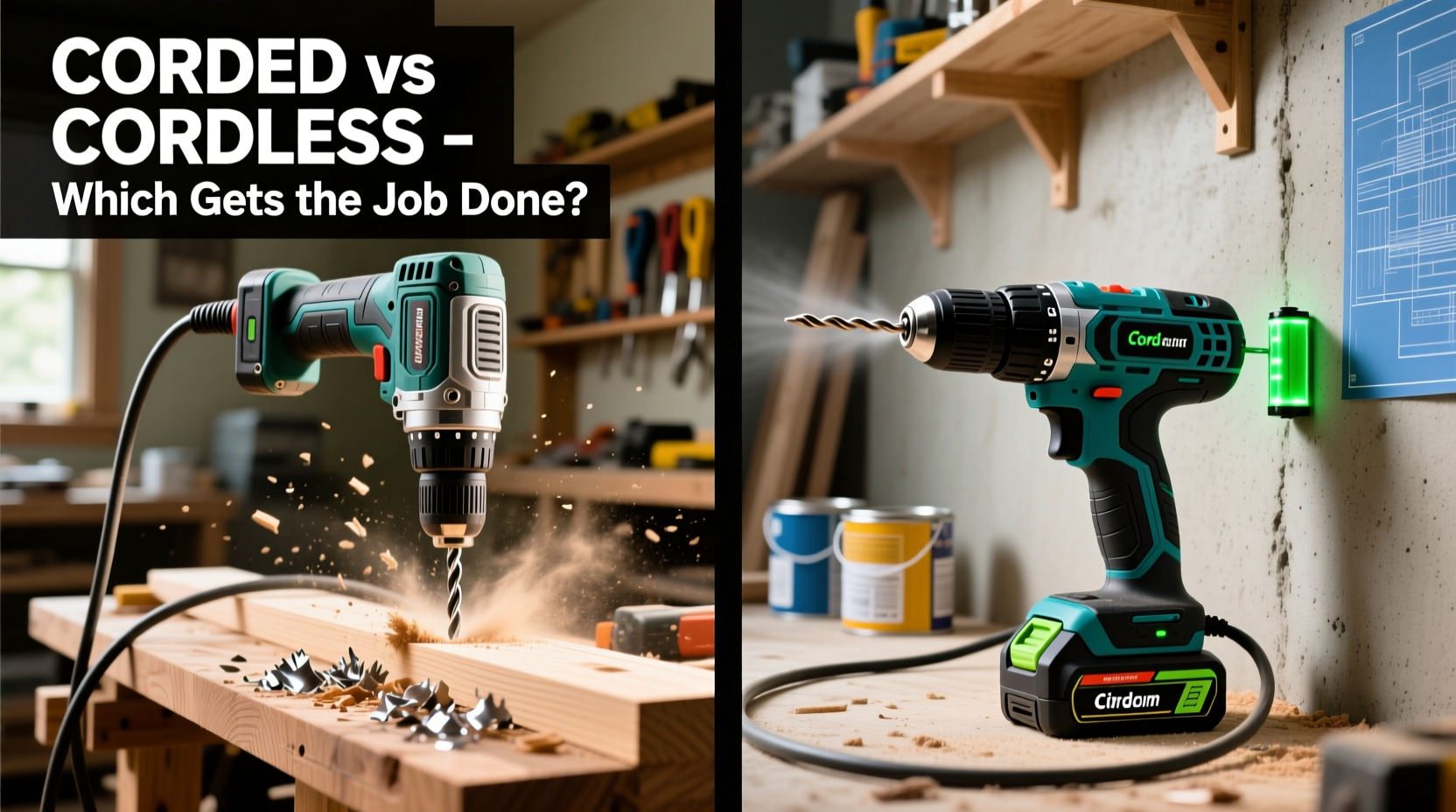
The most fundamental distinction between corded and cordless drills lies in their power delivery. Corded drills plug directly into an electrical outlet, providing a continuous and stable supply of energy. This allows them to deliver consistent torque and rotational speed without any drop-off over time. For tasks requiring sustained high power—such as drilling through masonry, hardwood, or thick metal—a corded model often outperforms its battery-powered counterpart.
Cordless drills, on the other hand, rely on rechargeable lithium-ion batteries (typically 12V, 18V, or 20V Max). While modern cordless models have closed the performance gap dramatically, they still face limitations under heavy load. As the battery drains, especially during prolonged use, you may notice a reduction in speed and torque. Some advanced brushless motors help mitigate this, but physics remains a factor: no battery can match the uninterrupted energy flow of a wall socket.
“Corded drills remain unmatched for industrial-grade applications where constant high torque is non-negotiable.” — James Holloway, Professional Electrician with 25 years of field experience
For typical household tasks like driving screws into drywall or pre-drilling holes in softwood, a quality cordless drill handles the work effortlessly. But when pushing beyond light-duty jobs—say, installing deck posts or working with lag bolts—many DIYers find themselves wishing for the raw, unwavering power of a corded unit.
Tip: If using a cordless drill for heavy tasks, allow short breaks between operations to prevent motor overheating and maintain peak performance.Portability and Convenience
Where corded drills fall short is mobility. A power cord limits your range and requires access to an outlet, which isn’t always available in garages, basements, or outdoor areas. Extension cords add flexibility but introduce tripping hazards and voltage drop over long distances, potentially reducing efficiency.
Cordless drills excel here. Their freedom from cords makes them ideal for overhead work (like mounting ceiling fans), tight spaces (inside cabinets or crawl spaces), and mobile projects around the yard. You’re not tethered to a single spot—you can move fluidly from room to room, ladder to roof, without rewiring your workflow.
This independence also enhances safety. Without trailing wires, there’s less risk of accidental disconnection or cutting through the cord while operating the tool. In multi-story homes or unfinished spaces where outlets are sparse, a cordless drill becomes not just convenient, but necessary.
Real Example: Installing Wall-Mounted Bookshelves
Consider Sarah, a homeowner installing floating bookshelves across three rooms. She started with her older corded drill but quickly grew frustrated by the need to unplug, drag the extension cord, and reposition every time she moved to a new wall. After switching to her 18V cordless model, she completed the remaining installations in half the time. No more tripping over cords, no hunting for outlets—just steady progress from one stud to the next.
Her only hiccup came when she reached the third room and realized her battery was nearly depleted. Fortunately, she had a spare charged and swapped it within seconds. This highlights a key trade-off: ultimate convenience depends on proper battery management.
Battery Life and Long-Term Costs
One of the biggest misconceptions about cordless drills is that they’re cheaper upfront and easier to maintain. While entry-level cordless kits are widely available at competitive prices, long-term ownership involves recurring costs—primarily replacement batteries.
Lithium-ion batteries degrade over time, typically lasting 2–5 years depending on usage and charging habits. Once capacity drops below 70%, runtime suffers noticeably. Replacing a high-voltage battery can cost $50–$150, sometimes approaching the price of a new corded drill. Additionally, if your brand-specific battery platform becomes discontinued, future compatibility may be an issue.
Corded drills, by contrast, have no batteries to replace. They draw power directly from the grid, eliminating ongoing consumable costs. Maintenance usually boils down to occasional brush replacements (in brushed models) and keeping the chuck clean. Over a decade, this reliability translates into lower total cost of ownership.
“Many homeowners underestimate how often they’ll need backup batteries until they’re halfway through a tiling project and the drill dies.” — Marcus Tran, Home Renovation Contractor
Comparative Overview: Corded vs Cordless Drills
| Feature | Corded Drill | Cordless Drill |
|---|---|---|
| Power Output | Consistent, high torque; unlimited runtime | Varies with battery charge; may reduce under load |
| Mobility | Restricted by cord length and outlet access | Full freedom of movement; ideal for remote areas |
| Battery/Runtime | No battery needed; runs indefinitely | Limited by charge; 20–60 minutes average per battery |
| Initial Cost | $40–$80 (no recurring parts) | $100–$200+ (includes batteries/charger) |
| Lifespan | 10+ years with minimal wear | 5–8 years (battery degradation affects usability) |
| Best For | Heavy-duty drilling, workshop use, fixed locations | General repairs, overhead work, portable tasks |
When Each Tool Shines: Practical Use Cases
Choosing between corded and cordless isn't about declaring one universally superior—it's about matching the tool to your specific needs.
Corded Drills Excel When:
- You're doing extended drilling sessions (e.g., building a timber frame or installing multiple outlets).
- Working with tough materials like concrete, steel, or dense hardwoods.
- Operating from a fixed location like a garage workbench or indoor workshop.
- Budget constraints make long-term battery replacement undesirable.
Cordless Drills Are Ideal For:
- Light to medium household repairs: hanging pictures, assembling furniture, installing curtain rods.
- Situations requiring overhead or awkward-angle drilling (e.g., mounting a TV or fan).
- Outdoor projects where outlets aren't accessible.
- Quick fixes around the house without setup hassle.
Step-by-Step Guide: Choosing the Right Drill for Your Needs
- Assess Your Typical Projects: List the last five repairs you made. Were they quick fixes or involved deep drilling? Did you run out of battery?
- Evaluate Power Requirements: If you frequently drill into masonry or thick wood, prioritize power over portability.
- Check Your Workspace: Do you have easy access to outlets? Is your garage wired with multiple sockets?
- Consider Battery Ecosystem: If you already own cordless tools from a major brand (DeWalt, Milwaukee, Ryobi), adding another tool in the same voltage system saves money.
- Determine Budget Scope: Factor in not just purchase price, but potential future battery replacements and charger compatibility.
- Test Before Committing: Visit a hardware store and hold both types. Feel the weight, trigger response, and ergonomics.
Frequently Asked Questions
Can a cordless drill handle the same jobs as a corded one?
Modern high-voltage cordless drills (18V/20V Max with brushless motors) can perform nearly all common household tasks traditionally done by corded models. However, for continuous, high-torque applications—especially in commercial or construction settings—corded drills still offer superior consistency and endurance.
Are corded drills becoming obsolete?
No. While cordless technology has advanced rapidly, corded drills remain relevant due to their simplicity, reliability, and zero dependency on batteries. They’re particularly valued in workshops, rental fleets, and professional environments where downtime and consumables matter.
How do I extend the life of my cordless drill battery?
Charge batteries before they fully deplete, avoid leaving them in hot environments (like a car trunk), and remove them from the charger once full. Storing at around 40–60% charge when not in use for weeks helps preserve cell health.
Final Recommendation: Build a Smart Toolkit
For most homeowners, relying solely on one type of drill limits capability. The optimal approach is strategic diversification. Start with a mid-range cordless drill (18V with two batteries and a fast charger)—this covers 90% of routine repairs with maximum convenience. Then, supplement it with a dedicated corded drill for intensive weekend projects or basement renovations where power and endurance trump portability.
This dual-tool strategy gives you adaptability without compromise. You’ll avoid frustration when the battery dies mid-job, yet still enjoy the ease of wireless operation for simple fixes. Brands like Bosch, Makita, and DeWalt now offer hybrid ecosystems where batteries and chargers are interchangeable across dozens of tools, making expansion seamless.
Checklist: Choosing Your Home Repair Drill
- ☐ Identify your most common repair tasks
- ☐ Determine whether outlets are easily accessible in your workspace
- ☐ Decide on voltage/battery platform if going cordless
- ☐ Consider buying extra batteries or a second charger
- ☐ Test grip comfort and weight balance in-store
- ☐ Prioritize brushless motors for longer runtime and efficiency
- ☐ Keep a corded backup for high-demand situations
Conclusion
The debate between corded and cordless drills isn’t about finding a single winner—it’s about understanding what “getting the job done” really means in your home. For sheer power and longevity, corded drills stand strong. For flexibility and ease of use, cordless models dominate. The smartest solution? Combine both. Equip yourself with the right tool for each task, and you’ll finish projects faster, safer, and with greater satisfaction.
🚀 Ready to upgrade your toolkit? Assess your last three repair challenges and decide: did lack of power or lack of mobility slow you down? Share your experience or ask questions in the comments—let’s build smarter homes together.