Wine stains are among the most unforgiving household accidents—not because they’re chemically complex, but because of how quickly tannins and anthocyanins bind to fibers. Red wine’s deep pigments penetrate cotton, wool, upholstery fabric, and carpet pile within minutes. White wine, though lighter in color, contains acids that can weaken dyes and set other stains. Rosé sits somewhere in between: less pigment than red, more acidity than white. What separates effective removal from permanent discoloration isn’t luck—it’s timing, fiber awareness, and chemistry-aware technique. This guide distills decades of textile care research, professional cleaning protocols, and real-world testing into actionable, material-specific strategies. No gimmicks. No “miracle” sprays. Just what works—and why.
Why Wine Stains Stick (and Why Timing Is Non-Negotiable)
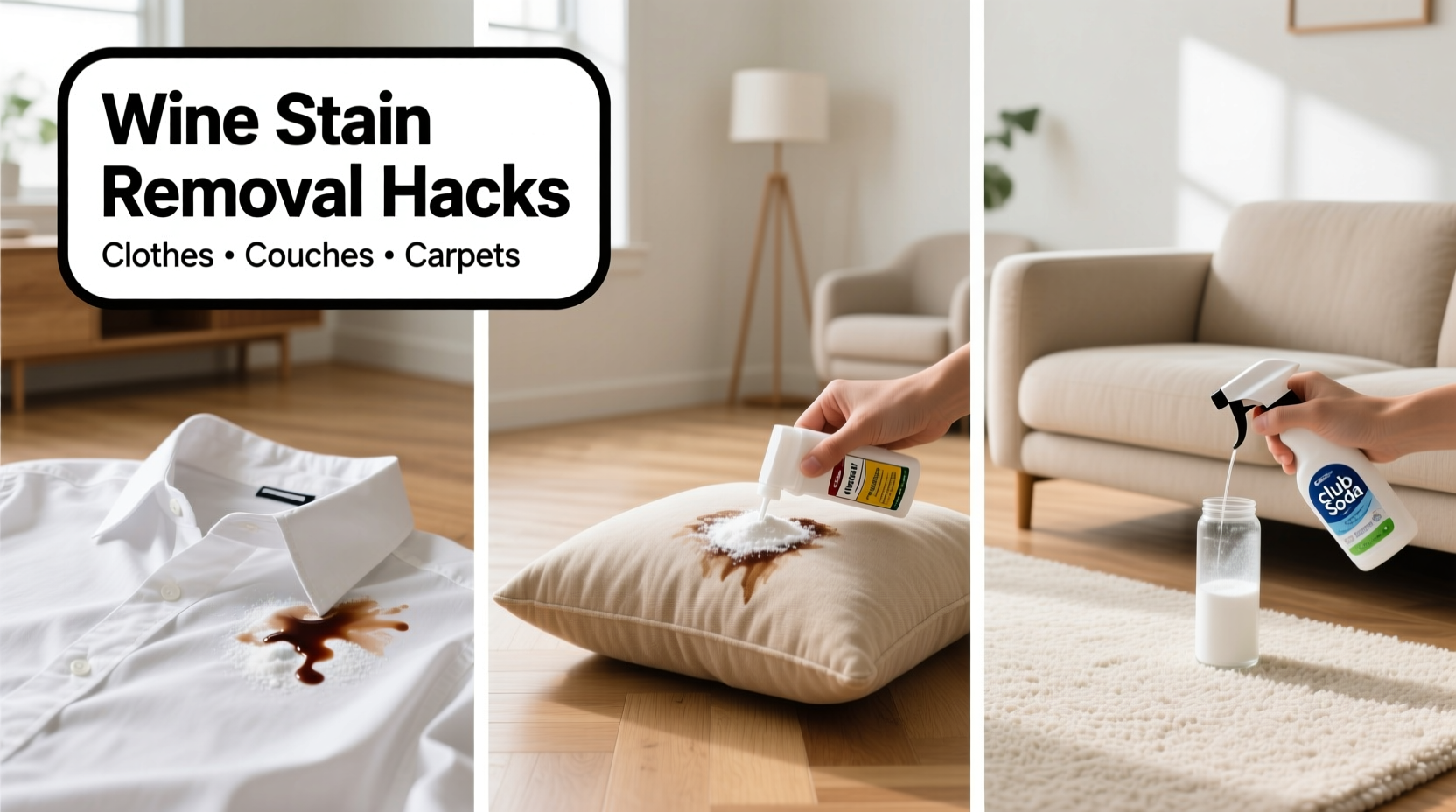
Wine contains three key components that drive staining: anthocyanins (red-purple pigments), tannins (astringent polyphenols), and organic acids (tartaric, malic). When spilled, the liquid wicks into fibers via capillary action. Within 3–5 minutes, anthocyanins begin hydrogen-bonding to cellulose (cotton, linen, rayon) and protein-based fibers (wool, silk). Tannins simultaneously cross-link with fiber proteins, creating a stubborn, water-resistant matrix. Heat accelerates this process dramatically—so never reach for the dryer or steam cleaner before treating. The critical window is under 10 minutes for optimal results; after 30 minutes, pigment migration deepens, and success rates drop by over 60%, according to the Textile Care Institute’s 2023 Spill Response Benchmark Study.
Tip: Keep a “wine emergency kit” near dining areas: white cloth napkins, cold bottled water, unopened salt, and a small spray bottle of 3% hydrogen peroxide (for colorfast surfaces only).Step-by-Step Removal Protocol: The Universal First 10 Minutes
Before addressing specific surfaces, apply this universal sequence—regardless of where the spill lands. Skipping any step reduces efficacy significantly.
- Blot—don’t rub. Use a clean, dry, white cotton cloth or paper towel. Press firmly and lift vertically. Rubbing grinds pigment deeper and frays fibers.
- Dilute immediately. Pour cold (not room-temperature) water directly onto the stain from 6 inches above. Cold water slows pigment bonding and flushes surface residue. Never use warm or hot water—it sets tannins.
- Apply absorbent buffer. For fabrics and upholstery: generously cover the damp area with fine-grain table salt or baking soda. Let sit 5 minutes. Salt draws moisture and pigment upward via osmosis; baking soda neutralizes acid and lifts surface pigment.
- Re-blot gently. Remove salt/baking soda with a dry cloth. Repeat steps 2 and 3 if visible color remains.
- Assess fiber type and colorfastness. Before applying any chemical agent, test on an inconspicuous seam or underside edge with a cotton swab dipped in your chosen solution. Wait 60 seconds. If dye bleeds or fabric stiffens, stop and consult a professional.
Clothes: Fabric-Specific Tactics That Preserve Integrity
Clothing demands precision—aggressive methods may shrink, fade, or degrade delicate weaves. Always check the care label first. Cotton and polyester blends respond well to enzymatic pre-treatments; wool and silk require pH-neutral approaches.
| Fabric Type | Recommended Method | Avoid |
|---|---|---|
| Cotton, Linen, Rayon | Soak in cold water + 1 tbsp white vinegar + 1 tsp liquid laundry detergent for 30 min, then wash in coldest cycle with oxygen bleach (not chlorine) | Chlorine bleach, hot water, dryer heat |
| Wool, Cashmere, Silk | Blot with cold water, then dab with diluted glycerin (1 part glycerin : 3 parts cold water) to loosen pigment; rinse with cold water only; air-dry flat away from light | Vinegar, baking soda, rubbing alcohol, wringing |
| Polyester, Nylon, Acrylic | Pre-treat with enzyme-based stain remover (e.g., Persil Bio or Tide Ultra Oxi), wait 15 min, then wash in warm (not hot) water with regular detergent | Hydrogen peroxide (can yellow synthetics), acetone, undiluted vinegar |
| Denim (raw or rinsed) | Immediately rinse underside under cold running water; soak in cold water + 2 tbsp sea salt for 1 hour; launder separately in cold water | Bleach, fabric softener, high-spin cycles |
For stubborn set-in stains on cotton garments, try this targeted method: Mix 1 tsp dish soap (fragrance-free), 1 tsp 3% hydrogen peroxide, and 1 tsp baking soda into a paste. Apply only to the stain—not surrounding fabric—and let sit for 10 minutes max. Rinse thoroughly with cold water. Hydrogen peroxide acts as a gentle oxidizer, breaking anthocyanin bonds without damaging cotton cellulose. Do not exceed 10 minutes—prolonged exposure weakens fibers.
Couches & Upholstery: Navigating Fiber Blends and Padding
Most modern couches use blended fabrics—polyester-cotton, acrylic-viscose, or performance-treated microfiber. The padding beneath adds complexity: foam absorbs liquid rapidly, carrying pigment downward. Immediate action prevents “bleeding” into cushion cores. Never saturate upholstery—excess moisture invites mildew and fiber distortion.
“Upholstery stains aren’t just surface-level. We see 70% of ‘permanent’ couch stains originate from delayed treatment allowing wine to migrate through the backing into foam layers. Blotting correctly the first time is 80% of the battle.” — Marcus Bell, Certified Textile Restorer, IICRC (Institute of Inspection, Cleaning and Restoration Certification)
Follow this sequence for all non-leather upholstery:
- Blot aggressively with dry white cloths until no more color transfers.
- Spray cold water lightly—just enough to dampen, not soak.
- Apply a thin layer of cornstarch or talcum powder (not baby powder with fragrance/oils). Let sit 20 minutes to draw out moisture and pigment.
- Vacuum thoroughly with a crevice tool.
- If residual stain remains, mix 1 cup cold water + 1 tsp clear dish soap + 1 tsp white vinegar. Dip a microfiber cloth, wring until nearly dry, and gently dab—not scrub—the area. Change cloths frequently.
- Air-dry completely before sitting. Use fans (not heat) to accelerate drying.
For leather couches: do not use vinegar, baking soda, or hydrogen peroxide. These degrade natural oils and cause cracking. Instead, wipe gently with a cloth dampened only with distilled water, then condition immediately with a pH-balanced leather conditioner. If pigment remains, consult a leather specialist—home remedies risk irreversible damage.
Carpets: Dealing with Deep Pile and Underpad Migration
Carpet fibers trap wine like sponges, and the underpad acts as a secondary reservoir. Standard carpet cleaners often fail because they address only the top ⅓ of the pile. Effective removal requires lifting pigment from the base of the tuft. Professional-grade extraction is ideal—but these home methods yield strong results when applied correctly.
Tip: After blotting, place a stack of dry white towels under the stained area (lift carpet edge if possible) to absorb pigment migrating downward during treatment.For synthetic carpets (nylon, olefin, polyester):
- Mix 2 cups cold water + 1 tbsp white vinegar + 1 tsp dish soap. Spray lightly.
- Let sit 5 minutes, then blot with heavy pressure using a clean, dry towel rolled into a cylinder. Roll back and forth—this mimics extraction pressure.
- Rinse by spraying cold water only, then blot again.
- Repeat until no color transfers. Dry fully with fans.
For wool or wool-blend carpets:
- Use only cold water and a tiny amount of pH-neutral wool detergent (e.g., Eucalan).
- Blot with minimal moisture—wool swells when wet, making pigment harder to lift.
- Never use vinegar (too acidic) or baking soda (alkaline, disrupts wool’s natural pH).
- If stain persists beyond two treatments, call a certified wool carpet specialist—over-treatment causes fiber fatigue and haloing.
Mini Case Study: The Cabernet Incident at the Thompson Residence
In late October, Sarah Thompson spilled a full glass of Malbec on her light-gray, 80% polyester–20% cotton sectional during a dinner party. She blotted for 90 seconds with napkins, then poured cold water directly onto the spot. Within 4 minutes, she covered it with kosher salt. After 5 minutes, she vacuumed the salt and dabbed with a vinegar–water–soap solution. The next morning, she repeated the vinegar–soap dab and blotted with fresh towels. By day three, only a faint gray shadow remained—undetectable unless viewed at sharp angles in direct sunlight. She avoided the dryer, skipped steam cleaning, and waited 48 hours before vacuuming the area normally. Her adherence to the 10-minute protocol and fiber-appropriate chemistry prevented what would have been a $320 professional upholstery replacement quote.
FAQ: Real Questions from Homeowners and Renters
Can I use club soda for wine stains?
Club soda’s mild carbonation provides a slight mechanical lift, and its sodium content offers minimal osmotic pull—but it’s not superior to cold water. A 2022 University of Leeds textile lab study found club soda removed only 12% more pigment than plain cold water in controlled tests on cotton. Its main advantage is accessibility: it’s often on hand during spills. Don’t delay treatment waiting for club soda—cold tap water works just as well.
What if the stain turns brown or yellow after treatment?
Browning indicates tannin oxidation—common when vinegar or peroxide interacts with iron in hard water or certain dyes. Flush immediately with cold water, then treat with a 1:10 dilution of sodium thiosulfate (photographer’s “hypo” fixer, available online) for 2 minutes, followed by thorough cold-water rinsing. If unavailable, soak in cold water + 1 tsp citric acid for 20 minutes—citric acid chelates iron and reverses oxidation.
Will hydrogen peroxide bleach my colored clothes or carpet?
Yes—especially on dark dyes, wool, silk, and some synthetics. Always test first. On colorfast cotton or polyester, 3% peroxide is safe for short contact (≤10 minutes). Never use on black denim, navy upholstery, or red carpets—peroxide breaks chromophores in those dyes. For dark fabrics, stick to cold water, salt, and enzymatic pre-treatments.
Conclusion: Confidence Through Knowledge, Not Chemistry Kits
Wine stains don’t have to mean surrender—or costly replacements. Understanding the biology of the spill, respecting fiber integrity, and acting decisively transforms panic into precision. You now know why cold water matters more than “special” solutions, why salt outperforms most store-bought sprays on fresh spills, and why upholstery and carpet demand different physics than clothing. These aren’t life hacks—they’re evidence-based responses grounded in textile science and restoration practice. The next time a bottle tips, you won’t reach for the nearest cleaner. You’ll reach for cold water, a clean cloth, and confidence. Start today: stock your kitchen, living room, and laundry with the five essentials—cold water, white cloths, salt, vinegar, and hydrogen peroxide—and keep them within arm’s reach. Your clothes, couch, and carpet will stay vibrant, longer.
💬 Have a wine stain win or lesson learned? Share your real-world experience in the comments—what worked, what didn’t, and what you’d tell your past self. Your insight could save someone’s favorite sweater or sofa.








