There’s nothing more disheartening than stepping outside on a crisp winter morning to find your cheerful inflatable Santa lying flat on the lawn like a deflated balloon. You plug it in every evening, watch it light up with festive pride, only to discover it limp and lifeless by dawn. What’s going wrong? Is it the cold weather? A manufacturing flaw? Or something you’re doing—or not doing—during setup?
Inflatable holiday decorations are beloved for their ease of use, vibrant displays, and whimsical charm. But when they deflate overnight, they become more of a frustration than a festive feature. The good news: most causes of overnight deflation are fixable. Whether the culprit is temperature fluctuations, tiny punctures, faulty seams, or improper anchoring, understanding the root issue is the first step toward a fully inflated, reliably upright Santa.
This guide breaks down the science behind inflation stability, identifies common failure points, and provides practical solutions so your holiday display stays jolly all season long.
How Inflatable Decorations Work: The Basics
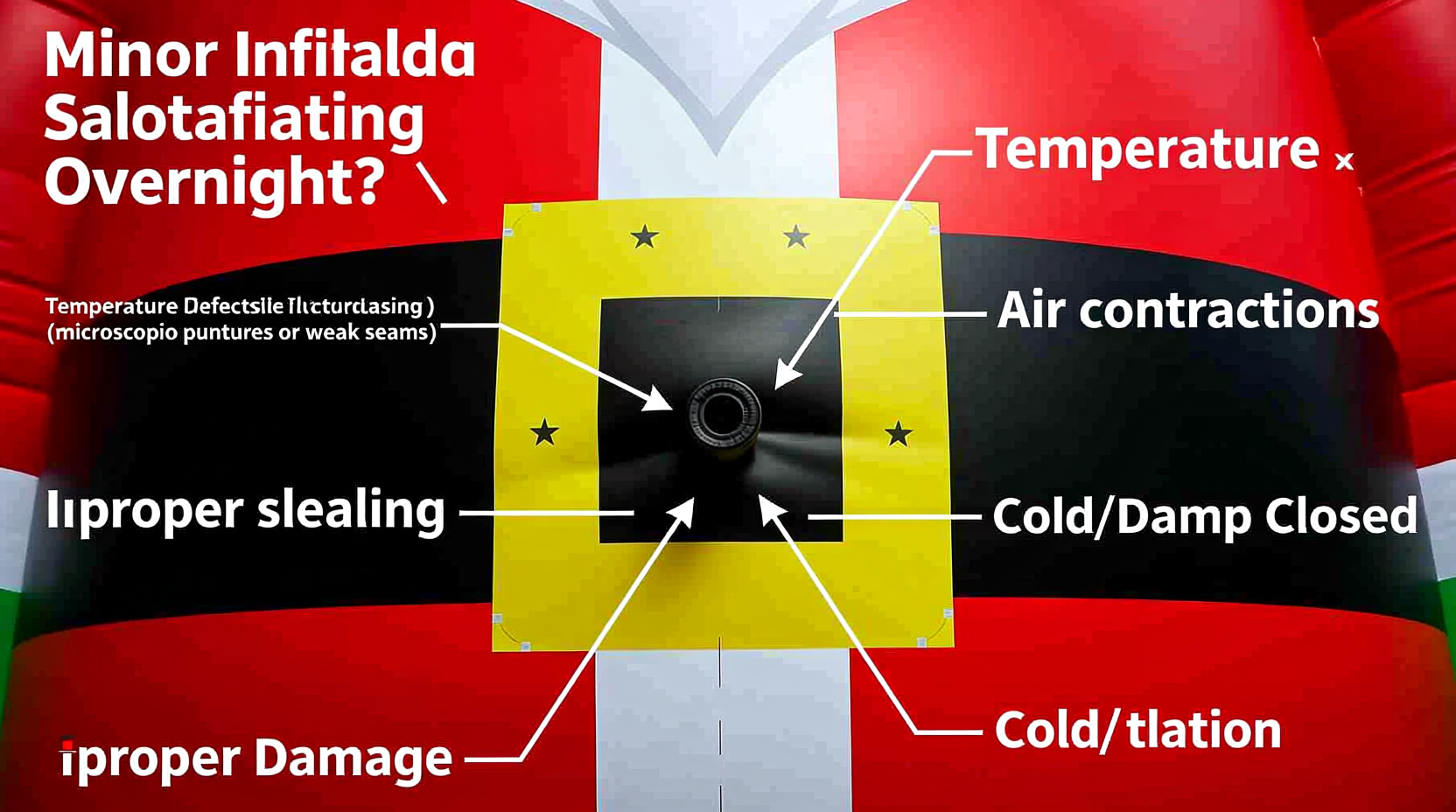
Inflatable Santas and similar yard decorations rely on an internal electric fan to continuously circulate air into a sealed fabric chamber. Unlike balloons that trap air once inflated, inflatables require constant airflow to maintain shape. The fan runs as long as the unit is plugged in, replacing air that naturally escapes through micro-seams or minor permeability in the material.
The outer shell is typically made from weather-resistant polyester or nylon, coated to resist moisture and UV damage. Seams are heat-sealed or stitched and taped to minimize leaks. When functioning properly, the internal pressure keeps the figure rigid and upright, even in mild wind.
However, any disruption—temperature shifts, physical damage, or power interruption—can cause rapid or gradual deflation. The key is determining whether the issue stems from environmental conditions or a mechanical defect.
Weather-Related Causes of Deflation
Cold temperatures are often blamed for inflatable failures, and with good reason. Air volume contracts as temperatures drop—a basic principle of physics known as Charles’s Law. For every 10°F (5.6°C) decrease in temperature, air volume reduces by about 3–4%. If your Santa inflates perfectly at 60°F in the afternoon but faces a 30°F night, that’s a 9–12% reduction in internal air volume. While fans compensate somewhat, extreme drops can outpace airflow, leading to partial sagging or full collapse.
Additionally, condensation can form inside the unit when warm, moist air from the fan meets cold surfaces. This moisture weakens adhesive seals over time and may freeze, creating micro-fractures in seams. Frost buildup can also restrict airflow within internal ducts, reducing inflation efficiency.
Wind plays a role too. Strong gusts can lift or twist the unit, straining seams and causing temporary disconnection from the fan housing. Even if the fan remains powered, misalignment can block airflow.
Tip: Position your inflatable near a wall or fence to reduce wind exposure, but ensure the fan intake stays clear of obstructions.Material and Manufacturing Defects
While weather contributes, many overnight deflations stem from product flaws. Low-cost inflatables often use thinner fabrics and less durable sealing methods. Common defect-related issues include:
- Micro-punctures: Tiny holes from shipping, storage, or setup can be invisible to the eye but allow steady air loss.
- Weak seam bonding: Poorly sealed joints separate under pressure or temperature stress.
- Fan housing detachment: The internal blower may loosen over time, breaking the airtight connection.
- Zippers or access flaps: These entry points often leak if not fully closed or if the seal degrades.
A defective fan itself can also fail intermittently. Units may appear functional during the day but shut off at night due to overheating or electrical faults. Some models lack thermal protection, causing automatic shutdown after prolonged use.
“Even high-end inflatables can develop leaks from seasonal wear. We recommend inspecting every unit before deployment—not just for obvious rips, but for soft spots along seams.” — Daniel Reeves, Holiday Display Technician, Midwest Lighting Co.
Step-by-Step Guide to Diagnose and Fix Deflation
Follow this systematic approach to identify and resolve the cause of your Santa’s mysterious deflation:
- Inspect for visible damage. Run your hands along seams, corners, and the base. Look for pinpricks, frayed edges, or bubbling glue. Use a flashlight in low light to spot tiny holes.
- Test in a controlled environment. Bring the unit indoors, inflate it, and leave it running for several hours. If it holds shape, weather is likely the primary factor. If it still deflates, there’s a leak or fan issue.
- Conduct a soap test. Mix dish soap with water in a spray bottle. Inflate the Santa and lightly mist suspected areas. Bubbles will form where air escapes. Mark these spots with tape.
- Check the fan operation. Ensure the motor runs continuously. Listen for irregular sounds or pauses. Verify the power cord isn’t damaged and the outlet delivers consistent voltage.
- Seal identified leaks. Use a vinyl repair patch kit designed for inflatables. Clean the area, apply adhesive, and press the patch firmly. Allow 24 hours to cure before reinflation.
- Reinforce weak seams. Apply waterproof seam sealer along high-stress joints, especially around limbs and the base.
- Reinstall with proper anchoring. Use ground stakes or sandbags to stabilize the unit. Avoid tension on the fabric that could strain seams.
Do’s and Don’ts: Inflatable Care Best Practices
| Do | Don't |
|---|---|
| Store in a cool, dry place away from rodents | Fold while damp—this encourages mold and weakens fibers |
| Use a protective tarp during storms | Leave it up during heavy snow or ice storms |
| Anchor securely with multiple tie-downs | Place directly on sharp gravel or icy surfaces |
| Turn off during extreme winds (>30 mph) | Ignore manufacturer’s setup instructions |
| Inspect annually for wear and tear | Use household tape or glue for repairs |
Real Example: A Suburban Santa’s Sudden Collapse
In December 2023, Lisa M., a homeowner in Milwaukee, noticed her 7-foot inflatable Santa deflating every night despite being new. She assumed it was the cold, but after two weeks of frustration, she decided to investigate.
She followed the soap test method and discovered three tiny bubbles forming near the left boot. Upon closer inspection, she found a nearly invisible puncture—likely from a stray garden tool during setup. After applying a repair patch and reinforcing adjacent seams, the Santa stayed fully inflated for the rest of the season.
Lisa’s experience highlights a critical point: even brand-new units can have hidden flaws. Proactive testing beats repeated disappointment.
When to Replace vs. Repair
Not every inflatable is worth saving. Consider replacement if:
- The fabric is brittle or cracked.
- Multiple large seams have failed.
- The fan motor is dead or non-replaceable.
- The unit has been repaired more than twice in one season.
High-quality inflatables from reputable brands often come with replaceable fans and reinforced stitching. Investing in such models—even at a higher upfront cost—can save money and hassle over time.
Tip: Keep the original packaging and manual. Replacement parts are often model-specific and easier to source with the product number.FAQ
Can cold weather alone cause complete deflation?
No—but it can significantly reduce internal air pressure. Combined with small leaks or fan limitations, cold temps can push a marginal unit into full deflation. Most well-sealed inflatables handle typical winter conditions if properly maintained.
Is it safe to leave my inflatable Santa on all night?
Most modern units are UL-listed and designed for continuous use. However, check for overheating signs—burning smells, discoloration, or intermittent shutdowns. Unplug during severe storms or if you’ll be away for extended periods.
Why does my Santa stay inflated during the day but fall at night?
This pattern often points to temperature-driven air contraction. Daytime warmth expands the air, masking small leaks. At night, cooler air reduces volume, and the leak rate exceeds the fan’s ability to compensate. Perform a soap test to confirm.
Preventative Checklist for Next Season
- ✅ Inspect all seams and zippers before first use
- ✅ Conduct a soap bubble leak test annually
- ✅ Clean gently with mild soap and water; avoid pressure washers
- ✅ Store completely dry in a breathable bag (not plastic)
- ✅ Anchor securely using included ropes and stakes
- ✅ Monitor local weather; take down during high winds or ice storms
- ✅ Keep a repair kit on hand with patches and seam sealer
Conclusion: Keep Your Santa Standing Tall
An inflatable Santa deflating overnight doesn’t have to ruin your holiday spirit. More often than not, the issue is solvable with a little investigation and care. Whether it’s a microscopic leak, a faulty seal, or simply the physics of winter air, understanding the cause empowers you to take action.
By combining smart placement, routine maintenance, and timely repairs, you can ensure your festive centerpiece stays upright and joyful throughout the season. Don’t let a flat Santa dim your display—diagnose, fix, and celebrate.
🚀 Take action tonight: Test your inflatable with the soap method, reinforce weak points, and secure its position. Share your success story or ask questions in the comments—let’s help each other keep the holidays merry and bright!








