Nothing undermines the festive elegance of a holiday mantel or doorway quite like a sagging, sparse garland. You spent time selecting fresh greens—maybe even paid a premium for premium boxwood or noble fir—only to watch it lose volume, arch downward, and expose bare wire within days. Drooping isn’t inevitable. It’s a symptom of predictable physiological and mechanical failures—and each one is addressable with intention, knowledge, and simple, repeatable practices. This article distills decades of professional floral design experience, horticultural insight, and real-world event styling into actionable solutions—not theory, but what works in living rooms, historic staircases, and drafty front porches.
The Science Behind the Sag: Why Garland Droops
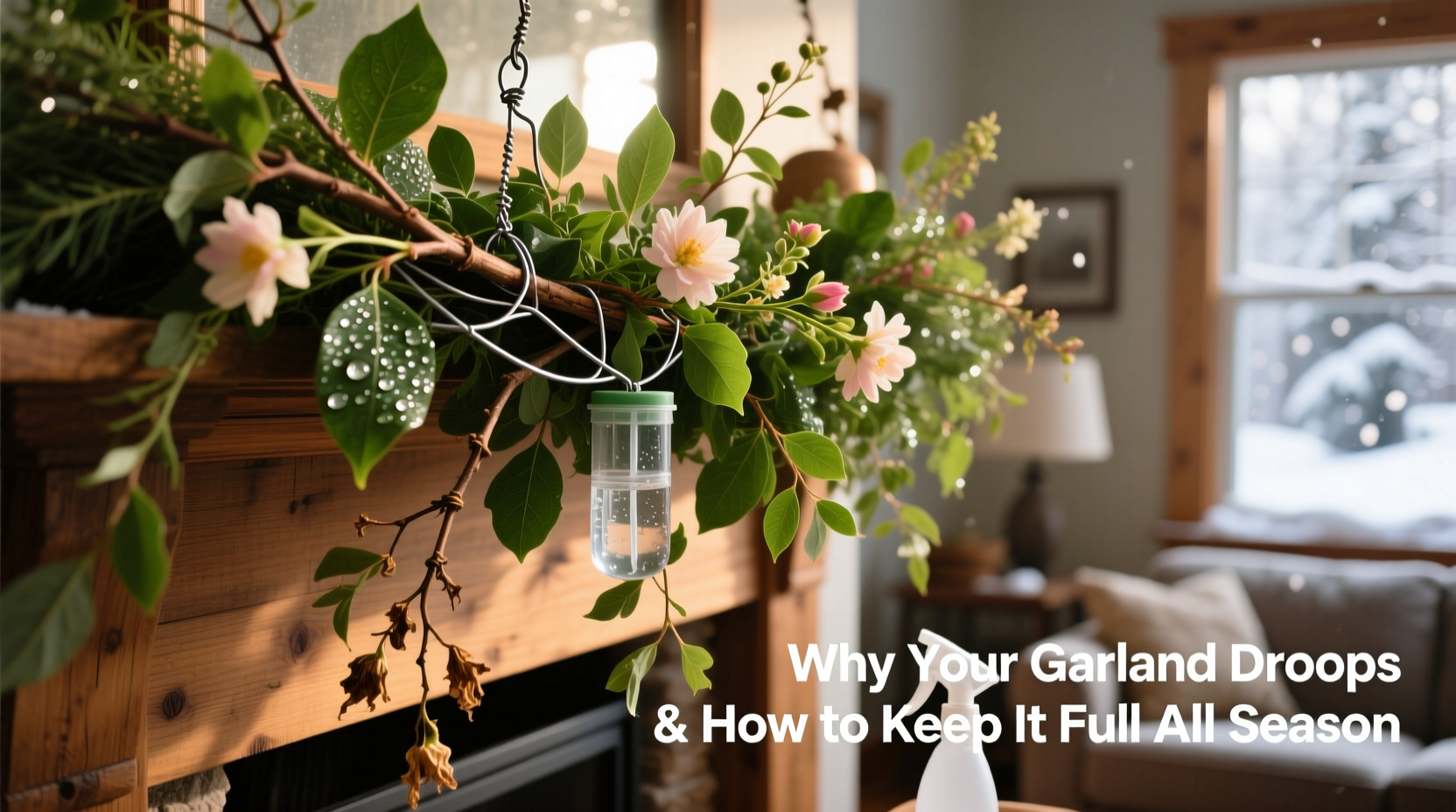
Drooping is rarely caused by a single factor. It’s usually the cumulative effect of three interrelated forces: dehydration, gravity-induced stem fatigue, and structural instability. Fresh-cut evergreen stems rely on capillary action to draw water from their cut ends up through xylem tissue. When that flow is interrupted—even briefly—the needles begin losing turgor pressure. Within 24–48 hours of cutting, untreated stems can lose up to 30% of their internal moisture. As cells shrink, branches soften, bend, and ultimately surrender to gravity.
Compounding this is stem fatigue: the physical weakening of vascular bundles under constant weight. A 6-foot garland of mixed greens can weigh 8–12 pounds when freshly cut. Over time, especially in warm or dry air, the lignin in stems softens slightly, reducing rigidity. Add ambient airflow (from HVAC vents or open doors), and you accelerate both drying and mechanical stress.
Finally, poor foundational support guarantees failure. Many DIYers wrap garland directly around banisters or mantels without anchoring points—or use flimsy floral wire that stretches instead of holds. Without distributed tension and vertical reinforcement, gravity wins every time.
Tip: Never cut garland stems at an angle and then leave them unhydrated for more than 15 minutes before installation. That initial hydration window is critical for long-term turgor retention.Five Proven Methods to Maintain Fullness All Season
1. Hydration Is Non-Negotiable—Even for “Dry” Greens
Contrary to popular belief, even traditional “dry” garlands benefit from strategic hydration. While pine boughs won’t absorb water like cut roses, their cellular structure still responds to ambient humidity. Professional designers use two complementary approaches:
- Pre-soak method: Submerge entire cut stems (not just ends) in cool water for 2–4 hours before wiring or assembling. This saturates the cortex, delaying surface evaporation.
- Micro-misting protocol: Lightly mist the underside of foliage (where stomata are most concentrated) every 48 hours using distilled water. Avoid oversaturation—wet needles invite mold and accelerate needle drop.
Crucially, avoid tap water with high mineral content or chlorine, which clogs xylem pores. A solution of 1 teaspoon white vinegar + 1 quart distilled water improves uptake and inhibits bacterial growth in stem ends.
2. Reinforce with Internal Wiring—Not Just Surface Wrapping
Surface-wrapped floral wire only secures the outer layer—it doesn’t support the internal architecture. The industry standard for lasting fullness is internal parallel wiring. Here’s how top designers do it:
- Cut 22-gauge green paddle wire into 18-inch lengths.
- Lay 3–5 stems side-by-side (mixing textures: e.g., 2 sprigs of cedar, 1 of holly, 1 of pine).
- Thread wire under the base of the bundle, then twist tightly 3–4 times—just enough to hold, not crush.
- Add another layer of stems atop the first, offsetting the joints, and repeat wiring.
- Continue building lengthwise, always wiring *between* layers—not over the top.
This creates a self-supporting “spine” that distributes weight evenly and prevents individual stems from buckling inward. The result? A garland that retains its cylindrical shape, even after weeks.
3. Anchor Strategically—Not Just at the Ends
Most drooping begins mid-span, where unsupported weight peaks. Relying solely on end anchors invites central collapse. Instead, use a tri-point anchoring system:
- Primary anchor: At each end (e.g., mantel corners or banister posts)
- Secondary anchor: Midpoint—hidden behind foliage using a small screw eye or discreet hook
- Tertiary support: Every 24 inches for garlands over 6 feet, using clear monofilament tied to ceiling joists or wall studs (not drywall anchors)
This transforms the garland from a draped rope into a suspended bridge—tensioned, stable, and resistant to sag.
4. Control the Environment—Temperature, Airflow & Light
Garlands thrive in cool (35–55°F), humid (40–60% RH), low-light conditions. Indoor heating systems are the #1 culprit behind rapid dehydration. A room held at 72°F with 20% humidity will deplete a garland’s moisture reserves 3× faster than a cooler, more humid space.
Practical adjustments make a measurable difference:
| Factor | Ideal Condition | Common Pitfall | Fix |
|---|---|---|---|
| Air Temperature | ≤55°F | Placed above forced-air vent | Relocate 3+ feet from heat sources; use thermal barrier (e.g., folded linen runner beneath garland) |
| Ambient Humidity | 40–60% RH | Dry winter air (often ≤20% RH) | Run cool-mist humidifier 3–4 ft away; avoid ultrasonic models near foliage (mineral dust buildup) |
| Light Exposure | Indirect or low light | Direct sun on south-facing mantel | Rotate garland 180° every 3 days; install sheer curtain to diffuse intensity |
| Air Movement | Still or gentle circulation | Fan or open window nearby | Block drafts with removable acrylic shield or fabric drape |
5. Refresh, Don’t Replace—The Mid-Season Revival Technique
By Day 10–14, even well-cared-for garlands show subtle signs of fatigue: slight flattening, minor needle loss at tips, reduced sheen. This is the optimal moment for targeted revival—not full replacement.
Follow this 20-minute process:
- Remove garland gently from its anchor points.
- Trim ½ inch off all stem ends with sharp bypass pruners (no crushing).
- Soak trimmed ends in preservative solution (1 gallon warm water + 2 tbsp sugar + 1 tsp bleach + 1 tsp lemon juice) for 30 minutes.
- Pat stems dry, then lightly spray entire garland underside with anti-transpirant spray (e.g., Wilt-Pruf diluted 1:5). This forms a microscopic polymer film that slows moisture loss by 40%.
- Reinstall using refreshed anchors and add 1–2 new accent sprigs (e.g., dried orange slices, cinnamon sticks, or preserved eucalyptus) to visually reinforce fullness.
Professionals report this extends peak visual quality by 7–10 days—without adding cost or waste.
Real-World Case Study: The Historic Inn Mantel Rescue
The Wentworth Mansion in Charleston, SC, installs 22-foot garlands on its 18-ft marble mantel each November. In 2022, their traditional method—hand-wired noble fir wrapped around a foam core—began visibly drooping by Day 5, requiring daily re-tensioning and causing guest complaints about “saggy elegance.”
Floral director Lena Cho switched to internal parallel wiring with 22-gauge steel, added tri-point anchoring (including a discreet brass hook embedded in the mantel’s carved rosette), and implemented twice-daily micro-misting with distilled vinegar water. She also installed a compact humidifier inside the adjacent library, raising ambient RH from 18% to 44%.
Result: The garland maintained full, upright volume for 28 days—outlasting the holiday season by 3 days. Needle retention improved from 68% to 92%, and maintenance labor dropped from 45 minutes/day to 8 minutes/week.
“Drooping isn’t a flaw in the greenery—it’s feedback from an unbalanced system. Fix the hydration, support, and environment, and the plant does the rest.” — Dr. Aris Thorne, Horticultural Physiologist, University of Vermont Plant Science Lab
What to Do (and Not Do): A Seasonal Checklist
Use this checklist before, during, and after installation. Print it. Tape it to your utility closet. Refer to it weekly.
- ✅ Before Cutting or Buying: Inspect stems for snap—fresh greens should audibly crackle when bent sharply. Avoid any with brown or brittle tips.
- ✅ At Installation: Wire every 6–8 inches internally—not just at ends. Use green paddle wire, never silver or craft wire (it corrodes and cuts stems).
- ✅ Day 1–3: Mist underside only, early morning or late evening. Never in direct sun or near heat sources.
- ✅ Day 7: Check anchor points for loosening. Tighten wire twists; re-tie monofilament if stretched.
- ✅ Day 12: Perform full refresh: re-cut ends, soak, apply anti-transpirant, add 3–5 accent elements.
- ❌ Never: Hang garland in direct sunlight for >2 hours/day.
- ❌ Never: Spray foliage with glycerin or oil-based products—they coat stomata and suffocate tissue.
- ❌ Never: Use hot glue guns on fresh greens—heat accelerates desiccation at contact points.
FAQ: Your Most Pressing Garland Questions—Answered
Can I use artificial greens to avoid drooping entirely?
Yes—but only high-end UV-stabilized varieties retain realistic texture and color under indoor lighting. Budget PVC garlands often yellow, curl at tips, and develop static cling that attracts dust, creating a different kind of “flat” appearance. If choosing faux, invest in silk-blend or PE (polyethylene) foliage with hand-painted veining and variable needle density. Even then, proper mounting (tri-point anchoring) remains essential to prevent synthetic limpness.
Does spraying with hairspray help prevent drooping?
No. Hairspray contains alcohol, polymers, and propellants that damage cuticle layers, increase surface tension, and attract dust. It may create temporary stiffness—but accelerates dehydration and leaves a sticky, dull residue. Anti-transpirants formulated for horticulture (like Cloud Cover or Wilt-Pruf) are scientifically designed to reduce water loss without harming tissue.
How long *should* a well-maintained fresh garland last?
In ideal conditions (cool, humid, low-light, properly wired), premium greens like Fraser fir, blue spruce, or Arizona cypress maintain full visual integrity for 21–28 days. Lower-density species like white pine or some junipers max out at 14–18 days—even with perfect care. Know your species’ natural longevity before setting expectations.
Conclusion: Fullness Is a Choice, Not a Chance
Your garland doesn’t have to surrender to gravity. Drooping isn’t fate—it’s physics waiting for intervention. With precise hydration, intelligent structural reinforcement, environmental awareness, and timely renewal, you transform a seasonal decoration into a resilient, living element of your home. These methods aren’t reserved for florists or event planners. They’re scalable, affordable, and rooted in observable plant behavior—not marketing myths or tradition for tradition’s sake.
Start small: next time you hang garland, try internal wiring on just one 3-foot section. Mist only the underside. Place a hygrometer nearby and note the humidity reading. Observe the difference—not in days, but in the quiet confidence that comes from knowing your decor is supported, sustained, and deeply intentional.
💬 Your turn. Try one technique this season—and tell us in the comments what changed. Did internal wiring eliminate mid-span sag? Did misting extend needle retention? Share your real results. Your experience helps others move beyond droop—and into delight.








