As the holiday season approaches, homes come alive with festive decorations—none more iconic than twinkling Christmas lights. But for many homeowners, the joy of illuminating their space is quickly dimmed when the circuit breaker trips the moment they plug in their strings of lights. This common yet frustrating issue isn't just inconvenient—it can also signal underlying electrical problems that need attention. Understanding the root causes and knowing how to prevent them ensures not only uninterrupted holiday cheer but also the safety of your home and family.
How Circuit Breakers Work: The Basics
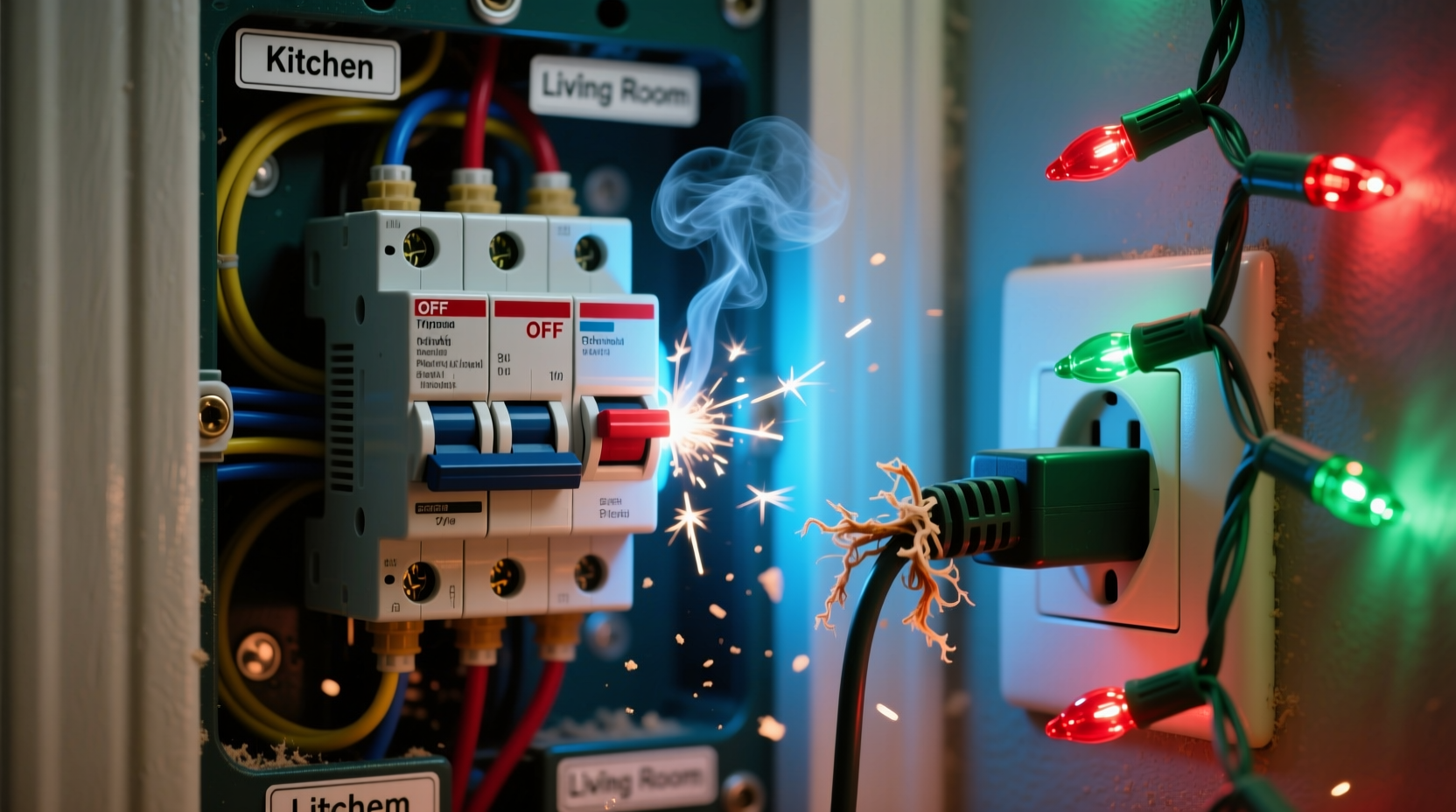
Circuit breakers are essential safety devices installed in your home’s electrical panel. Their primary function is to protect your wiring and appliances from damage due to overloads, short circuits, or ground faults. When too much current flows through a circuit, the breaker automatically \"trips,\" cutting off power to prevent overheating and potential fire hazards.
Most household circuits are rated for either 15 or 20 amps. Each circuit powers multiple outlets and fixtures in a specific area of the house. When you exceed the amperage limit—such as by connecting too many high-draw devices—the breaker responds by shutting down the circuit.
Christmas lights, especially older incandescent models or long strands connected together, can draw enough power to overload a single circuit. But even low-wattage LED lights can cause issues if daisy-chained improperly or combined with other appliances on the same line.
“Circuit breakers don’t trip without reason. They’re designed to detect danger before it becomes disaster.” — James Holloway, Licensed Electrician and Electrical Safety Consultant
Common Causes of Tripped Breakers When Using Christmas Lights
Several factors can contribute to a tripped breaker when plugging in holiday lights. Identifying which one applies to your situation is key to finding a lasting solution.
1. Overloaded Circuit
The most frequent cause is simply drawing more power than the circuit can handle. Many people underestimate how much electricity decorative lighting consumes, especially when multiple strands are linked together.
For example, a single strand of 100 traditional incandescent mini-lights uses about 40 watts. That may not sound like much, but ten such strands equal 400 watts—or roughly 3.3 amps on a 120-volt system. Add in other devices on the same circuit (like lamps, TVs, or chargers), and it's easy to surpass the 15-amp limit.
Tip: Always calculate total wattage before plugging in multiple light strands. A safe rule is to stay below 80% of your circuit’s capacity—about 1,440 watts for a 15-amp circuit.2. Daisy-Chaining Too Many Light Strands
Many manufacturers specify a maximum number of light sets that can be safely connected end-to-end. Exceeding this limit increases current draw beyond what the first set’s wiring can manage, leading to overheating and tripping.
Even if each strand is labeled “connectable,” there’s still a hard limit based on wire gauge and internal fuses. Ignoring these guidelines—even with LED lights—can trigger a response from the breaker.
3. Faulty or Damaged Wiring in Light Sets
Old or poorly maintained light strings may have frayed wires, cracked insulation, or corroded sockets. These defects can create short circuits or ground faults, causing an immediate trip when plugged in.
A telltale sign is sparks, flickering, or a burning smell when attempting to use the lights. In such cases, the breaker is doing its job by cutting power before a fire hazard develops.
4. GFCI Outlet or AFCI Breaker Sensitivity
Modern homes often have Ground Fault Circuit Interrupter (GFCI) outlets or Arc-Fault Circuit Interrupter (AFCI) breakers installed in living areas and outdoor circuits. These advanced devices detect small irregularities—like minor current leaks or arcing—that standard breakers might miss.
While highly effective at preventing shocks and fires, they can be overly sensitive. Moisture in outdoor outlets, minor insulation wear, or electromagnetic interference from transformers can cause nuisance tripping when lights are plugged in.
5. Shared Circuits with High-Draw Appliances
If your Christmas lights are plugged into an outlet shared with kitchen appliances, space heaters, or entertainment systems, the combined load can easily exceed limits. For instance, a refrigerator cycling on while lights are plugged in could push the circuit past its threshold.
This scenario is especially common in older homes where fewer circuits were installed during construction, leading to overcrowding on individual lines.
Step-by-Step Guide: Troubleshooting a Tripping Breaker
If your breaker trips every time you plug in your Christmas lights, follow this systematic approach to diagnose and resolve the issue.
- Unplug everything on the circuit. Start by turning off all devices connected to the same breaker, including lamps, electronics, and appliances.
- Reset the breaker. Go to your electrical panel and firmly switch the tripped breaker to “off,” then back to “on.” If it trips again immediately, there may be a short circuit in the wiring—not just the lights.
- Test the outlet. Plug in a simple device like a lamp to confirm the outlet is working. If the lamp works and doesn’t trip the breaker, the problem likely lies with the lights or their configuration.
- Inspect the light strands. Look for damaged bulbs, exposed wires, bent prongs, or signs of moisture. Replace any defective sets.
- Plug in one strand at a time. Connect a single light string to the outlet. If it stays on, add another. Stop as soon as the breaker trips—this helps identify whether the issue is cumulative load or a specific faulty set.
- Check manufacturer ratings. Review the label on the light string for max connectable sets and total wattage. Never exceed these values.
- Use a dedicated circuit. If possible, plug lights into an outlet on a different circuit, preferably one not used by major appliances.
- Consider upgrading to LED lights. LEDs consume up to 90% less energy than incandescent bulbs, reducing strain on circuits significantly.
Do’s and Don’ts: Safe Holiday Lighting Practices
| Do | Don’t |
|---|---|
| Use LED Christmas lights to reduce power consumption | Connect more than three incandescent strands end-to-end |
| Inspect lights annually for damage before use | Use indoor lights outdoors or vice versa |
| Plug heavy loads into outlets closest to the electrical panel | Run extension cords under rugs or furniture |
| Use surge-protected power strips with indicator lights | Overload a single outlet with multiple adapters |
| Label circuits in your breaker box for quick identification | Ignore persistent tripping—investigate the cause |
Real Example: A Homeowner’s Holiday Lighting Dilemma
Sarah from Portland decorated her living room each December with hundreds of warm-white Christmas lights draped across the mantel, windows, and tree. One year, the moment she plugged in the final strand, the entire room went dark. The breaker had tripped—and kept doing so no matter how few lights she used.
After consulting an electrician, she discovered two issues: First, her living room outlets were on the same 15-amp circuit as her kitchen countertop, where a coffee maker and toaster were often in use. Second, one of her older light sets had a degraded socket causing a partial short.
The solution? She replaced all incandescent strands with energy-efficient LEDs, unplugged non-essential kitchen devices during decoration hours, and moved her main light plug-in point to a basement circuit with lower usage. The result: reliable lighting without a single trip throughout the season.
Expert Tips for Preventing Future Issues
Tip: Use a clamp-on ammeter or plug-in power meter to measure actual current draw of your light setup before full deployment.- Spread the load: Distribute light strings across multiple circuits instead of relying on one outlet.
- Upgrade outdoor circuits: If using exterior lights, ensure GFCI outlets are functioning properly and not degraded by weather exposure.
- Use timers: Set lights to turn on only during evening hours, reducing continuous load and heat buildup.
- Replace old extension cords: Use heavy-gauge (16 AWG or lower) cords rated for outdoor or indoor use as needed.
- Label your breaker box: Clearly mark which rooms or outlets each breaker controls for faster troubleshooting.
FAQ: Common Questions About Christmas Lights and Breakers
Can LED Christmas lights still trip a breaker?
Yes, although rare. While individual LED strands use very little power (often under 10 watts), connecting dozens together or combining them with other devices on an already-loaded circuit can still exceed capacity. Additionally, a manufacturing defect or water intrusion in outdoor setups can cause a fault that triggers the breaker.
Is it safe to keep resetting the breaker when it trips?
No. Repeatedly resetting a tripped breaker without addressing the cause can overheat wiring, damage appliances, or create a fire risk. If a breaker trips more than once after proper reset, stop using the circuit and consult a licensed electrician.
Why do my lights trip the breaker only when it rains?
Moisture is likely entering an outdoor outlet, extension cord, or light socket, creating a ground fault. Even small amounts of water can conduct electricity and trigger GFCI protection. Always use weatherproof covers on outdoor outlets and check that light sets are rated for outdoor use.
Essential Checklist for Safe Holiday Lighting
- ✅ Inspect all light strings for damage (fraying, broken bulbs, corrosion)
- ✅ Confirm the outlet and circuit aren’t overloaded with other devices <3>✅ Check manufacturer labels for maximum connectable sets
- ✅ Use only LED lights for large displays to minimize power draw
- ✅ Plug into GFCI-protected outlets for outdoor or damp locations
- ✅ Avoid daisy-chaining more than recommended (typically 3–5 sets)
- ✅ Use surge-protected power strips instead of cheap multi-plug adapters
- ✅ Test the setup before leaving home or going to bed
- ✅ Install a smart plug or timer to automate shut-off
- ✅ Keep cords away from foot traffic and heat sources
Conclusion: Enjoy the Holidays Safely and Brightly
A tripped circuit breaker when plugging in Christmas lights is more than a seasonal annoyance—it’s a warning sign that should never be ignored. Whether caused by overloaded circuits, faulty equipment, or outdated wiring, the issue demands attention to ensure both functionality and safety.
By understanding your home’s electrical limits, choosing efficient lighting options, and following best practices for installation and maintenance, you can create a dazzling display without compromising safety. The holidays are meant for celebration, not emergency electrician calls. Take the time now to inspect your setup, upgrade where needed, and spread the electrical load wisely.
🚀 Ready to light up your home safely? Audit your current Christmas light setup today—replace old strands, verify circuit loads, and share your tips in the comments to help others celebrate responsibly!