Cats are naturally curious creatures, and during the holidays, their fascination with new textures, scents, and dangling objects often leads them straight to the Christmas tree—and specifically, the garland. If you've found your feline companion gnawing on festive strands of tinsel, popcorn, or pine, you're not alone. This behavior may seem harmless at first, but it can pose serious health risks. Understanding the underlying reasons for this habit is the first step toward protecting both your cat and your decorations.
Chewing on garland isn’t just a quirky holiday quirk—it’s a signal that your cat is responding to instinctual drives, environmental stimuli, or even unmet needs. The good news? With thoughtful planning and consistent intervention, you can redirect your cat’s attention safely and keep your holiday season joyful and hazard-free.
Why Cats Are Drawn to Christmas Garland
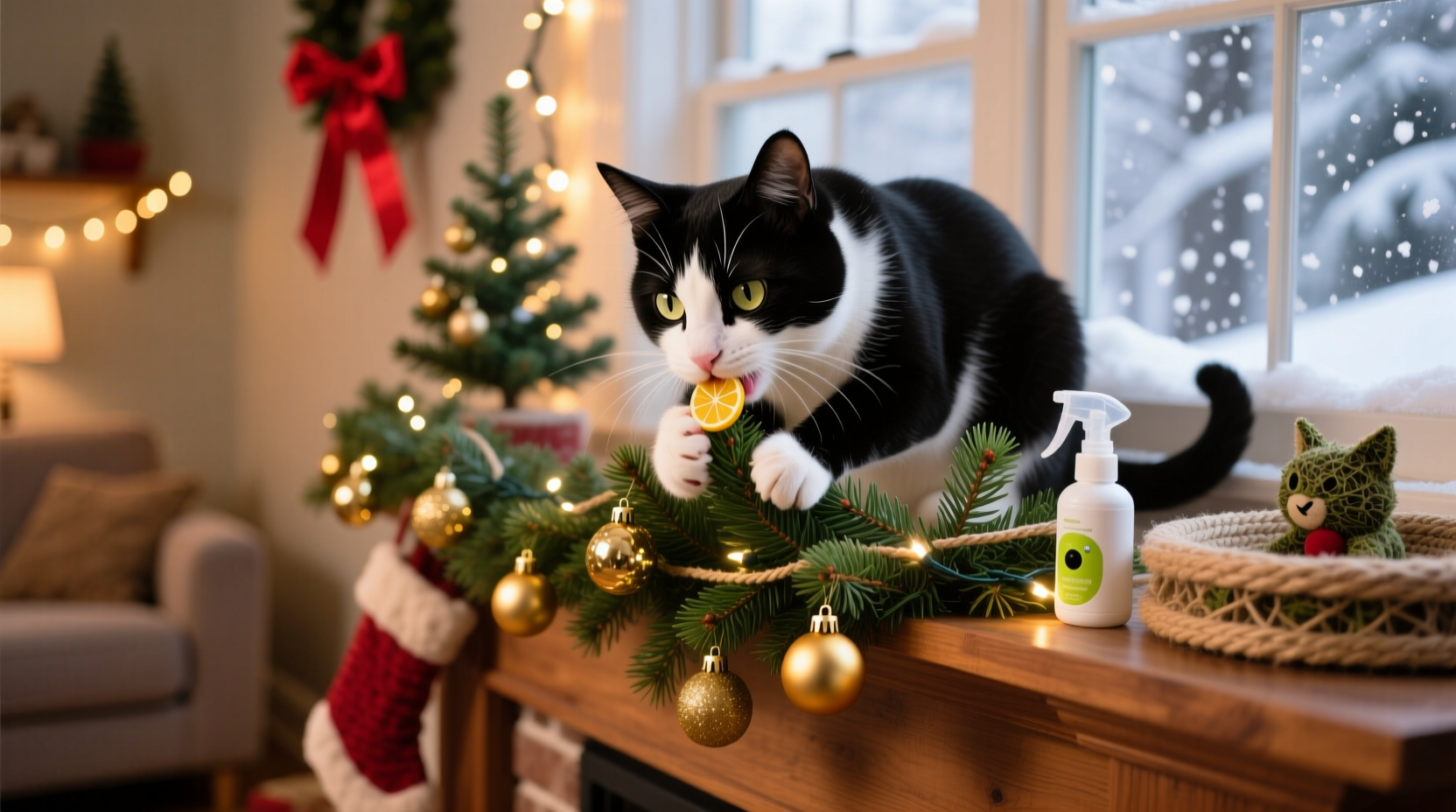
Cats don’t chew on garland out of malice. Their actions stem from deeply ingrained behaviors rooted in biology and psychology. Several key factors explain why your cat might treat your holiday decor like a personal plaything.
- Movement and texture mimic prey: Strings, tinsel, and beaded garlands sway and shimmer when touched, resembling the motion of insects or small animals. This triggers a cat’s predatory instincts, prompting pouncing, batting, and chewing.
- Scent attraction: Natural garlands made of popcorn, cranberries, or pine emit strong aromas. Popcorn and cranberries carry food-like scents, while pine contains compounds that may appeal to a cat’s olfactory curiosity—similar to how they react to catnip.
- Boredom and lack of stimulation: The holiday season brings changes in routine, guests, and household energy. If your cat isn’t receiving adequate mental or physical engagement, decorative items become convenient outlets for excess energy.
- Oral exploration: Cats use their mouths to investigate the world. Chewing allows them to assess texture, taste, and safety—especially common in younger or teething cats.
- Attention-seeking: If your cat learns that interacting with garland gets a reaction—even a negative one—they may repeat the behavior to engage with you.
Health Risks of Ingesting Garland
While occasional nibbling might seem harmless, ingesting garland components can lead to life-threatening conditions. The danger varies by material, but all types carry potential risks.
| Garland Type | Risks | Potential Outcomes |
|---|---|---|
| Tinsel & Metallic Strands | Linear foreign body ingestion | Intestinal blockage, perforation, emergency surgery |
| Popcorn & Cranberry Strings | Choking, mold toxicity, salt/butter additives | Gastrointestinal upset, pancreatitis, fungal infection |
| Plastic Beads & Ornaments | Choking, obstruction | Vomiting, constipation, surgical removal |
| Natural Pine or Cedar | Toxic oils (phenols, plicatic acid) | Mouth irritation, liver damage, respiratory distress |
The most dangerous scenario occurs with linear foreign bodies like tinsel. When swallowed, these long, string-like materials can bunch up in the intestines or anchor in one place while the digestive tract tries to move them along. This causes a \"sawing effect,\" which can lacerate intestinal walls and require urgent surgery.
“Even a small piece of tinsel can cause catastrophic internal damage. We see multiple cases every December.” — Dr. Lena Reyes, DVM, Emergency Feline Veterinarian
Effective Strategies to Deter Garland Chewing
Prevention is far safer than treatment. Instead of reacting after an incident, implement proactive measures to make garland inaccessible and unappealing.
1. Choose Cat-Safe Alternatives
Opt for decorations that satisfy visual appeal without posing risks. Consider:
- Large, sturdy ornaments placed high on the tree
- Wooden or fabric garlands (ensure no loose threads)
- LED light strands instead of tinsel
- Dried citrus slices or cinnamon sticks (non-toxic and aromatic)
2. Use Taste Deterrents
Cats dislike certain flavors. Apply pet-safe bitter sprays to the lower sections of the tree and nearby surfaces. Look for products containing:
- Denatonium benzoate (most bitter substance known)
- Citrus extracts (grapefruit, lemon)
- Essential oil-free formulas (many essential oils are toxic to cats)
Always test a small area first and reapply as needed, especially after dusting or cleaning.
3. Create Physical Barriers
Make the tree and garland off-limits through strategic placement and enclosures:
- Place the tree in a room with a baby gate or door barrier
- Use a tree skirt that fully covers the base
- Install a freestanding mesh fence around the tree
- Secure the tree to a wall to prevent tipping if your cat climbs
4. Increase Environmental Enrichment
A stimulated cat is less likely to seek entertainment in forbidden places. Enhance your cat’s environment with:
- Daily interactive play using wand toys (10–15 minutes, twice daily)
- Food puzzles and treat-dispensing toys
- Window perches with bird feeders outside
- New scratching posts or cardboard condos
Step-by-Step Guide to Garland-Proof Your Home
Follow this timeline to create a cat-friendly holiday space before temptation arises.
- Week 1: Assess Risk Areas
Identify where your tree will go, what decorations you plan to use, and your cat’s access patterns. Note past problem zones. - Week 2: Shop Smart
Purchase cat-safe decorations and deterrents. Avoid tinsel, small beads, and edible garlands. Buy bitter spray and barriers. - Week 3: Set Up the Tree Safely
Assemble the tree in its designated spot, secure it to the wall, and install any fencing. Do not add garland yet. - Week 4: Introduce Gradually
Add lights and large ornaments. Let your cat investigate under supervision. Spray deterrents on lower branches. - Final Days: Add Final Touches
If using garland, choose non-toxic, thick rope-style options and hang only on upper branches. Monitor closely for the first few days. - Ongoing: Supervise and Redirect
When you can’t watch, confine your cat to another room. Reward calm behavior near the tree with treats or praise.
Mini Case Study: Bella and the Tinsel Incident
Bella, a 2-year-old Siamese mix, had always been fascinated by shiny objects. When her owners hung silver tinsel on their Christmas tree, she began pawing at it within hours. Despite warnings, she managed to swallow a strand after her owners left her home alone for two hours.
By evening, Bella was lethargic and vomiting. An emergency X-ray revealed a linear foreign body in her intestines. She underwent surgery to remove the tinsel and spent three days in recovery. Her vet estimated the total cost at $3,200.
Afterward, her owners implemented changes: they switched to wooden bead garlands hung above her reach, installed a baby gate around the living room, and introduced daily puzzle feeding. That next holiday season, Bella showed interest in the tree—but with proper management, she never repeated the behavior.
This case underscores how quickly curiosity can turn dangerous—and how simple adjustments can prevent crisis.
Checklist: Cat-Safe Holiday Decor Plan
Use this checklist to ensure your home stays festive and safe:
- ☐ Avoid tinsel, ribbon, and string-like decorations
- ☐ Choose large, shatterproof ornaments stored high on the tree
- ☐ Secure the tree to a wall or ceiling bracket
- ☐ Apply pet-safe bitter spray to lower branches
- ☐ Install a physical barrier (gate, fence) around the tree
- ☐ Provide alternative enrichment (toys, perches, puzzles)
- ☐ Supervise interactions or limit access when unattended
- ☐ Have your vet’s emergency number and nearest animal hospital saved
Frequently Asked Questions
Is tinsel really that dangerous for cats?
Yes. Tinsel is one of the most hazardous holiday decorations for cats. Due to its thin, flexible nature, it can cause linear foreign body obstructions, leading to severe internal damage and requiring emergency surgery. Even small amounts can be life-threatening.
What should I do if I think my cat ate garland?
Do not wait for symptoms. Contact your veterinarian immediately. Signs like vomiting, lethargy, loss of appetite, or straining to defecate may indicate a blockage, but early stages can be subtle. Prompt imaging and care improve outcomes significantly.
Are there any safe natural garlands I can use?
Limited options exist. Plain popcorn strings are risky due to choking and mold. Dried fruit or cinnamon stick chains are safer visually but should still be kept out of reach. The safest approach is to avoid edible or string-based garlands altogether and opt for non-toxic, fixed decorations like LED lights or wooden shapes.
Conclusion: A Safer, Happier Holiday for You and Your Cat
Your cat’s fascination with Christmas garland is understandable—but it doesn’t have to end in danger. By recognizing the behavioral drivers behind chewing and taking practical steps to modify the environment, you can preserve both your holiday spirit and your pet’s well-being. Prevention, enrichment, and vigilance are your strongest tools.
This season, aim not for perfection, but for balance: a home that feels festive without compromising safety. With thoughtful planning, your cat can enjoy the holidays too—just from a respectful distance from the tinsel.
💬 Have a story about your cat and holiday decor? Share your experience or tips in the comments—your insight could help another pet owner avoid a holiday emergency.








