
As holiday seasons approach, homes across neighborhoods light up with festive cheer. At the heart of these displays are Christmas lights—small but essential decorations that transform rooftops, trees, and porches into glowing spectacles. Yet not all lights are created equal. The choice between LED and incandescent Christmas lights affects more than just brightness and color; it influences energy consumption, heat output, safety, and long-term costs. Understanding which type burns hotter and uses more power isn’t just a technical detail—it’s a practical consideration for both safety and sustainability.
How Incandescent Lights Work and Why They Generate Heat
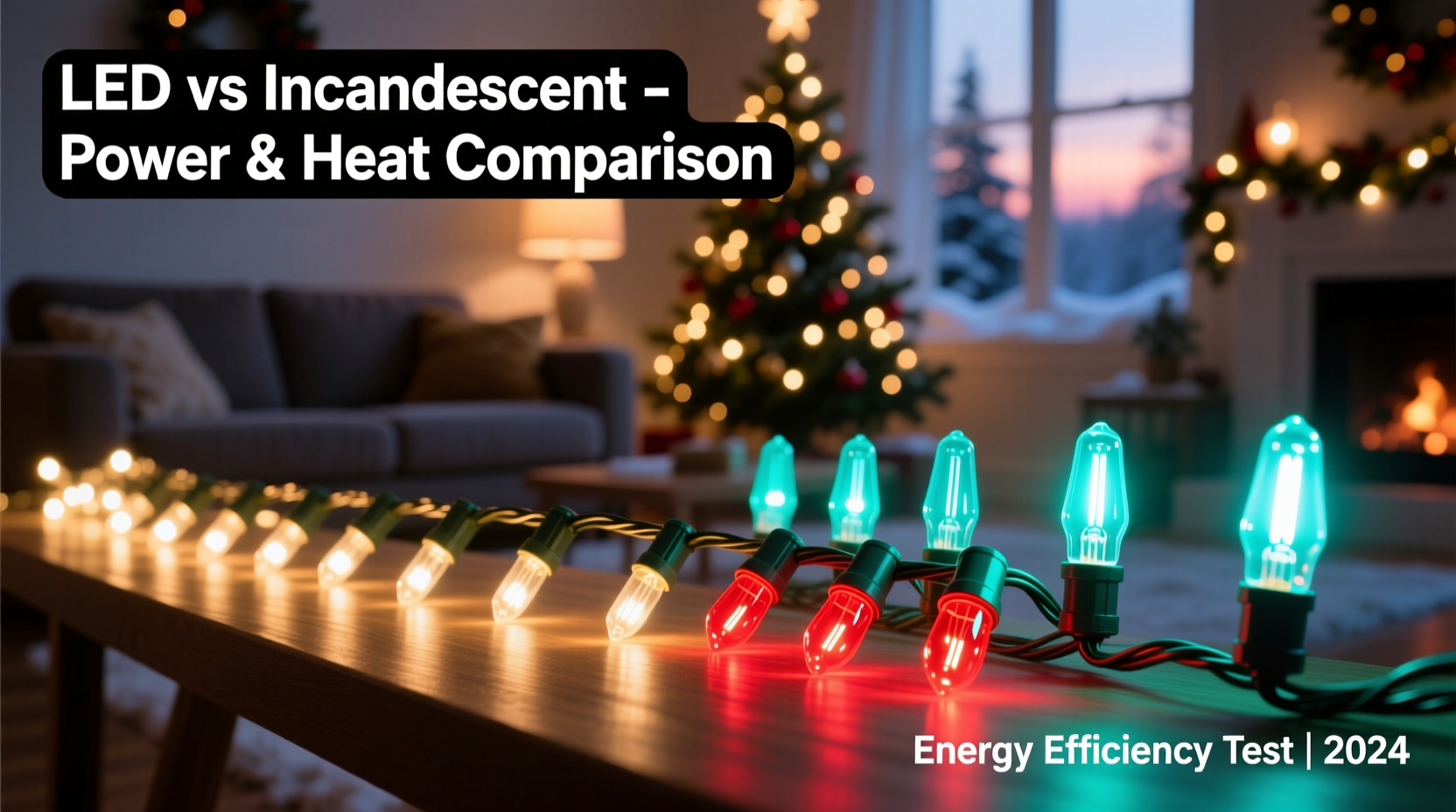
Incandescent Christmas lights have been a staple since the early 20th century. Their operation is simple: electricity passes through a thin tungsten filament inside a small glass bulb. As current flows, the filament heats to extremely high temperatures—typically around 2,500°C (4,500°F)—causing it to glow and emit visible light. This process, known as incandescence, is inherently inefficient because over 90% of the energy consumed is released as heat rather than light.
This inefficiency explains why incandescent strings feel warm—or even hot—to the touch after being on for a short time. In confined spaces like indoor trees or tightly wound garlands, this heat can accumulate. While individual bulbs may not pose an immediate fire hazard under normal conditions, the cumulative effect increases risk, especially when combined with dry Christmas trees or flammable materials nearby.
Tip: Never leave incandescent Christmas lights unattended for long periods, especially overnight or when leaving the house.The Science Behind LED Lighting and Thermal Efficiency
Light Emitting Diodes (LEDs) operate on a fundamentally different principle. Instead of heating a filament, LEDs produce light through electroluminescence—a process where electrons move through a semiconductor material, releasing photons (light particles) in the process. This method generates very little waste heat compared to incandescent technology.
While LEDs do produce some heat, it’s primarily at the base of the diode within the electronic components, not radiated outward like in incandescent bulbs. Because of their low thermal output, LED Christmas lights remain cool to the touch even after hours of continuous use. This makes them significantly safer for use on artificial trees, near fabrics, or in children's rooms.
Beyond safety, the minimal heat generation contributes to longer lifespans. Excessive heat degrades materials over time, including wiring insulation and bulb enclosures. LEDs avoid this degradation pathway, allowing many models to last 25,000 to 50,000 hours—up to ten times longer than traditional incandescent strings.
“LED technology represents a quantum leap in decorative lighting—not just in efficiency, but in reducing fire risks associated with older technologies.” — Dr. Alan Reeves, Electrical Safety Engineer, National Fire Protection Association
Power Consumption: A Clear Winner Emerges
When comparing energy usage, the difference between LED and incandescent Christmas lights is dramatic. Consider a typical string of 100 mini lights:
| Type | Wattage per String (100 lights) | Average Power Use (6 hrs/night, 30 days) | Estimated Cost @ $0.13/kWh |
|---|---|---|---|
| Incandescent | 40 watts | 7.2 kWh | $0.94 |
| LED | 4.8 watts | 0.86 kWh | $0.11 |
The numbers speak clearly: LED lights use about 85–90% less electricity than their incandescent counterparts. For larger displays involving multiple strands—such as roof outlines, lawn figures, or multi-tree setups—the savings compound quickly. A homeowner using 20 strings would consume nearly 144 kWh with incandescent lights (costing ~$18.70), versus just under 17 kWh with LEDs (~$2.25).
Over a decade of seasonal use, those savings exceed $150—even before factoring in replacement costs from burned-out incandescent bulbs. Utility companies often report spikes in residential energy demand during December, much of it attributable to decorative lighting. Switching to LEDs helps reduce grid strain and lowers personal electric bills without sacrificing brightness or ambiance.
Safety Implications: Heat Output Matters More Than You Think
The temperature difference between LED and incandescent lights has real-world consequences. Independent tests show that after 30 minutes of operation, incandescent mini-lights can reach surface temperatures between 40°C and 50°C (104°F to 122°F), while LEDs typically stay below 30°C (86°F)—close to room temperature.
In one documented incident in suburban Ohio, a family’s dry artificial tree ignited after coming into contact with a cluster of overheated incandescent lights left on overnight. Though no injuries occurred, the fire caused significant property damage. Fire safety experts cite such cases as preventable, emphasizing that cooler-running LEDs greatly reduce ignition risks.
Additionally, municipalities and housing associations increasingly regulate outdoor lighting due to fire codes and energy ordinances. Some historic districts now require LED-only installations for public holiday displays. Even insurance providers may offer discounts for homes using low-heat, energy-efficient lighting systems.
Mini Case Study: The Johnson Family Display Upgrade
The Johnsons in Portland, Oregon, maintained a beloved tradition of decorating their front yard with hundreds of multicolored lights each December. Their original setup included 15 strings of incandescent lights totaling over 600 watts. After receiving a shockingly high electric bill one January ($47 increase month-over-month), they decided to investigate alternatives.
They replaced all incandescent strings with equivalent LED versions, cutting total wattage to just 72 watts. Not only did their next holiday bill show no noticeable spike, but they also noticed the lights stayed bright throughout the season without any failures. Their youngest child, who had previously burned her hand touching a warm bulb, now safely helped decorate. Within two seasons, the cost savings covered the price of the new lights.
Long-Term Value and Environmental Impact
While LED Christmas lights often carry a higher upfront cost—ranging from $8 to $15 per string compared to $3 to $6 for incandescent—they pay for themselves over time. Durability is a major factor: LEDs resist breakage from vibration or weather, maintain consistent color over years, and suffer far fewer “dead bulb” issues common in older series-wired incandescent sets.
From an environmental standpoint, reduced energy consumption means lower carbon emissions. Assuming average U.S. electricity generation emits 0.85 pounds of CO₂ per kWh, a single incandescent string used seasonally produces about 6.1 pounds of CO₂ annually. An LED version produces just 0.73 pounds. Multiply that across millions of households, and the collective reduction exceeds tens of thousands of tons of greenhouse gases each year.
Tip: Look for ENERGY STAR® certified LED Christmas lights—they meet strict efficiency, longevity, and performance standards set by the U.S. Environmental Protection Agency.Checklist: Choosing the Right Lights for Your Home
- ✅ Determine total number of light strings needed for your display
- ✅ Calculate estimated wattage if using incandescent vs. LED options
- ✅ Check outlet load capacity—avoid daisy-chaining too many incandescent strings
- ✅ Prioritize LED lights for indoor trees, kids’ rooms, or flammable decor
- ✅ Choose warm-white LEDs for a traditional glow similar to incandescent
- ✅ Store lights properly in labeled containers after each season
- ✅ Inspect wires and plugs annually for wear, especially on older incandescent sets
Frequently Asked Questions
Do LED Christmas lights really use less power?
Yes, absolutely. LED lights typically consume 85–90% less electricity than incandescent lights. For example, a 100-light LED string uses about 4.8 watts versus 40 watts for incandescent. This translates into meaningful reductions in both energy bills and environmental impact.
Can incandescent Christmas lights start a fire?
While rare under proper use, yes, they can. Incandescent bulbs generate substantial heat, and when placed near dry Christmas trees, paper decorations, or damaged wiring, they increase fire risk. The National Fire Protection Association reports that decorative lighting is involved in an average of 70 home fires per year. Using LEDs reduces this hazard significantly.
Why do my LED lights sometimes flicker?
Flickering in LED Christmas lights is usually due to incompatible dimmer switches, voltage fluctuations, or poor connections in linked strings. Unlike incandescent bulbs, LEDs respond instantly to power changes, making minor inconsistencies more visible. Ensure you’re using non-dimmable LEDs on standard circuits and avoid mixing old and new batches unless designed to be combined.
Step-by-Step Guide to Transitioning from Incandescent to LED Lights
- Inventory Current Lights: Count how many strings you currently own and note their condition and placement.
- Assess Usage Patterns: Identify which displays run longest (e.g., porch vs. indoor tree) and prioritize upgrading those first.
- Research Quality Brands: Look for reputable manufacturers offering shatter-resistant LEDs with warranty protection (many offer 3+ year guarantees).
- Purchase in Phases: Replace 3–5 incandescent strings per year with LEDs to spread out costs.
- Test Before Full Installation: Plug in new LED strings indoors to check color consistency and brightness.
- Retire Old Sets Safely: Recycle incandescent lights through e-waste programs—do not dispose of in regular trash due to metal and glass content.
- Update Storage System: Label LED boxes separately and store coiled on cardboard reels to prevent wire kinks.
Conclusion: Make a Brighter, Safer Choice This Holiday Season
The evidence is overwhelming: LED Christmas lights burn cooler, use dramatically less power, last longer, and offer superior safety compared to incandescent bulbs. While tradition may favor the nostalgic warmth of old-style lights, modern LEDs now replicate that glow with precision—without the drawbacks. Whether you're decorating a small apartment window or orchestrating a neighborhood-famous display, switching to LED technology protects your home, saves money, and supports a more sustainable holiday season.
💬 Have questions about your current setup or want to share your switch to LED success story? Join the conversation below and help others make informed, safe lighting choices this year!








