Animated Christmas yard displays—talking snowmen, dancing reindeer, synchronized light shows with motion sensors, inflatable Santas that wave on command—are a growing fixture in North American neighborhoods each December. Yet for every household that invests hundreds (or thousands) in programmable, motorized holiday spectacles, there’s another that dreads the arrival of November, not for the joy of carols or cocoa, but for the looming sensory assault next door. This isn’t just grumbling about “too much tinsel.” It’s a layered, often unspoken tension rooted in neuroscience, urban sociology, cultural identity, and evolving expectations of shared space. Understanding why some people genuinely dislike—or even resent—animated yard displays is essential not only for thoughtful decorating but for sustaining neighborly goodwill during what should be a season of connection.
The Sensory Overload Factor: When Joy Becomes Exhaustion
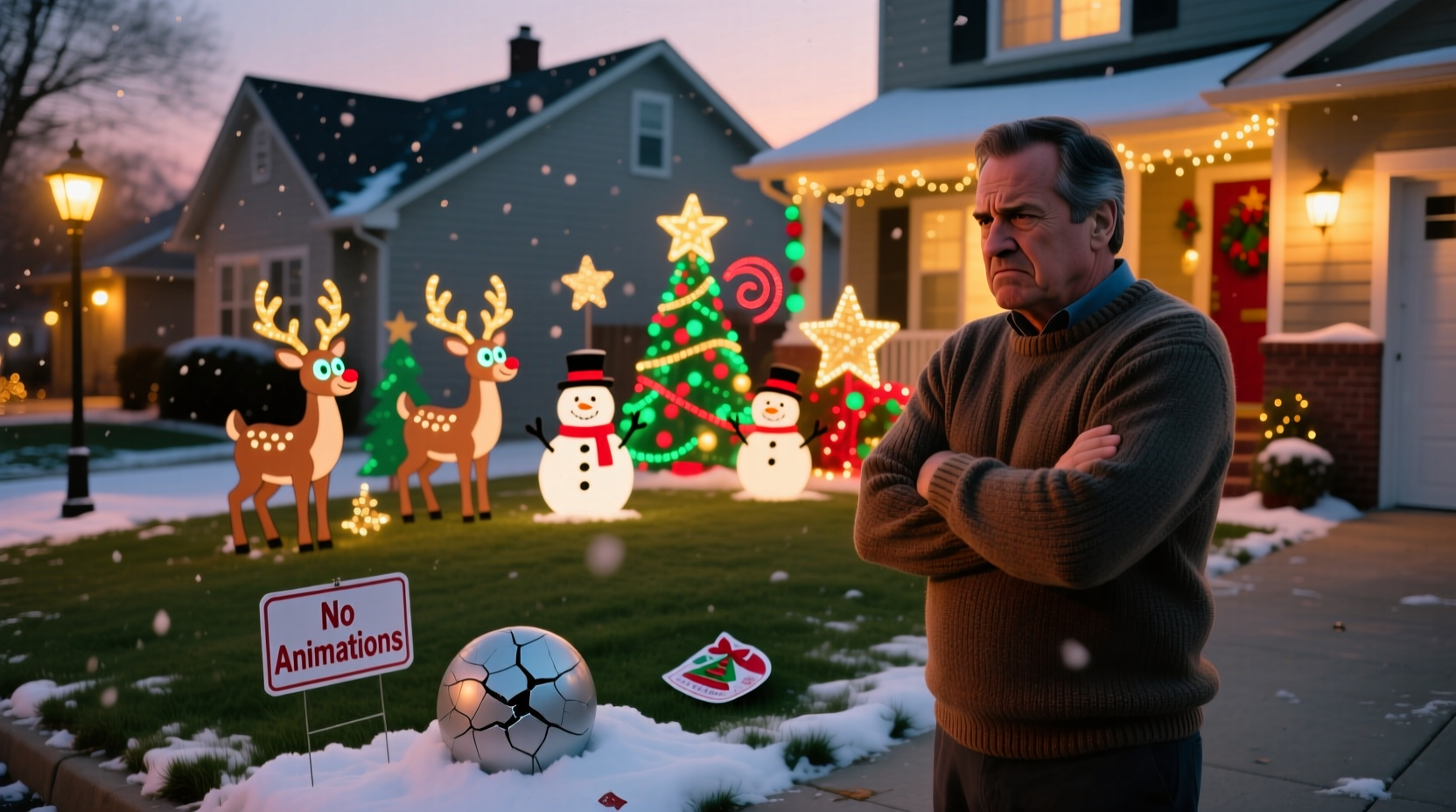
For many, the issue begins not with aesthetics or theology—but with physiology. Animated displays are engineered for impact: flashing LEDs, repetitive audio loops (often at 70–85 decibels), sudden movements, and strobing effects. While designed to delight children, these features can trigger measurable stress responses in adults and vulnerable populations. Neurologist Dr. Lena Torres explains: “The human visual cortex processes motion up to three times faster than static imagery. When combined with unpredictable sound cues and high-contrast lighting, especially at dusk or after dark, this creates a low-grade ‘threat detection’ state—even when consciously recognized as harmless.”
This effect is magnified for individuals with sensory processing sensitivity, autism spectrum traits, ADHD, PTSD, or chronic fatigue conditions. A 2023 survey by the National Institute for Environmental Health found that 68% of respondents with self-reported sound sensitivity reported increased anxiety or sleep disruption when exposed to neighborhood holiday audio displays lasting longer than 45 seconds per cycle. One participant noted, “It’s not that I don’t like Christmas—I love it. But hearing ‘Jingle Bells’ played by a robotic polar bear at 10:17 p.m., for the 14th time that night, feels like being trapped in a loop I didn’t consent to.”
Tip: If using audio in your display, limit playback to daylight hours (7 a.m.–9 p.m.), cap volume at 55 dB (equivalent to a quiet conversation), and avoid looping the same track more than twice consecutively.Cultural and Religious Dissonance: Beyond “Just Decor”
Animated displays rarely exist in a secular vacuum. Their narratives—Santa flying over rooftops, angels descending with trumpets, nativity scenes where shepherds bow in sync—are steeped in specific cultural frameworks. For families observing non-Christian holidays (such as Hanukkah, Eid al-Adha, or Diwali), or those raising children in secular or interfaith homes, these displays can feel exclusionary—not merely different, but dominant. They reinforce a public assumption that Christmas is the default winter celebration, making alternative traditions invisible by contrast.
A mini case study illustrates this: In Portland, Oregon, a Jewish family installed a large, illuminated menorah on their front lawn in early December. Within days, their neighbors erected a 12-foot motorized Santa that rotated slowly while reciting blessings from the Book of Luke through a weatherproof speaker. Though well-intentioned, the juxtaposition created tension—not because either display was inherently offensive, but because the scale, motion, and vocal component of the Santa display unintentionally overwhelmed the quieter, symbolic presence of the menorah. The family reported fielding repeated questions from passersby asking, “Is your menorah part of the Christmas show?”—a question that reduced their sacred symbol to scenic backdrop.
This dynamic reflects what sociologist Dr. Marcus Bell terms “ambient religious hegemony”: when one tradition’s iconography becomes so ubiquitous, animated, and technologically amplified that it sets the ambient tone of public space—leaving others to either assimilate, retreat, or protest.
The Erosion of Residential Quiet: When Neighborhoods Lose Their Rhythm
Historically, residential neighborhoods operated on an implicit social contract: shared expectations around noise, light, and temporal boundaries. Yard decorations were static—wreaths, garlands, string lights—designed to complement, not command, attention. Animated displays disrupt that equilibrium. Unlike interior holiday lights, which remain contained, motorized figures project movement, sound, and light into shared airspace—crossing property lines in ways that are physically tangible but legally ambiguous.
Consider the timeline of a typical animated display’s nightly operation:
- 5:30 p.m. – Lights activate; subtle LED shimmer begins.
- 6:15 p.m. – First motion sequence starts: reindeer nod, snowman blinks.
- 7:00 p.m. – Audio loop initiates (“Ho ho ho! Merry Christmas!”).
- 8:45 p.m. – Synchronized light-and-motion sequence triggers every 90 seconds.
- 10:30 p.m. – Display remains active until midnight—though audio may pause, motion continues.
For residents working night shifts, caring for infants, or managing chronic pain, this rhythm undermines rest, concentration, and recovery. Municipal noise ordinances rarely cover “holiday-specific” audio, and zoning codes seldom address light pollution from private property—leaving affected neighbors without recourse beyond polite requests or strained conversations.
The “More Is More” Escalation and Social Comparison Stress
What began as a friendly neighborhood contest—“Who has the best light display?”—has evolved into a competitive, tech-driven arms race. Social media platforms amplify this trend: YouTube tutorials teach viewers how to synchronize 300+ lights via Raspberry Pi; TikTok influencers showcase $2,500 animatronic nativity sets with facial recognition cameras; Facebook groups trade firmware hacks to make inflatable characters “dance in time to Spotify playlists.”
This escalation carries unintended social consequences. Homeowners who choose simplicity—perhaps due to budget, disability, caregiving demands, or personal values—can begin to feel like outliers. A 2022 Pew Research study found that 41% of adults aged 35–64 reported feeling “mild to moderate pressure” to increase holiday display complexity after viewing neighbors’ setups—especially when those displays included motion, sound, or internet-connected features. As one respondent wrote: “I love my simple wreath and candle lanterns. But now when people walk by, they glance at my house, then look down the street at the house with the singing robot elf, and say, ‘Oh—cute.’ It’s not judgmental, but it lands like a dismissal.”
The psychological weight isn’t just about keeping up—it’s about visibility. Static decor says, “We celebrate.” Animated decor says, “We invest, we engineer, we entertain—and you are part of our audience whether you opted in or not.” That shift in relational framing unsettles many.
Do’s and Don’ts of Thoughtful Animated Decorating
Moving beyond critique, the goal isn’t to eliminate animated displays—but to steward them with communal awareness. Below is a practical, evidence-informed framework for balancing creative expression with neighborly respect.
| Action | Do | Don’t |
|---|---|---|
| Audio Use | Use directional speakers aimed toward your yard; limit audio to 7 a.m.–9 p.m.; select instrumental versions over vocal tracks. | Install omnidirectional speakers near property lines; play audio after 9 p.m.; use recordings with loud laughter, bells, or shouting. |
| Motion Design | Program slower, more natural movement cycles (e.g., 10-second nod vs. 2-second jerk); avoid rapid blinking or strobing. | Use erratic, jerky motions; include flashing red/blue lights reminiscent of emergency vehicles. |
| Light Management | Install timers with dimming functions for post-9 p.m.; shield LEDs to prevent glare into adjacent windows. | Run full-brightness displays all night; aim spotlights at neighboring homes or sidewalks. |
| Community Engagement | Share your display schedule with neighbors in advance; offer printed QR codes linking to mute options or showtimes. | Assume universal enthusiasm; install displays without prior notice during sensitive times (e.g., exam weeks, elder care transitions). |
| Scale & Placement | Keep motorized figures under 6 feet tall if within 25 feet of a property line; place audio sources behind shrubbery or fences. | Install life-sized moving figures directly facing adjacent bedrooms; mount speakers on eaves overlooking patios or decks. |
Expert Insight: Designing for Shared Humanity
Urban designer and inclusive placemaking consultant Maya Chen emphasizes that holiday decor sits at the intersection of personal expression and public infrastructure: “A front yard isn’t just private land—it’s civic interface. When we animate that space, we’re designing a micro-public square. The most successful displays don’t shout; they invite. They offer rhythm, not repetition. Warmth, not wattage. And crucially—they build in off-ramps: moments of stillness, zones of quiet, visual breathing room. That’s not restraint. That’s responsibility.”
“Animation should deepen meaning—not drown it out. A single, gently swaying angel figure lit by soft amber light can evoke more reverence than a dozen flashing, talking Santas. Motion earns its place when it serves stillness, not replaces it.” — Maya Chen, FAIA, Director of Public Space Equity Initiative
FAQ
Can I legally require my neighbor to turn off their animated display?
Generally, no—unless it violates specific municipal codes. Most cities lack ordinances targeting holiday-specific motion or light. However, if audio exceeds local noise limits (typically 55–60 dB after 10 p.m.) or causes documented light trespass (e.g., blinding glare into a bedroom window), you may file a complaint with code enforcement. Success depends on measured evidence—not subjective discomfort.
Are there ADA-compliant alternatives to animated displays?
Yes. Tactile elements (braille-labeled ornaments), scent-based installations (cinnamon-scented pine cones in weatherproof bowls), and vibration-responsive lighting (lights that pulse gently when someone claps nearby) offer inclusive, low-stimulus engagement. Many communities now host “Quiet Night” events where animated displays power down for two hours weekly to accommodate neurodiverse attendees.
How do I talk to a neighbor about their display without causing offense?
Lead with shared values, not critique: “I really admire how much joy your display brings to kids on the block. Would you be open to a quick suggestion? My partner works nights, and the audio loop after 9 p.m. makes rest difficult. Could we explore a timer or volume adjustment?” Framing it as collaboration—not correction—yields far higher success rates.
Conclusion
Holiday displays are never neutral. They carry memory, meaning, and momentum—both cultural and personal. Animated yard displays reflect real creativity, technical skill, and heartfelt generosity. Yet their impact extends beyond the creator’s intent into the lived experience of everyone nearby. Recognizing why some people resist them isn’t about stifling joy—it’s about expanding the definition of what joyful celebration looks, sounds, and feels like for *all* who share this season, this street, this community. Whether you’re installing your first dancing snowman or choosing to hang a single hand-painted ornament on your porch, intentionality matters more than intensity. Let this December be the year your display doesn’t just capture attention—but honors attention spans, protects peace, and leaves space for stillness amid the sparkle.
💬 Your neighborhood’s holiday atmosphere starts with one thoughtful choice. Share this article with a fellow decorator—or a neighbor you’ve been meaning to connect with. Because the most meaningful light we can add this season isn’t LED—it’s understanding.