The sight of a decorated evergreen tree adorned with twinkling lights and surrounded by brightly wrapped presents is one of the most iconic images of the holiday season. But have you ever paused to wonder why those gifts are placed specifically under the tree rather than beside it or in another part of the room? This seemingly small detail carries layers of history, symbolism, and practical tradition that stretch back centuries. Understanding the origins and evolution of this custom reveals more than just holiday aesthetics—it reflects how cultural values, religious beliefs, and family rituals have shaped modern celebrations.
Historical Origins of the Christmas Tree Tradition
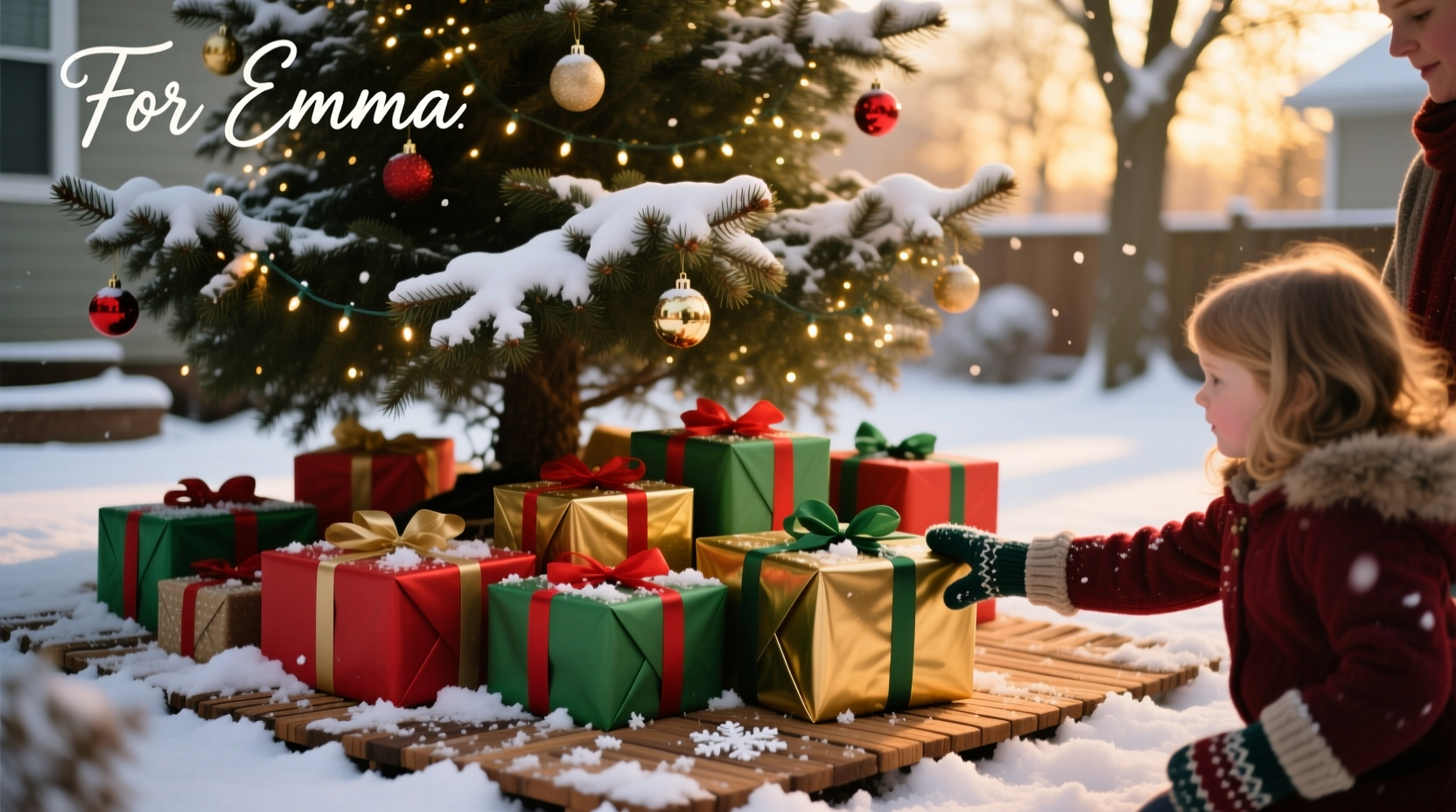
The practice of bringing evergreen trees indoors during winter predates Christianity. Ancient civilizations across Europe—including the Romans, Celts, and Germanic peoples—used evergreens as symbols of life and renewal during the winter solstice. These trees were believed to ward off evil spirits, illness, and darkness during the coldest, shortest days of the year.
The modern Christmas tree as we know it began in 16th-century Germany. Devout Christians in regions like Alsace and the Rhineland started decorating fir trees with candles, fruits, nuts, and paper ornaments. Martin Luther, the Protestant reformer, is often credited (though likely apocryphally) with adding lighted candles to mimic the stars he saw shining through the branches on a winter night.
At first, gifts were not placed under the tree. Instead, they were hung directly on the branches or left near the hearth. Children would find small tokens, apples, or gingerbread tucked into the boughs—a practice that made the tree itself a living gift-giver. Over time, as decorations became more elaborate and fragile, placing gifts beneath the tree became a safer and more practical alternative.
The Shift from Hanging to Placing Gifts Under the Tree
By the 18th and 19th centuries, the Christmas tree had become a central feature in German households. As industrialization brought mass-produced ornaments, toys, and wrapping paper, the volume and size of gifts increased. Larger items like dolls, toy soldiers, and books could no longer be suspended from branches without risk of damage or imbalance.
This practical limitation led families to begin placing larger presents at the base of the tree. The transition was gradual but accelerated when Queen Victoria and Prince Albert popularized the German-style Christmas tree in England after their 1848 appearance in the Illustrated London News, depicted with a decorated tree surrounded by their children. The image sparked widespread imitation across Britain and North America.
In Victorian homes, the tree often stood in the parlor, and placing gifts beneath it created a dramatic focal point. It also reinforced the idea of the tree as a magical source of generosity—children would wake to find the space underneath transformed overnight, as if the tree itself had produced the bounty.
“Placing gifts under the tree turned the evergreen into a symbol of abundance and divine blessing. It wasn’t just decoration; it became an altar of giving.” — Dr. Eleanor Finch, Cultural Historian of Holiday Traditions
Spiritual and Symbolic Meanings Behind the Placement
Beyond practicality, the placement of gifts under the tree carries deep symbolic resonance. In Christian theology, the evergreen represents eternal life through Christ. By placing gifts beneath it, families subtly reinforce the idea that all good things—material and spiritual—flow from this central truth.
The tree’s triangular shape has long been associated with the Holy Trinity: Father, Son, and Holy Spirit. Gifts at its base can be seen as offerings received through grace, echoing the biblical Magi who presented gold, frankincense, and myrrh at the feet of the infant Jesus.
Psychologically, the act of gathering around the tree to exchange gifts fosters intimacy and unity. Unlike stacking presents on a table or shelf, positioning them under the tree creates a shared ritual space. Everyone must gather close, often sitting on the floor, which levels social hierarchies and encourages connection—especially between generations.
Tip: To enhance the symbolic meaning, involve children in placing one special gift under the tree the night before Christmas—a representation of gratitude or giving back.Cultural Variations and Modern Adaptations
While placing gifts under the tree dominates in English-speaking countries, customs vary worldwide. In some Latin American cultures, gifts arrive on January 6 for Epiphany and may be left by the door or near a nativity scene rather than under a tree. In the Philippines, where real trees are rare, handmade parol lanterns take center stage, and presents are often grouped nearby rather than strictly underneath.
In Japan, Christmas is more of a romantic holiday than a family-centered one, and gift-giving often involves dining out or exchanging small tokens—no tree required. Meanwhile, in Scandinavian countries like Sweden, families may place gifts around a central straw goat or gnome figure rather than an evergreen.
Modern adaptations include using artificial trees with built-in storage compartments, LED-lit bases designed to highlight presents, and even “gift shelves” attached to the lower trunk. Some eco-conscious families opt for minimal wrapping or reusable cloth bags to reduce waste while preserving tradition.
Global Gift-Placing Customs Compared
| Country/Region | Primary Gift Location | Associated Figure | Key Date |
|---|---|---|---|
| Germany | Under the tree | Christkind / Weihnachtsmann | December 24 |
| United States | Under the tree | Santa Claus | December 25 |
| Mexico | Nativity scene or doorway | Los Reyes Magos | January 6 |
| Italy | By the fireplace or stockings | La Befana | January 6 |
| Australia | Under the tree (often artificial) | Santa Claus | December 25 |
Why Not Beside the Tree? Practical and Psychological Factors
Given the option, why did “under” prevail over “beside”? Several factors explain this preference:
- Visual Hierarchy: Placing gifts under the tree creates a natural pyramid effect, drawing the eye upward from the presents to the treetop star or angel, reinforcing a sense of order and celebration.
- Space Efficiency: In smaller homes or apartments, clustering gifts beneath the tree conserves floor space compared to spreading them around the perimeter.
- Ritual Anticipation: Concealing gifts under low-hanging branches adds mystery. Children peek underneath, building excitement without revealing everything at once.
- Photogenic Appeal: The arrangement is highly photogenic, making it ideal for holiday cards and social media—something that has reinforced the tradition in the digital age.
- Tradition Reinforcement: Once established, the pattern became self-perpetuating. Media, advertising, and literature consistently depict gifts under the tree, normalizing the practice.
Attempts to place gifts beside the tree often feel disjointed or incomplete. Without the visual anchor of stacked boxes beneath the trunk, the display lacks cohesion. Retailers capitalize on this: pre-decorated trees in stores always include a pile of presents underneath, shaping consumer expectations.
Step-by-Step: How to Arrange Gifts Under the Tree for Maximum Impact
Arranging presents under the tree isn’t just about stacking boxes—it’s an art form that enhances the magic of the season. Follow these steps to create a visually appealing and meaningful display:
- Start with larger packages as a base. Use big, flat-wrapped items to form a foundation. Position them vertically against the trunk for stability and depth.
- Layer in medium and small gifts. Tuck smaller boxes between larger ones to avoid gaps. Vary colors and patterns to create visual interest.
- Incorporate texture. Add fabric-wrapped gifts, wooden crates, or baskets to break up glossy paper and introduce warmth.
- Leave space for lighting. Ensure strands from the tree reach the floor or use battery-operated fairy lights beneath to illuminate the area softly.
- Add a personal touch. Include handwritten tags, sprigs of holly, or miniature ornaments nestled among the packages.
- Reserve one spot for Christmas morning. Leave a small gap or mark a spot where Santa will leave the final gift, maintaining the illusion of surprise.
Mini Case Study: The Thompson Family’s Tree Tradition
The Thompsons of Portland, Oregon, have maintained a strict gift-under-the-tree rule for four generations. Great-grandmother Margaret began the tradition in 1932 during the Great Depression, when resources were scarce. She wrapped each gift in repurposed newspaper and placed them carefully beneath a small balsam fir, insisting they stay hidden until dawn.
Her grandson, David Thompson, now continues the practice with his own children. “We don’t just dump the presents,” he says. “We arrange them like a mosaic. Each one has a story. My daughter knows her grandmother’s first gift was a hand-knitted scarf placed right at the front.”
Last year, when a pet dog knocked over the tree, the family chose to rebuild the display together rather than abandon it. “It wasn’t about the gifts,” David recalls. “It was about restoring the symbol—the center of our holiday.”
Their experience illustrates how the physical placement of gifts becomes intertwined with emotional memory and family identity.
Frequently Asked Questions
Is it wrong to place gifts beside the tree?
No, there’s no universal rule. While “under” is traditional, practical constraints like space or accessibility may make “beside” more suitable. The key is intentionality—choose a method that works for your household and feels meaningful.
When did Santa Claus become associated with leaving gifts under the tree?
The link solidified in the mid-19th century, particularly through Clement Clarke Moore’s 1823 poem *A Visit from St. Nicholas* (“‘Twas the Night Before Christmas”), which described Santa filling stockings hung by the chimney. As the tree gained popularity, illustrators and advertisers merged the two traditions, showing Santa placing gifts beneath the tree by the late 1800s.
Can I mix real and artificial gifts under the tree?
Absolutely. Many families blend physical presents with “experience gifts” represented by tokens—like a seashell for a beach vacation or a tiny ski for a resort trip. These can be placed under the tree alongside traditional packages to maintain visual harmony.
Checklist: Preparing Your Gift Display Under the Tree
- ✔ Measure available floor space to determine how many gifts fit comfortably
- ✔ Group gifts by recipient to simplify distribution on Christmas morning
- ✔ Use sturdy wrapping to prevent tearing from friction or moisture
- ✔ Avoid placing heavy items on top of delicate ones
- ✔ Incorporate non-gift elements like pinecones or candles for ambiance
- ✔ Take a photo before unwrapping to preserve the moment
Conclusion: More Than Just a Spot for Presents
The tradition of placing gifts under the tree is far more than a decorative choice—it’s a convergence of history, symbolism, and human connection. From ancient solstice rites to Victorian parlors and modern living rooms, this simple act has endured because it speaks to something fundamental: our desire to gather, give, and celebrate hope during the darkest time of the year.
Whether you follow the custom strictly or adapt it to your family’s needs, the space beneath the tree remains a powerful symbol of anticipation, love, and renewal. It invites us to slow down, appreciate the moment, and remember that the best gifts aren’t just wrapped in paper—they’re found in presence, memory, and shared joy.
💬 How does your family arrange holiday gifts? Share your traditions, photos, or creative ideas in the comments—let’s keep the conversation growing!








