Every winter, as homes fill with lights and carols echo through neighborhoods, millions of families reach into storage boxes to retrieve ornaments that have survived decades. These aren’t just decorations—they’re fragments of memory, passed down like sacred relics. Heirloom Christmas decorations—whether a hand-blown glass ball from 1952, a crocheted angel made by a grandmother, or a lopsided clay reindeer crafted in elementary school—carry emotional weight far beyond their physical form. But why do people preserve these items so fiercely? The answer lies not in aesthetics or monetary worth, but in the intricate web of identity, memory, and belonging that they represent.
The Emotional Anchor of Holiday Traditions
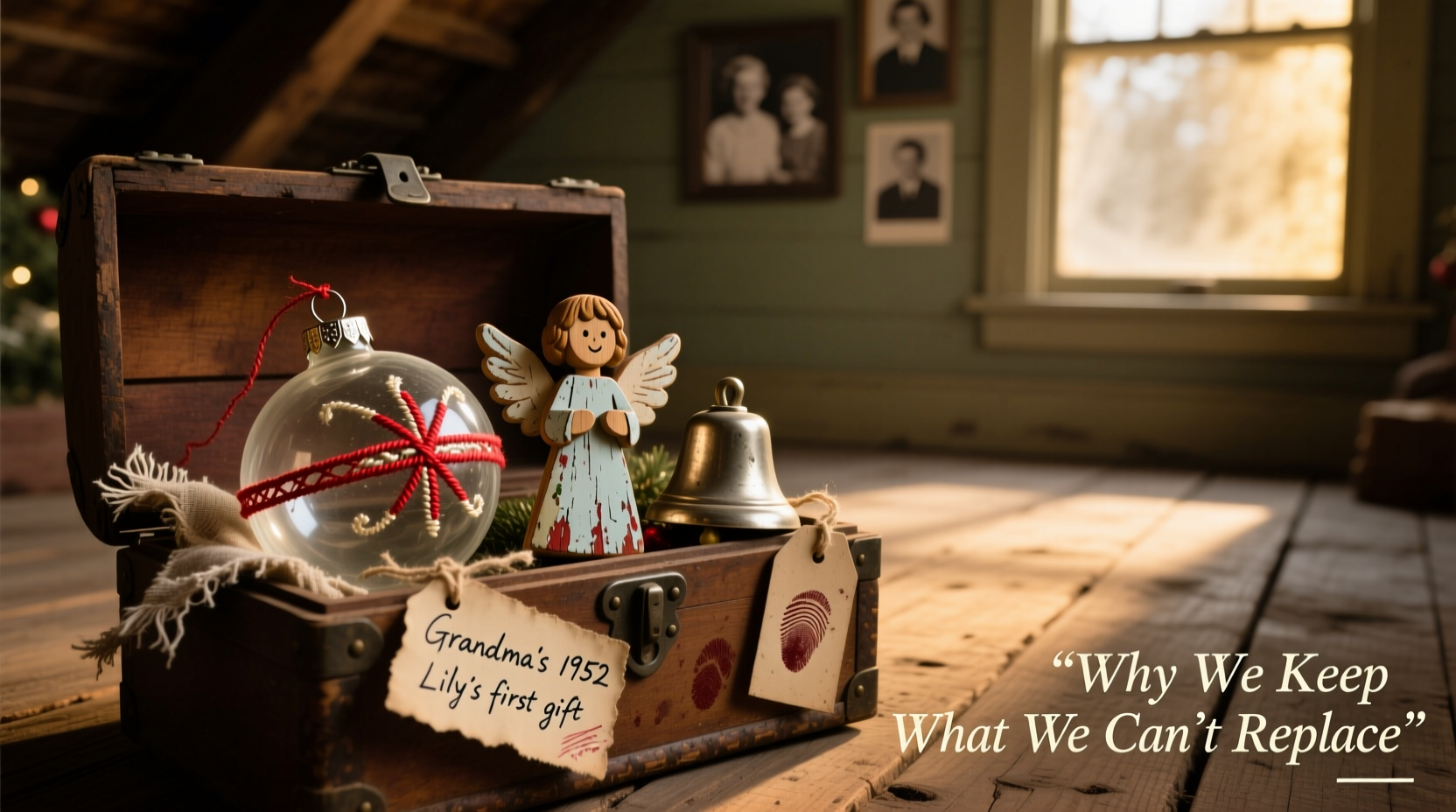
Christmas is one of the few annual events where time seems to fold in on itself. Adults become children again as they unpack familiar ornaments, retell stories of past Christmases, and recreate rituals perfected over generations. Heirloom decorations serve as emotional anchors in this process. They ground the present moment in a shared history, offering continuity amid life’s inevitable changes.
Psychologists refer to this phenomenon as “autobiographical memory consolidation.” Objects associated with emotionally significant events become mental bookmarks. A chipped Santa Claus figurine might not look impressive on its own, but when paired with memories of childhood excitement, it becomes irreplaceable. The act of handling such an ornament each year reactivates neural pathways tied to joy, safety, and familial love.
“Objects become vessels of memory. When we touch an ornament our mother hung, we aren’t just seeing it—we’re reliving moments through it.” — Dr. Rebecca Langston, Cultural Psychologist at Columbia University
This sensory connection strengthens intergenerational bonds. Parents who explain the origin of each piece to their children are not merely decorating a tree—they are narrating family history. In doing so, they foster a sense of identity rooted in continuity rather than isolation.
Tip: Pair each heirloom decoration with a short written note explaining its origin. Tuck it into the storage box so future generations understand its significance.Symbolism and Identity in Decorative Choices
Heirloom decorations often reflect more than personal taste—they mirror cultural values, migration histories, and socioeconomic backgrounds. For example, a family with Eastern European roots may preserve handmade paper snowflakes or painted eggs adapted for winter use, blending old-world customs with new-world holidays. These choices signal resilience and adaptation, silently asserting, “We remember where we came from.”
In many cases, preserving certain decorations becomes a quiet act of resistance against homogenization. As mass-produced ornaments dominate retail shelves, handcrafted heirlooms stand out as declarations of individuality. Their imperfections—the uneven glaze, the slightly frayed ribbon—are not flaws but badges of authenticity.
Moreover, the selective preservation of specific items reveals subconscious priorities. Families tend to keep decorations associated with pivotal life events: a star added the year a child was born, a bell hung after surviving illness, or a new ornament following immigration. Over time, the tree transforms into a three-dimensional timeline, each piece marking a milestone.
How Heirlooms Reflect Family Narratives
| Ornament Type | Common Symbolism | Emotional Association |
|---|---|---|
| Handmade Craft (e.g., popsicle stick sled) | Childhood innocence, parental pride | Nostalgia, warmth |
| Vintage Glass Ball (pre-1970s) | Economic era, craftsmanship appreciation | Legacy, refinement |
| Religious Figurine (e.g., nativity scene) | Spiritual continuity, faith transmission | Reverence, tradition |
| Photo Ornament | Personal memory preservation | Grief, celebration, remembrance |
| Military-Themed Decoration | Sacrifice, service, patriotism | Pride, loss, honor |
The table above illustrates how different types of heirloom decorations carry distinct symbolic meanings. While some emphasize joy and celebration, others quietly acknowledge hardship and endurance. Together, they create a balanced emotional landscape—one that reflects real family experiences, not idealized versions of them.
The Role of Ritual in Emotional Preservation
Rituals provide structure during emotionally charged times. The deliberate repetition of actions—unwrapping each ornament carefully, telling the same story about Great Aunt Clara’s ceramic penguin, placing the star last—creates psychological safety. This predictability is especially comforting during periods of change, such as aging parents, empty nests, or bereavement.
When a loved one passes away, their favorite ornament often takes on new meaning. Hanging it becomes an act of remembrance, a way to include them symbolically in the celebration. Grief experts note that such rituals help integrate loss into ongoing life rather than suppressing it. Rather than saying, “They’re gone,” families say, “They’re still here—with us, on the tree.”
This ritualistic reuse also reinforces responsibility. Children entrusted with hanging a fragile heirloom learn early about stewardship. They internalize the message: *This matters because we say it does.* That simple belief—that collective agreement imbues objects with meaning—is foundational to cultural continuity.
Mini Case Study: The Johnson Family Tree Tradition
The Johnsons of Minneapolis have maintained the same Christmas tree ritual since 1963. Every December 1st, the entire family gathers to decorate a live fir in their living room. At the center of the tradition is a small wooden sleigh, carved by matriarch Eleanor Johnson during World War II while her husband served overseas. Though simple in design, the sleigh has been placed front-and-center on every tree for over sixty years.
When Eleanor passed in 2010, her granddaughter Maria took over narration duties. Now, before any other ornament goes up, Maria tells the story of how Eleanor used scrap wood from packing crates to make the sleigh, hoping it would bring good luck for her husband’s return. The tale ends with the couple reunited in 1945, dancing in the kitchen to Bing Crosby’s “White Christmas.”
Over time, younger cousins began adding their own notes to the story, asking questions about wartime shortages and what music their ancestors listened to. What started as a personal keepsake evolved into a living oral history project—all sparked by one small wooden object.
Practical Steps to Preserve Sentimental Value
Sentimental value doesn’t sustain itself—it must be actively nurtured. Without intentionality, even the most cherished heirlooms can fade into obscurity. Below is a step-by-step guide to ensuring these decorations remain meaningful across generations.
- Document Origins: Record when, where, and by whom each ornament was made or acquired. Use voice memos, handwritten cards, or digital spreadsheets.
- Assign Meaning During Use: Verbally share stories while decorating. Make storytelling part of the ritual.
- Rotate Responsibility: Let different family members lead the decoration process each year to distribute emotional ownership.
- Photograph the Display: Take annual photos of the fully decorated tree, focusing on key heirlooms. Create a visual archive.
- Create a Legacy Kit: Store all related documents, extra ribbons, repair materials, and care instructions with the decorations.
Checklist: Preserving Your Heirloom Decorations
- ☑ Inventory all heirloom decorations annually
- ☑ Attach origin stories or tags to each item
- ☑ Store in climate-appropriate conditions (avoid attics and basements)
- ☑ Involve younger family members in setup and storytelling
- ☑ Digitize photos and recordings for backup
- ☑ Repair damaged pieces promptly using archival methods
- ☑ Designate a family “custodian” responsible for long-term care
Challenges and Ethical Considerations
Not all family dynamics are harmonious, and heirloom preservation can sometimes intensify conflict. Who gets to decide which decorations are kept? What happens when siblings disagree on display practices? And how should families handle ornaments tied to painful memories—such as those from a marriage that ended in divorce or a home lost to tragedy?
There is no universal rulebook. Some families adopt rotating custody models, where key pieces travel between households on a yearly basis. Others choose to duplicate special ornaments using molds or replicas, allowing multiple branches to feel connected without physical scarcity.
In cases involving trauma, mental health professionals suggest acknowledging the complexity. An ornament doesn’t have to be displayed to be honored. It can be respectfully stored, photographed, or even ceremonially retired if it evokes more pain than peace. Preservation should serve emotional well-being—not undermine it.
“We don’t preserve objects for their own sake. We preserve them for ours—for the comfort, identity, and connection they give us.” — Dr. Alan Zhou, Director of the Human Memory Project at UC Berkeley
Frequently Asked Questions
Can I modernize heirloom decorations without losing their value?
Yes—thoughtful updates can enhance relevance. Replacing a broken hook or reinforcing a fragile base with archival materials maintains integrity. However, altering core elements (like repainting a hand-decorated surface) risks diminishing authenticity. When in doubt, consult a conservator or create a replica instead.
What should I do if my family doesn’t care about these decorations?
Start small. Share one story. Invite curiosity rather than demand reverence. Sometimes disinterest stems from unfamiliarity. Give younger relatives space to form their own connections. If engagement remains low, consider donating to historical societies or museums where the items may educate others.
How do I start building my own heirloom collection?
Begin with intentionality. Choose one or two meaningful ornaments each year—perhaps one handmade, one purchased to mark a milestone. Pair each with a dated note. Over time, this curated selection will carry the same emotional depth as older collections.
Conclusion: Honor the Past, Shape the Future
Heirloom Christmas decorations endure not because they are beautiful, but because they are meaningful. They are silent witnesses to laughter, tears, reunions, and farewells. Each scratch, chip, and faded color tells a story—not of perfection, but of presence. In a world increasingly defined by disposability, these objects remind us that some things are worth keeping simply because they connect us to who we were—and who we still are.
The true legacy of an heirloom isn’t its survival, but its ability to spark conversation, evoke emotion, and inspire continuity. Whether you’re dusting off a vintage nutcracker or helping a child hang their first ornament, you’re participating in something timeless: the human need to belong, to remember, and to hope.
💬 What’s the most meaningful ornament in your collection? Share its story in the comments and help keep the spirit of tradition alive.








