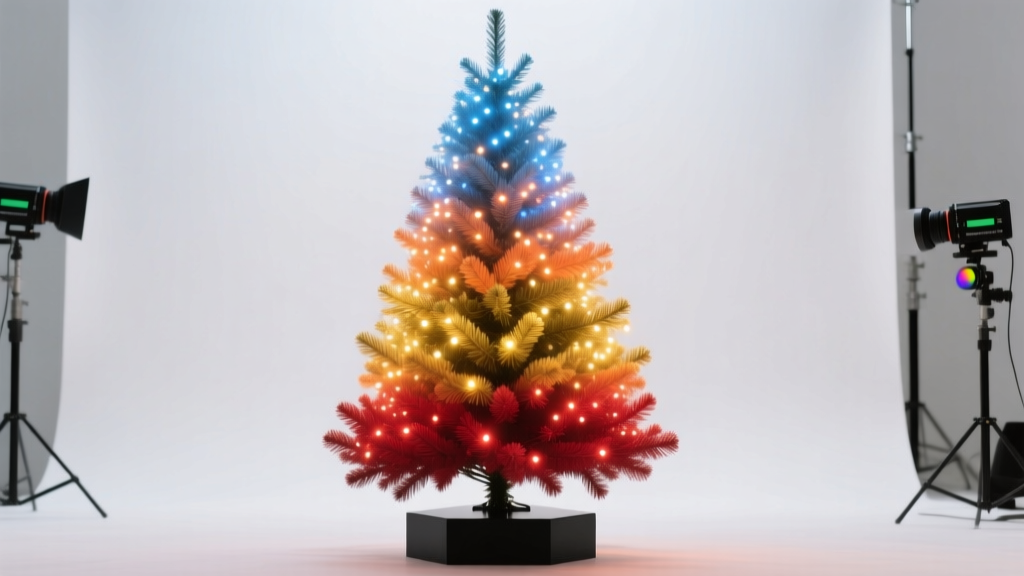
Walk into almost any corporate holiday gathering in November or December—whether it’s a tech startup’s rooftop soiree, a law firm’s ballroom reception, or a university department’s cozy lounge celebration—and you’ll notice something consistent: the overhead fluorescents are off, the ceiling is draped in delicate golden-white fairy lights, and ambient light hovers just above twilight. It’s not accidental. This deliberate shift from bright, functional illumination to soft, layered, twinkling warmth reflects a sophisticated convergence of environmental psychology, social dynamics, hospitality design principles, and evolving workplace expectations. The preference isn’t about nostalgia or decoration alone—it’s a carefully calibrated atmospheric strategy that serves tangible human and organisational goals.
The Psychology of Light: How Dimness Lowers Social Resistance
Human beings are biologically wired to associate bright, even lighting with scrutiny, evaluation, and task-oriented environments—think open-plan offices, hospital examination rooms, or classroom settings. In contrast, lower light levels (typically 50–150 lux, compared to the 300–500 lux standard for office workspaces) signal psychological safety. Research published in the Journal of Environmental Psychology confirms that participants in dimly lit rooms report significantly higher levels of self-disclosure, relaxed posture, and willingness to engage in informal conversation—even with strangers. At an office party, where colleagues interact outside formal hierarchies, this matters deeply.
Fairy string lights amplify this effect through two key mechanisms: first, their low-intensity, point-source glow avoids glare and visual fatigue; second, their irregular, scattered distribution creates visual “soft edges”—a phenomenon interior designers call *luminous diffusion*. Unlike harsh downlights that cast sharp shadows and highlight imperfections, fairy lights wrap space in gentle gradation, subtly smoothing facial contours and reducing perceived judgment. The result is a room that feels less like a performance stage and more like a shared living room.
Tip: For maximum psychological comfort, position fairy lights at eye level or slightly above—never directly overhead—and avoid pairing them with bare bulbs or exposed LED strips.The Hospitality Blueprint: Why Offices Borrow from Bars and Boutique Hotels
Over the past decade, workplace design has increasingly borrowed from hospitality aesthetics—not as a gimmick, but as a response to shifting employee expectations. A 2023 Gensler Workplace Survey found that 78% of employees now rate “atmosphere and sensory experience” as equally important as food or entertainment when evaluating company events. Office parties no longer function solely as morale exercises; they’re experiential touchpoints that reinforce culture, signal appreciation, and influence retention.
Bars, lounges, and boutique hotels have long used dim, layered lighting to achieve three critical outcomes: (1) extended dwell time (people stay longer when lighting encourages lingering), (2) reduced auditory stress (lower light correlates with quieter, more conversational volume), and (3) perceived exclusivity (a softly lit space feels intentionally curated, not utilitarian). When HR teams commission a holiday party, they’re not just booking a venue—they’re designing a micro-experience. Fairy lights provide instant, scalable ambiance without requiring structural renovation or expensive lighting rigs. A single 10-metre strand can transform a conference room into a winter garden; ten strands can soften the acoustics and visual scale of a 200-person ballroom.
The Technical Advantage: Practical Benefits Beyond Aesthetics
Beyond mood and perception, dim lighting with fairy strings offers measurable logistical advantages—especially in multi-use office spaces. Consider the constraints most companies face: limited budget, short setup windows, non-permanent installations, and strict fire-safety compliance. Fairy lights excel here because they are lightweight, low-voltage (typically 12V or USB-powered), energy-efficient (drawing under 5W per 5-metre strand), and universally compatible with existing infrastructure. Unlike theatrical gels, gobos, or motorised dimmers, they require no electrician, no permits, and leave zero residue on ceilings or walls.
Moreover, their flexibility supports inclusive design. Bright lighting disproportionately affects neurodivergent individuals—particularly those with sensory processing sensitivity, migraine predisposition, or autism spectrum traits. A 2022 study by the UK’s National Autistic Society found that 63% of autistic professionals reported avoiding office social events due to overwhelming sensory conditions, with lighting cited as the top trigger. Dimmed, diffuse fairy lighting reduces visual overload while maintaining sufficient ambient light for navigation and accessibility—a rare win-win for both wellness and compliance.
| Lighting Feature | Fairy String Lights | Traditional Party Lighting (e.g., LED Par Cans) |
|---|---|---|
| Setup Time | Under 20 minutes for 50m coverage | 45+ minutes + rigging crew |
| Energy Use (per 10m) | 1.2–2.5W | 35–75W |
| Heat Emission | Negligible (LEDs remain cool) | Moderate to high (requires ventilation) |
| Accessibility Impact | Low visual stress, adaptable brightness | High flicker risk, potential glare |
| Post-Event Storage | Fits in standard shoebox; reusable for years | Requires padded case, calibration checks |
A Real-World Example: How One Finance Firm Transformed Its Culture Through Light
In 2021, London-based investment advisory firm Halstead & Rowe held its first post-pandemic office Christmas party in its newly renovated 8th-floor headquarters. Previous years’ events had been held in brightly lit hotel conference rooms—functional but forgettable. Attendance hovered around 45%, with feedback citing “feeling like I was at a board meeting” and “too much pressure to be ‘on’.”
For 2022, the People & Culture team collaborated with a lighting designer to reimagine the space. They installed over 1,200 metres of warm-white (2700K) fairy lights—woven through potted olive trees, suspended in loose cascades above the bar, wrapped around column bases, and strung along balcony railings. All overhead panels were dimmed to 10% capacity. Crucially, they added no additional colour, no strobes, no moving lights—just consistent, gentle luminance.
The results were immediate and quantifiable: attendance rose to 89%; average dwell time increased from 78 to 142 minutes; internal pulse survey scores for “felt psychologically safe” jumped 41 percentage points. More tellingly, six junior analysts later cited the party atmosphere as their primary reason for accepting full-time offers—specifically naming the lighting as “the first time I felt like I belonged, not just observed.” As HR Director Lena Cho noted in her year-end review: “We didn’t change our values—we made them feel real in the room.”
Expert Insight: What Lighting Designers and Organisational Psychologists Agree On
“Light doesn’t just illuminate space—it modulates behaviour. Dim, diffused light lowers cortisol, slows heart rate variability, and signals ‘this is not work time.’ Fairy lights work because they deliver that signal without pretence. They’re humble, warm, and human-scale—exactly what a corporate environment needs to temporarily suspend its own gravity.” — Dr. Aris Thorne, Environmental Psychologist & Fellow, Royal Institute of British Architects
“The magic isn’t in the lights themselves—it’s in the negative space they create. By removing brightness, you remove urgency. By adding twinkle, you add delight without demand. That balance is why fairy lights outperform every other decorative lighting option in hybrid, high-stakes social settings.” — Maya Lin, Principal Lighting Designer, Studio Lumina Collective
How to Implement It Right: A 5-Step Ambient Lighting Protocol
Adopting this approach isn’t about buying more lights—it’s about deploying them with intention. Follow this sequence to ensure your office party lighting achieves its full psychological and practical potential:
- Assess the baseline: Turn off all overhead lighting one hour before guests arrive. Measure ambient lux with a free smartphone app (e.g., Lux Light Meter). Target 80–120 lux at seated height.
- Layer, don’t spotlight: Use fairy lights exclusively for ambient fill—never as primary task lighting. Reserve focused light (e.g., small table lamps or pendant shades) only for food stations and registration desks.
- Control colour temperature: Stick to 2200K–2700K (warm white to amber). Avoid cool whites (4000K+) or RGB multicolour strings—these trigger alertness, not relaxation.
- Integrate tactically: Prioritise placement where people gather—above seating clusters, along drink service lines, and framing entryways. Avoid dangling lights directly over heads; aim for 1.8–2.2 metres above floor level.
- Test human impact, not wattage: Before finalising, invite three colleagues with varied sensory profiles to sit in the space for 10 minutes. Ask: “Does this feel welcoming or demanding? Calming or distracting? Where does your gaze naturally rest?” Adjust based on qualitative feedback—not technical specs.
FAQ
Won’t dim lighting make the space feel unsafe or unprofessional?
No—when executed thoughtfully, dim lighting enhances professionalism by signalling respect for human physiology. Safety is maintained through strategic placement of low-level path lighting (e.g., LED step lights along corridors) and ensuring no area falls below 30 lux. Professionalism lies in intentionality: a well-dimmed room communicates care, not neglect.
Can fairy lights be used in offices with strict fire regulations?
Yes—provided they are certified to relevant standards (e.g., UL 2299 in the US, BS EN 60598 in the UK) and powered via low-voltage transformers or USB hubs. Always use LED-only strings (no incandescent bulbs), keep leads untangled and away from high-traffic zones, and never drape lights over sprinkler heads or fire exits. Most modern commercial-grade fairy lights meet Class O fire rating requirements for surface spread of flame.
What if our office has high ceilings or large windows? Won’t the effect be lost?
Not at all—high ceilings actually amplify the benefit. Install lights in vertical columns (e.g., wrapped around tall planters or suspended from ceiling hooks in staggered heights) to create depth and scale. For large windows, hang strings in loose curtains or “icicle” formations along the frame—this draws the eye outward while softening harsh daylight transitions. The goal isn’t uniform brightness, but intentional focal warmth.
Conclusion
The quiet dominance of dim lighting and fairy strings at office Christmas parties reveals something deeper about where workplace culture is headed: toward intentionality over inertia, human-centred design over default functionality, and emotional resonance over transactional efficiency. This isn’t trend-chasing—it’s evidence-based environmental stewardship. Every strand of light represents a conscious choice to lower cognitive load, widen psychological bandwidth, and affirm that people matter more than productivity metrics—even for one evening a year.
You don’t need a lighting consultant or a six-figure budget to begin. Start with one strand. Drape it thoughtfully over a bookshelf in your team’s breakout area. Dim the overheads during your next Friday afternoon sync. Observe how voices soften, laughter lingers longer, and shoulders drop just a fraction. Atmosphere isn’t decoration—it’s dignity made visible. And sometimes, the most powerful cultural statement an organisation can make is simply to turn down the lights and let people shine on their own terms.
💬 Have you experienced the difference dim, fairy-lit ambiance makes at work? Share your observation, tip, or cautionary tale in the comments—your insight could help shape more human-centred workplaces this holiday season.