Brown leaf tips are one of the most common complaints among indoor gardeners. You water faithfully, place your plant in a sunny spot, and still—those unsightly brown edges appear. It’s frustrating, especially when you’re trying your best to care for your green companions. The good news is that brown tips are rarely a death sentence. More often than not, they’re a symptom of an underlying environmental or care imbalance. Understanding the root causes—and how to address them—can transform your struggling plants into lush, vibrant specimens.
Brown tips occur when plant cells at the leaf margins die due to stress. This stress might stem from inconsistent watering, low humidity, chemical buildup, or improper light exposure. While trimming the affected leaves improves appearance, lasting results come from correcting the conditions causing the damage in the first place.
Common Causes of Brown Tips
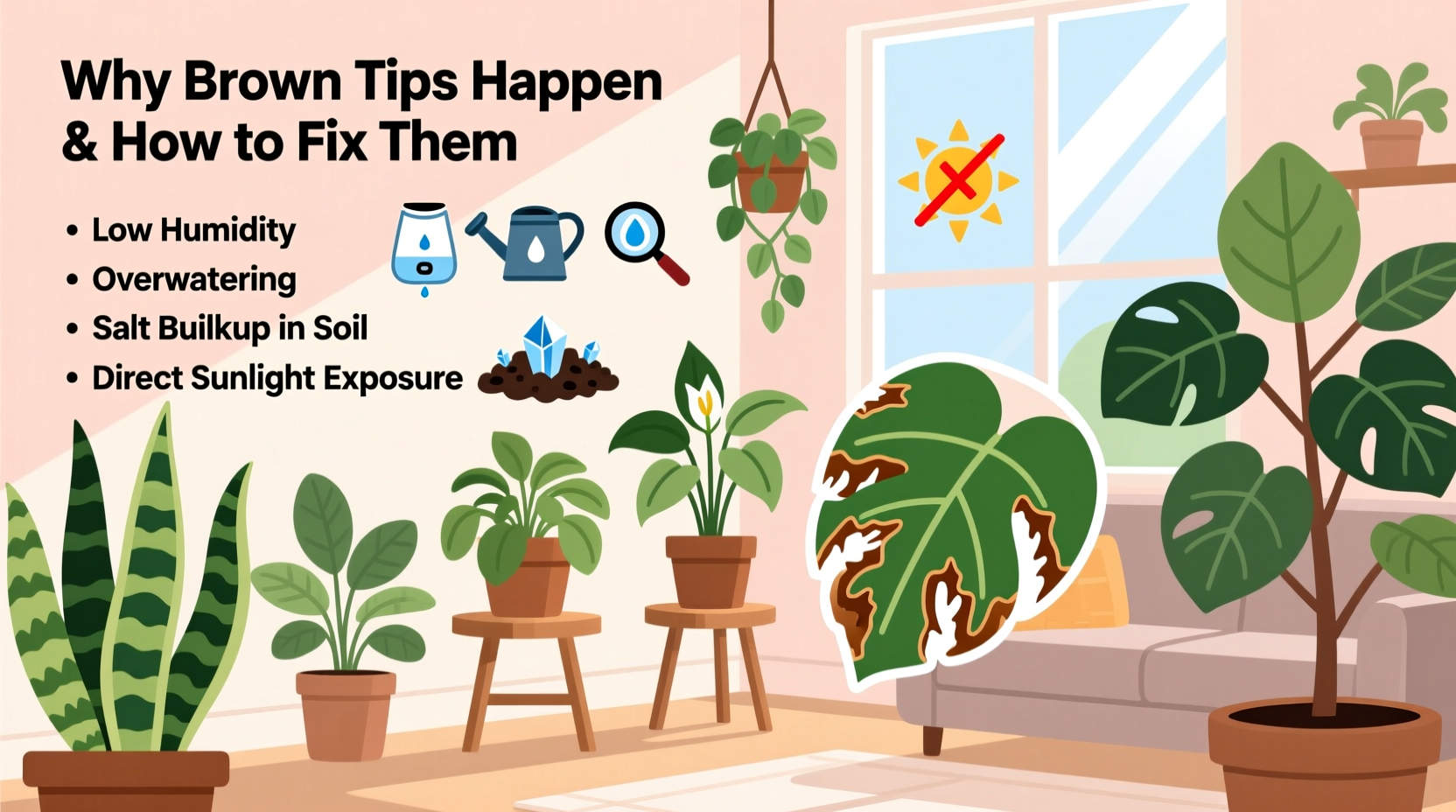
Before jumping to conclusions, it helps to diagnose the real culprit. Many factors mimic each other, so a careful assessment is essential.
1. Inconsistent Watering
Both underwatering and overwatering can lead to browning. When a plant dries out too much, the tips—being the farthest from the roots—suffer first. Conversely, waterlogged soil leads to root rot, impairing the plant’s ability to absorb moisture and nutrients, which also results in stressed foliage.
Tip: Use your finger to test soil moisture before watering. If the top 1–2 inches feel dry, it’s time to water.2. Low Humidity
Most houseplants originate from tropical climates where humidity levels exceed 60%. Indoor environments, especially during winter with heating systems running, often drop below 30%. Dry air pulls moisture from plant leaves faster than roots can replace it, leading to crispy brown tips—common in spider plants, peace lilies, and ferns.
3. Chemical Buildup in Soil
Tap water often contains chlorine, fluoride, and dissolved salts. Over time, these accumulate in the soil and can burn sensitive leaf tips. This is particularly true for plants like dracaenas and calatheas, which are highly susceptible to fluoride toxicity.
4. Excessive Fertilizer
Over-fertilizing creates a salt buildup in the soil, drawing water away from roots through osmosis. This “fertilizer burn” manifests as brown, dry leaf margins. Even if you follow a regular feeding schedule, applying fertilizer to dry soil or using too concentrated a solution can cause damage.
5. Poor Lighting Conditions
Too much direct sunlight can scorch leaves, while insufficient light weakens the plant, making it more vulnerable to stress. Plants such as snake plants and ZZ plants tolerate low light but may still develop tip burn if other conditions are off-balance.
Solutions That Actually Work
Fixing brown tips isn’t about quick fixes—it’s about adjusting long-term care practices. Here’s how to tackle each major cause effectively.
Adjust Your Watering Routine
Consistency is key. Instead of watering on a fixed schedule, respond to your plant’s needs. Check the soil regularly. When watering, do so thoroughly until water drains from the bottom, then empty the saucer to prevent root rot.
For plants that prefer even moisture—like pothos or philodendrons—let the top inch dry between waterings. Succulents and cacti need the soil to dry completely. Always match your watering habits to the plant’s natural preferences.
Increase Humidity Strategically
Boosting humidity doesn’t require expensive equipment. Simple methods include:
- Grouping plants together to create a microclimate
- Placing a tray of water and pebbles beneath the pot (ensure the pot isn’t sitting in water)
- Using a humidifier near your plant collection
- Misting lightly in the morning (though this offers only temporary relief)
For humidity-loving plants like ferns or orchids, consider placing them in naturally humid rooms such as bathrooms or kitchens—if adequate light is available.
Flush the Soil Periodically
To remove accumulated salts and chemicals, flush the soil every 3–6 months. Slowly pour several times the volume of your pot in filtered, distilled, or rainwater through the soil, allowing it to drain fully. This process dissolves and washes out harmful mineral deposits.
“Regular leaching of the soil is one of the most overlooked yet effective ways to prevent tip burn in sensitive indoor plants.” — Dr. Lena Torres, Urban Horticulturist at Greenhouse Institute
Use the Right Water
If your tap water is heavily treated or hard, switch to alternatives. Let tap water sit out overnight to allow chlorine to evaporate (though this won’t remove fluoride). For fluoride-sensitive plants, use distilled or rainwater. Collecting rainwater is both eco-friendly and ideal for most houseplants.
Fertilize Mindfully
Less is more. Most houseplants need feeding only during active growing months (spring and summer), and even then, at half the recommended strength. Use balanced, water-soluble fertilizers and avoid feeding dry plants. Organic options like worm castings or compost tea release nutrients slowly and reduce the risk of salt accumulation.
Do’s and Don’ts: A Quick Reference Table
| Action | Do | Don't |
|---|---|---|
| Watering | Check soil moisture; water deeply when needed | Stick to a rigid schedule regardless of conditions |
| Humidity | Use pebble trays or group plants together | Rely solely on misting for long-term humidity |
| Fertilizing | Feed monthly in growing season at half strength | Apply full-strength fertilizer every two weeks |
| Water Source | Use filtered, distilled, or rainwater for sensitive species | Assume all tap water is safe for every plant |
| Soil Maintenance | Flush soil every few months to remove salt buildup | Never repot or refresh soil for years |
Step-by-Step Guide to Reviving a Plant with Brown Tips
If your plant already shows signs of tip burn, follow this sequence to restore its health:
- Assess the symptoms: Are tips dry and crispy? Is browning accompanied by yellowing or drooping? This helps identify whether the issue is hydration, nutrient, or light-related.
- Trim damaged leaves: Use clean scissors to cut off brown tips along the natural leaf contour. This prevents further spread and improves appearance.
- Check the soil: Test moisture level and drainage. If compacted or foul-smelling, it may be time to repot.
- Flush the soil: Rinse out accumulated salts using room-temperature filtered water.
- Adjust environment: Move the plant to a location with appropriate light and stable humidity. Avoid cold drafts or heat vents.
- Revise care routine: Implement consistent watering, proper fertilization, and periodic flushing going forward.
- Monitor progress: New growth should emerge without browning within 4–6 weeks if conditions improve.
Real Example: Reviving a Spider Plant
Sarah, an apartment dweller in Chicago, noticed her spider plant developing brown tips each winter. Despite weekly watering and a south-facing window, the problem persisted. After researching, she realized her home’s humidity dropped to 22% in winter due to forced-air heating. She placed the plant on a pebble tray, started using filtered water, and flushed the soil monthly. Within two months, new shoots emerged with no browning. Her plant now produces healthy offsets and has become a centerpiece in her living room.
This case illustrates how multiple factors—dry air, chemical-laden tap water, and infrequent soil maintenance—can combine to stress a plant. Addressing all three simultaneously led to lasting recovery.
Preventive Checklist for Healthy Houseplants
Stay ahead of brown tips with this actionable checklist:
- ✅ Test soil moisture before every watering
- ✅ Use filtered, distilled, or rainwater for fluoride-sensitive plants
- ✅ Flush soil every 3–6 months to prevent salt buildup
- ✅ Maintain humidity above 40%, especially in winter
- ✅ Fertilize only during growing season at diluted strength
- ✅ Repot every 1–2 years with fresh, well-draining soil
- ✅ Wipe leaves occasionally to remove dust and support photosynthesis
- ✅ Rotate plants weekly for even light exposure
Frequently Asked Questions
Can brown tips go away on their own?
No. Once leaf tissue dies, it cannot regenerate. However, removing the damaged portion improves appearance, and correcting the underlying issue will prevent future browning on new growth.
Should I cut off all the brown leaves?
Only remove leaves that are mostly brown or decaying. For minor tip damage, trim just the affected area. Removing too many leaves at once stresses the plant and slows recovery.
Are brown tips contagious to other plants?
No, brown tips themselves aren’t contagious. However, if the cause is environmental—like low humidity or poor water quality—other nearby plants may develop similar issues. Addressing the shared condition benefits all your plants.
Final Thoughts: Consistency Over Perfection
Brown tips are a signal, not a failure. They reveal that something in your plant’s environment needs attention. The most successful indoor gardeners aren’t those who never make mistakes—they’re the ones who observe, adjust, and learn from their plants’ responses.
Start small. Pick one plant showing signs of stress and apply the steps outlined here. Monitor it closely. Once you see improvement, extend those practices to your entire collection. Over time, you’ll develop an intuitive sense of each plant’s needs.
💬 Have a plant that turned around after fixing brown tips? Share your story in the comments—your experience could help another gardener find hope and solutions.








