Walk into any department store in November, browse a collector’s online forum, or step into a well-curated living room during the holiday season—and you’ll almost certainly see them: miniature houses nestled beside snowy evergreens, glowing windows aglow, and winding through it all, a delicate loop of brass or plastic track carrying a tiny locomotive. Christmas villages are beloved for their nostalgic warmth and intricate storytelling—but the train tracks running through them are rarely accidental. They are deliberate, historically grounded, and rich with symbolic meaning. Far from mere aesthetic filler, these rails connect us to industrial progress, family ritual, regional identity, and the quiet magic of movement amid stillness. This article traces how train tracks became an indispensable narrative thread in the Christmas village tradition—not as decoration, but as memory, metaphor, and continuity.
The Industrial Heartbeat: Trains and the Rise of the American Christmas Village
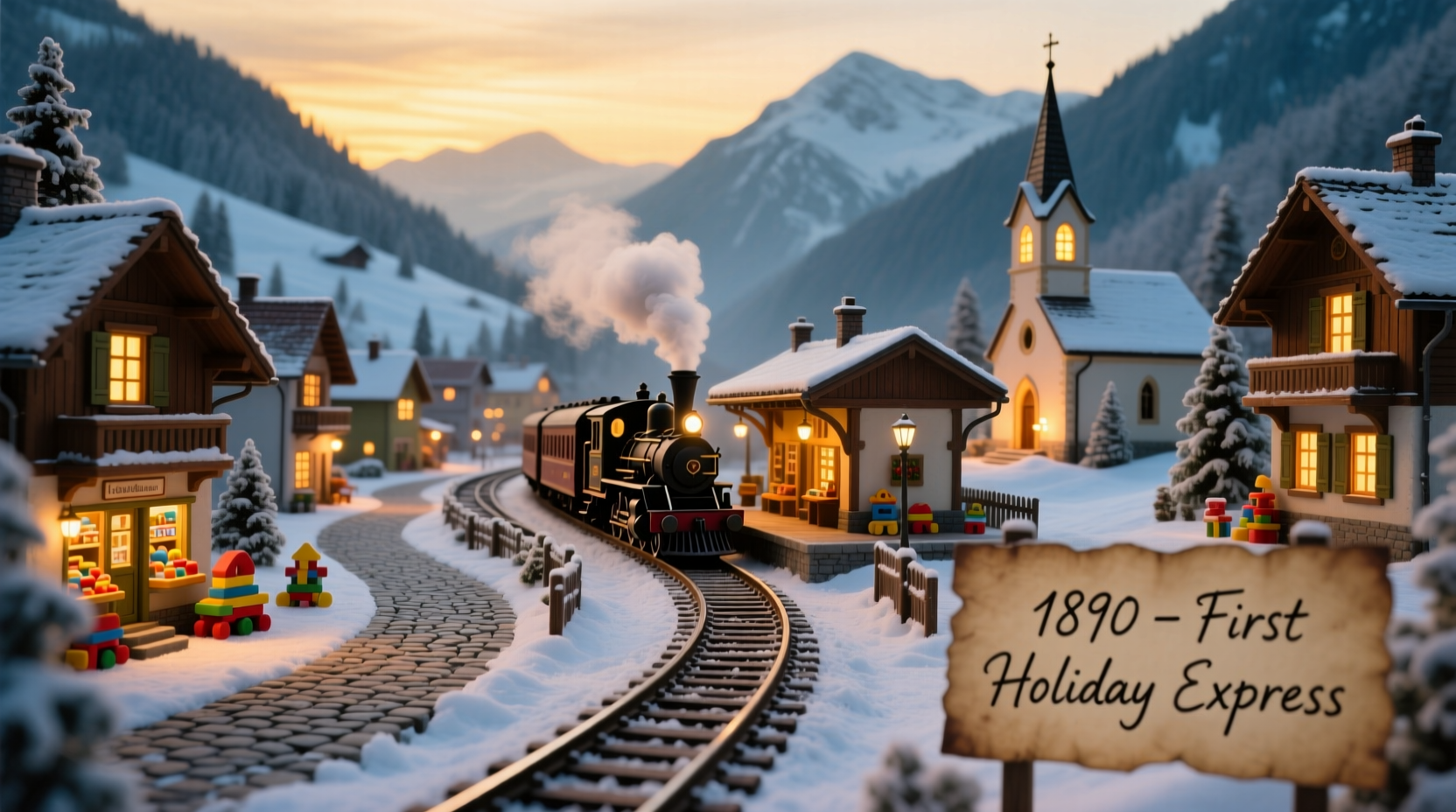
The modern Christmas village as we know it emerged not in Victorian England, but in early 20th-century America—specifically in the Appalachian and Rust Belt regions where railroads were the lifeblood of industry and community. Between 1905 and 1930, companies like Lionel, Ives, and American Flyer transformed toy trains from luxury novelties into mass-market icons. These weren’t just toys; they were scaled-down replicas of real locomotives that hauled coal from West Virginia mines, delivered mail across Ohio farmlands, and linked immigrant neighborhoods in Pittsburgh and Cleveland to jobs, markets, and kinship networks.
By the 1920s, department stores began staging elaborate window displays featuring miniature towns with working trains—Lionel’s “Christmas Express” sets debuted in 1924 at Macy’s Herald Square, drawing crowds so large that police redirected traffic. What made these displays resonate wasn’t just craftsmanship—it was recognition. For families whose fathers worked on the B&O or the Pennsylvania Railroad, seeing a scaled-down version of their hometown depot, complete with freight cars labeled “Pittsburgh Coal Co.” or “Cleveland Dairy,” evoked pride, security, and belonging. The train wasn’t fantasy; it was home, rendered in brass and felt.
This era cemented a crucial precedent: the train in the Christmas scene wasn’t incidental—it was central to the story of prosperity, connection, and seasonal hope. When postwar suburbanization spurred the rise of tabletop villages (popularized by Department 56 beginning in 1976), designers didn’t discard the rails—they inherited them, along with their emotional weight.
Symbolism in Motion: Why Tracks Belong Where Stillness Reigns
Christmas villages thrive on contrast: warm light against cold snow, stillness against implied festivity, permanence against transience. Train tracks introduce a vital third dimension—movement. Unlike static figurines or fixed buildings, a moving train suggests journey, arrival, anticipation, and return. In Christian tradition, this echoes core Advent themes: waiting for the Messiah’s arrival, the pilgrimage of the Magi, and the promise of divine movement into human time and space.
But the symbolism extends beyond theology. Psychologists studying holiday rituals note that children—and adults—find deep comfort in predictable motion during periods of emotional intensity. A looping train provides rhythmic, reassuring repetition: departure, passage, return. It mirrors the cyclical nature of the season itself—darkness giving way to light, scarcity yielding to abundance, isolation dissolving into gathering.
Moreover, the track layout itself carries meaning. Most village layouts use oval or figure-eight configurations—not because they’re easiest to assemble, but because they reflect real-world rail patterns used in early switching yards and holiday-themed excursions (like the famed “North Pole Limited”). These loops symbolize continuity, wholeness, and the idea that no part of the village is isolated—even the tiniest cottage is connected to the larger whole via the rail.
Tip: When arranging your own village, position the train’s “arrival point” near the church or stable—this subtly reinforces narrative cohesion and invites viewers to imagine the journey’s purpose, not just its path.The Collector’s Lens: How Tradition Cemented the Track
In the 1970s and ’80s, Christmas villages evolved from handmade curiosities into collectible art forms. Department 56’s hand-painted ceramic villages—introduced in 1976 with the “Snow Village” line—deliberately included integrated railbeds and compatible track systems. Their first catalog featured a full-page photo of a train passing beneath a snow-draped arched bridge beside a gingerbread bakery, captioned: “The train brings more than gifts—it brings the spirit of the season home.”
This wasn’t marketing fluff. It reflected genuine consumer behavior. A 1983 survey by the National Association of Collectors found that 78% of village buyers cited “a working train” as a top-three purchasing criterion. Why? Because collectors understood that the train served as both anchor and animator: it grounded the scene in realism while simultaneously animating it with sound, motion, and narrative potential.
Over decades, this expectation hardened into convention. Today, major manufacturers—including Lemax, Bachmann, and Kurt Adler—design entire product lines around interoperable track systems. Even digital village apps (like “Christmas Village Builder”) include drag-and-drop rail tools as a default feature. The track is no longer optional; it’s structural grammar—the syntax that makes the village legible as a world rather than a collection of objects.
Regional Roots and Cultural Echoes
While the American Christmas village dominates global perception, its rail-centric design reflects specific regional histories—not universal ones. In Germany, where the tradition of Heilige Nacht (Holy Night) nativity scenes originated, trains appear only rarely. German Christkindlmarkts emphasize woodcarvings, candlelight, and folk motifs—not locomotives. Likewise, Scandinavian julbock (Yule goat) traditions or Ukrainian didukh wheat bundles carry no rail associations.
The American emphasis on trains stems from a confluence of factors unique to the late 19th and early 20th centuries:
- Railway Expansion: Between 1860–1910, U.S. track mileage grew from 30,000 to over 250,000 miles—the largest network in the world.
- Immigrant Labor: Irish, Italian, Chinese, and Eastern European workers built those rails, embedding railroad imagery into neighborhood identities—from “Railroad Park” in Chicago to “Trackside” diners in New Jersey.
- Mail-Order Culture: Sears, Roebuck & Co.’s 1903 Christmas catalog shipped toys—including trains—via rail, making the locomotive synonymous with gift delivery long before Santa’s sleigh entered mainstream iconography.
This regional specificity matters. It reminds us that the Christmas village isn’t a timeless archetype—it’s a living archive. Every curve of track encodes a labor history, every station sign a vanished town, every signal light a memory of steam-whistle greetings heard from porches at dusk.
From Nostalgia to Narrative: Building Meaning Into Your Village
Understanding the history doesn’t diminish the joy of assembling a village—it deepens it. When you lay track today, you’re participating in a century-old dialogue between technology and tenderness, industry and intimacy. To help translate that understanding into practice, here’s a concise checklist for honoring the tradition while making it your own:
Checklist: Honoring the Rail Tradition in Your Village- ✅ Choose track material that matches your era: brass for vintage authenticity, molded plastic for weather-resistant outdoor displays
- ✅ Position at least one “destination” structure near the track’s terminus—a station, post office, or toy shop—to imply purpose
- ✅ Vary train speed: slower sections near churches or homes evoke reverence; faster curves near factories or mills suggest industry
- ✅ Add subtle realism: tiny “railroad crossing” signs, gravel ballast between ties, or even a miniature conductor figurine checking a timetable
- ✅ Avoid overcrowding—leave breathing room between track and buildings. Real railroads respected setbacks for safety and maintenance access.
For those seeking deeper engagement, consider this timeline of meaningful integration:
- Week 1: Research your local railroad history—what lines served your town? What industries did they support? Look for historic photos at your public library’s archives.
- Week 2: Select one building in your village to “anchor” to that history—a grain elevator if your region was agricultural, a steel mill if it was industrial, a depot if your town was a rail hub.
- Week 3: Lay track so it “arrives” at that building. Add a small detail: a freight car labeled with your county’s name, or a passenger car with a destination sign reading “Home.”
- Week 4: Share the story. Write a short card explaining the connection and place it beside your display. You’ll be surprised how often guests ask about it—and how quickly it becomes part of your family’s oral tradition.
Expert Insight: The Enduring Power of the Loop
Dr. Elena Martinez, curator of the Museum of American Railroads and author of Steel and Season: How Trains Shaped Holiday Culture, explains why the train remains irreplaceable:
“The Christmas village train isn’t about speed or scale—it’s about rhythm. In a world increasingly defined by digital fragmentation and accelerated time, that steady chug-chug-chug offers something rare: embodied continuity. Children watch it circle and internalize a truth older than railways—that some journeys are meant to return, that some arrivals are also departures, and that belonging is often measured in the quiet certainty of knowing where the track leads, and who waits at the end.” — Dr. Elena Martinez, Museum of American Railroads
FAQ: Understanding the Rails Behind the Magic
Why don’t all Christmas villages include trains—even older European ones?
European nativity traditions (presepi in Italy, cribs in the UK) focus on theological fidelity and pastoral realism—not industrial infrastructure. Trains entered American holiday culture later, through toy manufacturing and department-store spectacle, not religious observance. Their absence elsewhere reflects different cultural priorities, not oversight.
Is it historically accurate to mix trains from different eras in one village?
Yes—and intentionally so. Vintage villages often blend 1920s steam engines with 1950s diesel units and modern LED-lit models. This “time-layering” mirrors how real communities evolve: a 19th-century church stands beside a 20th-century diner, all under the same December sky. Accuracy lies in emotional resonance, not strict chronology.
Can I build a meaningful village without a train at all?
Absolutely—but recognize you’re choosing a different tradition. Some families prioritize nativity authenticity, others focus on winter landscapes or literary themes (e.g., Dickensian London). The train isn’t mandatory—it’s an invitation to participate in one particular strand of American holiday storytelling. Omitting it doesn’t weaken your display; it shifts its narrative center.
The Track Ahead
The miniature train circling your Christmas village does more than entertain. It carries forward generations of laborers who laid real rails in frozen ground, engineers who navigated fog-bound switchyards, children who pressed noses to station windows waiting for fathers’ returns, and grandparents who saved pennies for a Lionel set that now sits on your shelf. Its presence is a quiet act of remembrance—a way to say: *This season is built on connection. This joy is sustained by movement. This peace rests on the certainty of return.*
You don’t need rare collectibles or museum-grade precision to honor that legacy. You need only pause when the train passes the bakery, notice how its light catches the frosted eaves, and remember that every loop of track is also a loop of care—winding back through time, and forward into the warmth of your own home.
💬 Your village tells a story—what chapter will you add this year? Share how you’ve woven history, family memory, or personal meaning into your train’s journey. Comment below and inspire others to look closer at the rails beneath the snow.








