Every year, homes flicker to life with twinkling lights, wreaths hang on doors, and the scent of pine fills the air—often weeks before Christmas Day. For many families, putting up decorations in late November or even early December has become a cherished ritual. But beyond nostalgia and festive cheer, there’s an unexpected psychological ripple: children tend to maintain their belief in Santa Claus longer when holiday decor appears earlier.
This isn’t just anecdotal. Child psychologists, developmental researchers, and cultural observers have noted a tangible link between environmental cues—like decorations—and the persistence of magical thinking in young minds. The immersive atmosphere created by early holiday displays subtly reinforces the narrative of Santa’s existence, delaying skepticism and extending the enchantment of childhood wonder.
The Psychology of Belief and Environmental Cues
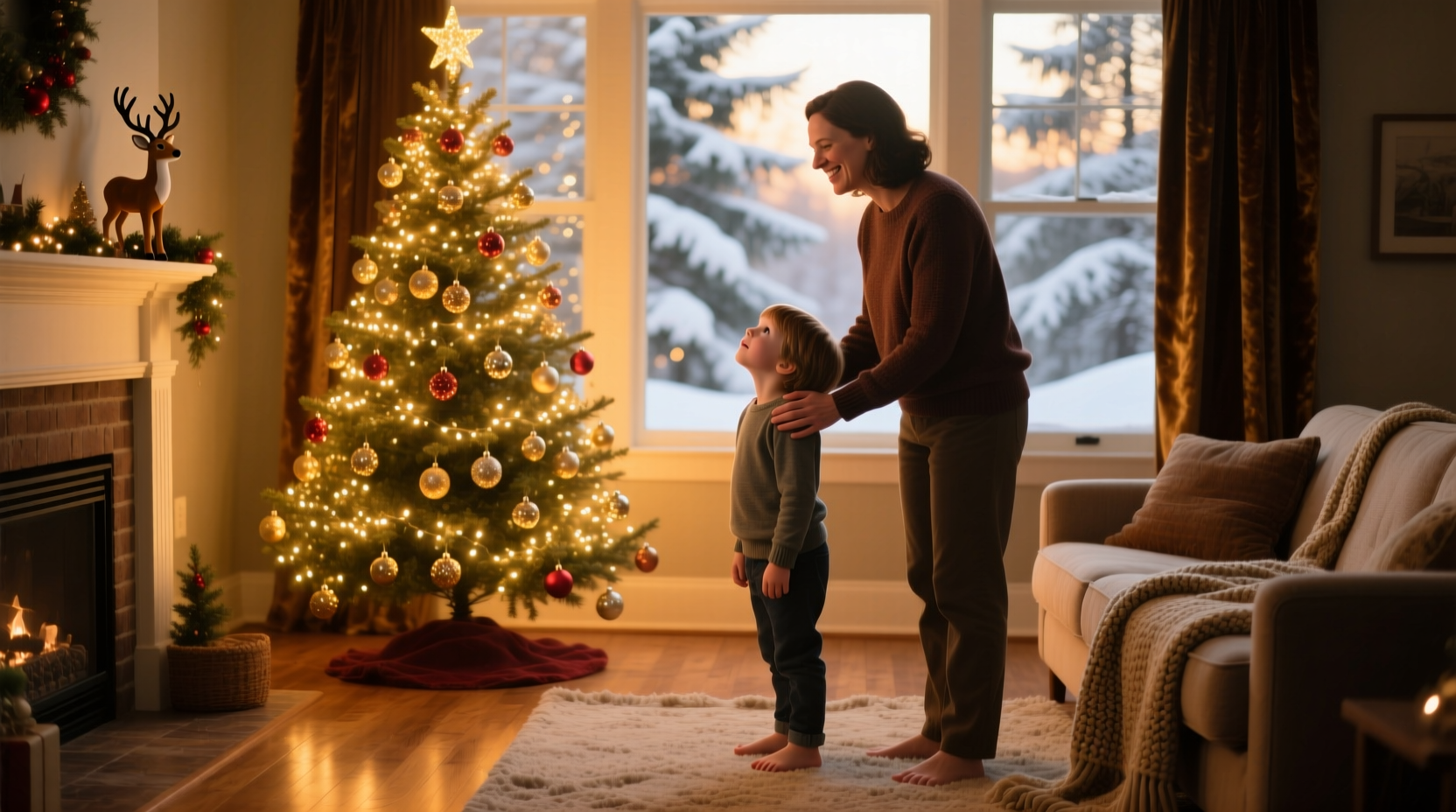
Children under the age of 8 operate largely within what developmental psychologist Jean Piaget termed the “preoperational stage,” where imagination and reality often blur. During this phase, kids are highly receptive to symbolic narratives, especially those reinforced by consistent sensory experiences.
When decorations appear early—tree lit, stockings hung, Santa figurines arranged—it creates a sustained context for the Santa story. This isn’t passive background noise; it’s active reinforcement. Each time a child sees a glowing reindeer lawn ornament or passes a decorated tree, their brain receives confirmation that the world aligns with the Santa narrative.
“Belief in figures like Santa isn’t sustained by one conversation—it’s maintained by a web of consistent cues. Decorations act as daily reminders that this magic is real.” — Dr. Lena Peterson, Developmental Psychologist, University of Toronto
These cues work much like scripts in a play. The more elements of the “Santa world” are present—the songs, the visuals, the rituals—the more coherent and believable the story becomes. Early decoration transforms the home into a stage where the Santa myth unfolds naturally, making disbelief feel disruptive rather than logical.
How Early Decorations Extend the Magic
The timing of holiday setup plays a critical role in shaping perception. When decorations go up weeks in advance, they initiate a prolonged period of immersion. This extended timeline does several things psychologically:
- Normalizes the extraordinary: A house decked out in tinsel and twinkling lights signals that something special is happening. Over time, the presence of Santa-related items (elves, letters to Santa, countdown calendars) becomes normalized, reducing cognitive dissonance.
- Delays exposure to contradictions: Children typically begin questioning Santa when inconsistencies arise—like seeing a parent wrap a gift labeled “From Santa.” An early start allows families to build narrative momentum before such moments occur.
- Strengthens emotional investment: The longer the festive season lasts, the more emotionally attached children become to its symbols. Letting go of Santa feels like losing part of the joy, so belief persists to protect that happiness.
A Timeline of Belief: How the Season Unfolds
The gradual rollout of holiday elements shapes a child’s experience. Here’s a typical progression in homes with early decorations:
- Week 1 (Late November): Tree goes up, outdoor lights installed. Music begins playing. The child senses the season has started.
- Week 3: School activities include Santa crafts. Elf on the Shelf arrives. The narrative gains social validation.
- Week 5: Family visits to see Santa at malls. Photos taken. Direct interaction deepens belief.
- Week 7 (Christmas Eve): Rituals like leaving milk and cookies reinforce participation. Belief peaks.
This slow build-up allows belief to deepen incrementally. In contrast, homes that decorate only in the final week before Christmas offer fewer reinforcing cues, giving children less time to emotionally invest—making them more likely to question the story sooner.
Real Example: The Miller Family Experiment
In 2021, the Miller family in Minneapolis decided to test the impact of timing on their two children’s belief in Santa. Their son, age 6, and daughter, age 8, had both shown signs of doubt the previous year.
That November, they began decorating on Thanksgiving Day—earlier than ever before. They added a nightly tradition: reading a short holiday story involving Santa and placing a small item under the tree each night to simulate “early deliveries.”
The result? Both children not only maintained full belief through Christmas but expressed renewed excitement. The daughter, who had previously asked if Santa was “just pretend,” told her teacher in January: “I know he’s real because he left my snow globe on December 3rd—before I even told anyone I wanted it.”
While anecdotal, this case reflects broader patterns: immersive environments foster deeper engagement with fantasy narratives. The consistency of the setting made the impossible feel plausible.
Do’s and Don’ts: Supporting Belief Without Pressure
While extending belief in Santa can be joyful, it’s important to balance magic with emotional honesty. Use this guide to support wonder without fostering anxiety or shame when doubt eventually arises.
| Do | Don’t |
|---|---|
| Create shared traditions (e.g., baking cookies for Santa, watching holiday films) | Force belief or punish questions (“Only good kids believe in Santa”) |
| Use decorations as storytelling tools (e.g., “Look—the reindeer are getting ready!”) | Lie about physical impossibilities (e.g., “Santa comes down every chimney in the world in one night”) |
| Follow your child’s lead—answer questions honestly if asked directly | Involve extended family in elaborate deception (e.g., fake footprints, voice recordings) |
| Emphasize Santa as a symbol of generosity and kindness | Use Santa as a behavioral threat (“He’s watching—you’d better behave”) |
“The goal isn’t to fool children forever. It’s to create moments of awe, generosity, and family connection. The magic isn’t in the lie—it’s in the love behind it.” — Dr. Alan Reyes, Child Development Specialist
Why Some Kids Believe Longer—And Why That Matters
Research suggests that children who maintain belief in Santa slightly longer often exhibit stronger imaginative play skills and higher empathy levels. A 2019 study published in Child Development Perspectives found that kids engaged in fantasy-based beliefs were more likely to understand others’ emotions—a skill known as theory of mind.
Early decorations contribute to this by creating a safe space for imaginative exploration. When a child pretends to hear sleigh bells or believes an elf moved overnight, they’re practicing perspective-taking and creative reasoning. These aren’t signs of gullibility—they’re markers of cognitive growth.
Moreover, the extended belief period allows parents more time to instill values tied to the Santa narrative: secret gift-giving, anonymous kindness, and the joy of surprise. These lessons often stick long after the character himself is understood as symbolic.
Tip: Frame Santa as a family tradition of giving, not just receiving. This shifts focus from materialism to meaning.Frequently Asked Questions
At what age do most children stop believing in Santa?
Most children begin questioning Santa between ages 6 and 8, with the average age of realization around 7. However, this varies widely based on culture, family practices, peer influence, and exposure to media. Children in homes with strong holiday traditions and early decorations often maintain belief 4–6 weeks longer than peers in minimally decorated households.
Is it harmful to encourage belief in Santa?
No—when handled with care, belief in Santa is not deceptive but developmental. Experts agree that fantasy play is healthy and supports emotional intelligence. The key is avoiding shaming when children express doubt. Instead, honor their growing awareness: “You’re starting to figure out how the magic works—that’s a big step!”
Should I start decorating early if I want my child to believe longer?
While no single factor guarantees prolonged belief, early decorations are a powerful supporting element. Combined with storytelling, music, and interactive traditions, they create an environment where magic feels possible. Just remember: the goal isn’t indefinite deception, but shared joy and meaningful connection during a formative time.
Practical Checklist: Creating a Belief-Friendly Environment
If you’d like to extend the Santa experience in a healthy, joyful way, follow these steps:
- ✅ Start decorating in late November to establish early visual cues
- ✅ Play holiday music regularly to engage auditory senses
- ✅ Incorporate Santa into daily routines (e.g., “What should we tell Santa tonight?”)
- ✅ Encourage letter-writing to build emotional investment
- ✅ Visit Santa at events to add real-world interaction
- ✅ Use advent calendars or Elf on the Shelf for ongoing narrative momentum
- ✅ Focus on generosity—talk about how Santa rewards kindness, not just obedience
- ✅ Prepare gentle responses for when questions arise (“What do you think?”)
Conclusion: Keeping Wonder Alive
The decision to put up decorations early isn’t just about aesthetics or eagerness—it’s a subtle act of nurturing childhood wonder. By surrounding children with symbols of joy, generosity, and magic, families create a sanctuary where belief can thrive a little longer.
In a world that increasingly pushes kids to grow up fast, these small rituals matter. They don’t deceive children; they give them space to imagine, to hope, and to experience the kind of awe that often fades too soon. Whether Santa is “real” becomes less important than what he represents: love in action, secrets shared, and the warmth of being seen.
So if you’ve been hesitant to unpack the ornaments before December, consider this: every light strung, every bell hung, every glittering snowflake taped to the window—is a quiet invitation to believe. And sometimes, that’s exactly what a child needs.
💬 Did your child believe longer because of early decorations? Share your story in the comments—let’s keep the conversation (and the magic) going.








