Whiskey isn’t just a spirit—it’s a cultural artifact, a symbol of craft, patience, and quiet confidence. When translated into interior design, it becomes more than decor; it’s a narrative anchor. A well-curated whiskey-themed wall doesn’t shout “bar room cliché.” Instead, it whispers heritage, nods to craftsmanship, and grounds a space in authenticity. Whether you’re refining a dedicated man cave or elevating a minimalist living room with layered character, whiskey-inspired wall art offers surprising versatility: warm tones, tactile textures, historical depth, and subtle sophistication. The key lies in intentionality—not saturation. This guide explores thoughtfully executed concepts that avoid kitsch while honoring the spirit’s legacy, grounded in real spatial principles, material integrity, and evolving design sensibilities.
1. Vintage Distillery Lithographs & Antique Label Reproductions
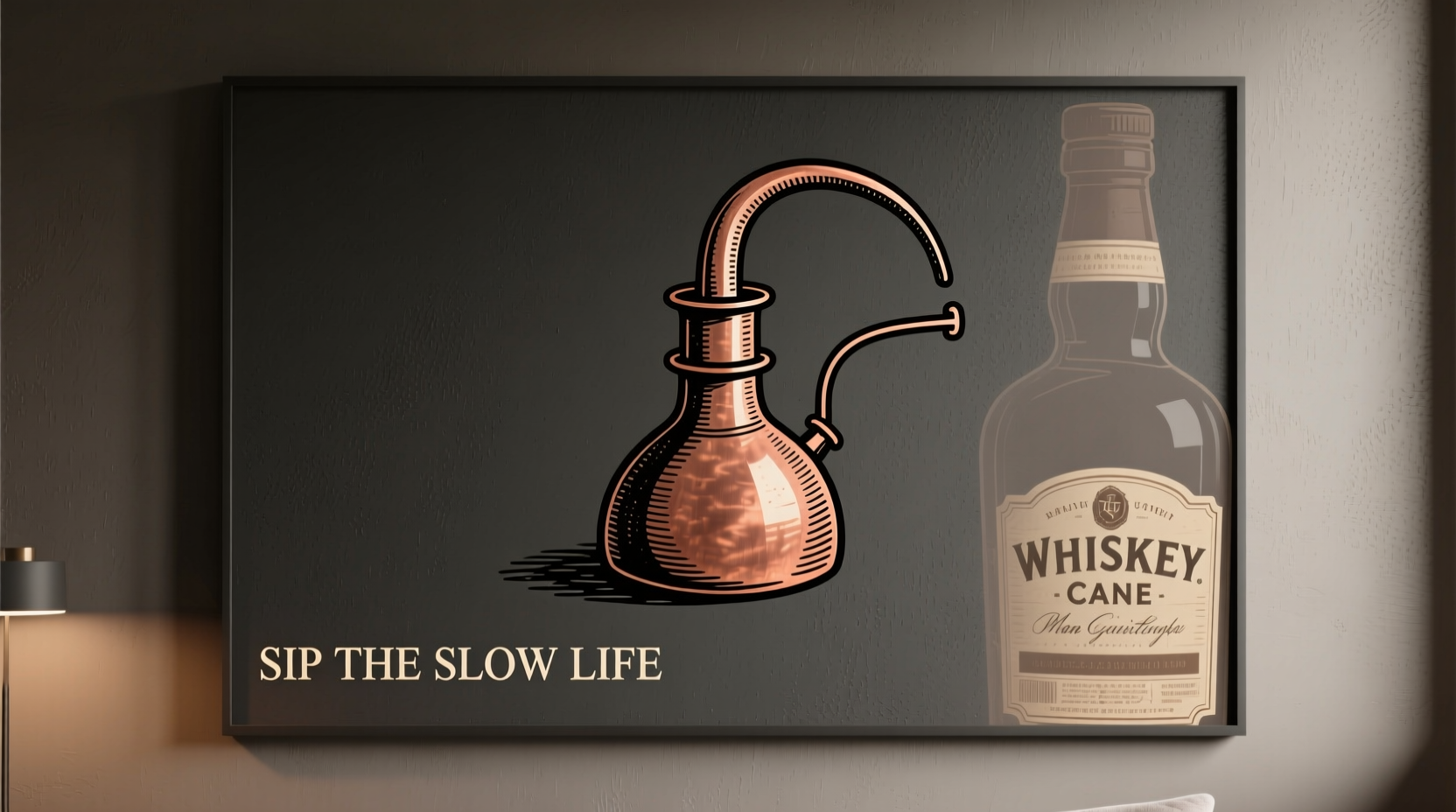
Authenticity begins with provenance. Original 19th- and early 20th-century lithographs from Scottish, Irish, American, and Japanese distilleries—like Macallan’s 1894 Edinburgh Exhibition poster or Bulleit’s 1889 Louisville print—carry irreplaceable gravitas. These aren’t mass-produced posters; they’re archival documents, often sourced from museum collections or estate sales. Reproductions must be high-resolution giclée prints on acid-free cotton rag paper, framed in reclaimed oak or blackened steel to preserve their scholarly dignity. Scale matters: a single 24” x 36” lithograph above a leather Chesterfield commands attention without clutter. Groupings work best when unified by era (e.g., all pre-1930 American bourbon labels) or geography (a triptych of Islay, Speyside, and Campbeltown maps), not random accumulation.
Tip: Verify reproduction provenance—reputable sources like the Scotch Whisky Research Institute or the Kentucky Historical Society offer licensed archival prints. Avoid uncredited “vintage-style” designs sold on generic marketplaces.2. Custom Barrel Stave Wall Panels
Repurposed whiskey barrel staves—charred, bent, and weathered—offer unmatched texture and story. Unlike novelty “whiskey barrel” signs, true stave panels use actual ex-bourbon or sherry casks aged at least three years. Each stave bears unique grain patterns, char depth (Level 3 or 4 charring is most visually rich), and subtle residual tannin stains. Installation requires precision: staves are mounted horizontally or vertically on a rigid substrate with hidden French cleats, allowing slight expansion/contraction. For modern spaces, pair with matte black metal framing and recessed LED strip lighting behind the top edge to cast soft, amber-toned shadows. In a man cave, combine with integrated shelving that holds matching decanters—creating continuity between wall and function.
3. Typography-Based Quote Art: Less Cliché, More Character
Forget “Drink Responsibly” in Comic Sans. Effective whiskey typography draws from literary, philosophical, or technical sources. Consider Robert Louis Stevenson’s observation—“The brown liquor was the very soul of the place”—rendered in hand-carved walnut letters. Or a minimalist serif rendering of the legal definition of “Straight Bourbon”: “Distilled from at least 51% corn, aged in new charred oak containers, bottled at no less than 80 proof.” Even better: a precise line drawing of a copper pot still, annotated with engineering terms like “lyne arm angle,” “reflux ratio,” and “cut point”—framed as a scientific illustration. This approach appeals to connoisseurs and designers alike, transforming wall space into a quiet conversation piece about process over product.
4. Map & Timeline Installations: Charting Terroir and Time
Whiskey is inseparable from place and time. A large-scale wall map—120 cm wide—of the River Spey basin, annotated with distillery locations, water source tributaries, and peat bog zones, functions as both geography lesson and aesthetic focal point. Pair it with a vertical timeline running beside it: 1700 (first recorded Scottish excise tax), 1823 (Excise Act enabling legal distillation), 1964 (first official Japanese whisky, Nikka Yoichi), 2014 (U.S. Craft Distillers Association founding). Use brass pins, linen tape, and archival ink for tactile refinement. For urban apartments, scale down to a framed 30” x 40” sectional map of Louisville’s historic Whiskey Row, overlaid with translucent vellum showing building dates and original distiller names.
| Installation Type | Ideal Space | Material Recommendation | Avoid |
|---|---|---|---|
| Vintage Lithograph | Man cave bar wall, library nook | Giclée on Hahnemühle Photo Rag, black steel frame | Plastic frames, fluorescent-lit display, mismatched eras |
| Barrel Stave Panel | Living room accent wall, entryway | Actual ex-bourbon staves, matte black aluminum subframe | Painted or stained staves, plastic adhesives, direct sunlight exposure |
| Typography Quote | Above sofa, beside fireplace | Hand-carved walnut or brushed brass lettering | Overly decorative fonts, motivational slogans, neon lighting |
| Terroir Map | Home office, dining room | Linen-backed archival paper, brass pin accents | Digital-only prints without physical annotation, crowded legends |
| Decanter Silhouette Series | Bedroom gallery wall, hallway | Matte black laser-cut MDF, floating shelf mounts | Colored silhouettes, glossy finishes, non-proportional scaling |
5. Real-World Application: The Portland Lofts Project
In a renovated 1920s brick loft in Portland, Oregon, interior designer Lena Cho transformed a stark 14-foot concrete wall into a whiskey narrative centerpiece. She began with structural honesty: leaving original brick exposed but sealing it with breathable lime wash to mute red tones. Above a low-profile walnut media console, she installed three elements in strict vertical alignment: (1) a 36” x 48” giclée of a 1912 Oregon Liquor Control Commission permit document; (2) a 12” x 48” vertical panel of reclaimed Oregon oak, routed with grooves holding three actual, empty, rinsed-and-sanitized bottles from local craft distilleries (House Spirits, Westward, Freeland); and (3) below them, a recessed 48” LED channel casting upward light onto the brick’s texture. No signage, no labels—just material, document, and vessel. Residents report guests consistently pause there first, asking about the permit’s significance before even noticing the bottles. The installation succeeded because it treated whiskey not as decoration, but as cultural infrastructure.
6. Expert Insight: Material Integrity Over Theme
“The strongest whiskey-themed spaces don’t ‘feature’ whiskey—they reflect its values: patience, material honesty, and regional specificity. A single, perfectly aged stave tells more than ten novelty signs. Choose one authentic artifact, treat it with reverence, and let it breathe in the space.” — James McLeod, Curator, The Whisky Museum Edinburgh
7. Step-by-Step: Installing a Barrel Stave Accent Wall
- Source responsibly: Purchase staves directly from cooperages (e.g., Independent Stave Company) or certified distillery surplus programs. Request documentation confirming origin and aging duration.
- Acclimate: Store staves indoors for 72 hours at room temperature and 40–50% humidity to prevent warping post-installation.
- Prepare substrate: Mount ½” plywood over studs, ensuring level surface. Prime with oil-based primer to block tannin bleed.
- Layout & mark: Dry-fit staves using spacers for consistent 3mm gaps. Mark stud locations on back of each stave.
- Mount securely: Use stainless steel screws driven at 45° through stave ends into studs. Never glue—wood movement must be accommodated.
- Finish minimally: Wipe with mineral oil only if dryness appears; never varnish or stain. Preserve the char and natural patina.
8. Do’s and Don’ts of Whiskey-Themed Design
- Do anchor your theme around one authentic artifact—a specific bottle label, a particular cooperage’s stamp, or a documented distillery blueprint.
- Do balance warm whiskey tones (amber, charcoal, toasted oak) with cool neutrals (slate gray, deep navy, raw concrete) to prevent visual heaviness.
- Do consider acoustics: textured stave walls or fabric-wrapped panels with whiskey motif prints subtly improve sound absorption in open-plan living areas.
- Don’t mix whiskey motifs with unrelated “man cave” tropes (sports memorabilia, neon beer signs, poker tables) unless deliberately curated as ironic contrast.
- Don’t hang art where direct sunlight hits—UV degrades paper, fades ink, and dries out wood staves irreversibly.
- Don’t assume “whiskey” means exclusively Scotch or bourbon. Include Japanese, Indian, or Australian expressions to reflect global craftsmanship.
9. FAQ
Can whiskey-themed art work in a rental apartment?
Absolutely—with temporary, damage-free solutions. Use removable adhesive strips for framed prints, rent stave panels from specialty décor services (like Artisan Walls), or create a modular collage of whiskey-related book covers (e.g., Whisky Galore, The World Atlas of Whisky) in identical black frames. All can be reinstalled elsewhere without wall repair.
Is it appropriate to use actual empty bottles in wall art?
Yes—if handled with respect. Rinse thoroughly with hot water and vinegar to remove residue, then sterilize with food-grade ethanol. Display upright on floating shelves or suspended via clear monofilament from ceiling-mounted anchors. Never embed bottles in resin or plaster—they lose their functional identity and become decorative objects rather than meaningful artifacts.
How do I avoid making the space feel like a bar or lounge?
Resist literalism. Replace “whiskey glass” motifs with abstract interpretations: a gradient print mimicking the meniscus curve of liquid in a Glencairn, or a geometric sculpture referencing still column height ratios (2:1 copper-to-height proportion). Prioritize negative space—let the wall breathe. One powerful piece, well-placed, outweighs a crowded gallery wall every time.
Conclusion
Whiskey-themed wall art succeeds not by shouting its subject, but by listening to its history, respecting its materials, and honoring its human makers. Whether you choose the quiet authority of a 19th-century distillery map, the tactile warmth of a reclaimed stave panel, or the intellectual resonance of a precisely rendered still diagram, what matters is intention. This isn’t about filling blank space—it’s about curating meaning. Your wall becomes a silent curator of craft, patience, and regional pride. Start small: select one authentic piece that moves you, research its origin, and install it with care. Let it spark conversation, invite closer looking, and deepen the atmosphere of your home—not as background noise, but as grounded presence. The best whiskey spaces aren’t defined by volume, but by voice. Yours is ready to speak.
💬 Which concept resonates most with your space? Share your real-world adaptation, sourcing tip, or unexpected pairing in the comments—we’ll feature thoughtful insights in our next design roundup.








