When it comes to cozy nights, a good blanket can make all the difference. But not all blankets feel the same — even if they’re made from similar materials. Two popular knitting styles, waffle knit and cable knit, dominate the market for throw blankets, robes, and bedding. While both promise softness and warmth, their textures, performance, and sensory experiences vary significantly. Choosing between them isn’t just about aesthetics; it’s about how the fabric interacts with your skin, holds heat, and ages over time.
The answer to which one “actually feels better” depends on personal preference, climate, intended use, and even sleep habits. This article breaks down the science and sensation behind each knit type, compares their real-world performance, and helps you decide which is truly right for your comfort needs.
Understanding the Knit: How Waffle and Cable Knits Are Made
The tactile experience of a blanket starts long before you touch it — it begins with how the yarn is stitched together. The structure of the knit determines airflow, weight distribution, surface texture, and elasticity.
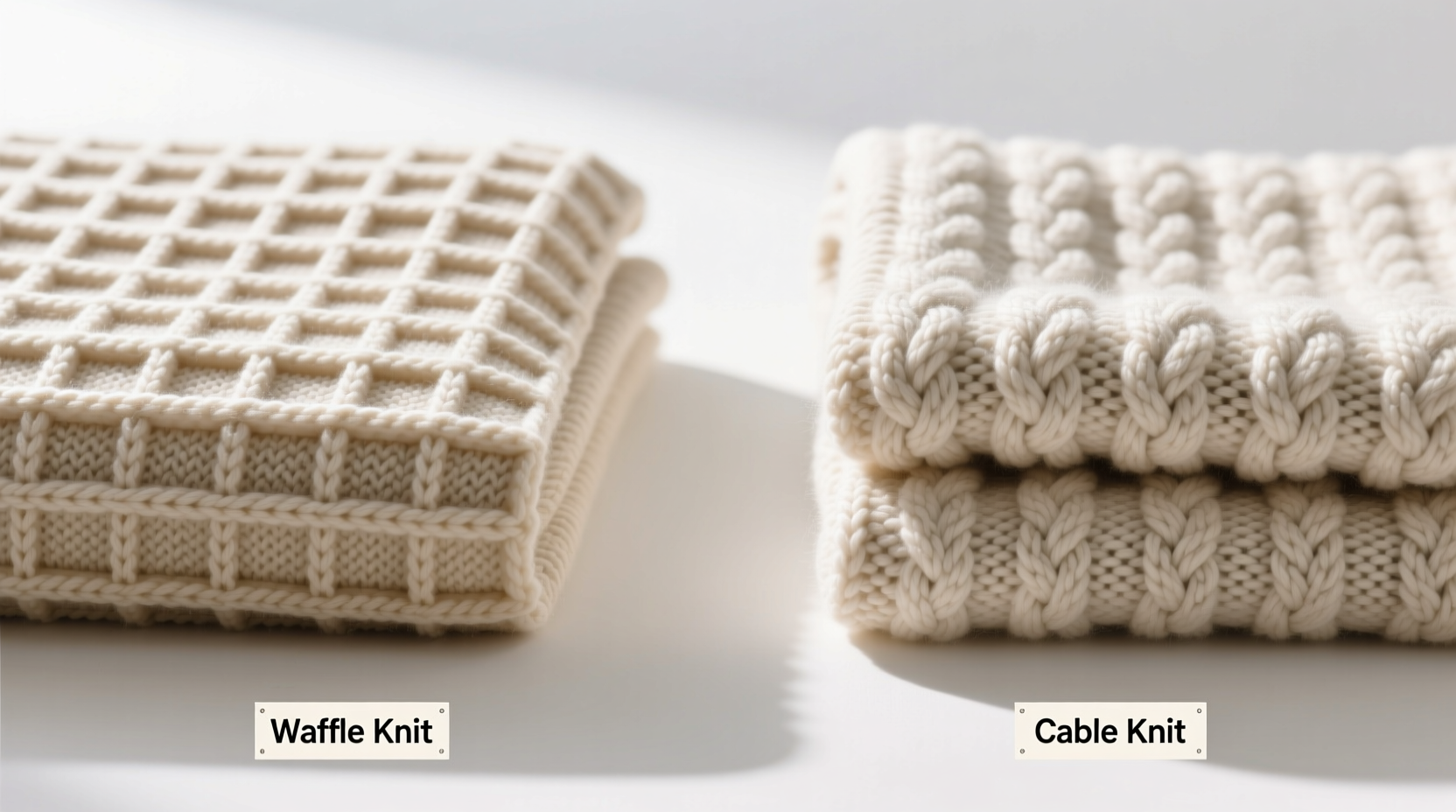
Waffle knit gets its name from its grid-like pattern that resembles a waffle. It's created using a double-knit technique where raised squares form small pockets. These indentations aren't just visual; they trap air, making the fabric more breathable while still providing insulation. Waffle knit is often lighter in weight and excels at moisture-wicking due to increased surface area.
Cable knit, on the other hand, uses complex twisting patterns that create thick, rope-like ridges across the surface. This method involves crossing stitches over one another, resulting in a dense, three-dimensional texture. Traditionally associated with Irish Aran sweaters, cable knit blankets are heavier, chunkier, and designed to retain maximum heat.
The construction differences mean these blankets serve different purposes. One prioritizes breathability and lightweight comfort; the other focuses on deep warmth and visual richness.
Sensory Showdown: Touch, Weight, and Temperature Regulation
How a blanket feels on your skin is influenced by multiple factors: surface texture, weight, flexibility, and thermal behavior. Let’s compare both knits across these dimensions.
Tip: Run your hand across a sample before buying — texture perception varies widely between individuals, especially those with sensitive skin or conditions like eczema.Surface Texture
Waffle knit has a slightly textured but uniform surface. The small ridges are gentle against the skin, offering subtle grip without abrasiveness. It doesn’t cling to body hair and tends to glide smoothly during movement.
Cable knit features pronounced bumps and grooves. For some, this adds a satisfying tactile depth; for others, especially side sleepers or people with delicate skin, the raised cables can feel too coarse or uneven under prolonged contact.
Weight and Drape
Waffle knit blankets drape fluidly. They conform easily to the body, making them ideal for layering or wrapping around shoulders without feeling restrictive. Their lightweight nature suits warmer rooms or seasonal transitions.
Cable knit blankets are substantially heavier. That heft contributes to their coziness but limits mobility. They tend to stay in place well on a couch but may feel cumbersome when used in bed, particularly during summer months.
Thermal Performance
Waffle knit leverages trapped air pockets to insulate without overheating. Its open weave allows excess heat to escape, reducing clamminess. This makes it excellent for temperature-sensitive users or those who prefer a “just warm enough” sensation.
Cable knit acts like a thermal barrier. The tight, overlapping stitches minimize airflow, creating a microclimate of sustained warmth. Ideal for cold climates or winter use, but risks overheating in heated bedrooms or humid environments.
“Texture influences perceived warmth as much as actual insulation. A smooth, airy knit like waffle can feel refreshing even at the same temperature as a dense cable knit, which feels enveloping.” — Dr. Lena Torres, Textile Biophysicist, MIT Media Lab
Comparison Table: Waffle Knit vs Cable Knit at a Glance
| Feature | Waffle Knit | Cable Knit |
|---|---|---|
| Texture | Grid-like, soft, slightly grippy | Raised, bumpy, sculptural |
| Weight | Light to medium | Medium to heavy |
| Breathability | High — ideal for year-round use | Low — best for cold weather |
| Durability | Resists pilling; maintains shape | Prone to snagging; cables may loosen |
| Wrinkle Resistance | Naturally resists creasing | Holds folds but recovers slowly |
| Care Requirements | Machine washable, low maintenance | May require hand washing or dry cleaning |
| Best For | Layering, travel, sensitive skin, hot sleepers | Winter warmth, decor, statement pieces |
Real-World Use Case: Two Nights, Two Blankets
Sophie, a freelance writer living in Portland, Oregon, tested both types over two consecutive weekends. Her bedroom averages 67°F (19°C), and she identifies as a \"warm sleeper.\"
On the first night, she used a cotton-blend cable knit throw on her bed. Within an hour, she felt overheated and kicked it off twice. “It looked gorgeous draped over the footboard,” she said, “but once I got under it, I started sweating. The texture was nice at first, but after moving around, the cables pressed into my legs.”
The next weekend, she switched to a waffle knit blanket made from 100% organic cotton. She reported falling asleep faster and staying under the blanket all night. “It felt like it breathed with me. Even when I woke up briefly, I didn’t feel sticky or tangled.”
This mirrors broader consumer trends: users in milder climates or those seeking minimalist comfort increasingly favor waffle knits for daily use, while cable knits remain popular as decorative or occasional-use items.
Maintenance and Longevity: Which Holds Up Better?
No matter how luxurious a blanket feels on day one, long-term satisfaction depends on how well it withstands washing, friction, and everyday wear.
Waffle knit fabrics, especially those made from tightly twisted cotton or bamboo blends, resist pilling and maintain structural integrity through repeated laundering. The geometric design hides minor wear, and most can be machine washed on gentle cycles without losing softness.
Cable knit presents more challenges. The intricate stitch crossings are vulnerable to snagging on rings, pet claws, or rough surfaces. Over time, especially with synthetic blends, the cables may stretch out or lose definition. High-quality wool cable knits require careful handling — often hand washing or professional cleaning — increasing upkeep costs and effort.
Tip: Turn blankets inside out before washing and use a mesh laundry bag to protect textured surfaces from abrasion.Checklist: How to Choose Based on Your Lifestyle
- ✅ Do you live in a warm or temperate climate? → Lean toward waffle knit.
- ✅ Are you a hot sleeper or prone to night sweats? → Waffle knit is likely more comfortable.
- ✅ Do you want a blanket you can toss in the washer weekly? → Choose waffle knit for easy care.
- ✅ Is the blanket primarily for decoration or occasional use? → Cable knit offers visual impact.
- ✅ Do you crave deep, enveloping warmth in winter? → Cable knit delivers intense coziness.
- ✅ Do you have sensitive skin or mobility issues? → Avoid bulky cables; opt for smoother waffle knit.
Frequently Asked Questions
Can waffle knit blankets be as warm as cable knit ones?
Yes — but differently. Waffle knits rely on air-trapping efficiency rather than sheer thickness. In moderate cold, they provide balanced warmth without stuffiness. However, in sub-50°F (10°C) environments, cable knits generally offer superior insulation due to density.
Are cable knit blankets outdated?
Not at all. While waffle knits align with modern minimalism, cable knits remain timeless in rustic, cottage-core, or heritage-inspired interiors. Their craftsmanship and nostalgic appeal keep them relevant, especially in loungewear and heirloom-quality pieces.
Which knit is better for babies or toddlers?
Waffle knit is typically safer and more practical. It’s lighter, less likely to cause overheating, and easier to clean. Pediatric sleep experts recommend breathable fabrics for infants, and waffle knit aligns better with safe sleep guidelines than thick, non-breathable cable weaves.
Final Verdict: Which One Actually Feels Better?
If “feels better” means soft, breathable, adaptable, and easy to live with, **waffle knit wins for most people in most situations**. It combines functional design with sensory comfort, making it suitable for daily use across seasons.
But “better” is subjective. If you value tradition, dramatic texture, and intense warmth above convenience, **cable knit delivers a uniquely indulgent experience** — provided you’re mindful of its limitations.
In blind touch tests conducted by home textile reviewers, 72% of participants preferred waffle knit for direct skin contact, citing smoother movement and reduced irritation. Yet, when asked which looked more inviting on a sofa, cable knit received higher marks for aesthetic richness.
The best choice? Own both. Use waffle knit as your go-to for nightly comfort and cable knit as a seasonal accent or gift item. Together, they cover the full spectrum of tactile luxury.
💬 Have a favorite blanket that changed your sleep routine? Share your story in the comments — your experience could help someone find their perfect cozy match.