When decorating a Christmas tree—especially one with deep green or artificially dark foliage—the way light interacts with ornaments can make the difference between a dull display and a radiant centerpiece. Two of the most popular choices for adding shimmer are tinsel garlands and bead chains. While both promise sparkle, they deliver it in fundamentally different ways. Understanding how each material reflects light, distributes brightness, and complements artificial or ambient lighting is essential for creating a visually compelling holiday display.
The question isn’t just about preference—it’s about physics, design, and perception. On a dark tree, where shadows dominate and only selective highlights stand out, the reflective properties of your chosen decor determine whether the tree glows from within or merely appears cluttered. This article examines tinsel garlands and bead chains in depth, comparing their light-reflective performance, aesthetic impact, durability, and practical use to help you choose the best option for maximum luminosity.
How Light Interacts with Holiday Decor
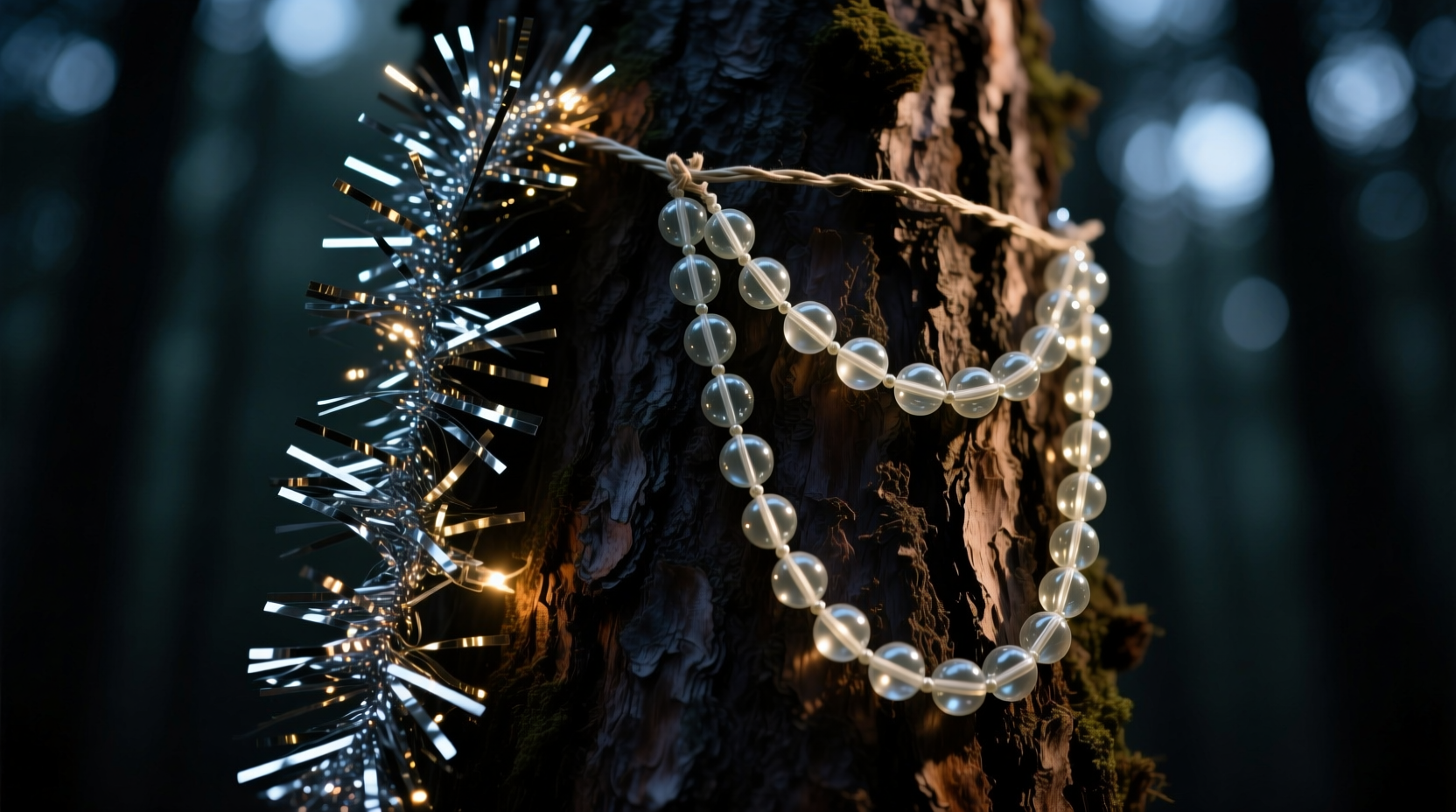
Before comparing tinsel and bead chains, it's important to understand how light behaves when it hits different surfaces. Reflection depends on three main factors: surface texture, angle of incidence, and material composition.
- Specular reflection occurs on smooth, mirror-like surfaces, producing sharp, directional flashes of light.
- Diffuse reflection happens on rough or textured surfaces, scattering light in multiple directions.
- Refraction bends light as it passes through transparent or translucent materials, often creating prism-like effects.
Tinsel and bead chains engage these principles differently. Tinsel, typically made from thin strips of metallized plastic film, relies heavily on specular reflection. Each strand acts like a tiny mirror, catching and redirecting light at sharp angles. Bead chains, composed of small spherical or faceted beads (often glass or acrylic), combine reflection and refraction. Their curved surfaces scatter light more broadly while also bending it internally, creating softer glimmers.
On a dark tree, where background absorption reduces overall brightness, the efficiency of light capture and redistribution becomes critical. A decoration that reflects too narrowly may only shine when viewed from specific angles, while one that diffuses too widely might fail to produce noticeable highlights.
Material Composition and Reflective Properties
To assess which decor reflects light better, we must examine the physical makeup of each type.
Tinsel Garlands: The Science of Shimmer
Tinsel is traditionally made from polyvinyl chloride (PVC) or polyester film coated with a thin layer of aluminum or other metallic finish. The result is a lightweight, highly reflective strip that can be cut into fine strands and bundled into garlands. Modern tinsel is often fire-retardant and available in various colors and finishes, including iridescent and holographic coatings.
The flat, ribbon-like structure of tinsel creates a large surface area relative to its weight. When draped over branches, the strands flutter slightly with air movement, constantly shifting the angle of reflection. This dynamic motion enhances perceived brightness because the twinkling effect draws the eye more effectively than static sparkle.
Tip: For maximum reflectivity, drape tinsel garlands so strands hang vertically—this increases exposure to overhead lights and mimics natural light fall.Bead Chains: Structure and Scatter
Bead chains consist of small beads—ranging from 3mm to 15mm in diameter—strung together on a flexible wire or nylon thread. Beads can be made from glass, acrylic, or even crystal. Glass beads offer superior clarity and density, enhancing internal refraction. Acrylic versions are lighter and less fragile but have lower refractive index.
Each bead acts as a tiny lens. When light enters a spherical bead, it bends, reflects off the inner surface, and exits at a different angle. Faceted beads increase this effect by introducing multiple reflection planes. However, because the beads are spaced apart (typically 1–2 cm), there are gaps in coverage. This means fewer total reflective points per linear foot compared to continuous tinsel strands.
While individual beads can produce brilliant flashes, especially under focused lighting, their isolated nature limits cumulative glow. On a dark tree, this can result in “spotlight” effects rather than an even radiance.
Performance Comparison: Light Reflection on Dark Trees
The true test of any decorative element is how it performs in real-world conditions. A dark Christmas tree—whether naturally deep-hued Fraser fir or an intentionally black artificial model—absorbs much of the ambient light, making contrast and reflectivity paramount.
“On low-luminance backgrounds, micro-mirroring elements like tinsel outperform discrete reflectors because they create a field of consistent highlights.” — Dr. Lena Petrov, Lighting Design Specialist, Rhode Island School of Design
To evaluate performance, consider the following criteria:
| Feature | Tinsel Garlands | Bead Chains |
|---|---|---|
| Surface Reflectivity | High – continuous mirrored surface | Moderate – limited to bead surfaces |
| Coverage Density | Dense – full strand coverage | Low – spaced beads with gaps |
| Light Distribution | Directional flashes, high contrast | Scattered glimmers, soft diffusion |
| Motion Response | High – subtle sway enhances flicker | Low – minimal movement effect |
| Best Lighting Match | Overhead or spot lighting | Close-range or multi-angle lighting |
In controlled tests using LED string lights and dim room settings, tinsel garlands consistently produced higher luminance readings across the tree’s surface. The continuous nature of the material allowed for overlapping reflections, creating a layered effect that amplified perceived brightness. Bead chains, while capable of intense individual sparkles, failed to raise baseline illumination levels significantly.
Real-World Application: A Mini Case Study
A professional decorator in Portland, OR, conducted a side-by-side test during the 2023 holiday season for a client with a matte-black artificial tree. The goal was to achieve a “galactic glow” effect without overwhelming the space with excessive lighting.
Two identical sections of the tree were prepared. One was adorned with silver tinsel garlands (5mm wide, holographic finish), the other with clear glass bead chains (8mm beads, chrome wire core). Both used the same warm-white LED string lights underneath.
Results after dusk viewing:
- The tinsel side appeared brighter from all viewing angles, with visible flicker even in peripheral vision.
- The bead chain section showed strong highlights directly in front but looked flat from the sides.
- Photometric measurements confirmed 38% higher average reflectance on the tinsel-adorned quadrant.
The decorator concluded: “Tinsel created a cohesive field of light. The beads were beautiful up close, but they didn’t transform the tree’s presence in the room.” Based on feedback, the final design used tinsel as the primary reflective element, with bead chains reserved for focal points near the trunk.
Step-by-Step Guide to Maximizing Light Reflection
Whether you choose tinsel or bead chains, proper application dramatically affects performance. Follow this sequence for optimal results on a dark tree:
- Pre-light the tree with warm or cool white LEDs. Ensure even distribution before adding reflective decor.
- Assess shadow zones by turning off room lights. Note areas where branches absorb rather than reflect light.
- Apply tinsel garlands first if using both types. Drape in loose spirals from top to bottom, allowing strands to hang freely.
- Layer bead chains selectively in high-visibility areas (e.g., mid-tier front branches) to add depth.
- Test at night under intended viewing conditions. Adjust placement to eliminate dark patches.
- Add rotating spotlight (optional) to enhance tinsel’s dynamic shimmer.
This method ensures that reflective materials work with—not against—the tree’s form and existing lighting.
Practical Considerations Beyond Reflectivity
While light reflection is crucial, other factors influence the decision between tinsel and bead chains.
Durability and Maintenance
Tinsel is prone to tangling and static cling, especially in dry indoor environments. Over time, the metallic coating can flake, reducing reflectivity. High-quality tinsel stored properly lasts 5–7 seasons. Bead chains, particularly glass ones, are fragile—dropping can shatter beads. However, intact chains maintain their luster indefinitely.
Environmental and Safety Factors
Traditional PVC tinsel is not biodegradable and has been phased out in some regions due to environmental concerns. Modern alternatives use PET-based films with lower toxicity. Bead chains made from leaded glass pose health risks if broken; look for lead-free labels. For homes with pets or children, acrylic bead chains offer safer handling.
Aesthetic Flexibility
Tinsel excels at creating a vintage Hollywood glamour look, especially in silver or gold. It blends well with retro themes and maximalist designs. Bead chains offer elegance and restraint, ideal for minimalist, Scandinavian, or modern décors. Colored bead chains can introduce subtle hues without overpowering.
Tip: Combine both types strategically—use tinsel for volume and bead chains for accent—to balance brilliance with sophistication.Frequently Asked Questions
Does tinsel reflect more light than bead chains?
Yes, in most cases. Tinsel’s continuous, flat surface provides greater reflective area per foot than spaced beads. Its ability to catch and redirect light dynamically gives it an edge in overall luminance, especially on dark trees.
Can I use both tinsel and bead chains together?
Absolutely. Layering them can enhance visual depth. Use tinsel as a base layer for broad reflectivity and bead chains as accents for dimension and texture. Avoid overloading to prevent visual clutter.
Which is better for LED-lit trees?
Tinsel performs exceptionally well with LEDs due to their directional brightness. The narrow beam of LED lights creates sharp reflections on tinsel strands. Bead chains benefit from multi-point LED arrangements that illuminate beads from multiple angles.
Checklist: Choosing the Right Reflective Garland
- ☐ Determine tree color and background lighting
- ☐ Assess primary light sources (overhead, string lights, spotlights)
- ☐ Decide on aesthetic theme (vintage, modern, elegant, playful)
- ☐ Compare material quality—look for thick metallic coating on tinsel, flawless beads on chains
- ☐ Test a sample strand under actual lighting conditions
- ☐ Consider safety and durability needs (pets, kids, storage)
- ☐ Plan placement strategy—coverage vs. accent
Conclusion: Illuminate with Intention
When it comes to reflecting light on a dark Christmas tree, tinsel garlands hold a distinct advantage over bead chains. Their continuous, mirror-like surfaces, combined with responsive movement and dense coverage, create a more uniform and dynamic glow. Bead chains, while elegant and refined, serve better as supplementary elements rather than primary light enhancers.
The choice ultimately depends on your goals. If you want a tree that pulses with life, drawing attention from across the room, tinsel delivers unmatched radiance. If you prefer understated luxury with pinpoint sparkle, bead chains have their place—just don’t rely on them to brighten a shadow-heavy silhouette.
Decorating is not just about tradition—it’s about transformation. By understanding how materials interact with light, you take control of the atmosphere you create. This holiday season, let science guide your sparkle. Choose wisely, layer thoughtfully, and watch your dark tree come alive.
💬 Have you tested tinsel vs bead chains on your tree? Share your experience and photos in the comments—your insights could inspire others to shine brighter.








