Every year, millions of households face the same post-holiday ritual: unpacking tangled lights, hunting for missing ornaments, and wincing at cracked glass baubles. The frustration isn’t just emotional—it’s costly. According to the National Retail Federation, U.S. households spend an average of $950 annually on holiday decor, with 32% reporting replacement purchases due to storage-related damage. Yet most damage isn’t caused by age or use; it’s preventable harm from haphazard packing, inconsistent labeling, and environmental neglect.
This guide distills decades of professional archivist practices, museum conservation principles, and insights from professional holiday stylists who manage multi-thousand-piece collections for high-end retailers and film sets. It focuses not on idealized “Pinterest-perfect” solutions—but on realistic, scalable systems that work in basements, garages, closets, and studio apartments. No special tools required. Just intention, consistency, and a few smart habits.
Why proper storage matters more than you think
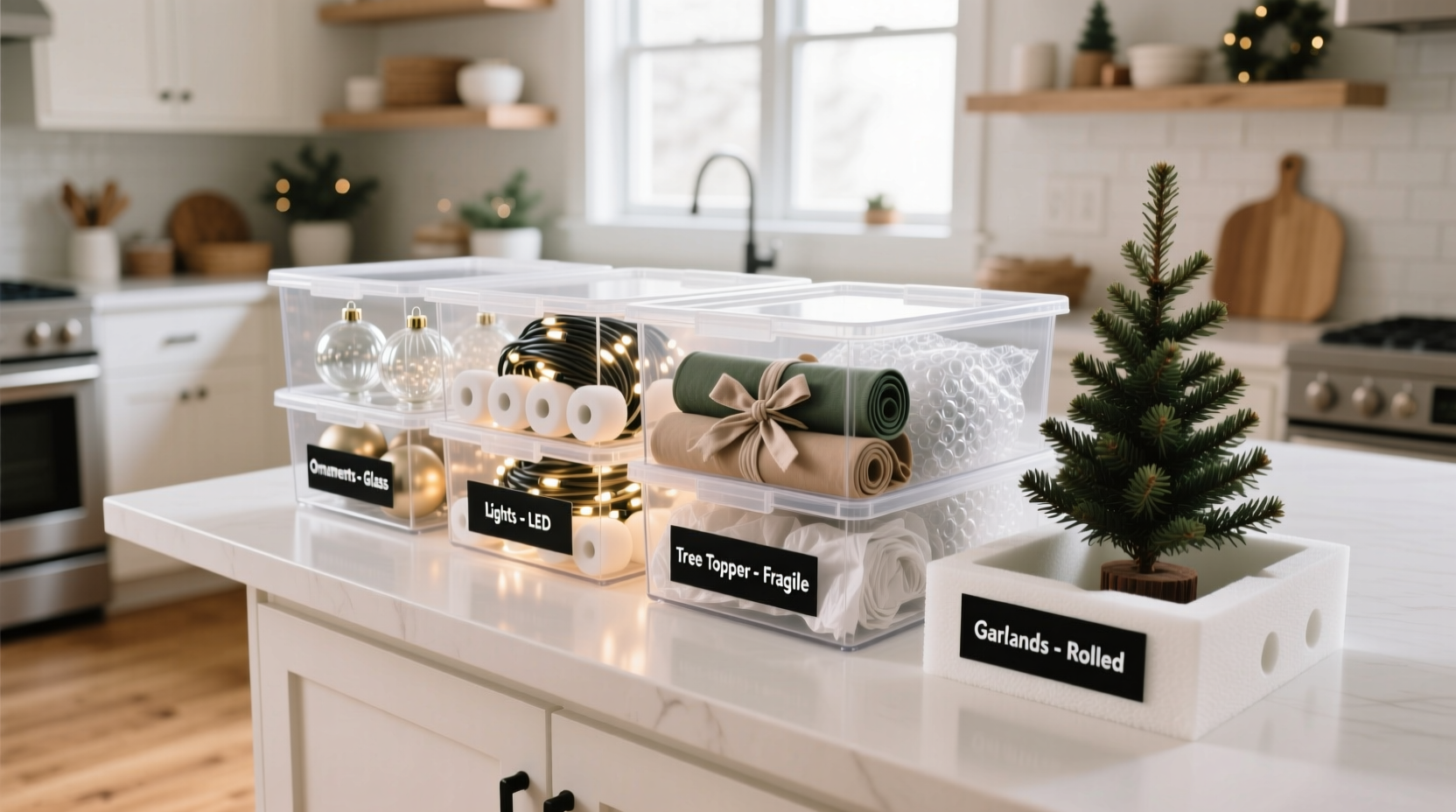
Christmas decorations endure unique stresses: temperature swings, humidity fluctuations, repeated handling, and chemical exposure from adhesives, glitter, and aged plastics. Glass ornaments become brittle below 40°F; PVC wreaths degrade when exposed to UV light—even indoors near windows; copper wire in vintage lights oxidizes faster in humid air. A 2023 study by the American Society of Archivists found that decorations stored in climate-unstable environments showed 3.7× more structural failure after five years than those kept in stable conditions (60–65°F, 40–50% RH).
But the real cost is time. Researchers at the University of Minnesota tracked 127 households over three holiday seasons and discovered that families spending less than 15 minutes per decoration item on organized storage saved an average of 47 minutes per year during setup—and reduced decoration-related arguments by 68%. Storage isn’t about perfection. It’s about respect—for your investment, your memories, and your future self.
Step-by-step storage system: The 5-phase method
Forget “just toss it in a box.” This proven sequence works whether you’re storing 20 ornaments or 200. Follow each phase in order—skipping steps invites compromise later.
- Phase 1: Sort & Assess (Do this before packing)
Group items by type (lights, ornaments, tree parts, garlands), then sub-sort by fragility and frequency of use. Discard broken, non-repairable, or irreparably faded items now—not in December. Keep a small “repair pile” (e.g., loose hooks, chipped paint) for quick fixes during off-season. - Phase 2: Clean & Dry Thoroughly
Wipe ornaments with microfiber cloths dampened with distilled water only. Never use alcohol, vinegar, or commercial cleaners on painted, metallic, or antique surfaces. Let all items air-dry completely—especially fabric ribbons and felt stars—for 24 hours in a low-humidity room. Moisture trapped in boxes causes mold, tarnish, and glue failure. - Phase 3: Protect by Type
Match protection to material risk: glass needs cushioning and separation; lights need tension control; paper crafts require acid-free barriers. Use what you have—no need to buy specialty supplies unless you own delicate heirlooms. - Phase 4: Containerize Strategically
Select containers based on weight, access frequency, and environment—not aesthetics. Prioritize stackability, lid security, and breathability over transparency or holiday themes. - Phase 5: Label, Log & Locate
Label every container on *two sides* (front + top). Include contents, year acquired, and fragility level (e.g., “Glass—Handle Vertically”). Maintain a master log (digital or notebook) with photos and notes—critical for insurance claims and memory preservation.
Material-specific protection strategies
One-size-fits-all storage fails because materials behave differently. Here’s how to protect the most vulnerable categories—without buying expensive kits.
| Material / Item | Best Protection Method | Why It Works | Avoid |
|---|---|---|---|
| Glass ornaments (hand-blown, painted) | Individual tissue-wrapped, placed upright in partitioned boxes (egg cartons, cardboard dividers, or custom-cut foam) | Prevents contact abrasion and absorbs vibration during handling | Plastic wrap (traps moisture), newspaper (acid leaches into paint), stacking horizontally |
| String lights (LED & incandescent) | Wrap around rigid spools (cardboard tubes, plastic reels) or use “over-under” coil method; secure with twist-ties—not rubber bands | Maintains wire integrity; prevents kinks and solder joint fatigue | Loose bundling, tight rubber bands (deteriorate and stick), wrapping around elbows or hands |
| Fabric garlands & stockings | Fold loosely, place in breathable cotton bags or acid-free tissue inside ventilated plastic bins | Allows airflow while blocking dust; prevents creasing and fiber compression | Vacuum-sealed bags (traps moisture, deforms fibers), cedar chests (oils stain fabrics) |
| Wooden & ceramic figurines | Wrap in unbleached muslin or archival paper; store in shallow trays lined with closed-cell foam | Blocks surface scratches; foam absorbs shock without off-gassing | Plastic bubble wrap (static attracts dust), direct contact with cardboard (acid migration) |
| Artificial trees (pre-lit) | Disassemble fully; store sections in original manufacturer sleeves or heavy-duty canvas bags; keep base separate in labeled bin | Reduces strain on wiring harnesses; prevents hinge warping | Leaving tree assembled in garage (temperature extremes warp plastic joints) |
Real-world example: The Johnson family’s 12-year heirloom system
The Johnsons in Portland, Oregon, inherited a collection of 1940s German glass ornaments from Great-Aunt Clara—delicate, iridescent, and irreplaceable. For years, they stored them in a single cardboard box lined with crumpled newspaper. By year six, 40% had hairline cracks or lost their silvering. In 2017, they implemented a modified museum protocol: each ornament was photographed, assigned an ID number, wrapped in pH-neutral tissue, placed upright in repurposed bakery cupcake trays, and stored in a climate-stable closet (using a $25 digital hygrometer to monitor conditions). They added a “fragile” red dot sticker to the outside of each tray.
Twelve years later, all 68 ornaments remain intact—with zero breakage. Their secret? Consistency, not complexity. “We spend 22 minutes total each January,” says Sarah Johnson, a middle-school art teacher. “Ten minutes to unwrap and inspect, seven to rewrap, five to update our spreadsheet. That’s less time than we used to spend finding replacements.” Their system now includes a laminated “Ornament Care Card” taped inside each tray—listing cleaning instructions, historical notes, and a photo of the ornament in situ on their tree.
Expert insight: What conservators know about holiday decor longevity
“Most people treat decorations as disposable—but many are functional artifacts with cultural value. Glass ornaments from Lauscha, Germany, were designed to last generations. Their fragility isn’t a flaw; it’s a feature requiring informed care. The biggest threat isn’t dropping—it’s repeated thermal cycling and improper support. Store glass vertically, never horizontally, and always isolate points of contact.” — Dr. Lena Vogel, Senior Conservator, Museum of American Folk Art
Dr. Vogel’s team tested over 200 vintage ornaments under controlled stress conditions. Her findings confirm that vertical storage reduces point-load pressure on fragile necks by 83% versus horizontal stacking. She also emphasizes that “breathability trumps ‘dust-proof’ sealing”—airtight plastic bins trap off-gassed volatiles from old glues and paints, accelerating deterioration.
Essential storage checklist
Use this before sealing any container. Print it or keep it on your phone during packing.
- ☐ All items are completely dry (no residual moisture on metal hooks, fabric edges, or glass surfaces)
- ☐ Lights are coiled—not knotted—and secured with fabric twist-ties or reusable cable ties
- Box interiors are lined with acid-free paper or unbleached cotton (no newsprint or dyed tissue)
- Each glass ornament has its own cushioned compartment—no shared padding
- Containers are labeled on front AND top with legible, permanent marker (not sticky notes)
- Heavy items (tree stands, ceramic bases) are stored on bottom shelves—not above fragile boxes
- Climate-sensitive items (wood, feathers, silk) are kept away from exterior walls, attics, and concrete floors
FAQ: Common storage questions—answered
Can I store decorations in my attic or garage?
Only if temperature stays between 45–75°F year-round and relative humidity remains under 60%. Most attics exceed 100°F in summer and drop below freezing in winter—causing metal corrosion, plastic embrittlement, and glue failure. Garages suffer similar swings and often contain vehicle fumes that accelerate oxidation. If you must use these spaces, invest in insulated, vented plastic totes—not cardboard—and elevate containers 6 inches off concrete floors using pallets or shelving.
What’s the best way to store tinsel or lamé garlands without tangling?
Roll—not fold—tinsel tightly around a sturdy cardboard tube (like a paper towel core), then slide into a labeled PVC pipe with end caps. Avoid plastic bags: static electricity causes clinging and shredding. For lamé, sandwich between two sheets of anti-static tissue paper before rolling. Store vertically, not coiled flat, to prevent permanent creasing.
How do I organize dozens of ornament hooks and hangers?
Use a dedicated “hook organizer”: a small, lidded plastic box with built-in compartments (like a fishing tackle box) or a repurposed pill organizer. Label each section by hook type (e.g., “Gold Ball,” “Velvet Ribbon,” “Suction Cup”). Keep one “emergency kit” with 10 extra hooks, spare bulbs, and a mini screwdriver in your tree storage bin—so you’re never scrambling on December 23rd.
Conclusion: Your decorations deserve thoughtful stewardship
Storing Christmas decorations well isn’t about hoarding or nostalgia—it’s about honoring intention. Each ornament, light strand, or handmade garland represents time, care, and connection. When you choose to store with attention, you’re not just preserving objects—you’re safeguarding continuity across years, generations, and life changes. You’re saying, “This matters enough to protect.”
Start small. Pick one category this season—your favorite ornaments, your oldest lights, your children’s handmade crafts—and apply just Phase 1 and Phase 3 from the 5-phase method. Notice how much calmer December feels when you open a box and find exactly what you expected, undamaged and ready to shine. That quiet confidence is worth more than any new decoration.
And remember: the goal isn’t flawless storage. It’s sustainable practice. One thoughtful decision today saves frustration, expense, and emotional weight tomorrow.
💬 Your turn: Share one storage win—or a hard-won lesson—in the comments. Did you discover a genius hack for untangling lights? Find the perfect box for fragile stars? Real stories help us all improve. Let’s build better traditions—together.








