Clean floors are essential for a healthy home, but cleanliness doesn’t always mean sanitation. While traditional mopping has been the go-to method for decades, steam mops have emerged as a modern alternative promising deeper hygiene. The key question isn’t just about removing dirt—it’s about eliminating harmful bacteria, viruses, and allergens. So when it comes to actual sanitization, which tool wins: the trusted bucket-and-mop or the high-heat steam cleaner?
The answer depends on how each method interacts with microorganisms, the types of flooring involved, and user habits. To make an informed decision, it's important to understand not just surface-level cleaning, but what happens at the microbial level.
How Sanitization Works: The Science Behind Killing Germs
Sanitization refers to reducing the number of pathogens—bacteria, viruses, mold spores—to a safe level as defined by public health standards. Unlike simple cleaning, which removes visible debris, sanitizing targets invisible threats. This process requires either chemical agents (like disinfectants) or physical conditions (such as heat) that disrupt the cellular structure of microbes.
Heat is one of the oldest and most effective sanitizing tools. When water reaches temperatures above 175°F (80°C), it begins to denature proteins in bacterial cells, effectively killing them within seconds. At 212°F (100°C)—the boiling point—most common household pathogens, including E. coli, Salmonella, and Staphylococcus aureus, are destroyed almost instantly.
In contrast, traditional mopping relies heavily on detergents and manual scrubbing. While this removes grime and some microbes through mechanical action, unless paired with a disinfectant solution, it often only redistributes germs rather than eliminating them. A study published in the *American Journal of Infection Control* found that conventional mopping can spread bacteria across surfaces if the mop head isn’t changed or rinsed frequently.
“Moisture and warmth from mops left uncleaned after use create ideal breeding grounds for bacteria like Pseudomonas and Klebsiella.” — Dr. Linda Thompson, Environmental Microbiologist
Traditional Mops: Simplicity vs. Limitations in Sanitation
Traditional mopping remains popular due to its low cost, simplicity, and universal compatibility with floor types. However, its ability to sanitize is limited without additional steps.
Most users rely on all-purpose cleaners or diluted bleach solutions. But even with these, several factors reduce effectiveness:
- Dwell time: Disinfectants require contact time (often 3–10 minutes) to kill germs. Most people mop quickly and don’t allow sufficient dwell time.
- Mop saturation: A wet mop spreads dirty water, re-depositing contaminants.
- Fiber retention: Cotton string mops trap bacteria and are harder to fully clean between uses.
- Human error: Improper dilution, infrequent rinsing, and skipping disinfectants altogether compromise results.
A real-world example illustrates this limitation: A family of four with young children used a traditional mop daily on their kitchen tile. Despite visible cleanliness, repeated cases of stomach illness prompted testing. Swabs revealed high levels of E. coli on the floor—traced back to under-rinsed mopping water and lack of disinfectant use.
Tip: If using a traditional mop, rinse the mop head thoroughly in hot water after every pass and use an EPA-registered disinfectant with proper dwell time.Steam Mops: Heat-Based Sanitization in Action
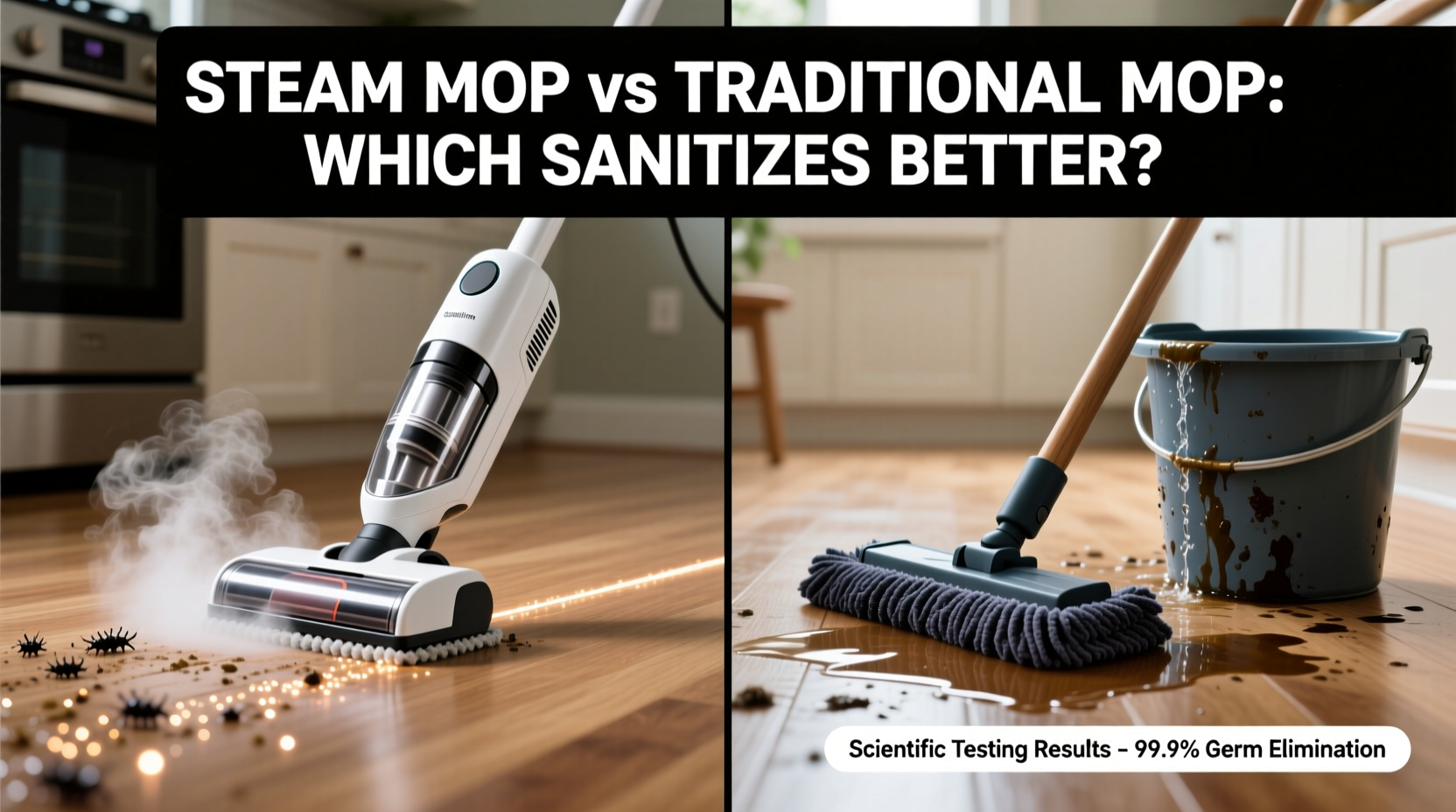
Steam mops use heated water to produce pressurized vapor, typically reaching 212°F (100°C) or higher at the nozzle. This dry vapor penetrates pores in flooring, lifting dirt while simultaneously destroying microorganisms through thermal shock.
Unlike chemical disinfectants, steam leaves no residue and requires no drying time beyond initial moisture evaporation (usually under a minute). It’s particularly effective on sealed hard surfaces such as ceramic tile, vinyl, laminate, and stone.
According to research conducted by the University of Arizona, steam cleaning reduced bacterial counts on kitchen floors by 99.9% in controlled tests—outperforming traditional mopping with standard detergent by over 90 percentage points.
Additionally, steam has been shown to deactivate certain viruses, including human coronaviruses (used as surrogates for SARS-CoV-2 in lab studies), within 10–30 seconds of exposure. This makes steam mops especially valuable in homes with infants, elderly individuals, or immunocompromised members.
What Steam Cleaning Destroys (and What It Doesn’t)
Steam is highly effective against:
- Bacteria (e.g., E. coli, Listeria, Staph)
- Mold spores and mildew
- Dust mites
- Common non-enveloped viruses (with sustained contact)
But it does **not** eliminate:
- Chemical residues or pesticides
- Heavy wax buildup or oil-based stains
- Unsealed porous materials where pathogens may reside deep below the surface
“Steam is a powerful physical sanitizer. It avoids chemical exposure while delivering hospital-grade results on appropriate surfaces.” — Dr. Carlos Mendez, Public Health Hygiene Specialist
Direct Comparison: Steam Mop vs Traditional Mop
| Feature | Steam Mop | Traditional Mop |
|---|---|---|
| Sanitization Method | High-temperature steam (kills microbes physically) | Chemical cleaners (requires correct product and usage) |
| Effectiveness Against Germs | Up to 99.9% reduction with proper technique | Varies; often less than 70% without disinfectant |
| Residue Left Behind | None (water evaporates quickly) | Possible chemical or soap film |
| Environmental Impact | Low (only water used) | Higher (plastic bottles, chemical runoff) |
| Floor Compatibility | Limited (avoid unsealed wood, waxed floors) | Broad (nearly all surfaces, with right cleaner) |
| Cost Over Time | Higher upfront, lower long-term (no refills) | Lower upfront, ongoing cost for solutions |
| User Effort | Moderate (setup, waiting for heat-up) | Low to moderate (mixing, wringing) |
This comparison shows that while steam mops excel in germ elimination and eco-friendliness, they aren’t universally suitable. Traditional mops remain more flexible in application but fall short in consistent sanitization unless rigorously managed.
Step-by-Step: Maximizing Sanitization with Either Method
Regardless of which mop you choose, technique matters. Follow this timeline to ensure optimal results:
- Pre-Clean (All Methods): Sweep or vacuum thoroughly to remove loose debris. Dirt acts as a barrier, shielding microbes from heat or chemicals.
- Prepare Solution or Device:
- For traditional mops: Use an EPA-registered disinfectant. Follow label instructions for dilution and safety.
- For steam mops: Fill with distilled water (to prevent mineral buildup), plug in, and allow full heat-up (typically 30 seconds to 1 minute).
- Mop in Sections: Work in small zones (3x3 feet). Overlap strokes slightly to avoid missing spots.
- Control Moisture:
- Steam mop: Use slow, deliberate passes (15–30 seconds per square foot) to allow heat penetration.
- Traditional mop: Wring well to avoid puddling, which dilutes disinfectants.
- Allow Dwell Time: For chemical disinfectants, let the floor remain visibly wet for the recommended duration (check product label).
- Rinse Mop Head Frequently: Change rinse water or run self-cleaning cycle (if applicable) every two rooms.
- Dry Completely: Open windows or use fans to speed drying. Wet floors encourage microbial regrowth.
- Clean the Tool After Use: Wash mop heads in hot water with detergent. Replace monthly or when frayed.
Real Example: A Daycare Center’s Switch to Steam
A licensed daycare center in Portland struggled with recurring gastrointestinal outbreaks among toddlers. Despite daily mopping with commercial disinfectants, cultures taken from playroom floors showed persistent contamination with norovirus and Streptococcus.
After consulting with a hygiene specialist, the staff switched to steam mopping during evening cleanings. They maintained morning sweeping and spot-wiping but replaced nightly chemical mopping with a commercial-grade steam unit.
Over six months, incident reports dropped by 78%. Follow-up swabs showed undetectable pathogen levels. Staff reported floors felt “cleaner,” and parents noted fewer sick-day absences. The transition required training and a $250 investment in equipment—but paid off in improved health and trust.
Choosing the Right Tool for Your Home
The best choice depends on your priorities:
- If **maximum sanitization** is your goal—especially in kitchens, bathrooms, or homes with pets/children—a steam mop is superior.
- If you have **unsealed hardwood, waxed linoleum, or delicate antique floors**, stick with traditional methods using pH-neutral cleaners to avoid damage.
- For **allergy sufferers**, steam’s ability to kill dust mites and mold makes it ideal for regular maintenance.
- For **budget-conscious households**, traditional mops are cheaper initially, but factor in recurring costs of disinfectants and replacement pads.
Hybrid approach: Some homeowners use steam mops weekly for deep sanitization and traditional microfiber mops for quick daily touch-ups.
FAQ
Can I add disinfectant to my steam mop?
No. Most manufacturers explicitly warn against adding anything other than water. Chemicals can corrode internal components, void warranties, and release hazardous fumes when heated.
Do steam mops really kill 99.9% of germs?
Yes—but only under optimal conditions. You must move slowly enough to deliver sufficient heat, maintain proper water levels, and clean regularly. Independent lab tests confirm efficacy when used correctly.
Is traditional mopping useless for sanitation?
No, but it requires discipline. Using a registered disinfectant, following dwell time instructions, and avoiding mop water contamination can achieve good results. However, consistency is harder to maintain than with steam.
Final Recommendation: Prioritize True Sanitation
When evaluating steam mop vs traditional mop for sanitization, the evidence clearly favors steam. Its ability to destroy germs without chemicals, leave no residue, and provide measurable reductions in microbial load makes it the superior option for health-focused cleaning.
That said, no tool replaces proper technique. A poorly used steam mop is no better than a neglected bucket of soapy water. Education, consistency, and matching the method to your flooring type are just as important as the device itself.
🚀 Ready to upgrade your floor hygiene? Try a steam mop on a small area this week—or refine your traditional routine with verified disinfectants. Share your experience in the comments and help others build cleaner, safer homes.








