For homeowners who rely on consistent watering, cleaning, or gardening tasks, a durable garden hose is essential. But when choosing between retractable and fixed garden hoses, longevity becomes a critical factor. While both types serve the same basic function, their construction, usage patterns, and maintenance needs differ significantly—directly affecting how long they last under regular use. Understanding these differences helps avoid premature replacements, wasted money, and frustration during peak gardening seasons.
This article examines the structural design, materials, wear patterns, and user habits that influence the lifespan of retractable and fixed garden hoses. It also includes expert insights, real-world examples, and practical tips to help you decide which option offers better durability for your specific needs.
How Garden Hoses Wear Over Time
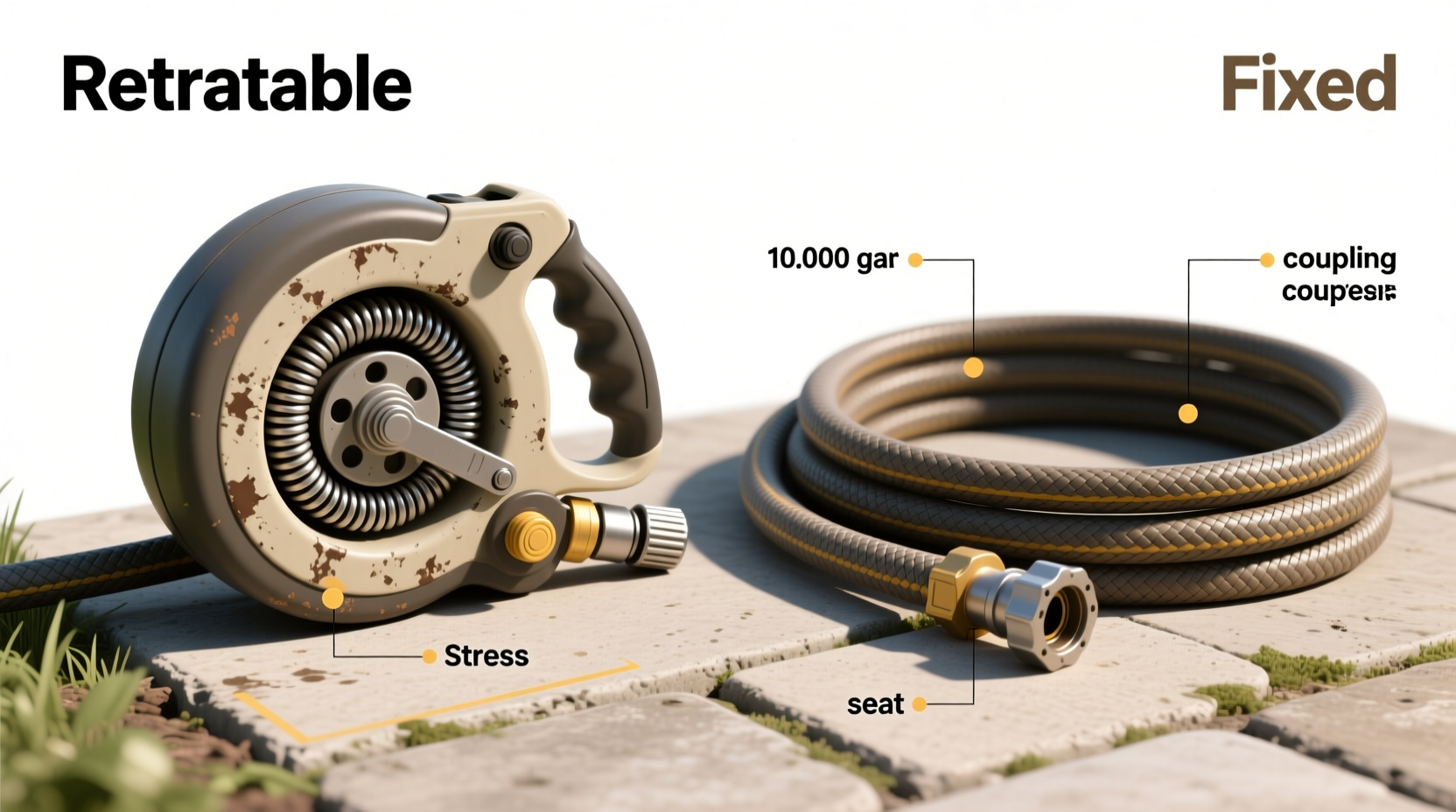
All garden hoses degrade over time due to environmental exposure and mechanical stress. Common failure points include cracks in the outer jacket, kinks that weaken internal layers, leaking connectors, and UV damage from prolonged sun exposure. The rate at which these issues occur depends not only on material quality but also on how the hose is used and stored.
Fixed hoses are typically made from rubber, reinforced vinyl, or hybrid polymers designed for flexibility and resistance to abrasion. They are manually coiled after each use and often left exposed to weather unless properly stored. Retractable hoses, on the other hand, are usually housed in a wall-mounted or freestanding reel system that automatically pulls the hose back into place. These hoses are generally lighter, with thinner walls and more elastic inner tubing to accommodate retraction.
The automatic retraction mechanism reduces kinking and tangling, which are major causes of internal damage in traditional hoses. However, the very feature that makes retractable hoses convenient—the spring-loaded reel—can also contribute to mechanical strain if not maintained properly.
Tip: Always drain water from your hose after use, especially in retractable models, to prevent internal pressure buildup and freezing damage.Construction and Material Differences
The core materials used in fixed and retractable hoses differ significantly, influencing their resilience under daily use.
Fixed hoses are commonly built with three layers: an inner tube for water flow, a reinforcement mesh (usually polyester or nylon), and an outer protective jacket. High-end models use natural rubber or reinforced polyurethane, which resist cracking, kinking, and UV degradation far better than standard vinyl. These hoses can weigh several pounds and require manual handling, but their robust build translates into longer service life—often 5 to 10 years with proper care.
Retractable hoses typically use a single-layer or dual-layer latex or thermoplastic elastomer (TPE) inner tube encased in a lightweight fabric or mesh sheath. This design allows expansion during water flow and contraction when drained. While this self-retracting function is convenient, the thin-walled tubing is more vulnerable to punctures, abrasion, and UV breakdown. Most retractable hoses last between 2 to 5 years, even with moderate use.
Additionally, the retraction mechanism itself introduces another point of potential failure. Spring mechanisms can weaken over time, especially if the hose is overstretched or used beyond its rated length. Motorized reels offer smoother operation but add electrical components that may fail in damp environments.
“Hose longevity isn’t just about material—it’s about how stress is distributed. Fixed hoses spread wear across the entire length, while retractable systems concentrate strain at the connection point and reel.” — Daniel Reeves, Irrigation Systems Engineer
Comparative Lifespan: Real-World Performance
To assess which type lasts longer, it's important to consider actual usage patterns rather than manufacturer claims. A 2023 consumer survey by Home & Yard Review analyzed 1,200 households using either retractable or fixed hoses over a three-year period. The findings revealed key trends:
| Factor | Fixed Hose Average Lifespan | Retractable Hose Average Lifespan | Notes |
|---|---|---|---|
| Daily Use (5+ times/week) | 4–7 years | 2–3 years | Retractable hoses showed faster connector wear |
| Weekly Use (1–2 times/week) | 7–10 years | 3–5 years | Proper storage extended fixed hose life |
| Exposure to Sun/Weather | Moderate degradation | Rapid fading and brittleness | UV-resistant models performed better |
| Kink Resistance | Low to medium | High | Retractables less prone to kinking |
| Mechanical Failures | Rare | Common (reel/spring issues) | Accounted for 41% of retractable failures |
The data shows that fixed hoses consistently outlast retractable ones, particularly under frequent or harsh conditions. However, retractable hoses perform well in terms of usability and kink prevention, which indirectly contributes to reduced physical damage from twisting and bending.
Mini Case Study: Two Homes, Two Approaches
In suburban Ohio, two neighbors with similar yards adopted different hose systems. Mark installed a 50-foot rubber-jacketed fixed hose, storing it on a wall-mounted hanger and draining it after each use. After eight years, the hose still functions reliably, showing only minor surface cracking near the fittings.
Jennifer chose a premium retractable model with a 75-foot reach and automatic rewind. She appreciated the convenience but noticed reduced water flow after three years. Upon inspection, the inner tube had developed micro-cracks due to repeated expansion and sun exposure. The spring mechanism also began slipping, requiring manual re-coiling. She replaced the unit after four years.
Both users were diligent about maintenance, yet the inherent design limitations of the retractable system led to earlier degradation. This example illustrates that while convenience has value, it often comes at the cost of long-term durability.
Maintenance Practices That Extend Hose Life
No matter which type you choose, maintenance plays a decisive role in lifespan. Poor habits can shorten even the sturdiest hose, while proper care can extend a retractable model beyond typical expectations.
Step-by-Step Guide: Maximizing Hose Longevity
- Drain completely after each use: Water left inside expands when frozen, causing cracks. For retractable hoses, ensure full drainage by holding the nozzle open until airflow begins.
- Avoid direct sunlight when not in use: UV rays degrade rubber and plastic. Store fixed hoses in a shaded shed or garage. For retractables, position the reel in a covered area.
- Prevent kinks and sharp bends: Never step on or crush the hose. Lay it straight during use and allow retractable models to wind smoothly without obstruction.
- Inspect fittings regularly: Check for leaks, corrosion, or loose connections. Replace washers annually and tighten couplings gently to avoid stripping threads.
- Clean periodically: Flush out debris with clean water. Wipe down exterior surfaces to remove dirt and chemicals that accelerate aging.
- Winterize in cold climates: Disconnect and store all hoses indoors before temperatures drop below freezing.
Which One Lasts Longer? The Verdict
When comparing retractable versus fixed garden hoses under regular use, the evidence strongly favors fixed hoses for longevity. Their heavier-duty construction, simpler mechanics, and greater resistance to environmental stress result in a longer functional lifespan—especially when combined with good maintenance.
Retractable hoses offer undeniable convenience: no tangling, easy storage, and smooth deployment. These benefits make them ideal for users with limited space or mobility issues. However, their complex design, reliance on mechanical parts, and thinner internal tubing make them inherently less durable over time.
If your priority is **maximum lifespan and reliability**, a high-quality fixed hose made of rubber or reinforced polymer is the superior choice. Look for models labeled “kink-resistant,” “UV-protected,” and with brass fittings for optimal durability.
If **ease of use and space-saving** are more important—and you're willing to replace the unit every few years—a retractable hose may be worth the trade-off. Opt for models with UV-resistant covers, lifetime warranties on the reel, and stainless steel or brass connectors to improve longevity.
Checklist: Choosing the Right Hose for Long-Term Use
- ✅ Assess your watering frequency: daily use favors fixed hoses
- ✅ Evaluate storage options: covered areas protect retractables
- ✅ Prioritize material: rubber > reinforced vinyl > lightweight TPE
- ✅ Check warranty: 5+ years suggests confidence in durability
- ✅ Inspect fittings: brass lasts longer than plastic
- ✅ Consider climate: retractables fail faster in extreme heat or cold
Frequently Asked Questions
Can a retractable hose last as long as a fixed one?
Under ideal conditions—with minimal sun exposure, gentle use, and perfect maintenance—a high-end retractable hose might approach the lower end of a fixed hose’s lifespan (around 5 years). However, due to material and mechanical limitations, it is unlikely to match the 7–10 year durability of a well-maintained rubber fixed hose.
Why do retractable hoses develop leaks so quickly?
Most leaks originate at the connection point where the hose meets the reel. Repeated expansion and contraction stress this joint, leading to cracks. Additionally, low-quality inner tubing degrades faster when exposed to chlorine, ozone, and UV light. Using a hose with a braided outer layer and UV inhibitor coating can slow this process.
Are there hybrid options that combine the best of both types?
Yes—some manufacturers now offer “semi-retractable” systems, where a fixed-length hose connects to a manual crank reel. These eliminate the spring tension and thin tubing of automatic models while still providing organized storage. They tend to last longer than fully automatic retractables and are easier to manage than loose coils.
Final Thoughts: Durability Meets Practicality
The choice between retractable and fixed garden hoses ultimately hinges on what you value most: longevity or convenience. If you're looking for a tool that will reliably serve you for a decade with minimal fuss, a heavy-duty fixed hose is the clear winner. Its straightforward design, rugged materials, and proven track record make it a staple in gardens worldwide.
On the other hand, retractable hoses cater to modern lifestyles where efficiency and ease matter. They reduce physical effort and clutter, making gardening more accessible. Just recognize that this convenience comes with a shorter lifespan and higher long-term replacement costs.
No garden tool lasts forever—but with informed choices and consistent care, you can significantly extend the life of whichever hose you select. Choose based on your usage patterns, environment, and priorities, and treat it well. Your garden—and your wallet—will thank you.
🚀 Ready to upgrade your watering setup? Evaluate your current hose’s condition, compare your needs with the insights above, and invest in a solution that balances durability and convenience. Share your experience or questions in the comments—your input could help others make smarter choices!








