The unmistakable aroma of a freshly cut Christmas tree is one of the most cherished signs of the holiday season. For many, that crisp, woodsy fragrance is as essential as lights or ornaments. But not all evergreens are created equal when it comes to scent. Among the most popular real trees—pine and spruce—there’s a quiet debate: which one delivers a stronger, longer-lasting aroma that truly fills the home?
This isn’t just about preference—it’s about chemistry, tree biology, moisture retention, and proper care. Whether you're choosing your first tree or refining your annual tradition, understanding the differences between pine and spruce can help you bring home not only beauty but lasting fragrance.
Fragrance Chemistry: Why Trees Smell the Way They Do
The scent of a Christmas tree comes from volatile organic compounds (VOCs) released by its needles and bark, primarily terpenes like pinene, limonene, and myrcene. These compounds serve natural purposes for the tree—deterring pests and healing wounds—but they also create the familiar \"piney\" smell we associate with winter holidays.
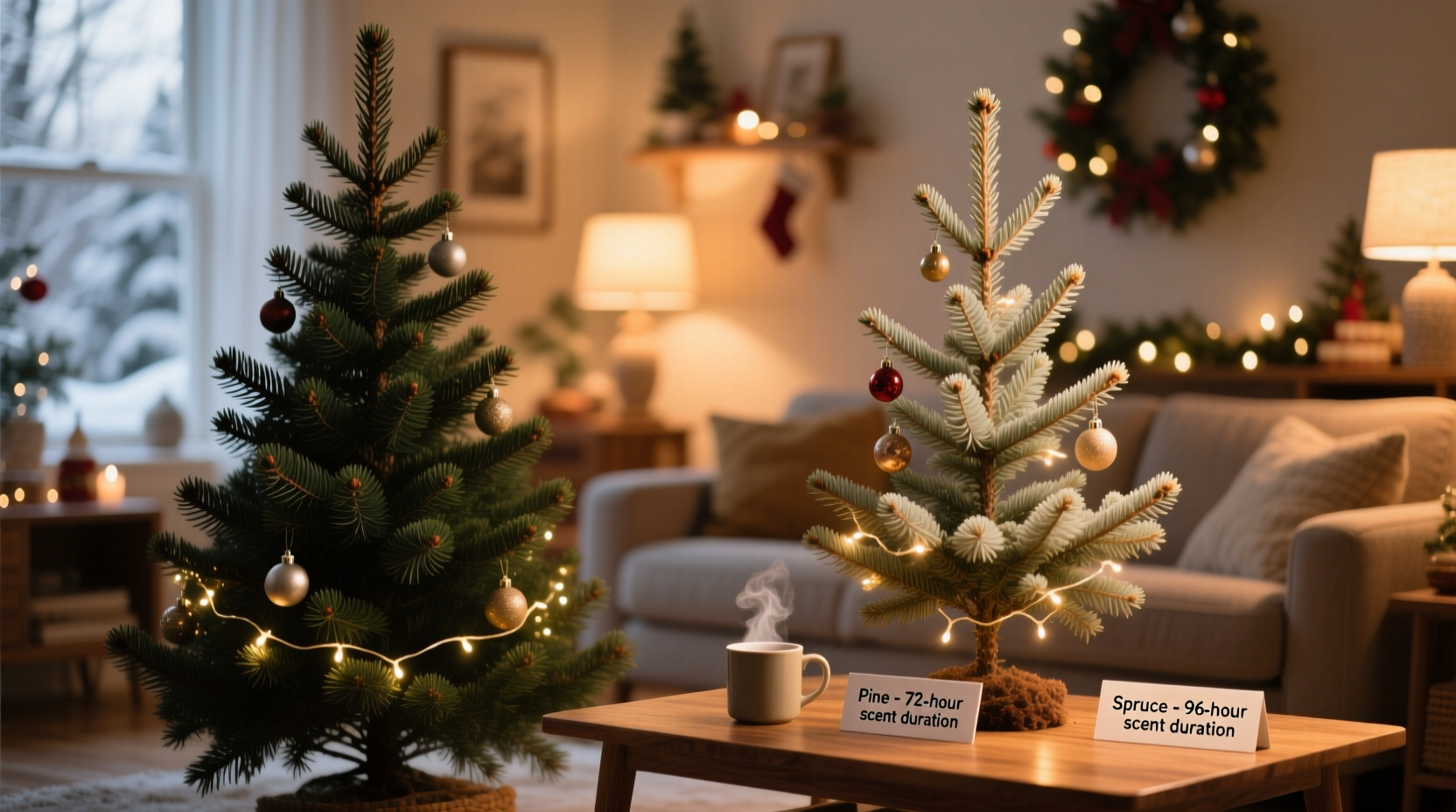
Pine trees (genus Pinus) typically produce higher concentrations of alpha- and beta-pinene, giving them a bright, citrus-tinged freshness. Spruce trees (genus Picea), on the other hand, emit a sharper, more resinous aroma due to different terpene profiles and denser needle oils.
However, scent intensity doesn’t solely depend on chemical composition. Environmental factors such as temperature, airflow, and humidity influence how quickly these compounds evaporate into the air. A tree may have potent oils, but if it dries out too fast, those fragrances vanish within days.
“Scent longevity in Christmas trees is less about initial strength and more about hydration. A well-hydrated spruce can outlast a dry pine in both appearance and aroma.” — Dr. Laura Mendez, Forest Ecologist, University of Vermont
Pine Trees: The Classic Fragrance Profile
Pine trees are often the go-to choice for families seeking that nostalgic holiday smell. Common varieties include Eastern White Pine, Scotch Pine, and Austrian Pine—each with subtle differences in scent and durability.
- Scotch Pine: Most widely sold in North America; known for strong, sweet-pine aroma and excellent needle retention.
- Eastern White Pine: Milder scent, softer needles, less oily—ideal for homes with pets or young children, but less aromatic.
- Austrian Pine: Intense fragrance, dark green needles, but heavier and harder to manage indoors.
Pines generally release their scent gradually over time. Their needles contain resin pockets that slowly exude fragrance, especially when warmed by indoor heating. Because many pines have thicker bark and waxy needle coatings, they tend to retain moisture better than some spruces—especially when properly cared for.
Tip: Before bringing your pine tree indoors, make a fresh 1-inch cut at the base and place it immediately in water. This reopens the sap channels and maximizes water uptake.Spruce Trees: Sharp, Resinous, and Often Short-Lived
Spruce trees—including Blue Spruce, Norway Spruce, and White Spruce—are prized for their symmetrical shape and full appearance. Their scent is often described as sharp, clean, and medicinal, with a camphor-like edge that cuts through indoor air.
Norway Spruce, commonly used in public displays like the Rockefeller Center tree, has a powerful initial fragrance. However, this intensity fades quickly. Spruce needles are thin, stiff, and prone to drying out—once dehydrated, they drop rapidly and lose aromatic compounds within days.
Blue Spruce offers a slightly longer scent life due to higher oil content and bluish wax coating on needles, which slows moisture loss. Still, even under ideal conditions, most spruces begin losing their fragrance by the second week indoors.
The issue isn’t weak chemistry—it’s structural. Spruce trunks seal off quickly after cutting, forming a barrier that prevents water absorption unless a fresh cut is made within hours of setup.
Why Spruce Scent Doesn’t Last as Long
- Rapid dehydration: Thin needles expose more surface area to dry indoor air.
- Trunk sealing: Sap hardens quickly, blocking water intake unless recut promptly.
- Needle drop: Once needles fall, so do the primary carriers of fragrance.
- Resin volatility: Spruce resins are more reactive and evaporate faster at room temperature.
Comparing Scent Longevity: Pine vs Spruce Head-to-Head
| Feature | Pine Tree | Spruce Tree |
|---|---|---|
| Initial Scent Strength | Moderate to strong (varies by species) | Very strong, sharp, immediate |
| Scent Duration | 3–5 weeks with proper care | 1–2 weeks before noticeable fade |
| Needle Retention | Excellent (especially Scotch Pine) | Poor to moderate |
| Water Absorption | Good; maintains uptake over time | Poor unless freshly cut |
| Best For | Long-term display, strong sustained aroma | Dramatic look, intense short-term scent |
While spruce wins the “first impression” contest with its bold, invigorating scent, pine consistently outperforms in endurance. If your goal is a tree that keeps filling your home with fragrance through New Year’s, pine—particularly Scotch Pine—is the superior choice.
Maximizing Scent Longevity: A Step-by-Step Guide
No matter which tree you choose, proper care determines how long the scent—and the tree—lasts. Follow this timeline to get the most out of your real Christmas tree:
- Day 0 – Purchase & Transport
Select a fresh tree with flexible needles and sticky resin. Avoid ones that shed easily or smell musty. Keep it covered during transport to reduce wind exposure and moisture loss. - Day 0 – Prep & First Cut
Before placing in the stand, use a sharp saw to make a straight, 1-inch horizontal cut. This removes any dried sap blockage and allows immediate water absorption. - Day 0 – Water Immediately
Place the tree in a sturdy stand with at least one gallon of water capacity. Fill it right away—don’t wait. Trees can absorb over a quart in the first 24 hours. - Days 1–7 – Daily Monitoring
Check water levels twice daily. Never let the reservoir run dry. Top up with plain tap water—no additives needed. - Days 8–14 – Optimize Environment
Keep the tree away from heat sources like vents, fireplaces, or direct sunlight. Lower room temperatures (65°F or below) slow drying and preserve oils. - Days 15+ – Refresh When Possible
If the tree begins to dry, consider a second recut (requires removing from stand). Mist needles lightly with cool water to temporarily revive scent.
Real Example: Two Homes, Two Trees, One Holiday Season
In December 2023, two neighboring households in Portland, Maine, each bought a 7-foot real tree—one Scotch Pine, one Norway Spruce—from the same local farm. Both were cut the same morning and transported within an hour.
The Johnson family chose the pine. They recut the trunk, placed it in water within 30 minutes, and kept it in a cooler corner of the living room. By Christmas Eve, the tree still smelled richly of forest air, and no needles had dropped.
The Carter family selected the spruce for its perfect conical shape. Though they set it up the same day, they forgot to recut the base. Within three days, the water level dropped drastically, and despite refilling, the trunk could no longer absorb. By mid-December, the sharp scent was gone, and needles littered the floor.
By New Year’s, only the pine remained fragrant and full—a testament to how care practices amplify natural advantages.
Expert Tips for Choosing the Right Fragrant Tree
Beyond species, several factors affect how well a tree will scent your space. Use this checklist before buying:
- ✅ Smell the tree: Crush a few needles between your fingers. Strong resin means active oils.
- ✅ Check flexibility: Bend a branch. If needles snap instead of bending, it’s too dry.
- ✅ Inspect for sap: Sticky residue on hands after touching indicates high oil content.
- ✅ Verify freshness: Shake the tree gently. Minimal needle drop is ideal.
- ✅ Ask about cut date: Trees cut within the last 2–3 days hold more moisture.
“The best-smelling tree isn’t always the one with the strongest nose punch at the lot. It’s the one that stays hydrated and keeps releasing its scent over time.” — Mark Reynolds, Master Arborist & Christmas Tree Grower, New Hampshire
Frequently Asked Questions
Does keeping a tree in water really make the scent last longer?
Absolutely. Hydration directly affects the release of aromatic compounds. Dry needles stop emitting terpenes, while moist ones continue to diffuse scent, especially when warmed by indoor air.
Are there any pine or spruce hybrids with longer-lasting fragrance?
Not officially classified as hybrids, but certain cultivars like the ‘Fraser Fir’ (often mistaken for spruce) offer excellent scent longevity. Among true pines, the Serbian Spruce (a misnomer—it’s actually a spruce) has surprisingly good needle retention and moderate fragrance duration.
Can I enhance the tree’s natural scent without damaging it?
You can lightly mist the branches with water to refresh the air, or place a small fan nearby to circulate scented air. Avoid commercial sprays or artificial fragrances—they can accelerate drying and leave residue.
Final Verdict: Which Tree Wins for Scent Longevity?
When comparing real pine versus spruce Christmas trees for lasting room-filling fragrance, pine emerges as the clear winner. While spruce delivers an intense burst of sharp, clean aroma in the first few days, it fades quickly due to rapid needle drop and poor water retention. Pine trees, particularly Scotch Pine, maintain hydration longer, steadily releasing their warm, resinous scent throughout the holiday season.
The key takeaway isn’t just species selection—it’s care. Even the most aromatic spruce won’t last without immediate hydration. Conversely, a well-maintained pine can remain fragrant and beautiful for five weeks or more.
If your priority is a home filled with natural evergreen scent from early December through January, choose a fresh, properly cut pine and commit to daily water checks. Your senses—and your holiday ambiance—will thank you.
💬 Did you switch from spruce to pine after noticing how fast the scent faded? Share your experience or favorite tree-care tip in the comments—help others make the most of their real Christmas tree this year!