Alcohol detection matters—not just for drivers, but for workplace safety, personal health monitoring, recovery support, and responsible social decision-making. Yet confusion persists about how well consumer-grade tools actually perform. Many assume a smartphone app that “analyzes your voice” or “measures skin conductivity” is as trustworthy as a handheld device you blow into. It isn’t. Accuracy in alcohol measurement isn’t theoretical—it’s physiological, technical, and legally consequential. A 0.02% BAC error can mean the difference between passing and failing a roadside screening—or worse, misjudging your ability to drive safely. This article cuts through marketing claims and examines what the science, regulatory standards, and real-world testing actually reveal about portable breathalyzers versus smartphone-based alcohol estimation apps.
How Alcohol Detection Actually Works: The Science Behind Accuracy
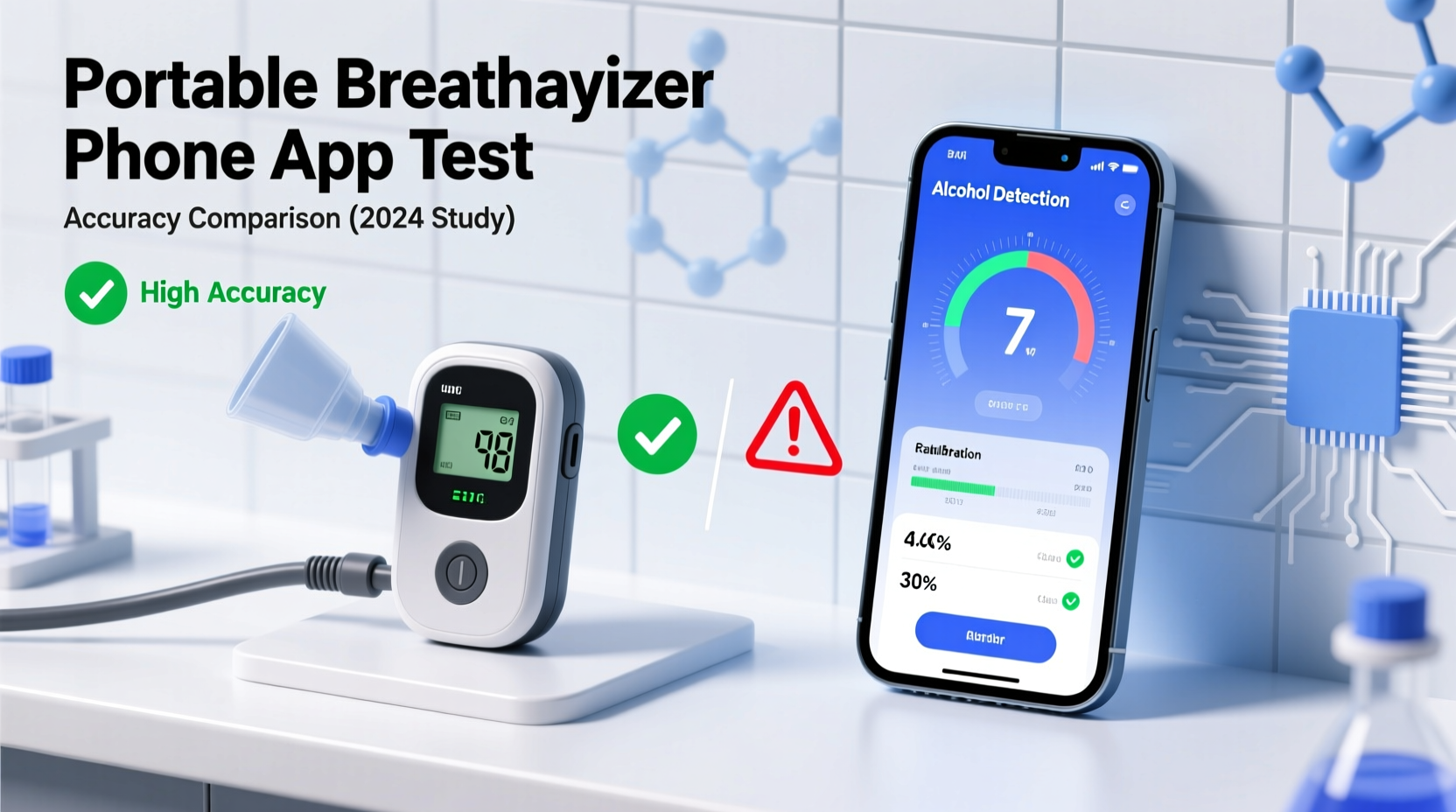
True breath alcohol concentration (BrAC) measurement relies on detecting ethanol molecules in deep-lung air—the alveolar air that equilibrates with blood alcohol concentration (BAC) at a predictable 2100:1 ratio. Only devices that sample this air and analyze it using validated chemical or electrochemical methods meet clinical or evidentiary thresholds. Portable breathalyzers use one of two core sensor types: fuel cell sensors (gold-standard for consumer and law enforcement use) or semiconductor (metal oxide) sensors (lower-cost, less precise). Fuel cell sensors oxidize ethanol selectively, generating an electrical current proportional to concentration—offering high specificity, low interference from acetone or mouth alcohol, and long-term stability. Semiconductor sensors react broadly to many volatile organic compounds, making them prone to false positives from hand sanitizer, perfume, or even ripe fruit.
Smartphone apps, by contrast, do not measure breath alcohol at all. They attempt to *estimate* intoxication indirectly—through voice analysis (slurring, pitch variation), reaction-time games, facial recognition (eye movement, pupil dilation), or galvanic skin response (sweat conductivity). These are behavioral proxies—not direct biochemical measurements. As Dr. Robert Swift, Professor of Psychiatry and Director of the Brown University Center for Alcohol and Addiction Studies, explains:
“Voice or reaction-time apps may correlate loosely with impairment at high BAC levels—but they cannot quantify BrAC. They’re like guessing someone’s weight by watching how they walk. Useful for self-reflection, perhaps, but useless for determining whether someone is at or above 0.08%. There is no validated algorithm that converts speech patterns into a reliable BAC value.” — Dr. Robert Swift, Brown University Center for Alcohol and Addiction Studies
This distinction is foundational: breathalyzers measure *what is in your breath*; apps infer *how impaired you might feel*. One is quantitative and traceable to blood chemistry. The other is qualitative and highly variable across individuals, environments, and device conditions.
Accuracy Benchmarks: What “Accurate” Really Means in Practice
Regulatory accuracy requirements expose the chasm between hardware and software approaches. In the U.S., the National Highway Traffic Safety Administration (NHTSA) certifies evidential breath test devices to within ±0.005 g/dL at 0.08 g/dL—and requires portable (preliminary) devices to meet similar tolerances under controlled lab conditions. Reputable consumer-grade fuel cell breathalyzers (e.g., BACtrack S80, AlcoMate Prestige) are independently verified to ±0.01% at 0.08%, with repeatability within 0.005% across multiple tests.
Smartphone apps have no such certification path. A 2022 peer-reviewed study published in Journal of Studies on Alcohol and Drugs tested seven top-rated iOS and Android “BAC estimator” apps against certified breathalyzers in a double-blind field trial with 247 participants. Results showed median absolute error of ±0.042% BAC—more than four times the allowable margin for even preliminary screening devices. At 0.05% BAC, three apps returned readings ranging from 0.01% to 0.12%. Two others failed to detect rising BAC entirely in 38% of subjects under 0.04%, likely due to baseline variability in voice or skin response unrelated to alcohol.
Tip: If you rely on alcohol detection for safety-critical decisions, never substitute an app for a calibrated, fuel-cell breathalyzer—especially after consuming multiple drinks or when fatigue, medication, or medical conditions may affect behavior-based metrics.Real-World Reliability: Environmental Factors and Human Variables
Even high-quality breathalyzers require proper use—but their limitations are known, measurable, and manageable. Semiconductor units overestimate after using mouthwash (due to residual ethanol); fuel cell models require a 15–20 minute wait post-drinking to avoid mouth alcohol skew. Both benefit from regular calibration (every 6–12 months) and warm-up time.
Apps face far less controllable variables. Voice analysis falters with accents, colds, laryngitis, background noise, microphone quality, or even phone case material dampening audio input. Facial tracking fails under low light, with glasses, facial hair, or rapid head movement. Skin sensors give erratic readings if hands are cold, sweaty, or dry—conditions common in bars, cars, or outdoor settings. A mini case study illustrates this starkly:
Case Study: Maya, 29, Project Manager
Maya used “SoberCheck Pro” before driving home from a work dinner where she’d consumed two glasses of wine over 90 minutes. The app reported “0.03% BAC – safe to drive” based on her voice recording and a 30-second eye-tracking exercise. She drove—and was pulled over 4 miles later. A police-administered breath test registered 0.072%. Later, she tested herself with a calibrated BACtrack S80: 0.069%. The app’s estimate missed her true BrAC by over 100%, likely because she’d taken ibuprofen (affecting skin conductivity), spoke softly due to a mild sore throat, and recorded in a noisy parking garage. She received a citation—not for DUI, but for refusing the field sobriety test after the app falsely reassured her.
This isn’t hypothetical. NHTSA data shows 12% of drivers arrested for DUI in 2023 had used a “sober app” within the prior hour—suggesting widespread misplaced confidence in behavioral proxies.
Comparison Table: Key Performance and Practical Attributes
| Feature | Portable Breathalyzer (Fuel Cell) | Smartphone App |
|---|---|---|
| Measurement Method | Direct electrochemical oxidation of ethanol in deep-lung breath | Indirect behavioral inference (voice, face, touch, reaction time) |
| Typical Accuracy (± at 0.08%) | ±0.005% to ±0.01% (certified models) | ±0.03% to ±0.06% (peer-reviewed field studies) |
| Legal Admissibility | Accepted as preliminary evidence in all 50 U.S. states; some models approved for workplace testing | None—explicitly disclaimed by all major app developers |
| Calibration Required? | Yes—every 6–12 months (critical for sustained accuracy) | No—no physical sensor to calibrate; algorithms remain static |
| Key Interference Risks | Mouth alcohol (wait 15+ min), acetone (rare, in ketosis), strong solvents | Cold/flu, stress, caffeine, medications, ambient noise, lighting, phone hardware variance |
| Cost Range (One-Time) | $80–$250 (fuel cell); $30–$70 (semiconductor) | Free–$4.99 (most are freemium; premium features rarely improve accuracy) |
What You Should Do: A Practical Decision Framework
Choosing between these tools isn’t about preference—it’s about purpose, risk tolerance, and accountability. Follow this step-by-step guide to make the right choice for your needs:
- Define your primary use case: Is this for personal awareness, workplace compliance, recovery accountability, or legal defensibility? If the answer involves any external stakeholder (employer, court, probation officer), only a certified breathalyzer qualifies.
- Assess consequence severity: Could an inaccurate reading lead to injury, job loss, or legal penalty? If yes, eliminate apps from consideration. Behavioral estimates lack the precision required for high-stakes decisions.
- Verify sensor type and certification: Check product specs for “fuel cell sensor” and look for FDA 510(k) clearance or NHTSA listing. Avoid “breath analysis” claims without sensor disclosure—many apps rebrand generic Bluetooth breath tubes as “smart” without adding real sensing capability.
- Commit to proper usage protocol: For breathalyzers: wait 15–20 minutes after last drink, avoid smoking/mouthwash, use consistent blowing technique (2–3 second steady exhale), store at room temperature. Apps require no discipline—making them dangerously easy to misuse.
- Plan for maintenance: Budget for professional calibration every 6–12 months. Apps “update” but never improve their core estimation logic—updates fix bugs, not physiology.
FAQ: Clearing Up Common Misconceptions
Can smartphone apps be “improved” to match breathalyzer accuracy?
No—fundamental physics prevents it. Ethanol molecules must be chemically detected to yield a BrAC value. Voice, facial, or skin metrics reflect neurobehavioral effects that vary widely between individuals (e.g., a seasoned bartender may show zero slurring at 0.10%, while a novice stumbles at 0.04%). No algorithm can overcome this biological noise to deliver consistent, quantitative output.
Are all portable breathalyzers equally accurate?
No. Semiconductor models (often under $50) frequently drift over time and react to non-alcohol volatiles. Fuel cell units cost more but offer clinical-grade consistency. Look for FDA-cleared models with documented third-party validation reports—not just “lab tested” marketing language.
Do I need a breathalyzer if I never drive after drinking?
Yes—if you manage teams, operate machinery, work in healthcare or education, or support someone in recovery. Workplace incidents linked to undetected impairment cost U.S. employers $105 billion annually (NIOSH). Breathalyzers provide objective data for safety protocols; apps provide anecdotal impressions.
Conclusion: Accuracy Isn’t Optional—It’s Foundational
When it comes to detecting alcohol, convenience should never override credibility. Smartphone apps serve a niche: sparking conversation, encouraging reflection, or adding gamified engagement to wellness apps. But they do not—and cannot—replace direct biochemical measurement. Portable breathalyzers, especially fuel-cell models, deliver quantifiable, repeatable, and regulation-aligned results because they engage with the substance itself, not its shadows. Choosing the right tool isn’t about tech preference; it’s about honoring the responsibility we hold—to ourselves, our passengers, our colleagues, and the strangers sharing the road. If you’ve relied on apps for safety-critical decisions, now is the time to upgrade to a certified breathalyzer. Calibrate it. Use it correctly. Trust the molecule—not the metaphor. Your judgment, your license, and someone else’s life may depend on the difference between estimation and evidence.
💬 Have you switched from apps to breathalyzers—or experienced a mismatch between the two? Share your story in the comments. Real experiences help others navigate this critical choice with clarity and confidence.