For over two decades, Crocs have sparked debate—beloved by some, mocked by others. But in recent years, their popularity has surged beyond beach walks and backyard barbecues. From healthcare workers to travelers, gardeners to fashion enthusiasts, people are wearing Crocs all day, every day. With the rise of the platform Croc—a taller, trend-forward evolution of the original Classic Clog—the question isn’t just about style anymore. It’s about stability, support, and long-term comfort. So, when it comes to enduring hours on your feet, are platform Crocs or Classic Clogs actually up to the task?
The answer isn’t as simple as “yes” or “no.” It depends on foot type, activity level, terrain, and expectations. This article dives deep into the structural differences, biomechanical implications, and real-world usability of both models to help you decide which—if either—is truly suitable for extended wear.
Anatomy of the Sole: What Makes a Croc Tick?
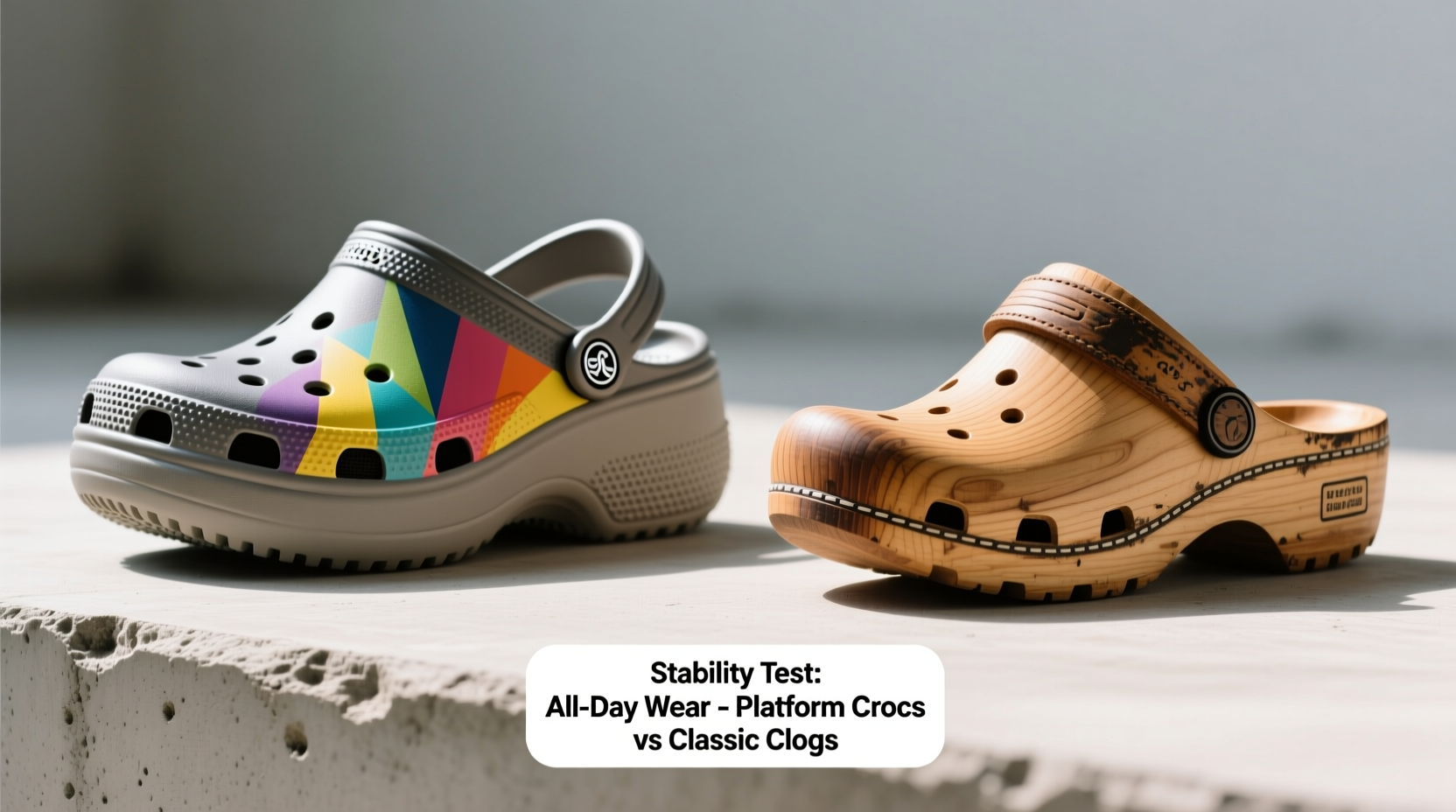
Both platform Crocs and Classic Clogs are built on Croslite™ foam, a proprietary closed-cell resin known for being lightweight, odor-resistant, and water-friendly. The material compresses slightly under pressure, offering cushioning with each step. However, the similarities largely end there when comparing the two models.
The Classic Clog features a flat, 1-inch sole with a slight heel elevation (about 1.5 cm) and a rounded toe box that allows natural splay. The tread pattern is minimal but effective on smooth surfaces. In contrast, the platform version adds an elevated midsole, increasing total height by nearly an inch. This lifts the heel further off the ground and alters the foot’s angle within the shoe.
This shift in geometry affects more than just appearance—it changes how weight is distributed across the foot. While the added height may appeal aesthetically, it raises concerns about balance, especially during dynamic movements like walking uphill or navigating uneven pavement.
Tip: If you're new to platform Crocs, break them in gradually—start with short indoor walks before committing to full-day use.Stability Showdown: Platform vs Classic
Stability in footwear hinges on three key factors: base width, center of gravity, and heel containment. Let’s examine how each model performs across these metrics.
Base Width and Ground Contact
The Classic Clog maintains a broad, consistent footprint from heel to toe. Its wide forefoot offers excellent lateral stability, reducing the risk of rolling an ankle on soft terrain. The platform Croc, while still wider than many sneakers, concentrates more mass toward the heel due to its stacked sole. This creates a narrower effective contact patch at initial heel strike, particularly noticeable on gravel or grass.
Center of Gravity
Elevating the foot increases the body’s center of gravity. In practical terms, this means less inherent balance—especially for individuals with weaker ankle stabilizers or vestibular sensitivity. For most healthy adults, the difference is manageable on flat surfaces. But prolonged standing on inclined floors (common in retail or industrial settings) can lead to subtle postural fatigue.
Heel Lockdown
Neither model includes a traditional heel counter. Instead, they rely on friction and the signature heel strap (on styles that have it) to keep the foot in place. The Classic Clog, sitting closer to the ground, experiences less shear force at the heel during gait. The platform version, however, sees increased backward pull with each step—leading some wearers to report slippage after several hours.
“Elevated footwear without proper arch integration can encourage compensatory mechanics, especially in flat-footed individuals.” — Dr. Lena Torres, Podiatrist & Gait Specialist
Comfort Beyond Cushioning: What Long-Term Wear Reveals
Cushioning is not synonymous with support. Many users praise Crocs for their immediate comfort—the sensation of walking on foam—but overlook what happens after four, six, or eight hours of continuous use.
The absence of structured arch support means the plantar fascia and intrinsic foot muscles bear additional load. Over time, this can contribute to fatigue, arch strain, or even heel pain—particularly in those predisposed to overpronation. Neither the Classic nor the platform model includes contoured arches; any shaping present is minimal and generic.
Ventilation is another point of divergence. Both shoes feature ventilation ports, but the thicker sole of the platform Croc traps more heat. In warm climates or high-humidity environments, this can lead to excessive sweating and discomfort, despite the breathable upper design.
On the flip side, the Croslite™ material molds slightly to the foot over time, creating a semi-custom fit. This adaptive quality enhances perceived comfort but does not improve mechanical stability. Think of it like a memory foam mattress: comfortable, yes—but not necessarily supportive.
Detailed Comparison: Platform vs Classic Clogs
| Feature | Classic Clog | Platform Clog |
|---|---|---|
| Sole Height | ~1 inch | ~1.75 inches |
| Weight (per shoe) | ~6.5 oz | ~8.2 oz |
| Arch Support | Minimal | Minimal |
| Lateral Stability | High | Moderate |
| Heel Security | Good (with strap) | Fair (increased lift = more slip risk) |
| Breathability | Excellent | Good |
| Suitable for Standing >6 hrs | Yes (for many users) | Conditionally (depends on user) |
| Fashion Versatility | Limited | High |
The data suggests a trade-off: the platform Croc sacrifices functional stability for aesthetic appeal. While both models are suitable for light-duty, low-impact activities, only the Classic Clog consistently earns praise from professionals who spend entire shifts on their feet.
Real-World Test: A Nurse’s Perspective
Meet Sarah Kim, a registered nurse working 12-hour shifts in a busy urban hospital. She’s worn Classic Crocs for seven years and recently tried the platform version during a vacation.
“I loved how the platforms looked with cropped pants,” she says. “But by hour three of walking between units, I felt unsteady going up stairs. My calves were tighter than usual, and I caught myself adjusting my balance more often.”
She switched back to her Classics the next shift. “The difference was instant. I didn’t realize how much the lower profile helped until I lost it. The platform feels like wearing little stilts—fun for photos, not for patient rounds.”
Sarah’s experience reflects a broader trend: occupational users prioritize function over form. While influencers may showcase platform Crocs at music festivals or brunch spots, frontline workers overwhelmingly stick with the original design for reliability.
Actionable Tips for All-Day Wear Success
If you’re committed to wearing Crocs throughout the day—whether Classic or platform—consider these strategies to maximize comfort and minimize risk.
Tip: Add a removable orthotic insert for better arch support, especially if you have flat feet or high arches.- Choose the right size: Crocs should fit snugly but not tightly. Your heel should barely lift when walking barefoot indoors.
- Use the heel strap: Always wear the strap down for maximum lockdown, especially with platform models.
- Avoid slippery surfaces: Neither model performs well on wet tile or polished concrete. Carry alternate footwear if needed.
- Rotate your shoes: Don’t wear Crocs every single day. Give your feet variety in support and motion.
- Stretch your calves and feet: Daily mobility work offsets the lack of heel elevation variation.
When to Consider Alternatives
While Crocs excel in specific niches—recovery footwear, casual lounging, short-duration tasks—they fall short for certain needs:
- Long-distance walking: Lack of heel control increases fatigue over miles.
- Heavy lifting or climbing: Elevated soles reduce leverage and balance precision.
- Outdoor hiking or trail use: Minimal tread and poor ankle support make them unsafe.
- Formal or professional settings: Even styled-up platforms remain casual footwear.
For those needing Crocs-level comfort with better biomechanics, alternatives like Oofos, Dansko clogs, or supportive sandals from brands like Chaco or Birkenstock offer superior arch integration and stability.
Frequently Asked Questions
Can I wear platform Crocs to work all day?
It depends on your job. For light-duty roles (e.g., retail cashier, office work), platform Crocs may suffice for shorter shifts. However, for jobs requiring constant movement, standing, or stair navigation, the Classic Clog is a safer, more stable choice.
Do Crocs cause foot problems over time?
Occasional use is unlikely to cause harm. However, chronic reliance on unsupportive footwear can contribute to issues like plantar fasciitis, tendonitis, or weakened foot muscles—especially in individuals with pre-existing biomechanical imbalances.
Are platform Crocs worth the hype?
If you value style and occasional wear, yes. They’re a fun, trendy option for outings where comfort matters but extreme stability doesn’t. But if you need reliable, all-day support, the Classic remains the more functional option.
Final Verdict: Function Over Fashion?
The platform Croc is undeniably fashionable. It’s a cultural icon, embraced by celebrities and streetwear lovers alike. But fashion rarely aligns perfectly with function—and in this case, the elevation comes at a cost.
The Classic Clog, though less flashy, delivers consistent performance for extended wear. Its lower profile, wider base, and proven track record in demanding environments make it the superior choice for true all-day stability.
That doesn’t mean you can’t enjoy both. Own the platform pair for weekend adventures and social events. Keep the Classics ready for days when your feet need real support. Just remember: no amount of viral styling can override physics and anatomy.
💬 Have you worn both styles for long periods? Share your experience below—your insights could help someone make a smarter footwear choice today.








