
Anime has evolved from a niche cultural export into a global aesthetic phenomenon. Once confined to bedrooms and fan dens, anime wall art prints are now finding their place in contemporary living rooms, minimalist studios, and even high-end urban lofts. The challenge isn’t whether anime art belongs in modern spaces—it’s about how to make it belong. When done thoughtfully, anime prints can add depth, emotion, and visual rhythm to sleek, modern interiors without clashing with the design language of clean lines, neutral palettes, and intentional minimalism.
The key lies in curation, context, and cohesion. Modern interior design values balance and intentionality. Anime art, often rich in color and narrative, can enhance that balance—if integrated with care. This guide explores practical strategies for matching anime wall art with modern décor, ensuring your space feels both personal and polished.
Selecting the Right Art: Style Over Fandom
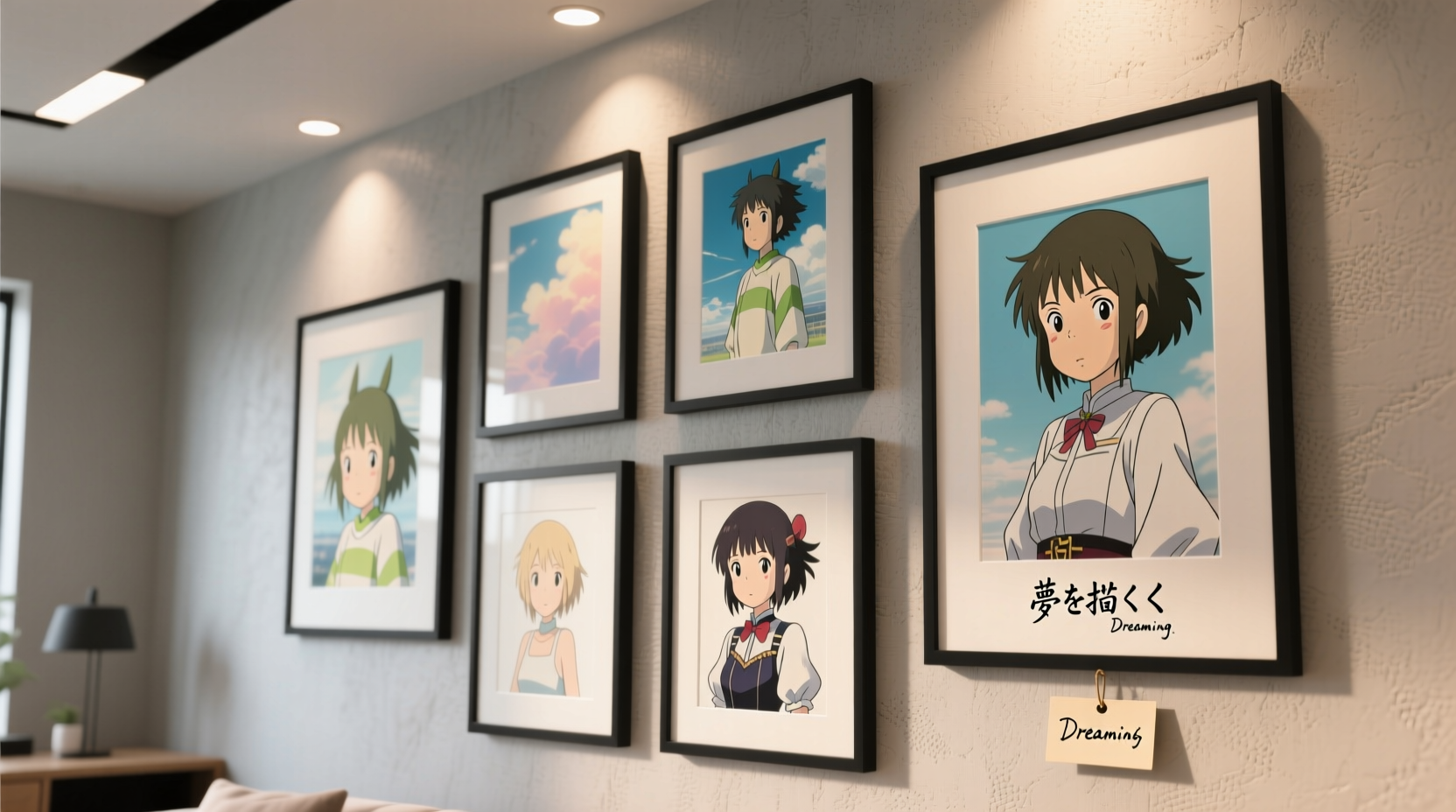
Not all anime prints work equally well in modern interiors. While personal attachment to a character or series is valid, the visual impact matters more when integrating art into a curated space. Focus on prints that emphasize composition, mood, and artistic technique rather than those dominated by action scenes or loud branding.
Consider works inspired by Studio Ghibli, Makoto Shinkai, or lesser-known illustrators whose pieces feature atmospheric landscapes, subtle lighting, or abstract interpretations. These tend to align better with modern sensibilities—soft gradients, emotional stillness, and natural motifs—than high-energy battle frames or dialogue-heavy panels.
Tip: Choose prints with strong negative space or monochromatic tones—they integrate more easily into minimalist rooms.Black-and-white linocut-style prints, watercolor-inspired renders, or digitally enhanced stills with muted backgrounds act as bridges between expressive anime aesthetics and restrained modern design. Look for artwork where the focus is on environment, solitude, or quiet moments—elements that resonate with Scandinavian, Japanese wabi-sabi, or California modern styles.
Harmonizing Color Palettes
Modern interiors often rely on neutral foundations: greys, beiges, whites, and soft earth tones. Introducing anime art doesn’t mean abandoning this harmony. Instead, use the print as a color anchor—a starting point from which to build complementary accents.
For example, a print featuring deep indigo skies and soft coral sunsets can inspire throw pillows, rugs, or ceramic vases in similar hues. The goal is not to match the artwork exactly but to echo its tones subtly elsewhere in the room. This creates cohesion without overwhelming the space.
| Anime Print Palette | Suggested Interior Accents | Best Room Types |
|---|---|---|
| Cool blues & silvers | Gray linen textiles, brushed steel lamps, matte black frames | Urban lofts, home offices |
| Warm terracotta & ochre | Clay pottery, jute rugs, walnut furniture | Scandinavian-Japanese fusion |
| Monochrome with red accent | One bold red chair, black-framed mirrors, white walls | Minimalist studios |
| Pastel pinks & lavenders | Matt-finish cushions, frosted glass decor, light oak | Bedrooms, reading nooks |
Avoid placing a vividly colored anime print in a room already saturated with bold hues unless you’re aiming for maximalist eclecticism. In most modern settings, let the artwork be the focal point—not one of many competing elements.
Framing and Presentation: Elevating the Aesthetic
How you display your anime print matters as much as the image itself. Off-the-shelf posters in plastic sleeves undermine the sophistication of modern design. Invest in proper framing using materials that reflect the room’s overall finish.
Opt for slim, matte-black, natural wood, or brushed aluminum frames. Avoid ornate or colorful borders that draw attention away from the artwork or clash with clean-lined furniture. Museum-quality glass reduces glare and protects against UV damage, especially important if the print is near a window.
Spacing and arrangement also play a role. A single large-format print (30x40 inches or larger) centered on a blank wall acts as a statement piece. Alternatively, create a small gallery wall combining one anime print with abstract photography or line drawings—provided they share a consistent frame style and tonal range.
“Art doesn’t have to be traditional to feel timeless. It’s the presentation and context that elevate any image into a design element.” — Lena Park, Interior Stylist & Gallery Curator
Strategic Placement in Key Rooms
Where you hang your anime print determines how well it integrates into the space. Consider function, sightlines, and emotional tone of each room.
Living Room: The Focal Wall
In open-concept homes, the living room’s main wall—often behind the sofa—is prime real estate. A large, emotionally resonant anime scene (e.g., a quiet moment from *Your Name* or a serene Ghibli landscape) can serve as a conversation starter while maintaining calm energy. Ensure it’s at eye level and properly lit, ideally with an adjustable picture light.
Home Office or Study: Inspiration Zone
Smaller prints work well here, especially those depicting determination, focus, or creativity. A framed still of a character studying, meditating, or creating art can subconsciously reinforce productivity. Place it within your peripheral vision but not directly in front of your monitor to avoid distraction.
Bedroom: Personal Sanctuary
This is where emotional connection matters most. Choose a print that evokes comfort or nostalgia—perhaps a childhood favorite rendered in soft tones. Position it opposite the bed or beside the nightstand. Avoid overly dynamic scenes that might disrupt relaxation.
Tip: Use LED strip lighting behind the frame for a floating effect—especially effective with dark-themed prints in low-light rooms.Step-by-Step Guide: Integrating Anime Art into a Modern Space
Follow this sequence to ensure your anime wall art enhances rather than disrupts your interior design:
- Assess your current color scheme. Note dominant wall colors, furniture finishes, and textile tones. Identify 2–3 base colors and 1 accent.
- Select a print that complements or contrasts intentionally. For neutral rooms, choose artwork with a single bold hue. For colorful spaces, opt for grayscale anime prints.
- Choose a high-quality frame. Match the frame finish to existing hardware (e.g., door handles, lamp bases).
- Determine the ideal wall. Pick a surface with uncluttered surroundings and good natural or artificial lighting.
- Measure and mark the hanging point. Center the artwork at 57–60 inches from the floor (eye level average).
- Install with precision. Use appropriate anchors for your wall type (drywall, plaster, brick).
- Add supporting elements. Introduce one or two accessories in a shared color or texture—e.g., a ceramic vase that echoes the print’s blue tones.
- Step back and evaluate. View the space from multiple angles. Does the art feel like part of the room? Adjust lighting or nearby objects if needed.
Mini Case Study: From Gamer Den to Design-Savvy Apartment
Taylor, a 32-year-old UX designer in Portland, wanted to showcase their love for *Cowboy Bebop* without turning their apartment into a shrine. Their living room featured light oak floors, white walls, and gray modular seating—classic Pacific Northwest modern.
Rather than hanging multiple posters, Taylor selected a single 36x24 inch archival print of Spike Spiegel standing beneath a neon-lit Tokyo skyline, rendered in deep navy, crimson, and silver. They had it framed in a thin black aluminum frame with anti-reflective glass.
The print was mounted on the main wall, above a low console table. To balance the intensity of the image, they added a concrete-effect side table and a charcoal wool throw. A single red orchid in a matte black pot echoed the crimson in Spike’s coat.
Visitors consistently remarked on the “cinematic” quality of the space. Taylor didn’t hide their fandom—they elevated it. The result was a room that felt personal, intentional, and undeniably modern.
Common Mistakes to Avoid
- Overcrowding walls with too many anime prints—this turns a design feature into visual noise.
- Using cheap frames or adhesive hooks that look out of place in refined spaces.
- Ignoring lighting—a poorly lit print disappears into the background.
- Clashing themes, such as pairing hyper-futuristic anime with rustic farmhouse décor.
- Placing art in low-visibility areas like hallways with poor lighting or obstructed views.
Checklist: Perfecting Your Anime Art Integration
- ☐ Choose one or two high-impact prints (not entire collections)
- ☐ Confirm the artwork’s color palette aligns with the room’s scheme
- ☐ Invest in professional framing with neutral, modern materials
- ☐ Hang at eye level on a prominent, uncluttered wall
- ☐ Add one or two decorative accents that echo a color or theme from the print
- ☐ Use directed lighting to highlight the artwork
- ☐ Step back and assess balance—does it feel intentional?
Frequently Asked Questions
Can I use anime art in a minimalist home?
Absolutely. Minimalism isn’t about emptiness—it’s about intentionality. A single, well-chosen anime print with strong composition and restrained color can be a powerful minimalist statement. The key is editing: one impactful piece beats ten scattered ones.
What if my family or guests don’t understand anime?
Focus on the universal qualities of the artwork: emotion, beauty, atmosphere. You don’t need to explain the plot of *Spirited Away*—you’re sharing a moment of wonder. If the piece is well-presented, people respond to its visual poetry, not just its origin.
Are digital prints acceptable, or should I buy originals?
High-resolution digital prints on archival paper are perfectly suitable for home display. Many modern anime artists license their work through reputable platforms like INPRNT or Society6, offering museum-grade reproductions. Originals are ideal for collectors, but premium prints offer excellent value and durability.
Conclusion: Make Your Passion Part of Your Space
Anime wall art doesn’t have to be hidden away or reserved for themed rooms. When selected and displayed with design awareness, it becomes a legitimate and expressive component of modern interiors. The goal isn’t to dilute your fandom, but to refine how it’s presented—transforming personal passion into curated beauty.
Today’s interiors celebrate individuality, provided it’s executed with thoughtfulness. Whether you’re drawn to the melancholy skies of Makoto Shinkai or the quiet strength of a Studio Ghibli heroine, there’s a way to honor that connection within a sleek, contemporary space. Start small, think holistically, and treat your anime art not as decoration, but as design.
💬 Have you successfully integrated anime art into a modern room? Share your story, tips, or favorite prints in the comments—let’s inspire others to blend passion with purpose.








