
A moonlit garden bar is more than decor—it’s an atmosphere, a mood, a quiet invitation to linger. When dusk settles and the air cools, soft light transforms ordinary backyard corners into intimate, dreamlike gathering spaces. Unlike brightly lit patios or commercial-style bars, a truly romantic moonlit setup leans into subtlety: diffused glow, layered textures, gentle movement (think flickering candlelight or slow-dancing string lights), and intentional spatial flow. This isn’t about spectacle—it’s about resonance. Readers seeking this aesthetic often want to host meaningful moments: anniversary toasts under the stars, slow Sunday soirées with close friends, or quiet pre-dinner cocktails as fireflies begin their nightly circuit. The challenge lies not in spending more, but in choosing wisely—lighting that doesn’t glare, surfaces that age gracefully, and layouts that encourage conversation rather than congestion.
Core Principles of Moonlit Garden Bar Design
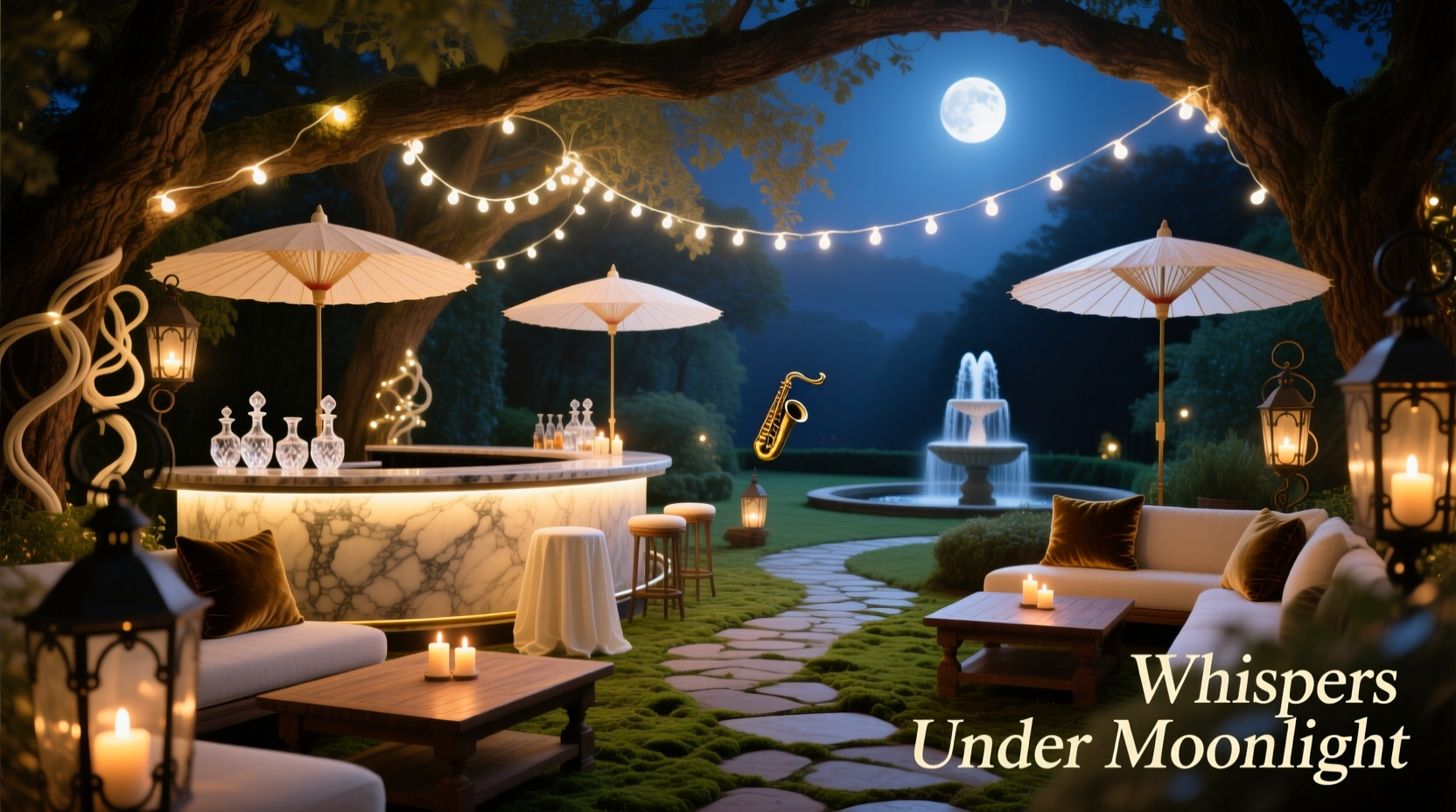
Successful moonlit bars follow three non-negotiable principles: hierarchy of light, human-scale proportion, and sensory coherence. First, light must be layered—not uniform. A single overhead fixture creates harsh shadows and defeats the “moonlit” effect. Instead, combine ambient (e.g., low-voltage path lights), task (e.g., under-bar LED strips), and accent (e.g., lanterns on shelves) sources. Second, proportions must serve intimacy. Bar height should allow eye contact at conversational distance—typically 36–42 inches for standing guests, with stools placed no more than 24 inches apart. Third, sensory coherence means every element reinforces the same emotional tone: matte finishes over glossy, natural fibers over synthetics, muted tones (slate, charcoal, warm taupe, deep sage) over bright primaries. As landscape architect and nighttime design specialist Lena Torres observes:
“Moonlight doesn’t illuminate—it reveals. Your lighting shouldn’t expose every surface; it should invite the eye to discover texture, depth, and shadow. That’s where romance lives—in what’s suggested, not shown.” — Lena Torres, Founder of Nocturne Land Studio
These principles anchor all practical decisions—from fixture selection to material choices—and prevent the common pitfall of assembling beautiful pieces that collectively feel disjointed or overly staged.
Soft Lighting Techniques That Actually Work
Not all “soft” lighting delivers romance. Harsh white LEDs, poorly shielded spotlights, or tangled fairy lights create visual noise—not ambiance. Proven techniques prioritize diffusion, warmth, and motion:
- Sheer fabric diffusion: Drape lightweight linen or voile over wire frames above the bar area. Hang warm-white (2200K–2700K) LED rope lights behind the fabric to cast a cloud-like, even glow.
- Recessed ground lighting: Install low-voltage 3-watt well lights (IP67 rated) along the bar’s perimeter, angled upward at 30° to graze vertical surfaces like trellises or potted olive trees—creating subtle vertical emphasis without glare.
- Candle clusters in weighted vessels: Group 3–5 pillar candles (unscented, beeswax or soy blend) inside heavy ceramic or hammered copper bowls. Weight prevents tipping; matte vessels absorb excess light, keeping flame glow soft and directional.
- String light layering: Use two parallel strands: one hung high (8–10 ft) in a loose zigzag pattern for ambient sky-fill, and another lower (5–6 ft), draped loosely over a pergola beam or draped vine, to frame sightlines and define the bar zone.
Weather-Resilient Materials That Age Beautifully
Romance fades fast when wood warps, metal rusts, or cushions mildew. Moonlit bars demand materials that withstand dew, occasional rain, and UV exposure—without sacrificing tactile warmth. Prioritize natural durability over temporary aesthetics:
| Material | Best Application | Why It Works | Maintenance Tip |
|---|---|---|---|
| Thermally modified ash | Bar top, shelving | Heat-treated to resist rot and insects; grain deepens to warm amber over time | Oil annually with clear teak oil—no sanding required |
| Marine-grade stainless steel (316) | Bar frame, shelf brackets, hardware | Chloride-resistant; won’t stain stone or concrete beneath | Wipe monthly with vinegar-water solution to prevent salt buildup |
| Outdoor-rated Sunbrella Canvas | Bar stool upholstery, cushion covers | UV-stable, mold-resistant, and colorfast for 5+ years | Vacuum weekly; spot-clean with mild soap + cold water |
| Basalt stone slabs | Bar countertop, base cladding | Natural cooling effect; non-porous surface resists stains and heat | Seal every 2 years with breathable silane-based sealer |
Crucially, avoid pressure-treated pine (it leaches greenish residue), untreated cedar (grays unevenly and splinters), and standard aluminum (corrodes near coastal or pool environments). One client in Portland, Oregon, replaced a cedar bar top after 14 months—rain saturation caused cupping and sharp splinters near the rim. Switching to thermally modified ash resolved both safety and aesthetic concerns while enhancing the moonlit reflection off its smooth, matte surface.
Step-by-Step: Building Your Moonlit Bar in 7 Days
This timeline assumes weekend availability and moderate DIY skill. All materials are sourced from standard landscape or home improvement suppliers.
- Day 1 – Site Assessment & Layout Marking: Measure space; mark bar footprint (ideal: 6' long × 2' deep × 36\" high); note existing power sources and drainage slopes. Use spray chalk—not stakes—to avoid damaging roots.
- Day 2 – Foundation & Frame Build: Pour 4-inch-deep gravel base; set galvanized steel post anchors; erect 316 stainless frame using through-bolts (no exposed screws). Let concrete footings cure 24 hours if used.
- Day 3 – Surface Installation: Attach basalt slab countertop with silicone adhesive + mechanical anchors; install thermally modified ash shelving with concealed French cleats.
- Day 4 – Lighting Wiring & Mounting: Run low-voltage wiring conduit beneath gravel base; install transformers and junction boxes; mount recessed ground lights and overhead string light anchors.
- Day 5 – Soft Goods & Accents: Sew or order Sunbrella stool covers; fill weighted candle bowls; hang sheer diffusion fabric; position potted herbs (rosemary, lavender, lemon balm) for fragrance and texture.
- Day 6 – Final Light Tuning: At dusk, switch on all circuits. Adjust fixture angles to eliminate glare on bar surface and guest faces. Dim string lights to 40% brightness; use warm-dimming LEDs for candle clusters.
- Day 7 – Dry Run & Refinement: Host a small test evening: pour drinks, observe where light pools or vanishes, note conversation flow, adjust stool spacing. Add a brass tray for coasters and a linen napkin basket.
Real-World Example: The Willow Creek Backyard Transformation
In Asheville, North Carolina, Sarah and James converted a neglected corner of their sloped backyard into a moonlit bar over six weeks. Their site had poor drainage, mature oak roots, and strict HOA guidelines limiting permanent structures. They opted for a semi-permanent solution: a freestanding 5-foot-long bar built on adjustable steel feet (to accommodate slope), anchored with removable ground screws. The countertop? A reclaimed black walnut slab sealed with food-safe epoxy—its rich grain catching low light like liquid obsidian. For lighting, they installed solar-powered path lights along a curved gravel edge (no wiring), paired with battery-operated LED tea lights nestled in hollowed river stones. Vines were trained up a tension-wire trellis strung between two existing posts—no new holes drilled. The result? A space that feels rooted and intentional, yet fully reversible. Neighbors now gather there weekly; Sarah notes, “The magic isn’t in the cost—it’s in how the light moves across the walnut at 8:47 p.m., just as the last gold fades from the sky.”
FAQ: Practical Questions Answered
How do I prevent insects from gathering around my lights?
Use warm-white (2200K–2700K) LEDs exclusively—cooler temperatures (4000K+) attract significantly more moths and beetles. Avoid open-flame candles near food prep zones; instead, place citronella-infused soy pillars in weighted bowls 3 feet away from the bar surface. Install yellow “bug-light” bulbs only in utility areas—not the seating zone—as they compromise ambiance.
Can I add a sink or refrigeration without major plumbing?
Yes—with limitations. For sinks: Use a self-contained, battery-powered pump system (like those in RVs) connected to a 5-gallon freshwater tank and gray-water bucket. For cooling: Opt for a 12V compressor fridge (e.g., Dometic CFX3) powered by a portable lithium power station (2000Wh capacity handles 3 days of light + fridge use). Both avoid trenching and permits—but require weekly refills/charging.
What’s the safest way to hang string lights over a dining area?
Never use nails or staples on living trees. Instead, wrap soft, UV-stable nylon webbing (1-inch wide) around trunks or beams, then attach S-hooks to the webbing. String lights should hang from the hooks—not directly from branches. Maintain at least 12 inches of clearance between bulbs and foliage to prevent heat damage or fire risk. Test tension: lights should sag gently, not pull taut.
Conclusion: Your Invitation to Slow Down
A moonlit garden bar isn’t a project to finish—it’s a practice to deepen. It asks you to notice how light changes minute by minute, how conversation lowers in volume when shadows lengthen, how a shared cocktail tastes different when served beneath a canopy of stars rather than under kitchen fluorescents. These setups succeed not because they’re perfect, but because they’re responsive: to weather, to season, to the quiet shifts in human connection. Start small—drape one length of warm string lights over a fence rail, place three weighted candles on a stone ledge, choose one stool upholstered in weatherproof linen. Observe how it alters your evenings. Then build outward, guided by what feels true, not what trends online. Romance isn’t manufactured; it’s cultivated in the details you choose to honor—the weight of a copper bowl, the grain of aged wood, the hush between sips when the world slows just enough.
💬 Your moonlit moment awaits. Try one lighting tip this week—and tell us in the comments what changed. Did guests stay later? Did laughter sound softer? Share your first step—we’ll help you refine it.








