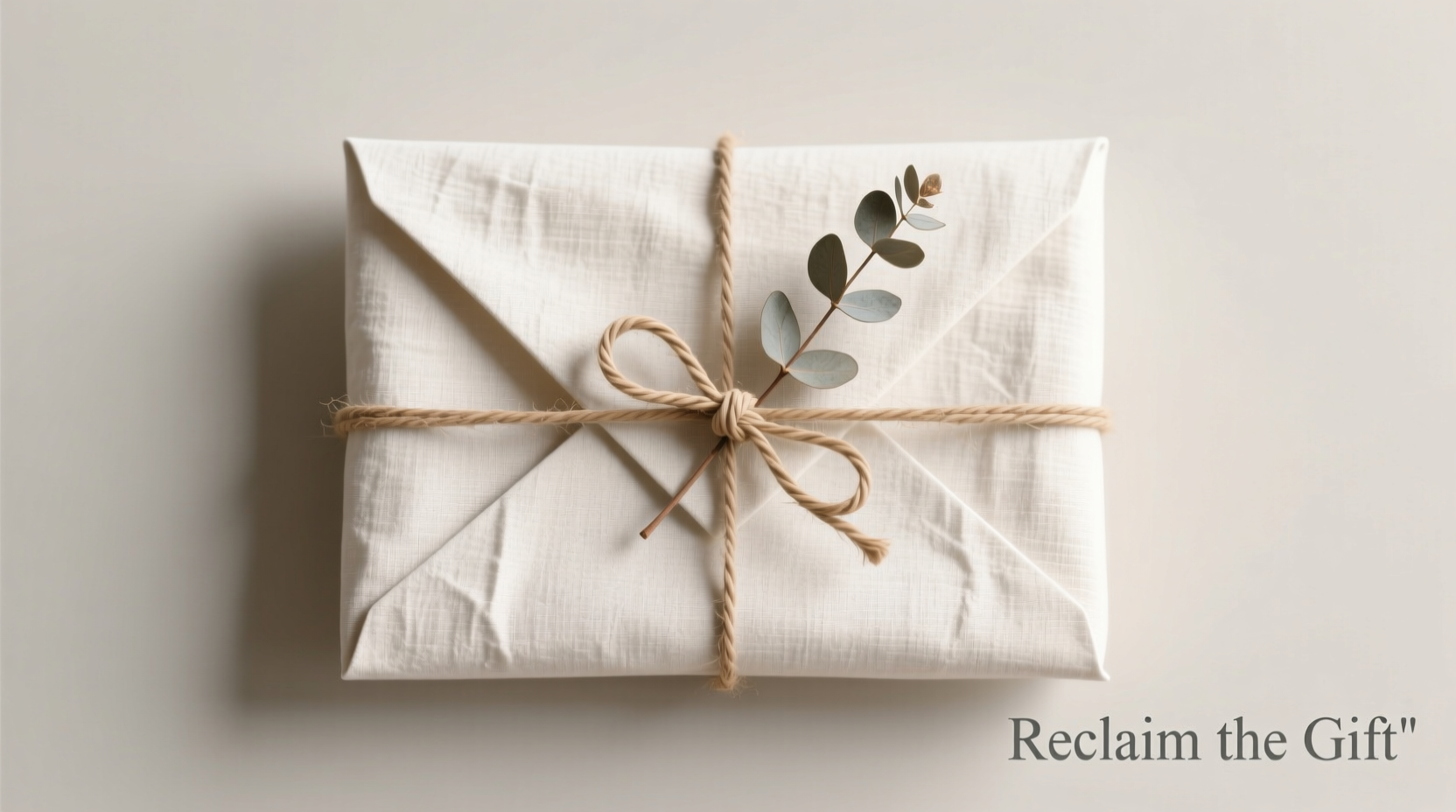
In a season often defined by excess, a quiet revolution is reshaping the way we present gifts. Minimalist Christmas gift wrapping, centered on reusable fabric and natural twine, has emerged not just as a design trend but as a meaningful shift in holiday values. This approach prioritizes sustainability, simplicity, and intentionality—offering an elegant alternative to glossy paper and plastic ribbons that end up in landfills after a single use.
The movement reflects broader cultural changes: consumers are increasingly aware of environmental impact, drawn to slow living principles, and seeking authenticity in their traditions. Reusable fabric wraps—commonly known as furoshiki in Japan—and organic twine are no longer niche choices; they’re becoming staples in eco-conscious homes across North America, Europe, and beyond.
Beyond environmental benefits, this minimalist style offers practical advantages. Fabric wraps can be folded, stored flat, and reused dozens of times. They double as scarves, napkins, or decorative cloths long after the holidays. Twine, sourced from jute or cotton, decomposes naturally and adds a rustic charm that complements modern interiors. Together, they create a gifting experience that feels personal, thoughtful, and timeless.
The Rise of Sustainable Gifting Culture
For decades, holiday consumption has followed a predictable cycle: buy gifts, wrap them in disposable materials, discard the packaging. According to the U.S. Environmental Protection Agency, Americans generate 25% more waste between Thanksgiving and New Year’s Day—an additional 1 million tons per week. Much of this comes from wrapping paper, bows, and tape, which are rarely recyclable due to mixed materials and dyes.
This reality has spurred innovation. Designers, zero-waste advocates, and lifestyle influencers have championed low-impact alternatives. The result? A growing market for reusable wrapping solutions that merge ethics with aesthetics. Furoshiki, once primarily associated with Japanese tea ceremonies, is now taught in workshops from Brooklyn to Berlin. Brands like EarthHero, Package Free Shop, and small artisans on Etsy offer curated sets of organic cotton squares, hemp ribbons, and plant-dyed fabrics designed specifically for gift-giving.
What sets this trend apart is its emphasis on ritual over extravagance. Tying a knot in fabric becomes a meditative act. Choosing a pattern that suits the recipient—a deep indigo for someone who loves the ocean, a soft sage green for a nature enthusiast—adds emotional weight. The recipient, in turn, is invited to participate in the cycle by reusing the wrap for their own gifts next year.
“Sustainable gifting isn’t about sacrifice—it’s about elevation. When you remove clutter, you highlight what matters: connection, craftsmanship, and care.” — Lena Torres, Sustainable Lifestyle Designer
How to Wrap Gifts Using Reusable Fabric (Furoshiki Method)
Furoshiki is a centuries-old Japanese technique of wrapping items in square cloth. Originally used to protect precious objects or bundle clothing, it has been adapted for modern gift presentation. The method requires no scissors, tape, or adhesive—just fabric and skillful folding.
To begin, select a square piece of fabric. Cotton, linen, or silk works best, with sizes ranging from 18x18 inches for small items to 36x36 inches for larger ones. Place the gift diagonally in the center. Then follow these steps:
- Lift two opposite corners and tie them in a secure knot over the gift.
- Take the remaining two corners, pull them across the first knot, and tie a second knot to lock everything in place.
- Adjust the folds so the fabric lies smoothly and the knots are visible as intentional design elements.
For bottles or cylindrical objects, use the “bottle wrap” variation: lay the fabric flat, place the item near one corner, fold the corner over it, then roll the item toward the opposite corner. Twist the remaining fabric and tuck it into the fold to secure.
Tip: Pre-fold and store your fabric wraps with matching twine loops for quick access during busy holiday prep.Variations for Different Gift Shapes
| Gift Type | Recommended Fabric Size | Best Folding Technique | Twine Accent Option |
|---|---|---|---|
| Book or Box (6x9 in) | 20x20 in | Basic Square Knot | Wrap twine around once before tying corners |
| Bottle (Wine/Prosecco) | 28x28 in | Roll & Tuck | Add a sprig of rosemary tied with twine |
| Jar or Candle | 18x18 in | Pouch Fold | Use twine to create a crisscross top closure |
| Toys or Irregular Items | 30x30+ in | Envelope Wrap | Double-wrap with contrasting twine colors |
Choosing the Right Materials: Fabric and Twine Guide
Not all fabrics and twines are created equal. For long-term usability and environmental integrity, consider the following factors when selecting materials.
Fabric Selection Criteria
- Natural Fibers: Opt for cotton, linen, hemp, or silk. These breathe, wash well, and biodegrade at end-of-life.
- Weave Density: Medium to tight weave prevents fraying and ensures durability through multiple uses.
- Dye Process: Choose plant-based or low-impact dyes. Avoid synthetic pigments that leach chemicals during washing.
- Size Versatility: Keep a range of sizes on hand. Smaller squares work for jewelry; larger ones handle sweaters or baskets.
Twine Characteristics
Natural twine enhances the minimalist aesthetic while reinforcing sustainability. Jute, cotton, and sisal are top choices:
- Jute: Strong, slightly coarse, with a warm golden hue. Ideal for heavier packages.
- Cotton: Soft, smooth, and available in undyed or naturally dyed variants. Best for delicate or refined presentations.
- Sisal: Stiffer than jute, excellent for structured bows or decorative knots.
Avoid synthetic twines made from polypropylene or nylon—they don’t break down and contradict the ethos of reuse.
Tip: Cut twine in standardized lengths (e.g., 24”, 36”) and store them coiled in labeled jars for efficiency.Building a Reusable Wrapping Kit: A Practical Checklist
Transitioning to minimalist wrapping doesn’t require a complete overhaul. Start with a simple kit that grows over time. Here’s what to include:
- Base Components
- – 3–5 square fabric wraps in varying sizes (cotton or linen)
- – 2 types of natural twine (jute and cotton)
- – Small wooden clothespins or decorative clips (optional)
- Decorative Add-Ons
- – Dried citrus slices or cinnamon sticks for bundling
- – Pressed leaves or seed paper tags
- – Handwritten labels on recycled cardstock
- Maintenance Supplies
- – Mild detergent for washing fabric
- – Mesh laundry bag for machine washing
- – Storage box or drawer organizer
Store the kit in a cool, dry place away from direct sunlight to prevent fading. Label compartments clearly so family members can use it without confusion.
Real Example: A Family Adopts Zero-Waste Wrapping
The Callahan family in Portland, Oregon, decided to eliminate single-use wrapping paper before the 2022 holiday season. With three children and extended relatives across two states, they typically went through over 20 rolls of wrapping paper, plus tape and bows.
Instead, they invested $75 in a starter set: six organic cotton furoshiki cloths (in seasonal patterns), a spool each of jute and cotton twine, and handmade tags from a local craft fair. Each child helped wrap gifts, learning basic knots and choosing fabrics based on the recipient.
The response was overwhelmingly positive. One aunt reused a navy-blue wrap to package her daughter’s birthday present in March. Another repurposed a floral square as a table runner. By December 2023, the family had reduced their wrapping-related waste to nearly zero—and saved money by reusing the same materials.
“It changed how we think about giving,” said Sarah Callahan. “The process became part of the gift. Watching my kids tie a knot carefully, pick a tag, and say, ‘This one’s for Grandma’—that moment meant more than any glittery bow ever did.”
Common Mistakes and How to Avoid Them
Even with good intentions, challenges arise. Here are frequent pitfalls and practical fixes:
- Mistake: Using fabric that’s too thin or stretchy.
Solution: Stick to medium-weight, non-stretch textiles. Test by folding a sample around a book. - Mistake: Overcomplicating the design.
Solution: Embrace asymmetry and imperfection. A slightly loose knot conveys warmth, not carelessness. - Mistake: Washing fabric improperly.
Solution: Machine wash cold on gentle cycle, air dry flat. Avoid bleach and high heat. - Mistake: Assuming all recipients will appreciate the style.
Solution: Include a small note explaining the choice: “Wrapped with care in reusable fabric—please reuse or return to me!”
Frequently Asked Questions
Can I use old scarves or tea towels as wrapping fabric?
Yes, absolutely. Upcycling household textiles is a core principle of minimalist wrapping. Ensure they’re clean and free of stains. Tea towels with existing hems are especially effective as they resist fraying.
What if the recipient doesn’t want to return the fabric?
That’s perfectly fine. Part of the philosophy is generosity without expectation. Let them keep it as a second gift—many repurpose the fabric as kitchen linens or craft material. The environmental benefit remains, even if the item isn’t returned.
Is this method suitable for large or oddly shaped gifts?
Yes. For bulky items like pillows or blankets, use oversized sheets or repurposed fabric remnants. The envelope fold or drape-and-tie method works well. Secure with multiple twine ties if needed. The key is flexibility—fabric adapts where paper cannot.
Expert Insight: The Future of Gifting Is Circular
“The most beautiful gift isn’t hidden under layers of paper—it’s the message behind the gesture. Reusable wrapping makes that message visible: respect for people, planet, and time.” — Dr. Arjun Patel, Cultural Anthropologist specializing in Consumer Rituals
Experts agree that minimalist wrapping is more than a trend—it’s a reflection of evolving values. As supply chains face scrutiny and climate awareness grows, consumers are redefining luxury. In this new paradigm, beauty lies in restraint, and status is measured not by excess but by mindfulness.
Getting Started: Your First Zero-Waste Holiday Season
Begin small. Pick one gift to wrap in fabric this year. Observe the process. Notice how it slows you down, invites presence, and connects you to the act of giving. Take photos—not for social media, but to remember how it felt.
Next year, expand to three gifts. Then half your list. Within three seasons, you may find that traditional wrapping feels foreign, even wasteful. The rhythm of folding, knotting, and personalizing becomes second nature.
Share the practice. Gift a furoshiki set to a friend with a handwritten guide. Host a wrapping evening with tea and music. Turn sustainability into celebration.
Conclusion: Wrap with Purpose, Give with Heart
Minimalist Christmas gift wrapping with reusable fabric and twine is not a rejection of tradition—it’s a refinement. It strips away the noise to reveal the essence of the holidays: thoughtfulness, connection, and care. Every knot tied is a small act of resistance against disposability. Every returned cloth carries a story.
You don’t need perfection to begin. You only need intention. Start with one square, one spool of twine, one gift wrapped differently. Let that choice ripple outward—to your family, your community, your future self who looks back with pride at the traditions you transformed.
💬 Ready to make your holidays more meaningful? Share this article, start your own wrapping kit, and inspire others to wrap with purpose. The most beautiful gifts leave no trace—except in the heart.








