When it comes to decorating the exterior of homes, businesses, or event spaces, choosing the right type of lighting isn’t just about aesthetics—it’s about resilience. In regions with extreme temperature shifts, heavy snowfall, high winds, or persistent humidity, decorative lights must do more than sparkle; they need to endure. Two of the most common options for outdoor holiday and architectural lighting are mini lights and C7 bulbs. While both can deliver impressive visual results, their ability to withstand harsh weather varies significantly. Understanding these differences is crucial for anyone planning a long-term, low-maintenance lighting display.
This article dives deep into the structural, material, and design distinctions between mini lights and C7s, focusing on how each performs under challenging environmental conditions. From moisture resistance to impact tolerance, we’ll explore real-world factors that determine longevity and reliability—so you can make an informed decision based on climate, budget, and intended use.
Understanding Mini Lights and C7s: Core Differences
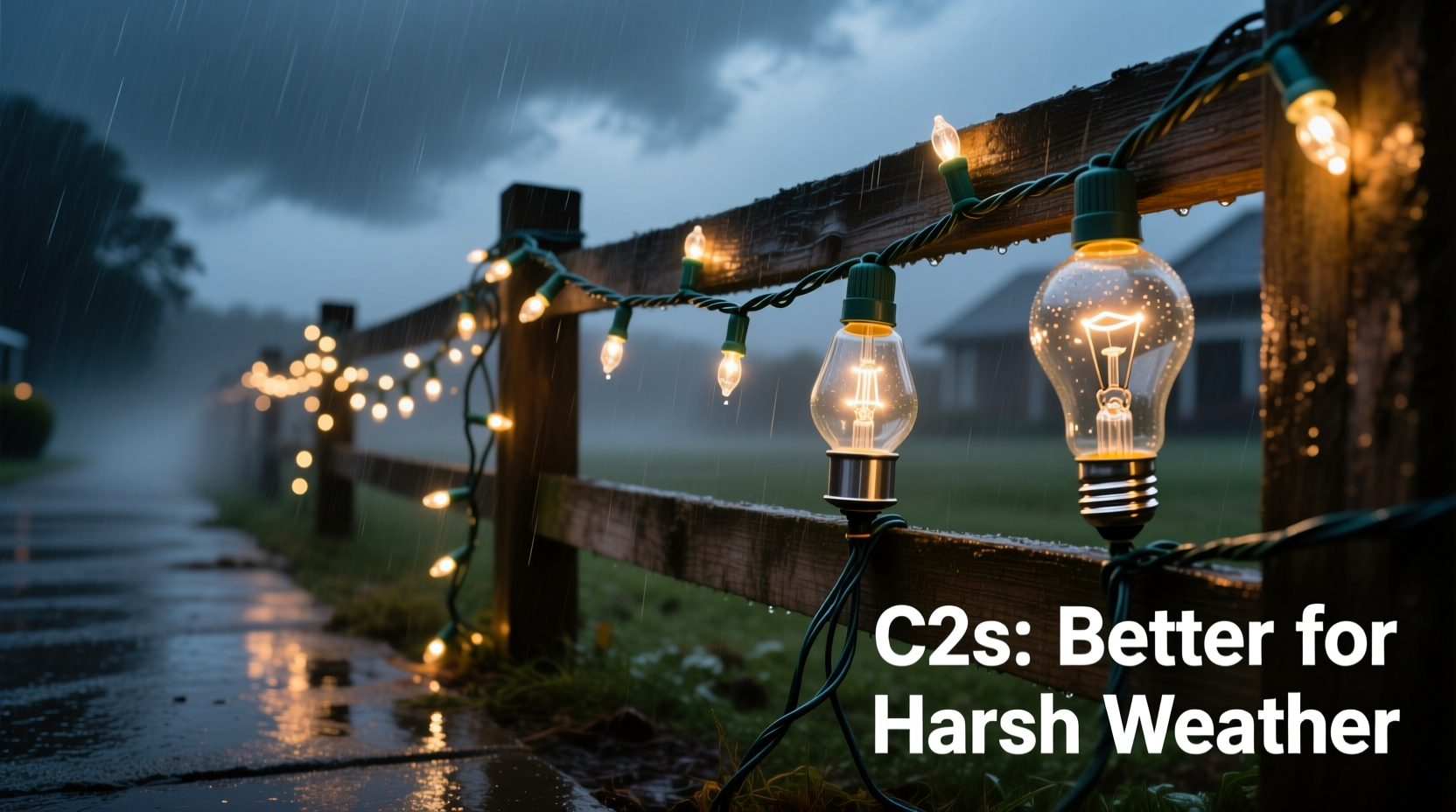
Before assessing weather resistance, it’s essential to understand what sets mini lights and C7s apart in construction and application.
Mini lights, often referred to as \"Christmas mini lights\" or \"fairy lights,\" are small incandescent or LED bulbs typically measuring around 5/8 inch in length. They are commonly strung together in dense sequences—up to 100 or more per string—and are known for their delicate, twinkling appearance. These are frequently used along rooflines, wrapped around trees, or woven through railings.
C7 bulbs, by contrast, are larger—about 1.5 inches long—with an E12 candelabra base. Traditionally used in commercial displays or bold residential installations, C7s offer a vintage look reminiscent of mid-20th-century holiday decor. They are usually spaced farther apart (typically 12–24 inches) and require individual bulb placement, either in sockets mounted on a cord or in permanent tracks.
The size difference is more than cosmetic. It directly affects durability. Larger bulbs like C7s have thicker glass or plastic casings, wider bases for better electrical contact, and greater spacing between units—each of which contributes to improved weather resistance.
Weather Resistance: How Each Performs Under Stress
Harsh weather includes not only precipitation but also freeze-thaw cycles, UV exposure, wind-driven debris, and rapid temperature fluctuations. A light's ability to resist damage from these elements depends on several key factors: seal quality, material composition, wiring integrity, and spacing.
Moisture and Humidity Resistance
Water intrusion is one of the leading causes of failure in outdoor lighting. Mini lights, especially older incandescent models, often feature poorly sealed sockets. Moisture can seep into the socket where the bulb meets the wire, causing corrosion, short circuits, or complete strand failure. Even many modern “weather-resistant” mini light sets rely on basic drip loops and minimal gasketing, which may fail after repeated exposure.
C7s, particularly those designed for permanent or semi-permanent outdoor use, typically come with rubber grommets or silicone seals around the base. Their larger size allows for more robust sealing mechanisms. Additionally, because C7 bulbs are screwed into fixed sockets rather than pushed into flimsy clips, the connection is inherently more secure against water ingress.
Tip: Always check for an IP (Ingress Protection) rating when purchasing outdoor lights. For harsh climates, aim for at least IP44 (protected against splashing water) or higher.Temperature Tolerance and Freeze-Thaw Cycles
In cold climates, ice buildup inside a light fixture can be devastating. When water enters a mini light socket and freezes, it expands—often cracking the plastic housing or warping the internal contacts. This is a common reason why strands of mini lights go dark mid-season, even if only one bulb failed initially.
C7 bulbs, due to their larger, sturdier construction, are less prone to this kind of damage. The materials used—such as polycarbonate lenses and brass or nickel-plated bases—are selected for thermal stability. Many C7 systems are rated for operation between -40°F and 120°F, making them suitable for Arctic winters and scorching summers alike.
LED versions of both types perform better in cold temperatures than incandescent models, as LEDs don’t rely on heated filaments. However, the structural weaknesses in mini light strings still limit their overall durability regardless of bulb technology.
UV and Sunlight Degradation
Prolonged sun exposure breaks down plastics and insulation over time. Mini light cords, typically made from thin PVC, become brittle and crack after just one or two seasons outdoors. Once the insulation fails, the copper wires are exposed to moisture and physical damage.
C7 cords are generally constructed with heavier-gauge wire and UV-stabilized thermoplastic jackets. These materials resist cracking and maintain flexibility even after years of direct sunlight. Some commercial-grade C7 wiring is rated for continuous outdoor use up to five years or more without degradation.
Structural Integrity: Wiring, Spacing, and Wind Load
Wind is another underrated threat to outdoor lighting. Mini light strings, with dozens of closely spaced bulbs, act like sails in strong gusts. This increases tension on mounting points and can lead to sagging, dislodged clips, or broken sockets. If one bulb is damaged, it can affect the entire circuit—especially in older series-wired incandescent sets.
C7s, spaced farther apart, present less surface area to the wind. Their individual mounting reduces strain on any single point. Moreover, most C7 systems use parallel wiring, meaning that if one bulb fails, the rest remain lit—a critical advantage during extended winter displays.
| Feature | Mini Lights | C7 Bulbs |
|---|---|---|
| Bulb Size | ~5/8 inch | ~1.5 inches |
| Base Type | Wedge (T1¾) | E12 (Candelabra) |
| Typical Spacing | 2–4 inches | 12–24 inches |
| Wiring Type | Series (common) | Parallel (standard) |
| Sealing Quality | Low to moderate | High (gaskets/seals) |
| Cord Durability | Thin PVC, prone to brittleness | Heavy-duty, UV-resistant |
| Temp Range (typical) | -20°F to 100°F | -40°F to 120°F |
| Lifespan (outdoor use) | 1–3 seasons | 5+ seasons |
Real-World Performance: A Case Study from Upstate New York
Consider the experience of Mark T., a homeowner in Buffalo, New York, where lake-effect snow and frequent ice storms are common from November through March. For five consecutive years, he used standard mini light strings to decorate his roofline and front porch. Each season, he replaced at least 30% of his lights due to moisture damage, cracked sockets, or broken wires from ice accumulation.
In year six, he switched to commercial-grade C7 LED bulbs mounted in G12 sockets on a parallel-wired system. He installed them using stainless steel clips and ensured all connections were sealed with waterproof electrical tape and conduit caps. Over the next four winters, he reported zero failures. Only two bulbs needed replacement due to physical impact from falling branches—easily swapped without affecting the rest of the circuit.
“The difference was night and day,” Mark said. “With mini lights, I was constantly troubleshooting dark sections. With C7s, I plug them in once and forget about them until April.”
“For permanent outdoor applications in variable climates, C7 systems offer superior reliability due to their robust construction and modular design. Mini lights are better suited for temporary or sheltered installations.” — Daniel Reyes, Electrical Systems Engineer, Outdoor Lighting Solutions Inc.
Installation and Maintenance Considerations
Durability isn’t just about the product—it’s also about how it’s installed. Even the toughest C7 system will fail prematurely if improperly mounted or left with exposed connections.
Step-by-Step Guide: Installing Weather-Resistant Outdoor Lighting
- Assess your climate zone: Determine average winter lows, snow load, and wind speeds. This informs your choice between mini lights and C7s.
- Choose the right product: Select lights with an appropriate IP rating and UL listing for outdoor use. Prefer parallel-wired systems for reliability.
- Plan spacing and layout: Use wider spacing (as with C7s) in high-wind areas to reduce strain.
- Use proper mounting hardware: Stainless steel clips or brackets prevent rust and hold firm in icy conditions.
- Seal all connections: Apply dielectric grease to bulb bases and cover plug connections with waterproof outlet boxes or self-vulcanizing tape.
- Test before finalizing: Power on the system after partial installation to catch defects early.
- Inspect annually: Check for cracks, corrosion, or loose fittings before each season.
Cost vs. Long-Term Value
At first glance, mini lights appear more affordable. A 100-count string might cost $8–$15, while a single C7 bulb can range from $3–$7, not including sockets and wiring. However, when factoring in lifespan and replacement frequency, C7s often prove more economical over time.
A typical mini light string lasts one to three seasons in harsh weather. Replacing multiple strands annually adds up quickly. In contrast, a well-installed C7 system can last a decade or more with minimal maintenance. The initial investment is higher, but the total cost of ownership is lower—especially for permanent installations.
Moreover, LED C7 bulbs consume even less energy than mini LEDs and produce less heat, reducing fire risk and extending component life.
Frequently Asked Questions
Can I leave C7 lights up year-round?
Yes, provided they are rated for continuous outdoor use and properly installed. Commercial-grade C7 systems with UV-resistant cords and sealed sockets are designed for permanent installation. Just ensure all connections are protected and inspect them annually.
Are mini lights completely unsuitable for harsh climates?
Not entirely. Modern LED mini lights with improved seals and shatterproof casings can perform adequately in mild to moderate winter conditions. However, they should be considered seasonal décor—removed after holidays and stored indoors to maximize lifespan.
Do C7s use more electricity than mini lights?
Individual C7 bulbs draw more power than a single mini light, but because they’re spaced farther apart, the total energy consumption for a full display is often comparable. LED C7s use approximately 0.4–0.8 watts per bulb, similar to LED minis. Always compare total wattage per string or circuit.
Checklist: Choosing the Right Light for Harsh Weather
- ☐ Prioritize C7s for regions with heavy snow, ice, or high winds
- ☐ Choose LED bulbs for longer life and better cold-weather performance
- ☐ Verify UL certification and IP rating for outdoor use
- ☐ Opt for parallel-wired systems to prevent total circuit failure
- ☐ Use UV-stabilized, heavy-gauge wiring for long-term durability
- ☐ Install with waterproof connectors and corrosion-resistant hardware
- ☐ Plan for easy access to bulbs for maintenance and replacement
Final Recommendation
While mini lights offer charm and versatility for indoor or sheltered outdoor use, they fall short when exposed to sustained harsh weather. Their small size, tight spacing, and fragile construction make them vulnerable to moisture, ice, and UV damage. For reliable, long-lasting outdoor illumination—especially in climates with severe winters or high humidity—C7 bulbs are the superior choice.
Their rugged build, effective sealing, and modular design allow them to endure conditions that would quickly disable a string of mini lights. Though the upfront cost is higher, the reduced need for replacements, repairs, and reinstallation makes C7s a smarter investment for serious outdoor decorators.
Ultimately, the goal isn’t just to create a beautiful display—it’s to create one that lasts. By choosing the right lighting technology and installing it correctly, you ensure your efforts shine brightly, season after season, no matter what the weather brings.
🚀 Ready to upgrade your outdoor lighting? Start planning your next installation with durable C7 LEDs today—and enjoy a brighter, more resilient display for years to come.








