Every holiday season, families carefully unpack their cherished Christmas ornaments—many of which have been passed down through generations. Among the most treasured are delicate glass baubles, hand-blown figurines, and vintage pieces that carry both sentimental and monetary value. The way these ornaments are hung can make the difference between a joyful display and heartbreaking shattering. One critical decision in ornament care is choosing between magnetic hangers and traditional hook hangers. This article explores how each type impacts fragile decorations, evaluates their effectiveness in preventing breakage, and offers expert-backed guidance for making the safest choice.
Understanding the Risks to Fragile Ornaments
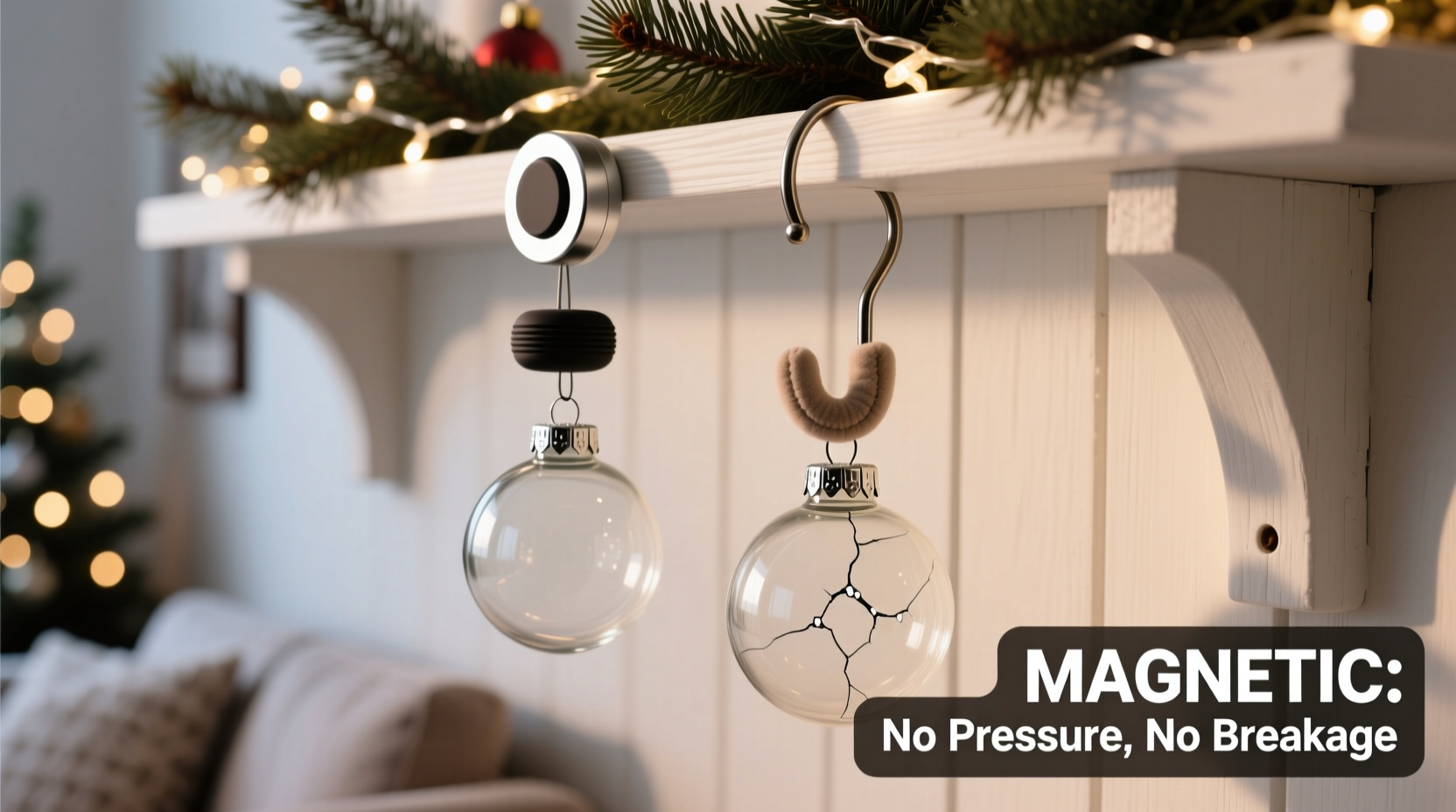
Fragile Christmas ornaments—particularly those made from glass, porcelain, or thin plastic—are vulnerable to stress at specific points. The top cap, often made of metal or glued-on plastic, bears the full weight of the ornament when suspended. Traditional hanging methods apply direct pressure to this area, increasing the risk of cracks, detachment, or complete collapse. Even minor bumps during tree assembly or accidental contact from pets and children can trigger failure if the support structure is compromised.
The root issue isn’t just gravity—it’s leverage. When an ornament swings or shifts on a rigid hook, torque builds at the neck or cap. Over time, repeated micro-movements weaken adhesives and metal fasteners. For older or historically significant pieces, this wear can be irreversible. Preservation-minded decorators must consider not only immediate safety but also long-term integrity.
Tip: Always handle fragile ornaments with clean, dry hands to avoid transferring oils that degrade adhesive over time.How Hook Hangers Work—and Where They Fall Short
Traditional hook hangers—typically made of bent wire or plastic—are the standard method supplied with most ornaments. They attach by inserting the hook through the loop or cap at the top of the ornament. While simple and inexpensive, they present several risks for delicate items:
- Concentrated Pressure: The entire weight rests on a small metal loop or glued tab, creating a single point of failure.
- Lack of Flexibility: Rigid hooks don’t absorb movement, so any jostling transfers directly to the ornament.
- Cap Detachment: If the glue bond weakens, the cap can pull away entirely, dropping the ornament.
- Tree Branch Wear: Metal hooks can scratch or damage real tree branches, leading to sap leakage or instability.
In households with active children or pets, hook hangers increase the likelihood of accidents. A tail swipe or curious tug can easily dislodge an ornament balanced precariously on a thin wire. Additionally, when multiple ornaments hang close together, their hooks can tangle, requiring forceful separation that risks knocking others loose.
“Over 60% of ornament damage occurs during setup or take-down—not while displayed. The hanging method is the weakest link.” — Dr. Lena Pruitt, Museum Conservator, National Holiday Archive
The Rise of Magnetic Hangers: A Safer Alternative?
Magnetic hangers have emerged as a modern solution designed specifically for fragile décor. These systems use two opposing magnets—one placed inside the ornament (or against its surface), and another outside—to create a secure, clamp-like hold without penetrating or stressing the cap. Some models feature soft silicone coatings to prevent scratching, while others include adjustable tension for different ornament weights.
The key advantage lies in **distributed force**. Instead of relying on a tiny attachment point, magnetic hangers spread pressure across a broader surface area. This reduces strain on glued joints and metal caps. Because there’s no need to thread a hook through a fragile loop, the risk of tearing or deformation during installation drops significantly.
Additionally, magnetic hangers allow for smoother installation and removal. There’s no fumbling with small hooks or risking a drop while aligning the cap. Many users report faster decorating times and fewer close calls when using magnetic systems, especially on tall trees or hard-to-reach branches.
Types of Magnetic Hangers
- Clip-Style Magnets: Designed like mini clothespins with embedded magnets; ideal for ornaments with slight rims or bases.
- Double-Disc Magnets: Two flat, round magnets sandwich the ornament’s top; best for smooth-surfaced baubles.
- Integrated Ornament Magnets: Pre-installed in some modern ornaments; offer seamless, invisible support.
- Adjustable Pole Magnets: Used for high placement; extendable rod with magnetic tip for placing ornaments at height.
Comparative Analysis: Magnetic vs Hook Hangers
| Feature | Magnetic Hangers | Hook Hangers |
|---|---|---|
| Pressure Distribution | Distributed across surface | Concentrated at cap/loop |
| Installation Ease | Simple clamp-on mechanism | Requires precise threading |
| Risk of Cap Damage | Very low | High, especially with aged glue |
| Suitability for Antiques | Excellent | Poor to fair |
| Stability in Drafts | Good (if magnet strong) | Fair (swings freely) |
| Cost | Moderate to high | Low (often free) |
| Reusability | High (last years) | Moderate (bend over time) |
The data shows a clear trend: magnetic hangers outperform traditional hooks in nearly every category related to breakage prevention. Their main limitation is compatibility—some ornaments lack a suitable surface for magnetic adhesion, particularly those with thick caps or non-metallic components. However, for smooth glass balls, lightweight figurines, and heirloom pieces, magnets offer superior protection.
Real-World Example: Preserving a Family Heirloom Collection
The Callahan family in Vermont owns a collection of 1940s German glass ornaments inherited from a great-aunt. For decades, they used standard hooks, losing at least one piece each season—usually due to cap failure. In 2021, after a rare “Blizzard Boy” angel shattered during setup, they decided to switch to magnetic hangers.
They invested in a set of silicone-coated double-disc magnets rated for 50 grams each—well above the average weight of their ornaments. During installation, they simply cleaned the top of each bauble, placed one magnet inside the cap (where accessible), and clamped the second from above. The process took less time than previous years, and not a single ornament was damaged during setup or takedown.
“It felt like we were finally treating them with the respect they deserved,” said Margaret Callahan. “The magnets hold better, look cleaner, and I’m not holding my breath every time someone walks near the tree.”
Now in their fourth season using magnetic hangers, the collection remains intact—a first in living memory.
Step-by-Step Guide to Switching to Magnetic Hangers
If you're considering upgrading your ornament hanging system, follow this proven sequence to ensure safety and effectiveness:
- Inventory Your Fragile Ornaments: Separate glass, porcelain, and vintage pieces from sturdier ones (plastic, wood).
- Weigh Sample Ornaments: Use a kitchen scale to determine average weight. Choose magnets rated for at least 1.5x the heaviest ornament.
- Clean Surfaces: Wipe the top 1–2 cm of each ornament with isopropyl alcohol to remove dust and oils for better magnetic contact.
- Test Magnet Strength: Attach the magnet pair to a similar surface and gently shake. If it holds, proceed.
- Install Carefully: Place one magnet inside the cap or against the inner top; press the second firmly from outside. Avoid sliding, which can scratch.
- Hang and Monitor: Place on the tree and observe for 24 hours. Check for slippage, especially in warm or drafty rooms.
- Label and Store: Keep magnets with their paired ornaments in labeled boxes for next year.
This method ensures a smooth transition without risking damage during the upgrade process.
Checklist: Choosing the Right Hanger for Your Ornaments
- ✅ Assess ornament material: Glass and porcelain benefit most from magnetic hangers.
- ✅ Check cap condition: If the loop is loose or glue is visible, avoid hooks.
- ✅ Verify magnet strength: Ensure load rating exceeds ornament weight.
- ✅ Consider aesthetics: Some magnetic hangers are more visible than discreet hooks.
- ✅ Prioritize safety: Use magnets for high-traffic areas or homes with kids/pets.
- ✅ Retain originals: Keep old hooks as backups in case magnets aren’t compatible.
Frequently Asked Questions
Can magnetic hangers damage glass ornaments?
No—if used correctly. High-quality magnetic hangers use soft coatings (like silicone or rubber) that prevent scratching. Avoid cheap, uncoated magnets with sharp edges. Also, ensure the magnet isn’t too strong, as excessive force could crack thin glass during installation.
Are magnetic hangers worth the cost?
For fragile or valuable ornaments, yes. A single broken heirloom can cost hundreds—or be irreplaceable. Magnetic hangers typically range from $15–$40 for a set, offering years of reuse. When weighed against emotional and financial loss, they are a sound investment in preservation.
Can I use magnetic hangers on all types of Christmas trees?
Yes. Magnetic hangers work on artificial, real, pre-lit, and even slim-profile trees. The only requirement is enough space to position the magnet pair. On densely branched trees, use a slim tool to assist placement. Avoid placing magnets near electronic controls, as strong fields may interfere with lighting systems.
Conclusion: Protect What Matters Most This Holiday Season
The choice between magnetic and hook hangers isn’t just about convenience—it’s about stewardship. Fragile Christmas ornaments represent more than decoration; they’re vessels of memory, tradition, and artistry. Hook hangers, while familiar, place undue stress on the weakest parts of these treasures. Magnetic hangers, by contrast, offer a smarter, gentler alternative that distributes weight, reduces handling risk, and enhances long-term preservation.
Switching doesn’t require overhauling your entire collection at once. Start with your most delicate or meaningful pieces. Test a few magnetic hangers this year and experience the difference in ease and peace of mind. As more collectors and conservators advocate for non-invasive display methods, magnetic solutions are becoming the new standard for thoughtful holiday decorating.
💬 Have a favorite ornament-saving tip or success story? Share your experience in the comments and help others protect their holiday memories with confidence.








