When it comes to holiday decorating, few elements deliver instant charm like draped greenery. Whether framing a mantel, winding down a staircase, or accenting a doorway, the right garland sets the tone for festive warmth. But with so many options available, one question consistently arises: when comparing lighted Christmas garlands and wired ivy, which drapes better? The answer isn’t just about aesthetics—it involves material quality, flexibility, lighting integration, longevity, and ease of use. This detailed comparison explores both options from every angle to help you make an informed decision that enhances your seasonal display.
Understanding the Basics: What Are Lighted Christmas Garlands?
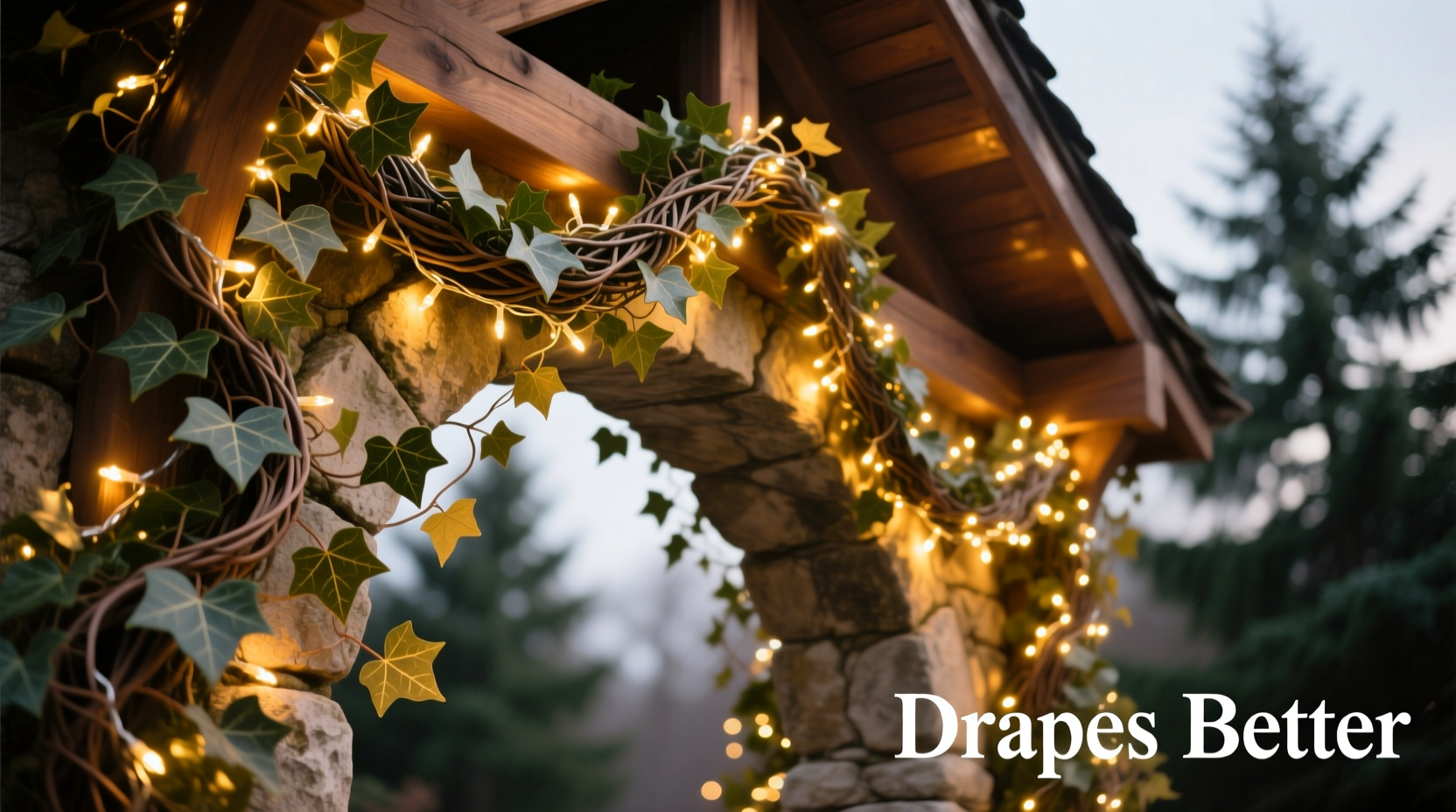
Lighted Christmas garlands are pre-lit artificial greenery strands designed specifically for holiday decoration. They typically consist of PVC or polyester foliage—often mimicking pine, fir, or mixed evergreen—with built-in LED lights woven into the stems. These garlands come in various lengths (commonly 6 to 9 feet) and plug configurations (battery-powered or electrical). Many include remote controls, timer functions, and multiple lighting modes such as steady, twinkle, or fade.
The primary appeal lies in convenience. Since the lights are already embedded, there's no need to wrap separate string lights around bare greenery. This makes installation faster and reduces clutter from tangled cords. However, this convenience often comes at the cost of natural movement and drape due to the rigidity introduced by wiring and bulb casings.
Tip: When purchasing a pre-lit garland, check whether the wire core is flexible enough to bend without kinking—some lower-quality models resist shaping.Wired Ivy: A Year-Round Favorite with Seasonal Potential
Wired ivy refers to artificial vines made from plastic or silk leaves threaded onto thin metal wires. Unlike seasonal-specific products, wired ivy is marketed as a versatile decorative tool usable all year round—for weddings, parties, home accents, or even commercial displays. Each stem is manually bendable, allowing precise shaping around banisters, picture frames, or furniture edges.
While not inherently lit, many decorators choose to pair wired ivy with separate string lights for a glowing effect. This DIY approach offers greater control over light density and placement but requires more time and effort during setup. Because the structure lacks internal lighting components, wired ivy tends to be lighter and more fluid in motion, giving it superior draping characteristics compared to most pre-lit alternatives.
“Wired ivy gives designers unmatched control over form and flow. It’s the go-to choice when realism and elegance matter.” — Lena Pruitt, Interior Stylist & Event Designer
Draping Performance: Flexibility, Weight, and Natural Movement
Draping quality depends on three key factors: flexibility of the core wire, overall weight, and how naturally the material hangs under gravity. Let’s break these down for each option.
Flexibility and Bendability
Lighted Christmas garlands usually have a central power cord running through the length of the strand. While some models incorporate flexible cabling, others use stiff insulation to protect bulbs and wiring. This can limit how tightly you can curve the garland, especially around sharp corners. In contrast, wired ivy uses individual thin-gauge wires per stem, enabling micro-adjustments and soft S-curves that mimic real plant growth.
Weight Distribution
Pre-lit garlands are heavier due to integrated LEDs, connectors, and thicker foliage clusters. This added mass can cause sagging if not properly supported—particularly on long runs like stair railings. Wired ivy, being significantly lighter, maintains its shape with minimal support and won’t pull down adhesive hooks or delicate surfaces.
Natural Flow and Realism
Because lighted garlands prioritize light coverage over botanical accuracy, their leaf patterns may appear repetitive or overly dense. Wired ivy allows layering and spacing adjustments, letting users create asymmetrical, organic-looking arrangements. For those aiming for a subtle, elegant look rather than bold holiday cheer, this level of customization is invaluable.
| Feature | Lighted Christmas Garland | Wired Ivy (+ Lights) |
|---|---|---|
| Drape Quality | Moderate – stiffer due to wiring | Excellent – highly flexible and fluid |
| Installation Speed | Fast – plug-and-play design | Slower – requires pairing with lights |
| Realism | Good to fair – uniform appearance | High – customizable and lifelike |
| Weight | Heavier – risk of sagging | Lightweight – easy to secure |
| Lifespan | 3–5 years (lights may fail earlier) | 5+ years with proper storage |
| Reusability Beyond Holidays | Limited – clearly seasonal | High – adaptable for any event |
Practical Use Cases: Where Each Option Shines
The best choice depends heavily on context. Consider the following scenarios:
Scenario 1: Quick Mantel Makeover for Christmas Eve
You're hosting guests tomorrow and want a festive look with minimal effort. A lighted Christmas garland is ideal here. Drape it across the mantelpiece, plug it in, and instantly achieve a warm, inviting glow. No extra lights needed, no trial-and-error positioning. The built-in illumination ensures even brightness, perfect for last-minute setups.
Scenario 2: Elegant Staircase Display for a Winter Wedding
A formal event calls for sophistication. Here, wired ivy paired with warm-white fairy lights provides a softer, more refined appearance. You can weave it gradually down the railing, vary the leaf density, and tuck in floral accents. The ability to hand-shape each section results in a high-end finish that feels intentional and artistic.
Scenario 3: Outdoor Porch Rail Decor in Cold Climate
If exposed to wind or moisture, durability becomes critical. Many lighted Christmas garlands are rated for outdoor use, with weather-resistant LEDs and UV-protected foliage. Wired ivy, unless explicitly labeled as outdoor-safe, may degrade faster under sun exposure and damp conditions. In this case, the pre-lit option wins for resilience—even if its drape is slightly less graceful.
Tip: For outdoor use, always verify IP ratings on lighted garlands. Look for at least IP44 (splash-resistant) and avoid placing electrical connections directly on wet surfaces.Step-by-Step: Creating a Professional-Looking Drape with Either Option
Regardless of your chosen material, proper technique elevates the final result. Follow this timeline for a polished display:
- Measure the Space (Day 1): Use a tape measure to determine linear footage needed. Add 15% extra for looping and swags.
- Select Anchoring Points (Day 1): Identify where clips, hooks, or ties will go. For heavy garlands, use wall anchors; for lightweight ivy, removable adhesive hooks suffice.
- Test Layout (Day 2): Unroll the garland or ivy along the floor in your desired pattern. Adjust loops and spacing before mounting.
- Begin Installation (Day 2): Start at one end and work toward the other. Secure every 12–18 inches. For wired ivy with separate lights, attach lights first, then wrap with foliage.
- Shape and Refine (Day 2): Bend tips outward for fullness. Fluff leaves to hide wires or cords. Rotate sections for varied texture.
- Final Lighting Check (Day 2): Turn on lights (if applicable) and inspect for dark spots or uneven distribution.
- Touch Up as Needed (Ongoing): After a few days, re-fluff any flattened areas caused by settling or air currents.
Longevity and Storage: Which Lasts Longer?
Both types can last multiple seasons with proper care, but failure points differ.
Lighted Christmas garlands often fail due to electrical issues—burnt-out bulbs, broken sockets, or frayed cords—rather than wear on the foliage. Once the lights malfunction, replacing them is rarely feasible, rendering the entire piece unusable despite intact greenery.
Wired ivy, having no electronics, avoids this issue entirely. As long as it’s stored free of dust and creases, it retains flexibility and color vibrancy for years. Store it loosely coiled in a breathable fabric bag, away from direct sunlight.
“Garlands with integrated lights are convenient, but they’re essentially disposable after three to four seasons. I recommend investing in quality standalone greenery and lights separately—they’ll outlast three pre-lit versions.” — Marcus Tran, Holiday Lighting Technician
Cost Comparison and Value Over Time
Upfront pricing shows a narrow gap: a 7-foot lighted Christmas garland averages $25–$40, while a comparable length of premium wired ivy costs $15–$25. However, adding a set of 50-count LED string lights ($10–$15) brings the total close to parity.
The value shift occurs over time. If you reuse wired ivy for five years across holidays, weddings, and spring décor, the per-use cost drops dramatically. Pre-lit garlands, limited to seasonal use and prone to early burnout, offer lower long-term value despite initial convenience.
Frequently Asked Questions
Can I combine lighted garlands with wired ivy?
Yes—and many professional decorators do. Wrap a lighted garland with additional wired ivy to soften its appearance, add volume, and improve drape. This hybrid method leverages the ease of pre-lit strands while enhancing realism and flow.
Do lighted garlands get hot?
Modern LED-equipped garlands produce minimal heat and are safe for indoor use near fabrics or wood. Avoid older incandescent models, which can become warm and pose fire risks when covered or confined.
How do I prevent wired ivy from looking too “perfect”?
Natural greenery isn’t symmetrical. To avoid a robotic look, vary the direction of leaf clusters, leave small gaps between stems, and gently crush a few leaves to simulate aging. Adding pinecones, berries, or ribbon fragments also breaks up uniformity.
Checklist: Choosing the Right Option for Your Needs
- ☐ Define your priority: speed of setup vs. quality of drape
- ☐ Measure all installation areas accurately
- ☐ Confirm indoor/outdoor usage requirements
- ☐ Check power access—can you reach outlets?
- ☐ Decide on lighting tone (warm white, cool white, multicolor)
- ☐ Evaluate storage space for off-season preservation
- ☐ Consider multi-use potential beyond the holidays
Conclusion: Balancing Beauty, Convenience, and Craftsmanship
So, which drapes better—lighted Christmas garlands or wired ivy? The evidence leans decisively toward wired ivy for superior drape, flexibility, and long-term versatility. Its ability to bend, flow, and adapt to architectural features gives it a clear edge in creating natural, elegant displays.
That said, lighted Christmas garlands serve a vital role for those prioritizing speed, simplicity, and immediate impact. They’re excellent for renters, busy households, or anyone who wants reliable holiday cheer with minimal effort.
The smartest approach may be a hybrid strategy: use pre-lit garlands in high-visibility, low-maintenance areas like entryways, and reserve wired ivy for focal points where craftsmanship matters—such as grand staircases or dining tables. By understanding the strengths of each, you gain creative freedom without sacrificing convenience.
💬 What’s your go-to garland for the holidays? Share your favorite combination of lights and greenery in the comments—we’d love to hear your pro tips!