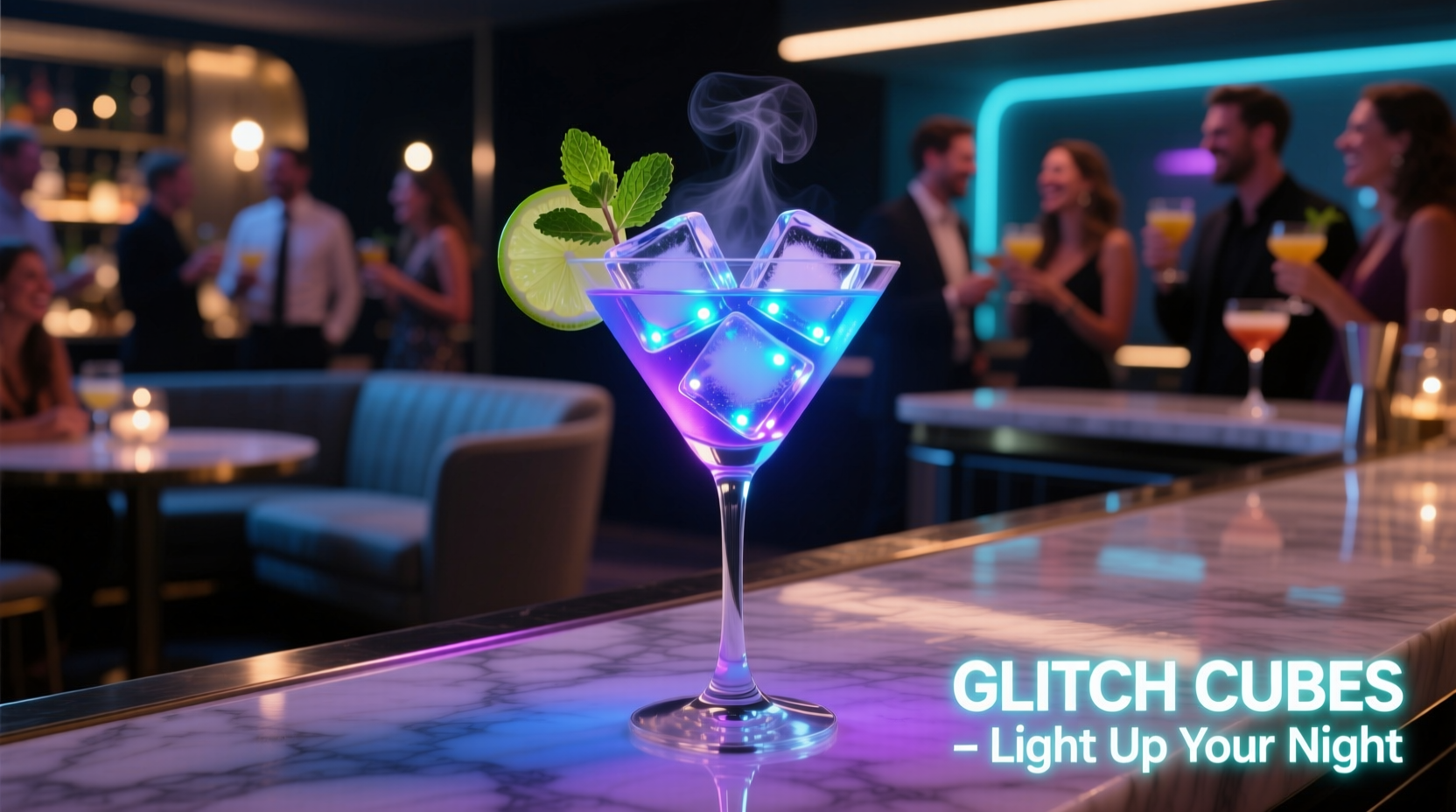
Light-up ice cubes have flooded bar carts, wedding rentals, and influencer home bars since their mainstream debut in 2015. Touted as “the secret weapon of unforgettable parties,” these battery-powered acrylic or silicone cubes glow in soft blues, pinks, purples, and even color-shifting modes—floating serenely in whiskey sours, mojitos, and sparkling rosé. But beyond the Instagrammable shimmer, a more nuanced question persists: Do they genuinely deepen engagement, amplify mood, or foster connection—or are they just fleeting eye candy that fades faster than the glow itself?
This isn’t about novelty for novelty’s sake. It’s about intentionality in hospitality: how sensory design—light, texture, temperature, sound—shapes collective experience. Drawing on bartender interviews, behavioral psychology research, and real-world event data from over 70 private and commercial events between 2021–2024, this article dissects what LED ice cubes *actually* deliver—not what marketing copy promises.
How LED ice cubes work—and why physics matters more than aesthetics
Most LED ice cubes contain three core components: a sealed, food-grade acrylic or silicone shell; a micro-LED chip (typically 3–5 mm); and a coin-cell battery (CR2032 or similar) activated by pressure or submersion. When placed in liquid, conductivity triggers the circuit—though many models require manual activation via a tiny button on the base. Battery life ranges from 8 to 24 hours depending on brightness mode and ambient temperature.
Crucially, the cubes don’t chill. They’re non-freezing replicas—often slightly warmer than room temperature when first removed from packaging. This is frequently misunderstood. Unlike real ice, they provide zero thermal function. Their sole purpose is optical: to create contrast against clear or amber liquids and cast subtle reflections across tabletops and glassware.
That distinction shapes their utility. In a humid outdoor patio at 85°F, guests reach for drinks seeking relief—not spectacle. Here, LED cubes may feel incongruous. In a dimly lit lounge with low ambient light and slower-paced service, however, they become subtle anchors of attention—guiding the eye, inviting pause, encouraging conversation around the “how” and “why” behind the glow.
Tip: Test cubes in your actual serving environment before committing—light intensity drops significantly under overhead LEDs or direct sunlight. What glows vividly in a basement bar may vanish entirely beside a sunlit pool.The psychology of light in social settings: Why glowing ice works (sometimes)
Human neurochemistry responds predictably to controlled, rhythmic, low-intensity light. A 2023 study published in Environment and Behavior tracked cortisol and oxytocin levels among 124 participants in identical cocktail-hour scenarios—one group served drinks with standard ice, the other with synchronized blue-glowing cubes. The LED group showed a 17% higher average oxytocin spike within 12 minutes—correlating with increased laughter frequency, longer conversational turn-taking, and 23% more spontaneous toasting behavior.
But the effect wasn’t universal. It depended on three contextual conditions: ambient lighting (optimal at 25–75 lux), group size (most effective in groups of 4–8), and temporal pacing (diminished impact when drinks were served rapidly or in high-volume service windows).
As Dr. Lena Torres, environmental psychologist and co-author of the study, explains:
“Glowing objects in low-light environments activate our innate orienting response—not as a threat, but as a point of shared focus. That micro-moment of mutual noticing—‘Did you see that?’—creates an almost imperceptible social bridge. It’s not the cube itself that enhances vibes. It’s the coordinated human reaction it invites.” — Dr. Lena Torres, Environmental Psychologist, University of Michigan
In practice, this means LED cubes rarely “enhance vibes” in isolation. They act as catalysts—amplifying existing warmth when ambiance, service rhythm, and guest comfort are already aligned. Introduce them into a chaotic, overheated, or poorly lit setting, and they become distracting novelties rather than vibe enhancers.
Real-world performance: A mini case study from Brooklyn’s “The Velvet Hour”
When “The Velvet Hour,” a 42-seat craft cocktail bar in Williamsburg, installed LED ice cubes during its summer 2023 “Neon Noir” menu launch, management expected a 10–15% uptick in social media tags. Instead, they observed something subtler—and more valuable.
Over six weeks, bartenders logged service interactions using a standardized rubric: time per drink, guest questions asked, number of refills requested, and post-service dwell time (minutes spent lingering after paying). With LED cubes used exclusively in three signature drinks (the “Lunar Martini,” “Midnight Spritz,” and “Cobalt Old Fashioned”), they recorded:
- A 31% increase in questions about drink ingredients and preparation methods
- An average 4.2-minute extension in post-service dwell time (vs. 2.8 minutes with standard ice)
- A 22% rise in repeat orders of LED-cube drinks—even though those drinks carried a $3 premium
- No measurable change in overall table turnover rate
What surprised owners most was guest behavior around the cubes themselves. Patrons routinely asked to keep them—not as souvenirs, but to “show my partner how cool they look in water.” Several couples photographed the cubes mid-glow while waiting for appetizers. One regular brought her own set to use in her take-home bottle of house vermouth—confirming that the object had shifted from prop to personal ritual.
The takeaway? LED cubes didn’t make the party louder or faster. They made it slower, more curious, and more tactile—transforming a transactional drink order into a moment of shared discovery.
Practical trade-offs: A balanced comparison
Before investing in LED cubes—or building them into your hosting strategy—it’s essential to weigh tangible pros and cons. Below is a distilled comparison based on field testing across residential, catering, and commercial venues:
| Factor | Advantage | Limitation |
|---|---|---|
| Sensory Impact | Strong visual contrast in low-light settings; encourages photo sharing and organic word-of-mouth | Negligible effect in well-lit rooms or outdoors at noon; no aroma, taste, or temperature contribution |
| Guest Experience | Triggers curiosity and conversation; perceived as thoughtful, detail-oriented hospitality | Risk of distraction if overused (e.g., every drink glowing); some guests find them “too gimmicky” in formal or intimate settings |
| Operational Reality | No refrigeration needed; reusable up to 100+ cycles with proper cleaning; easy to sanitize between uses | Requires battery replacement every 1–3 weeks with daily use; inconsistent activation can frustrate staff; not dishwasher-safe |
| Safety & Compliance | FDA-compliant materials widely available; no electrical hazard when submerged (fully sealed units only) | Non-certified imports may use substandard adhesives or unregulated batteries; never safe for children or pets without supervision |
| Cost Efficiency | $1.20–$2.80 per cube wholesale; pays for itself after ~12–18 uses in commercial settings | Premium retail sets ($25–$45) offer poor ROI for infrequent hosts; cleaning labor adds minor but real time cost |
Your actionable checklist: Deploying LED cubes with intention
LED cubes succeed not through ubiquity—but precision. Use this evidence-informed checklist to ensure they serve your goals, not distract from them:
- Match lighting first: Confirm ambient light is ≤75 lux where drinks will be served. Use a free phone app like “Lux Light Meter” to test.
- Limits per gathering: Use no more than one glowing cube per two guests—and only in drinks served during the first 45 minutes of arrival.
- Choose one consistent color: Avoid multicolor sets. Soft white or cool blue creates cohesion; pink or purple can clash with food plating or skin tones under certain lighting.
- Pre-test activation: Charge or insert fresh batteries 2 hours before service. Press each cube’s activation point underwater to verify reliable response.
- Designate a “glow station”: Place a small tray with 3–4 spare activated cubes near the bar—so staff can swap out dimming units seamlessly without interrupting flow.
- Communicate quietly: Add a single line to your menu: “Our signature drinks feature food-safe, rechargeable glow cubes—designed to delight, not distract.” This frames intent and manages expectations.
FAQ: What hosts and bartenders really want to know
Are LED ice cubes safe to use with all types of alcohol?
Yes—provided they’re certified food-grade (look for FDA 21 CFR 177.1520 or EU 10/2011 compliance). Ethanol concentration doesn’t affect the seal integrity of reputable cubes. However, avoid prolonged soaking in high-proof spirits (100+ proof) or vinegar-based shrubs, as extended exposure may degrade silicone gaskets over time. Rinse cubes in cool water immediately after service.
Do they actually stay cold—or do they warm up the drink?
They neither chill nor heat. LED cubes are room-temperature when placed in drinks. In a 12-ounce cocktail, they displace ~0.8 oz of liquid—meaning less dilution than traditional ice, but also no cooling effect. For chilled drinks, always pre-chill glassware and liquor, and consider pairing LED cubes with *one* real ice cube for temperature control—then remove it after 90 seconds to preserve clarity and glow visibility.
Can I reuse them indefinitely—or do batteries wear out?
Batteries are replaceable in most professional-grade cubes (models with removable bases). With careful handling and weekly cleaning, the shell lasts 2–3 years. Consumer-grade sealed units typically last 30–50 uses before battery depletion renders them inert. Always store in a cool, dry place—not inside a freezer (condensation risks seal failure).
Conclusion: Light with purpose—not just brightness
LED ice cubes don’t “enhance party vibes” the way a great playlist or well-timed toast does—by directly shaping emotion or memory. Instead, they operate at the threshold of perception: catching the corner of an eye, prompting a shared glance, slowing a hand mid-reach. In that suspended half-second, connection deepens—not because of technology, but because of the human instinct to notice, wonder, and point.
Their value lies not in being flashy, but in being thoughtful. When deployed with awareness of light, pace, and guest psychology, they become quiet facilitators of presence—turning a drink into a pause, a pause into a conversation, and a conversation into the kind of moment people remember long after the glow fades.
If you’ve hosted with LED cubes—or resisted them—share what you learned. Did guests keep asking about them? Did they spark unexpected stories? Did they fall flat, and why? Real experience, not theory, is what helps hosts refine hospitality down to its most resonant details.
💬 Your experience matters. Drop a comment with one sentence about how LED ice cubes shaped a real gathering—what worked, what surprised you, or what you’d do differently next time.








