
When it comes to outdoor cooking, two names dominate the conversation: Kamado Joe and Traeger. One represents the legacy of ceramic kamado grilling, perfected over decades; the other pioneered the pellet grill revolution that brought set-and-forget convenience to barbecue. But with so much marketing buzz and passionate fan bases, how do you separate the hype from real-world performance? The answer isn’t simple—because each brand excels in different areas, and the “better” grill depends entirely on how you cook, what flavors you chase, and what kind of experience you want in your backyard.
The Core Difference: Ceramic vs Pellet Technology
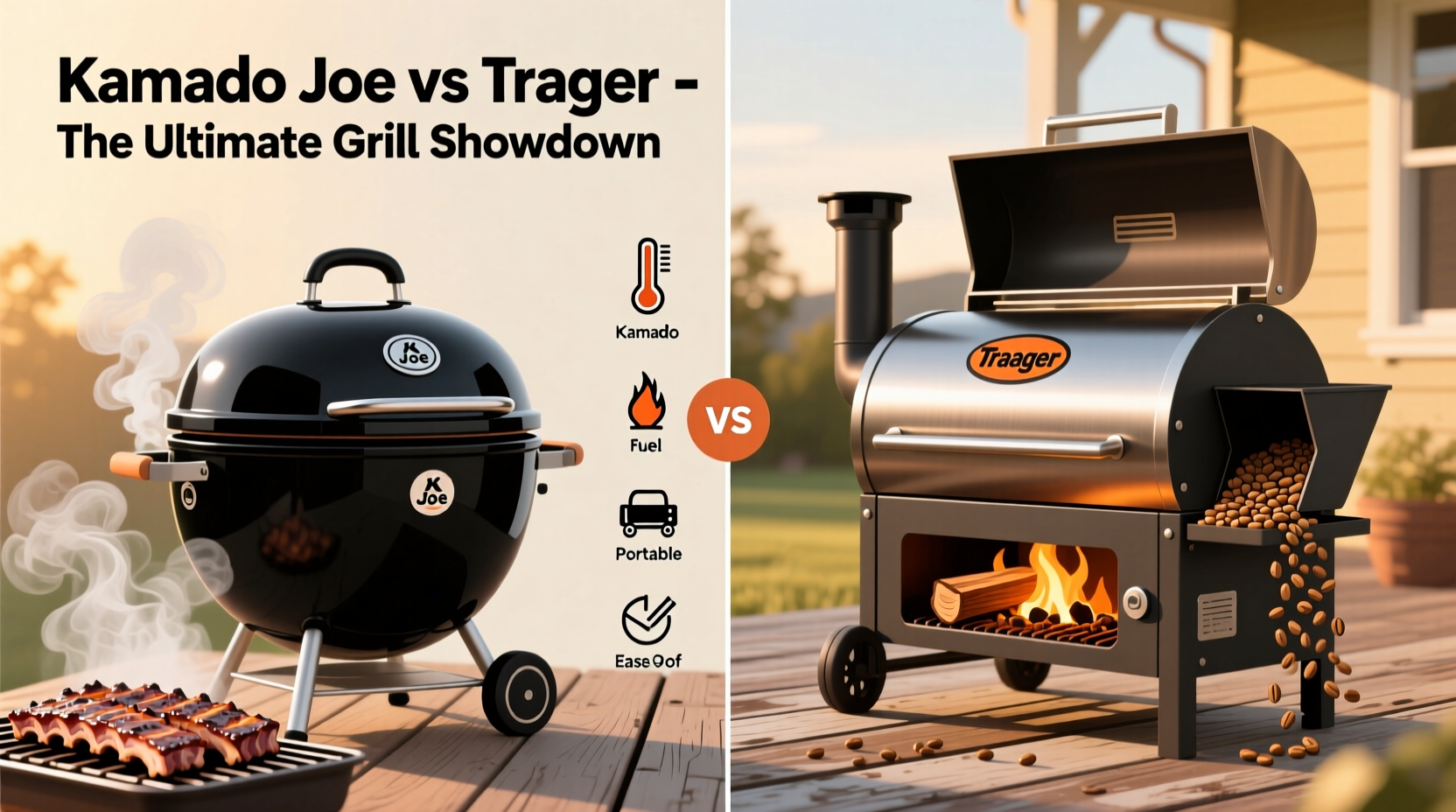
At the heart of the Kamado Joe vs Traeger debate lies a fundamental difference in design and fuel source. Kamado Joe grills are modern evolutions of ancient clay ovens, using thick ceramic walls and lump charcoal for unmatched heat retention and smoky flavor. Traeger grills, on the other hand, run on wood pellets fed automatically into a fire pot via an auger system, controlled by digital thermostats. This distinction shapes everything—from startup time to flavor profile to maintenance needs.
Kamado Joe’s ceramic construction allows for extreme temperature ranges (from 180°F to over 700°F), making it ideal for low-and-slow smoking, searing steaks, and even pizza baking. Traeger’s automated system prioritizes consistency and ease, letting users set a temperature and walk away—perfect for busy home cooks who want reliable results without constant monitoring.
Tip: If flavor depth and versatility are top priorities, lean toward Kamado Joe. If convenience and consistent temps matter most, consider Traeger.Performance & Cooking Experience Compared
Let’s break down how each grill performs across key categories:
| Category | Kamado Joe | Traeger |
|---|---|---|
| Heat Control | Precise via manual air vents; requires practice but offers fine-tuned response | Digital thermostat maintains set temp automatically; minimal user input needed |
| Flavor Profile | Richer, deeper smoke flavor from lump charcoal and ceramic insulation | Milder smoke flavor; varies by pellet type, but generally less intense |
| Startup Time | 15–20 minutes to reach smoking temp; longer for high-heat searing | 5–10 minutes from power-on to cooking temp |
| Fuel Efficiency | Extremely efficient; burns less charcoal per session due to insulation | Moderate; pellets burn faster at higher temps, increasing consumption |
| Versatility | Excels at smoking, grilling, roasting, baking, and even pizza | Strong at smoking and indirect grilling; limited for true searing or baking |
The Kamado Joe shines when you want full control and maximum flavor. Its ability to hold steady temperatures for 18+ hours makes it a favorite among competition pitmasters. Meanwhile, Traeger’s strength lies in accessibility—its Wi-Fi-enabled models allow remote monitoring, and the learning curve is far gentler for beginners.
“Pellet grills like Traeger have brought precision to smoking, but nothing replicates the soul of barbecue like a well-tuned kamado.” — Derrick Miles, BBQ Pitmaster & Instructor
Real-World Example: A Weekend Cookout
Consider John, a weekend warrior who hosts family dinners every Saturday. He used a Traeger for two years, appreciating how he could set it to 225°F, prep side dishes, and return to perfectly smoked ribs. But after attending a smoker competition, he tried a Kamado Joe-cooked brisket and was stunned by the bark development and smoke penetration. He bought a Kamado Joe Classic III and spent a few weekends mastering airflow control. Now, he splits his time: Traeger for easy weeknight chicken, Kamado Joe for Sunday brisket and homemade pizzas. His verdict? “One isn’t better. They just do different jobs.”
Key Features That Set Them Apart
Both brands offer premium features, but they solve problems differently.
- Kamado Joe’s Divide & Conquer Flex Plate System allows multi-level, multi-zone cooking—perfect for smoking meat on one rack while grilling veggies above.
- Traeger’s D2 Drive System reduces pellet jams and improves feed reliability, addressing a common early-gen complaint.
- Kamado Joe’s Thick Ceramic Walls retain heat so effectively that overnight smokes require only one fuel load.
- Traeger’s App Integration lets users adjust temps remotely, receive alerts, and access guided cooking programs.
While Kamado Joe focuses on enhancing traditional kamado strengths—durability, heat retention, and versatility—Traeger invests heavily in smart technology and user-friendly automation.
Checklist: Choosing the Right Grill for You
Answer these questions to determine your best fit:
- Do you prioritize deep, smoky flavor over convenience? → Lean Kamado Joe.
- Are you new to smoking and want a hands-off approach? → Traeger may suit you better.
- Do you want to bake bread or pizza outdoors? → Kamado Joe’s superior heat retention wins.
- Do you frequently cook for large groups? → Both handle volume, but Kamado Joe’s larger models offer more flexibility.
- Is Wi-Fi control or app integration important? → Traeger leads here.
- Are you willing to learn manual temperature management? → Kamado Joe rewards patience.
Maintenance & Long-Term Ownership
Longevity is where both brands impress—but in different ways. Kamado Joe grills are built to last decades. Their ceramic bodies resist corrosion, and replacement parts (like gaskets and fire grates) are readily available. However, they require seasonal cleaning: ash removal, checking the gasket seal, and protecting the exterior from moisture.
Trager grills demand more frequent internal maintenance. Grease buildup in the auger and fire pot can cause malfunctions if not cleaned every few uses. Pellet residue can also corrode components over time, especially in humid climates. Still, their modular design makes repairs easier, and many parts are replaceable through customer service.
Tip: After every 5 cooks, clean your Traeger’s grease tray and inspect the auger. For Kamado Joe, empty ashes weekly and check the lid gasket annually.FAQ: Common Questions Answered
Can I get authentic BBQ flavor from a Traeger?
Yes, but it’s different. Traegers produce a cleaner, milder smoke compared to the rich, charcoal-kissed bark from a Kamado Joe. Using stronger-flavored pellets (like hickory or mesquite) helps, but it won’t replicate the complexity of lump charcoal combustion.
Is the Kamado Joe worth the price?
If you cook often and value flavor, versatility, and durability, yes. Kamado Joe grills are premium tools with a lifetime of use. While priced higher than entry-level smokers, their efficiency and performance justify the investment for serious cooks.
Which is better for beginners?
Traeger wins for ease of use. The digital controls eliminate guesswork, and there’s no need to master airflow dynamics. Kamado Joe has a steeper learning curve, but many enthusiasts say mastering it deepens their appreciation for barbecue.
Final Verdict: Which Grill Is Actually Better?
There is no universal winner. The “better” grill depends on your goals.
If you want a set-it-and-forget-it machine that consistently delivers good results with minimal effort, the Traeger is an excellent choice. It’s ideal for families, casual entertainers, and anyone who values tech integration and simplicity.
If you crave maximum flavor, temperature flexibility, and the satisfaction of mastering a precision tool, the Kamado Joe is unmatched. It’s not just a grill—it’s a cooking powerhouse capable of replacing multiple appliances.
Many experienced grillers ultimately own both. They use the Traeger for weekday meals and the Kamado Joe for weekend projects that demand peak performance.
Step-by-Step: How to Decide in 30 Minutes
- Write down your top 3 cooking goals (e.g., smoke ribs, sear steaks, bake pizza).
- List your non-negotiables (e.g., must have Wi-Fi, must last 10+ years).
- Watch one Kamado Joe vs Traeger video review focusing on real cooks, not ads.
- Read three verified owner reviews on retail sites (Amazon, Home Depot, etc.).
- Ask yourself: Do I want to be part of the process, or just enjoy the outcome?
The answer to that last question will guide you more than any spec sheet.
“The best grill is the one you’ll use regularly—and that matches how you live, not just how you dream of cooking.” — Sarah Lin, Outdoor Kitchen Designer
Conclusion
The hype around Kamado Joe and Traeger exists for a reason: both deliver exceptional value, but in fundamentally different ways. One honors tradition with unmatched thermal efficiency and flavor; the other embraces innovation with smart controls and ease of use. Instead of asking which is better, ask which is better for you. Whether you’re drawn to the artistry of manual fire management or the precision of digital automation, your perfect grill is out there. Test, research, and trust your instincts—then fire it up and start creating meals that bring people together.
💬 Have experience with both? Share your story below. Your insights could help someone make their next big grilling decision!








