In recent years, a quiet but unmistakable shift has taken place in holiday décor. While traditional green pines dusted with snow-white lights remain beloved, an increasing number of homeowners—particularly those drawn to gothic aesthetics or minimalist modern design—are embracing a bold alternative: the black Christmas tree. Far from being a passing fad, this trend reflects deeper cultural movements toward individuality, dramatic contrast, and intentional interior storytelling. From matte black metal silhouettes to deep charcoal faux evergreens, these unconventional centerpieces are redefining what it means to celebrate the season.
The appeal lies not in rejection of tradition, but in reinterpretation. Black trees offer a striking canvas for personalized ornamentation, allowing lights, textures, and metallics to take center stage. They resonate particularly well in spaces where mood, atmosphere, and design cohesion matter as much as festivity. This article explores the rise of the black Christmas tree, its alignment with contemporary design philosophies, and how to incorporate one thoughtfully into your home.
The Aesthetic Evolution: Why Black Trees Are Gaining Ground
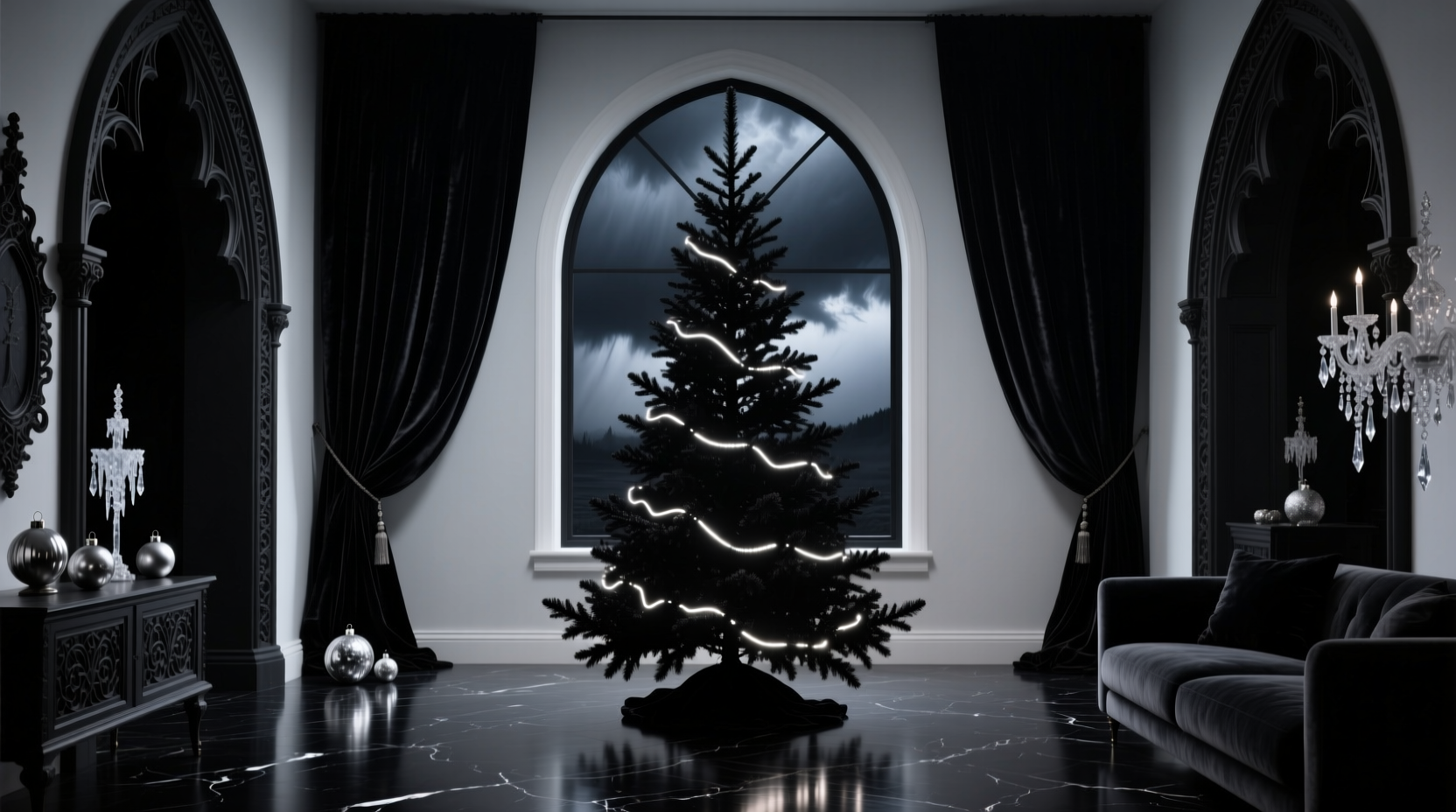
The popularity of black Christmas trees is rooted in broader design trends that favor sophistication over sentimentality. Modern interiors increasingly embrace monochrome palettes, industrial materials, and moody atmospheres—all of which create fertile ground for darker holiday expressions. Unlike their emerald counterparts, black trees do not blend into the background; they command attention.
Gothic-inspired homes, often characterized by dark woodwork, arched windows, rich textiles, and a preference for shadow over light, find natural synergy with black trees. These spaces treat the holidays not as a time to brighten everything, but to deepen the sense of ritual and mystery. A black tree becomes less of a festive interruption and more of a seasonal evolution of the existing aesthetic.
Meanwhile, modernist homes—defined by clean lines, open space, and neutral tones—use black trees as sculptural elements. In such environments, the tree functions as both art object and celebration symbol. Its stark silhouette contrasts beautifully against white walls or concrete floors, making it a focal point without visual clutter.
“Design isn’t about following rules—it’s about creating emotional resonance. A black Christmas tree can evoke reverence, intimacy, even rebellion. That’s powerful during the holidays.” — Lila Monroe, Interior Designer & Author of *Dark Holiday: Designing Seasonal Spaces with Intention*
Types of Black Christmas Trees and Their Best Uses
Not all black trees are created equal. The market now offers several distinct varieties, each suited to different styles and settings. Understanding these options helps ensure your choice enhances rather than clashes with your space.
| Type | Material | Best For | Lifespan |
|---|---|---|---|
| Faux Charcoal Evergreen | PVC or PE needles dyed black | Gothic, eclectic, maximalist interiors | 5–10 years |
| Metallic Black Wire Tree | Steel or iron with powder-coated finish | Modern lofts, minimalist spaces | Indefinite (with care) |
| Painted Natural Tree | Real fir or spruce sprayed with non-toxic black dye | Eco-conscious households, temporary installations | One season only |
| Holographic Black Finish | Reflective coating on synthetic branches | Dramatic lighting displays, event decor | 3–5 years |
Charcoal evergreens are the most common and widely available. They mimic real trees while offering the durability and reusability of artificial ones. Metallic wire trees, though less full, provide architectural interest and work especially well when paired with geometric ornaments or suspended glass baubles.
Tip: If you live in a small apartment or have limited storage, opt for a foldable black wire tree. It assembles quickly, takes up little space off-season, and maintains its shape year after year.Styling Your Black Tree: Color Palettes, Lights, and Ornaments
A black tree transforms the way color behaves in a room. Because the backdrop absorbs light instead of reflecting it, any decoration placed upon it appears more vivid and intentional. This makes thoughtful styling essential.
The most effective color schemes include:
- Monochrome silver and white – Creates a frostbitten, ethereal effect, ideal for modern spaces.
- Deep jewel tones (emerald, sapphire, amethyst) – Adds richness without clashing with the dark base.
- Gold and copper accents – Warm metallics glow against black, adding luxury and contrast.
- All-black theme with texture variation – Velvet bows, matte beads, and glossy spheres create depth through material, not hue.
Lighting is perhaps the most transformative element. White LEDs produce a crisp, icy brilliance, while warm white bulbs lend a softer, more inviting ambiance. For high-impact drama, consider using programmable RGB strips woven through the branches to shift colors gradually—a favorite in urban lofts and design-forward homes.
Ornament selection should prioritize contrast and craftsmanship. Avoid plastic tinsel or mass-produced figurines unless used ironically. Instead, choose hand-blown glass, ceramic pieces, or vintage finds. Cluster ornaments asymmetrically to maintain visual interest without overcrowding.
Step-by-Step: How to Style a Black Christmas Tree
- Start with a stable base – Ensure your tree stand is secure, especially if using heavier ornaments.
- Add string lights first – Weave them from trunk to tip, focusing on inner branches for depth.
- Attach larger ornaments near the base – Balance weight distribution and draw the eye downward.
- Layer mid-sized decorations throughout – Use varying textures (matte, shiny, translucent) to add dimension.
- Finish with top accents – A black star, crescent moon, or abstract sculpture works better than a traditional angel.
- Step back and assess – View from multiple angles and adjust spacing for symmetry or deliberate asymmetry.
Mini Case Study: A Brooklyn Loft’s Statement Tree
In a converted warehouse loft in Williamsburg, New York, designer Marcus Tran installed a 7-foot black wire Christmas tree in the center of his living space. The apartment features exposed brick, polished concrete floors, and floor-to-ceiling windows. Rather than competing with the industrial aesthetic, the tree enhanced it.
Tran wrapped the tree in 300 warm gold LED fairy lights and hung handmade Moroccan lanterns at varying heights. Instead of a tree skirt, he placed a circular black basalt stone beneath it, echoing the volcanic rock found in Icelandic landscapes. No traditional gifts were piled underneath; instead, curated books on architecture and poetry were arranged nearby.
“I didn’t want a cheerful tree,” Tran explained. “I wanted a contemplative one. Something that felt like part of the home year-round, just slightly transformed for the season.” His Instagram post of the setup garnered over 80,000 likes and sparked dozens of inquiries from other designers exploring similar concepts.
Practical Considerations and Common Pitfalls
While visually compelling, black Christmas trees come with unique challenges. The most common mistake is over-accessorizing. Because the dark background naturally draws the eye, too many ornaments can make the tree appear busy or chaotic.
Another issue is maintenance. Black surfaces show dust and fingerprints more readily than green or white ones. Regular wiping with a microfiber cloth is recommended, especially in high-traffic areas.
Families with young children or pets should also consider safety. Some black-dyed trees may shed fine particles, and metallic versions can have sharp edges. Always check manufacturer guidelines and supervise interactions.
“Color psychology matters during the holidays. Black can feel isolating if not balanced with warmth. Pair it with soft textiles, candlelight, or human-scale details to keep the space feeling welcoming.” — Dr. Naomi Pierce, Environmental PsychologistTip: Place a mirrored tray under your black tree to reflect light upward and amplify sparkle without adding more bulbs.
Checklist: Preparing Your Home for a Black Christmas Tree
- ✅ Assess your current décor palette—does black complement or clash?
- ✅ Choose between permanent (metal) and seasonal (faux evergreen) options
- ✅ Plan your lighting scheme before purchasing
- ✅ Source ornaments in contrasting or metallic finishes
- ✅ Designate a cleaning routine for dust prevention
- ✅ Consider spatial placement—will it dominate or harmonize?
- ✅ Test-run the setup before finalizing
FAQ
Can I use a black Christmas tree in a family home with kids?
Yes, but opt for a faux evergreen model with soft tips rather than a sharp-edged metal version. Involve children in decorating with safe, themed ornaments—like black-and-gold stars or glittered paper shapes—to make it inclusive.
Are black Christmas trees more expensive than traditional ones?
Generally, yes. Specialty designs, particularly artisanal or metal trees, can cost two to three times more than standard green models. However, many are built to last decades, improving long-term value.
Will a black tree make my room feel smaller?
Possibly, if the space is already low on natural light. To counteract this, pair the tree with reflective surfaces (mirrors, glass furniture), ambient lighting, and light-colored walls. Avoid placing it in cramped corners.
Conclusion: Embracing Boldness with Intention
The rise of the black Christmas tree is more than a design trend—it’s a reflection of changing attitudes toward tradition, identity, and personal expression. In gothic homes, it honors a legacy of romantic darkness and seasonal introspection. In modern spaces, it serves as a statement of clarity, control, and artistic confidence.
Adopting a black tree isn’t about rejecting joy or warmth; it’s about redefining them on your own terms. When done thoughtfully, it creates a holiday atmosphere that feels authentic, immersive, and deeply personal.
🚀 Ready to rethink your holiday décor? Try a small black accent tree this year—even in a hallway or书房—and see how it transforms your space. Share your experience or tag your setup online to inspire others embracing bold, intentional design.








