For years, beauty influencers have touted silk pillowcases as a secret weapon against frizzy hair and stubborn facial breakouts. But does the science back up the hype? With growing interest in skin and hair wellness, more people are turning to lifestyle changes—like switching their bedding—for visible improvements. Dermatologists are now weighing in with clinical perspectives on whether investing in a silk pillowcase is truly beneficial or just another overpriced trend.
The appeal lies in silk’s smooth texture and low absorbency compared to cotton. These properties may influence how skin and hair interact with the pillow surface overnight. While anecdotal evidence abounds, understanding the physiological mechanisms—and hearing directly from skincare professionals—can help separate fact from marketing fiction.
How Silk Differs from Cotton: The Science Behind the Fabric
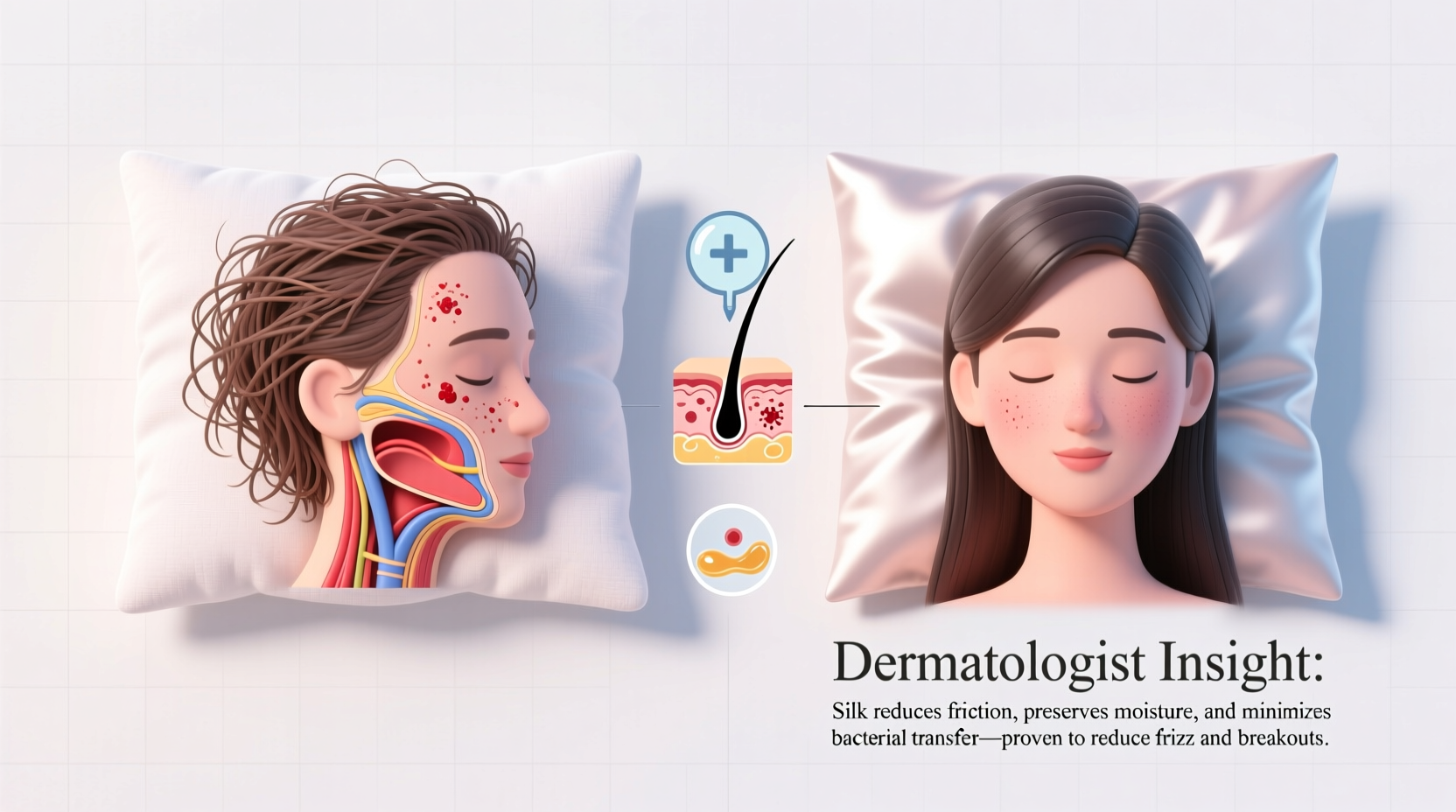
Cotton has long been the default material for bedding, but its characteristics can work against both skin and hair health. Standard cotton pillowcases are highly absorbent and have a coarse weave. This means they draw moisture from the skin and hair, potentially leading to dryness. Additionally, the friction between hair strands and cotton fibers can cause tangles, split ends, and increased frizz—especially for curly or textured hair types.
In contrast, silk is a natural protein fiber derived from silkworms. It has a tightly woven structure that creates a much smoother surface. Because silk is less absorbent than cotton, it doesn’t wick away essential oils or hydration from your skin and hair. This reduced absorption helps maintain the integrity of your hair’s cuticle and preserves the skin’s moisture barrier.
Dermatologists emphasize that friction plays a significant role in both hair damage and skin irritation. “Repeated rubbing against a rough surface like cotton can lead to micro-tears in the skin and mechanical stress on hair shafts,” explains Dr. Lena Park, board-certified dermatologist based in Los Angeles. “Silk’s low-friction surface minimizes this trauma, which may be especially helpful for people with sensitive skin or fragile hair.”
Tip: Look for 100% mulberry silk with a momme weight of at least 19 for maximum durability and softness.Can Silk Pillowcases Reduce Frizz? What the Evidence Says
Frizz occurs when hair absorbs moisture from the air, causing the cuticle to lift and create a rough texture. However, nighttime friction and moisture loss also contribute significantly. Cotton pillowcases absorb natural oils from hair, leaving strands drier and more prone to static and frizz by morning.
Silk’s smooth surface reduces tangling and allows hair to glide rather than snag. This means fewer knots, less breakage, and a better chance of waking up with smoother, more defined waves or curls. A small 2017 study published in *Skin Research and Technology* found that participants who slept on silk pillowcases reported less hair roughness and improved manageability after four weeks.
While no large-scale clinical trials exist specifically on silk and frizz reduction, trichologists (hair specialists) commonly recommend silk for patients dealing with dryness, breakage, or post-chemical treatment recovery. “If you’ve invested time and money into keratin treatments or color services, preserving that investment matters,” says Dr. Marcus Reed, a trichologist at the Center for Hair Wellness. “Sleeping on silk can extend the life of those treatments by reducing physical stress on the hair.”
That said, silk isn’t a substitute for proper hair care routines. It works best as a complementary tool—especially for those with curly, coily, or chemically treated hair. People with fine, straight hair may notice less dramatic effects, though many still report softer texture and reduced bedhead.
Do Silk Pillowcases Help Prevent Facial Breakouts?
Acne and breakouts are influenced by multiple factors: hormones, diet, hygiene, and product use. But what you sleep on could also play a supporting role. Cotton pillowcases absorb sebum, sweat, and residual skincare products. If not washed frequently, these surfaces become breeding grounds for bacteria, yeast, and allergens—all potential triggers for clogged pores and inflammation.
Silk’s lower absorbency means it retains fewer impurities, potentially reducing exposure to pore-clogging debris. Additionally, because silk causes less friction, it may help prevent irritation that exacerbates conditions like acne mechanica—a type of acne caused by pressure and rubbing.
However, dermatologists caution against overstating silk’s impact on acne. “Switching to silk alone won’t clear active breakouts,” warns Dr. Alicia Nguyen, a dermatologist specializing in acne management. “But if someone is already following a good skincare regimen, using silk might reduce irritation and support overall skin stability.”
For individuals with rosacea or eczema, silk’s gentler texture may offer relief from nighttime flare-ups triggered by fabric irritation. Still, cleanliness remains paramount. Even silk pillowcases must be washed regularly—ideally every three to four days—to prevent microbial buildup.
“Silk won’t cure acne, but it can be part of a holistic approach to minimizing irritation and preserving skin barrier function during sleep.” — Dr. Alicia Nguyen, Board-Certified Dermatologist
Comparing Bedding Materials: Silk vs. Satin vs. Cotton
Not all smooth-feeling pillowcases are created equal. Many affordable options labeled as “silk” are actually made from polyester satin, which mimics the sheen of silk but lacks its natural benefits. Here's a breakdown of key differences:
| Fabric Type | Made From | Absorbency | Friction Level | Ideal For |
|---|---|---|---|---|
| 100% Mulberry Silk | Natural protein fiber (silkworm) | Low | Very Low | Sensitive skin, curly hair, anti-aging routines |
| Polyester Satin | Synthetic plastic (petroleum-based) | Low | Low | Budget option; limited skin/hair benefits |
| Cotton (Percale/Sateen) | Natural plant fiber | High | High | Durability, breathability; higher friction |
While satin feels similar to silk, it tends to trap heat and lacks breathability, which can worsen oiliness and sweating. Real silk, on the other hand, is naturally temperature-regulating and hypoallergenic—making it a superior choice for long-term skin and hair health.
Real User Experience: A Case Study in Consistency
Sophia M., a 32-year-old graphic designer with wavy, color-treated hair and combination skin, struggled with morning frizz and recurring chin breakouts. After researching non-invasive ways to improve her routine, she invested in a 22-momme mulberry silk pillowcase.
Within two weeks, she noticed her hair was less tangled upon waking and required less heat styling. By week four, her dermatologist noted improved skin texture during a follow-up appointment. “I wasn’t doing anything differently skincare-wise,” Sophia shared. “But my skin looked calmer, and I had fewer small bumps along my jawline.”
She attributes part of her success to consistency—not just using silk, but washing it every third day with a gentle detergent. She also replaced her old cotton pillow every six months and avoided sleeping with makeup on. Her experience highlights that while silk helped, it worked best as part of an integrated routine.
Step-by-Step Guide to Maximizing Benefits from Your Silk Pillowcase
To get the most out of your silk pillowcase, proper use and maintenance are crucial. Follow this timeline for optimal results:
- Week 1: Transition Gradually
Start by using the silk pillowcase every other night to adjust to the feel. Pair it with clean hair and freshly washed face to establish a baseline. - Week 2–3: Monitor Changes
Take note of hair smoothness, tangle frequency, and any shifts in skin condition. Use a journal or app to track observations. - Week 4: Evaluate Results
Assess whether frizz has decreased or breakouts have stabilized. Continue only if you see measurable improvement. - Ongoing: Maintain Cleanliness
Wash the pillowcase every 3–4 days in cold water with a mild, sulfate-free detergent. Air dry flat to preserve fibers. - Every 6 Months: Inspect for Wear
Check for thinning, snags, or loss of sheen. Replace if the fabric no longer feels smooth.
Common Misconceptions About Silk Pillowcases
Despite growing popularity, several myths persist about silk’s capabilities:
- Misconception: Silk prevents aging.
Reality: While reduced friction may minimize sleep lines over time, there’s no strong evidence that silk actively prevents wrinkles. - Misconception: All shiny pillowcases are silk.
Reality: Many are synthetic satin. Always check the label for “100% mulberry silk.” - Misconception: Silk eliminates acne.
Reality: It may reduce contributing factors like irritation and bacterial transfer, but it’s not a treatment.
FAQ: Your Top Questions Answered
How often should I wash my silk pillowcase?
To prevent oil and bacteria buildup, wash your silk pillowcase every 3 to 4 days. Use cold water and a gentle, pH-balanced detergent designed for delicates. Avoid bleach and fabric softeners, which degrade silk fibers.
Are silk pillowcases worth the price?
High-quality silk pillowcases typically range from $60 to $120. For individuals with chronic frizz, hair breakage, or sensitive skin, the investment can pay off in reduced damage and improved comfort. Cheaper satin alternatives offer some slip but lack the breathability and durability of real silk.
Can men benefit from silk pillowcases too?
Absolutely. Hair texture and skin sensitivity—not gender—determine potential benefits. Men with short hair may notice less bedhead; those with beards may appreciate reduced itchiness and follicle irritation. Anyone prone to nighttime sweating or acne can benefit from silk’s moisture-wicking and low-friction properties.
Final Checklist Before You Buy
Before purchasing a silk pillowcase, ask yourself these questions:
- Am I currently experiencing hair frizz, breakage, or tangles upon waking?
- Do I have sensitive skin, rosacea, or a tendency toward mechanical acne?
- Am I willing to commit to regular washing and proper care?
- Have I ruled out other causes of breakouts (e.g., diet, products, hormones)?
- Am I buying genuine 100% mulberry silk, not synthetic satin?
If most answers are yes, a silk pillowcase could be a worthwhile addition to your self-care routine.
Conclusion: Making an Informed Choice for Skin and Hair Health
The question isn’t whether silk pillowcases are magical—they’re not. But when used correctly and paired with sound skincare and haircare habits, they offer tangible, science-backed advantages. Dermatologists agree: silk reduces friction and moisture loss, two overlooked contributors to frizz and irritation. While it won’t replace medical treatments for acne or repair severely damaged hair, it serves as a protective layer that supports healthier outcomes over time.
Ultimately, the value of a silk pillowcase depends on your individual needs and consistency. For those seeking gentler contact with their skin and hair each night, the upgrade from cotton to real silk may be one of the simplest yet most effective changes they make. If you've been curious, try it with realistic expectations and a commitment to hygiene. The results might surprise you.
💬 Have you tried a silk pillowcase? Share your experience in the comments—your insight could help others decide whether it’s worth the switch!