In an era where urban living spaces are shrinking and design aesthetics lean toward simplicity, the traditional floor-standing Christmas tree faces increasing scrutiny. For homeowners embracing minimalism—characterized by clean lines, clutter-free environments, and intentional design—the idea of a towering evergreen in the corner may feel outdated or impractical. Enter the wall-mounted Christmas tree: a sleek, space-conscious alternative gaining traction among modern decorators. But beyond its visual appeal, is it truly practical? This article explores the functionality, aesthetic integration, installation logistics, and long-term viability of wall-mounted trees in minimalist interiors.
Space Efficiency in Compact Living Environments
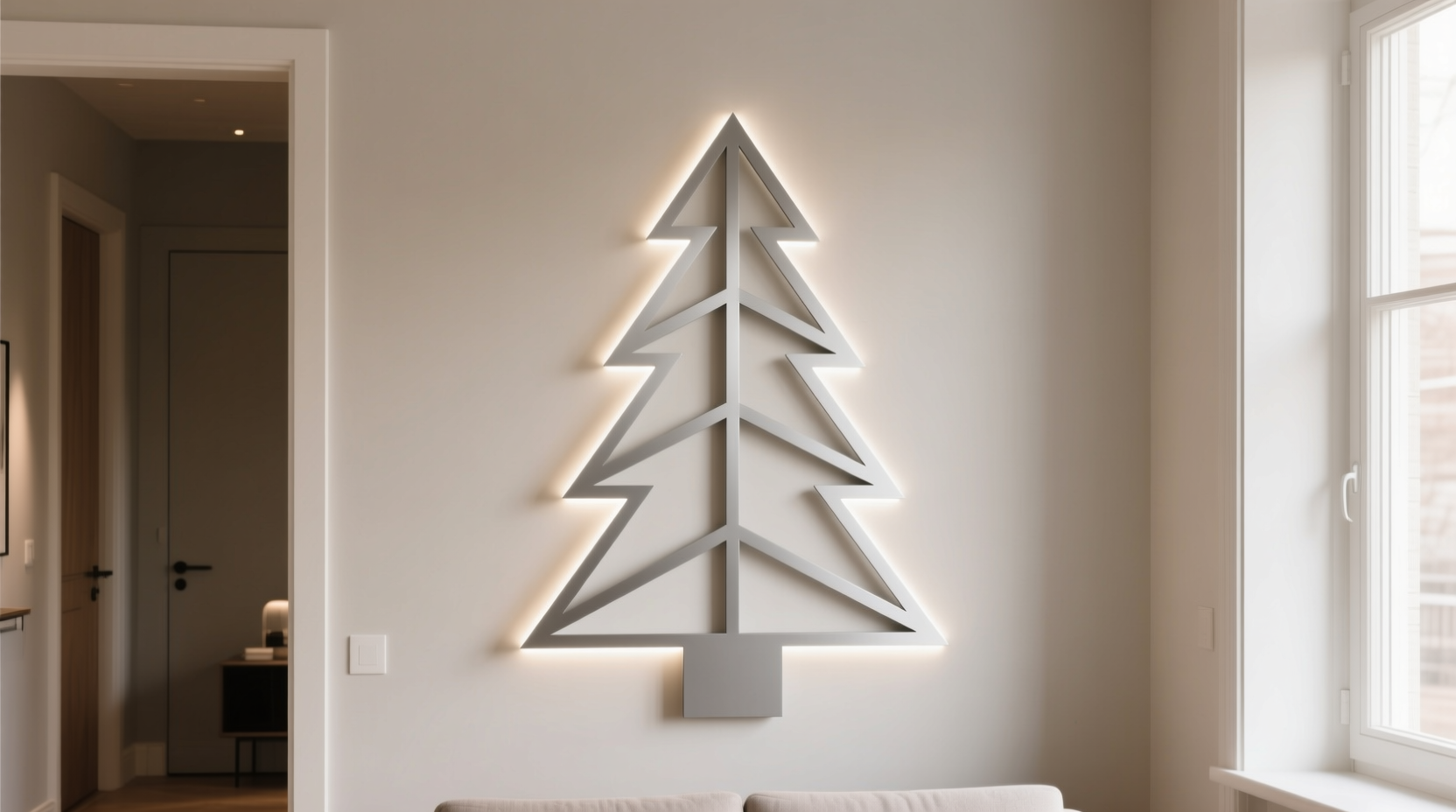
One of the most compelling arguments for a wall-mounted Christmas tree is spatial efficiency. In studios, micro-lofts, or open-plan apartments common in cities like New York, Tokyo, or Berlin, every square foot counts. A freestanding tree can dominate a room, restrict furniture placement, and create tripping hazards—especially with pets or children around. Mounting the tree on a wall eliminates floor occupancy entirely, freeing up valuable ground space without sacrificing seasonal charm.
Wall trees come in various dimensions, from narrow silhouettes as slim as 12 inches wide to expansive geometric designs that span entire accent walls. Their footprint is negligible compared to even a small tabletop tree, which still requires surface area and stability considerations. For minimalist homes where furniture often floats against walls and negative space is celebrated, a vertical tree aligns naturally with existing spatial logic.
Tip: Choose a wall-mounted tree that complements your room’s architectural lines—such as a triangular silhouette for vaulted ceilings or a linear design for hallway accents.Aesthetic Alignment with Minimalist Design Principles
Minimalism isn’t just about reducing possessions; it’s about curating meaningful elements that enhance rather than distract. A wall-mounted tree inherently supports this philosophy by functioning as both decoration and art. Unlike traditional trees laden with ornaments, lights, and tinsel, wall versions encourage restraint. Many are designed as sculptural forms—constructed from wood, metal, or recycled materials—that stand out through shape and texture rather than excess.
Interior designer Lena Tran, known for her work in Scandinavian-inspired urban lofts, observes:
“A wall tree allows clients to celebrate the season without compromising their year-round aesthetic. It becomes part of the architecture, not a temporary intrusion.” — Lena Tran, Interior Designer & Founder of Studio Nüvo
This architectural integration means the tree doesn’t need to be “put away” after December. Some models double as permanent wall features, with removable holiday-specific elements like string lights or hanging tags. Others use neutral-toned materials—birch plywood, black steel, or matte white acrylic—that blend seamlessly into monochromatic palettes typical of minimalist homes.
Installation and Structural Considerations
While visually appealing, wall-mounted trees require careful planning before installation. Unlike placing a potted tree in a corner, mounting involves securing structures to drywall, plaster, or masonry—depending on the home’s construction. The method varies based on material weight, size, and anchoring needs.
Lightweight models made from felt, cardboard, or thin wood strips can often be secured with adhesive hooks or picture hangers. However, larger installations—especially those holding LED strings, glass ornaments, or handmade crafts—may demand wall studs and heavy-duty anchors. Misjudging load capacity risks damage to both wall and decor.
Consider these factors during setup:
- Wall type: Drywall requires anchors; concrete or brick may need masonry bits.
- Tree weight: Include all decorations and lighting when calculating total load.
- Height and visibility: Position at eye level or slightly above for optimal viewing.
- Accessibility: Ensure cords (if using lights) can reach outlets safely.
For renters or those avoiding permanent modifications, tension rods with attached wire frames offer a non-invasive alternative. These support lightweight garlands or fabric trees without drilling holes—a crucial advantage in leased minimalist apartments governed by strict decor rules.
Practicality vs. Tradition: A Comparative Overview
To assess true practicality, it's useful to compare wall-mounted trees directly with traditional alternatives across key lifestyle metrics. The table below outlines core differences relevant to minimalist homeowners.
| Feature | Wall-Mounted Tree | Traditional Floor Tree |
|---|---|---|
| Floor Space Used | None | Significant (3–6 sq ft) |
| Assembly Time | 15–45 minutes | 30–90 minutes |
| Storage Requirements | Flat-packable, under-bed storage | Large box, closet or attic needed |
| Pet & Child Safety | High (no tipping risk) | Moderate to Low (tipping hazard) |
| Ornament Capacity | Limited (curated display) | High (full coverage possible) |
| Year-Round Usability | Possible with neutral design | Seasonal only |
The data suggests that while wall-mounted trees sacrifice ornament density, they gain significantly in safety, ease of storage, and spatial harmony—qualities highly valued in minimalist living.
Step-by-Step Guide to Installing a Wall-Mounted Tree
Installing a wall-mounted tree need not be daunting. Follow this logical sequence to ensure a secure, visually balanced result.
- Choose Your Design: Select a shape (triangle, spiral, abstract) and material that matches your interior tone.
- Measure the Wall: Use painter’s tape to outline the tree’s dimensions at intended height.
- Check for Studs: Use a stud finder to locate structural supports behind drywall.
- Mark Anchor Points: Identify top and side attachment locations based on mounting hardware.
- Drill Pilot Holes: Pre-drill holes slightly smaller than anchors to prevent cracking.
- Insert Anchors: Tap in plastic or toggle anchors if not mounting into studs.
- Attach Frame or Backing: Secure the main structure using screws provided.
- Add Decorative Elements: String lights, hang minimalist ornaments, or attach fabric boughs.
- Test Stability: Gently tug on edges to confirm no movement.
- Style Surroundings: Place complementary items below—a bench, stack of books, or small rug—to anchor the composition.
Real-Life Example: A Brooklyn Loft Transformation
Take the case of Daniel Reyes, a graphic designer living in a 600-square-foot converted warehouse loft in Brooklyn. His industrial-style apartment features exposed beams, concrete floors, and a monochrome palette interrupted only by select pieces of mid-century furniture. Each November, he faced the same dilemma: how to honor his family’s tradition of decorating without clashing with his curated space.
In 2022, he opted for a laser-cut walnut wall tree shaped like a stylized evergreen, spanning seven feet tall but only six inches deep. He mounted it on a blank brick accent wall using masonry anchors, then wrapped it with warm-white fairy lights powered by a discreet USB cord routed behind a floating shelf. Instead of ornaments, he clipped printed photos of past holidays onto small clothespins attached to the frame.
The result was a deeply personal yet unobtrusive centerpiece. “It feels more intentional than any tree I’ve had before,” Daniel said. “I’m not hiding it after January—I might keep the frame up year-round and switch out themes.”
Common Challenges and How to Overcome Them
No solution is perfect. Wall-mounted trees present unique limitations that must be addressed thoughtfully.
Challenge 1: Limited Ornament Hanging Space
Unlike full-bodied trees, wall versions offer fewer branches or attachment points. Solution: Prioritize meaning over quantity. Use five to ten special ornaments, or integrate flat decorations like paper cutouts, embroidered patches, or photo tags.
Challenge 2: Lighting Integration
String lights can look messy if not planned. Solution: Plan the light path before installation. Use adhesive clips to secure wires evenly. Opt for battery-powered LEDs to avoid visible cords.
Challenge 3: Perceived Lack of Festivity
Some guests may miss the scent and volume of a real tree. Counter this by enhancing ambiance elsewhere—play holiday music, use pine-scented candles, or serve seasonal treats near the display.
Frequently Asked Questions
Can I use a real tree branch for a wall-mounted design?
Yes, but with caveats. Fresh branches will dry out and shed within weeks. For longevity, preserve them with glycerin solutions or opt for high-quality artificial greenery designed for reuse.
Are wall-mounted trees safe for apartments?
Absolutely—if installed correctly. Lightweight models pose minimal risk. Always follow manufacturer guidelines and use appropriate hardware for your wall type. When in doubt, consult a professional handyman.
Do wall trees work in homes with children?
They can be safer than floor trees, eliminating tipping risks. However, ensure all electrical components are out of reach and decorations are securely fastened to prevent choking hazards.
Checklist: Is a Wall-Mounted Tree Right for You?
Before purchasing, evaluate your needs with this quick checklist:
- ☑ Do you live in a small or open-concept space?
- ☑ Is floor space limited or multi-functional?
- ☑ Does your decor favor clean lines and neutral tones?
- ☑ Are you looking to reduce post-holiday storage hassle?
- ☑ Do you prefer curated, meaningful decor over maximalist displays?
- ☑ Are you renting and restricted from major modifications?
- ☑ Do you have pets or toddlers who might knock over a traditional tree?
If you answered “yes” to three or more, a wall-mounted tree is likely a practical fit.
Conclusion: Rethinking Tradition for Modern Living
The question isn't whether a wall-mounted Christmas tree can replace the classic evergreen—it's whether it better serves the values of today’s minimalist households. Practicality extends beyond mere function; it includes emotional resonance, spatial intelligence, and long-term usability. In these terms, wall trees excel. They respect the ethos of less-is-more, adapt to evolving living conditions, and offer creative freedom within constraints.
For those willing to rethink tradition, the wall-mounted tree isn’t a compromise—it’s an evolution. It proves that holiday spirit doesn’t require bulk, noise, or clutter. Sometimes, it simply needs a new perspective—and a well-placed screw in the wall.
💬 Have you tried a wall-mounted Christmas tree? Share your experience, design tips, or photos in the comments—let’s inspire smarter, simpler holiday decorating together.








