In an era where remote work has reshaped how we interact with our environments, standing desks have surged in popularity. From Silicon Valley startups to home offices, it's common to see sleek adjustable desks that glide from sitting to standing height with the press of a button. But behind the polished marketing and ergonomic claims lies a pressing question: Are standing desks genuinely beneficial for posture, or are they simply another wellness trend capitalizing on office discomfort?
The truth is more nuanced than a simple yes or no. While standing desks aren’t a magic fix for poor posture, they can be a powerful tool when used correctly. The key lies not in standing all day, but in movement, variation, and alignment with your body’s natural needs.
The Posture Problem in Modern Work Life
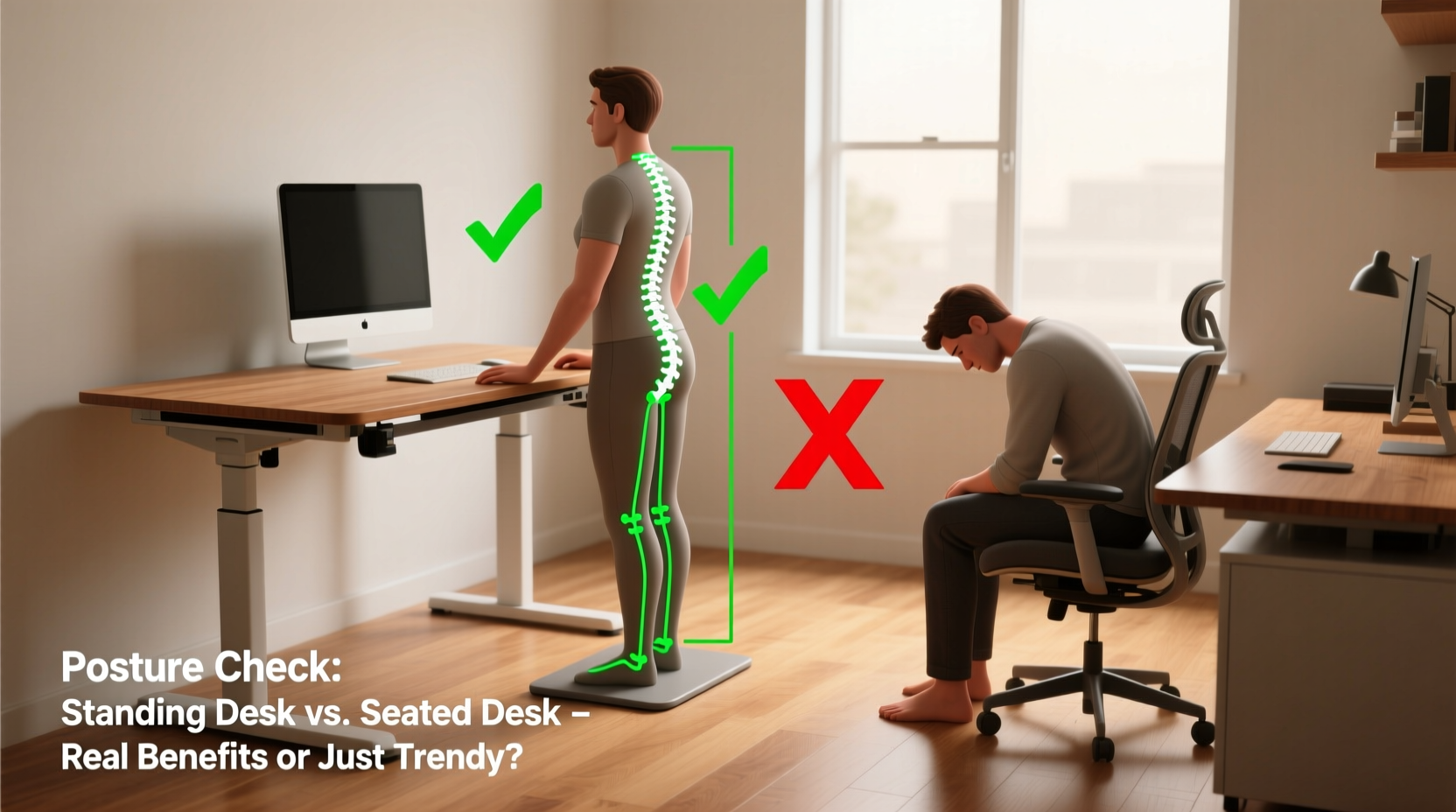
For decades, office workers have sat for up to eight hours a day—often in chairs that offer inadequate lumbar support, at desks with poor monitor placement, and with laptops balanced on knees. This prolonged static sitting contributes to a host of postural issues: forward head posture, rounded shoulders, lower back strain, and weakened core muscles.
Dr. Karen Jacobs, clinical professor of occupational therapy at Boston University and former president of the American Occupational Therapy Association, explains:
“Prolonged sitting, especially in poorly designed workspaces, leads to muscle imbalances. The hip flexors shorten, glutes deactivate, and spinal discs compress over time. It’s not just about comfort—it’s about long-term musculoskeletal health.”
This isn’t just anecdotal. A 2020 study published in *Applied Ergonomics* found that individuals who sit for more than six hours daily report significantly higher rates of chronic back pain and neck strain compared to those who incorporate movement breaks or alternate postures.
How Standing Desks Influence Posture
Standing desks don’t automatically improve posture—but they create opportunities to do so. When properly set up and used intermittently, they encourage more natural spinal alignment, activate stabilizing muscles, and reduce the risk of slouching associated with prolonged sitting.
The primary benefit lies in **postural variation**. Instead of locking into one position for hours, users can shift between sitting and standing, reducing fatigue and promoting circulation. This dynamic approach aligns with the body’s need for movement.
Tip: Set a reminder every 30–60 minutes to assess your posture, whether sitting or standing. Small adjustments prevent long-term strain.Postural Benefits of Standing (When Done Right)
- Improved spinal alignment: Standing encourages a neutral spine when the desk and monitor are at proper height.
- Engaged core and glutes: These muscles activate naturally during standing, supporting pelvic stability.
- Reduced pressure on intervertebral discs: Unlike sitting, which increases disc pressure by up to 40%, standing distributes load more evenly.
- Less forward head drift: People tend to crane their necks less when standing, especially if monitors are eye-level.
However, these benefits only emerge when the user maintains good form. Poorly executed standing—such as leaning on one hip, hunching over a low monitor, or wearing unsupportive shoes—can worsen posture over time.
Common Misconceptions About Standing Desks
Despite their growing adoption, several myths persist about what standing desks can—and cannot—do.
Myth 1: “Standing all day fixes back pain”
Standing for extended periods introduces its own risks: plantar fasciitis, varicose veins, and lower back fatigue due to locked knees or poor weight distribution. The goal is balance, not endurance.
Myth 2: “Any standing desk will improve my posture”
A poorly adjusted desk defeats the purpose. If your screen is too low, you’ll end up looking down, straining your neck. If the desk is too high, your shoulders hike up, causing tension. Proper ergonomics matter more than the desk itself.
Myth 3: “Standing burns enough calories to replace exercise”
While standing burns slightly more than sitting (about 0.15 extra calories per minute), it’s no substitute for intentional physical activity. Don’t mistake posture improvement for fitness.
“The real value of a standing desk isn’t in replacing sitting, but in breaking it.” — Dr. James Levine, author of *Get Up!: Why Your Chair Is Killing You and What You Can Do About It*
What the Research Says
Multiple studies have examined the impact of standing desks on posture and musculoskeletal health. While results vary, a consistent theme emerges: moderate use improves comfort and reduces pain, but misuse leads to new problems.
| Study | Findings | Limitations |
|---|---|---|
| Cochrane Review (2020) | No significant long-term reduction in back pain, but short-term improvements in discomfort reported. | Most trials were small and short-term (under 6 months). |
| British Journal of Sports Medicine (2018) | Participants using sit-stand desks reduced sitting time by 87 minutes/day and reported improved energy and focus. | Self-reported data; no objective posture measurements. |
| Occupational Medicine (2019) | Office workers using adjustable desks showed better shoulder and neck posture after 12 weeks. | Only 60 participants; required training on proper use. |
The takeaway? Standing desks show promise, particularly when paired with education and behavioral change. They’re most effective not as standalone solutions, but as part of a broader strategy to reduce sedentary behavior.
How to Use a Standing Desk the Right Way
Simply owning a standing desk won’t transform your posture. Success depends on setup, habits, and consistency. Follow this step-by-step guide to maximize benefits and avoid common pitfalls.
Step 1: Set Up Your Desk Ergonomically
- Adjust the desk so the top surface is at elbow height when your arms hang relaxed at your sides.
- Position your monitor so the top third is at or slightly below eye level, about an arm’s length away.
- Keep your keyboard and mouse close enough to avoid reaching, with wrists straight and forearms parallel to the floor.
- Use an anti-fatigue mat to reduce foot and leg strain.
Step 2: Start Gradually
Begin with 15–20 minutes of standing per hour. As your body adapts, increase standing time to 30–45 minutes per hour. Avoid jumping into full-day standing—it can lead to swelling, discomfort, and poor form from fatigue.
Step 3: Maintain Proper Posture While Standing
- Stand with feet shoulder-width apart, weight evenly distributed.
- Engage your core gently, avoiding overarching the lower back.
- Keep shoulders relaxed and down, not hunched or rolled forward.
- Bend elbows at 90 degrees, wrists neutral.
- Shift weight occasionally or use a footrest to alternate leg support.
Step 4: Incorporate Movement
Don’t just stand still. Sway slightly, shift your stance, or perform gentle calf raises. Consider pairing your desk with a small under-desk treadmill or pedal exerciser for light activity.
Tip: Wear supportive footwear—even at home. Bare feet or flimsy slippers increase instability and fatigue.Real-World Example: Sarah’s Posture Transformation
Sarah, a 34-year-old graphic designer, spent years working at a fixed-height desk. She developed chronic lower back pain and frequent headaches. After her doctor recommended reducing sitting time, she invested in a budget-standing desk but initially stood for three hours straight each afternoon. Within days, her feet ached and her lower back felt worse.
She consulted an ergonomic specialist who helped her recalibrate. She started with 10-minute standing intervals every hour, adjusted her monitor to eye level, added an anti-fatigue mat, and began doing posture checks using a mirror. Over eight weeks, she gradually increased standing time and incorporated stretching breaks.
The result? Her back pain decreased by 70%, she reported better concentration, and her colleagues noticed she seemed less tense during meetings. “It wasn’t the desk that fixed me,” she said. “It was learning how to use it—and move more throughout the day.”
Checklist: Optimizing Your Standing Desk for Posture
Use this checklist to ensure you’re getting the most out of your standing desk:
- ✅ Desk height allows elbows to bend at 90° without lifting shoulders
- ✅ Monitor top is at or slightly below eye level
- ✅ Keyboard and mouse within easy reach, wrists neutral
- ✅ Anti-fatigue mat in place
- ✅ Supportive shoes or orthotics worn while standing
- ✅ Alternating between sitting and standing every 30–60 minutes
- ✅ Daily stretching routine for hamstrings, hip flexors, and shoulders
- ✅ Regular posture self-checks using a mirror or phone camera
Frequently Asked Questions
Can a standing desk cure bad posture?
No single tool can “cure” poor posture, which often stems from long-term habits, weak muscles, or improper workspace design. However, a standing desk can support better posture by encouraging movement, improving spinal alignment, and reducing prolonged sitting. Lasting change requires consistent effort, strengthening exercises, and ergonomic awareness.
How much standing is ideal during an 8-hour workday?
There’s no universal rule, but research suggests aiming for 2–4 hours of standing and light movement spread throughout the day. A common guideline is the 20-8-2 rule: 20 minutes sitting, 8 minutes standing, 2 minutes moving (walking, stretching). This keeps the body engaged without overloading any one system.
Are standing desks worth the cost?
If you spend most of your day at a desk and experience discomfort from sitting, a standing desk can be a worthwhile investment—especially models with smooth height adjustment and stable construction. However, even DIY solutions (like placing a monitor on books) can help introduce postural variety. The value isn’t in the price tag, but in how you use it.
Conclusion: Beyond the Hype
Standing desks are neither miracle cures nor meaningless trends. They occupy a middle ground: useful tools that support healthier work habits when integrated thoughtfully. The real issue isn’t whether standing is better than sitting—it’s that doing either for too long harms posture and overall well-being.
The future of ergonomic work isn’t about choosing one position over another. It’s about embracing variability, listening to your body, and designing a workspace that moves with you. Whether you invest in a high-end electric desk or simply stand during phone calls, the goal remains the same: to break free from static postures and build sustainable habits that support long-term health.
💬 Have you tried a standing desk? What worked—or didn’t work—for your posture? Share your experience in the comments and help others find balance in their daily routines.








