For decades, toilet paper has been the default method of post-toilet hygiene in Western countries. But as awareness grows about personal health, environmental impact, and overall cleanliness, more people are turning to alternatives—chief among them being bidet attachments. Compact, affordable, and surprisingly effective, bidet attachments are quietly transforming bathroom routines across homes. The question isn’t whether they work—it’s whether they’re worth adding to your own space.
Beyond the initial hesitation lies a practical upgrade that improves daily comfort, promotes better hygiene, and reduces household waste. With installation times often under 30 minutes and prices starting below $50, the barrier to entry has never been lower. This article examines the real-world benefits of bidet attachments, breaks down their hygiene advantages, and provides actionable guidance for choosing and installing one with ease.
The Hygiene Advantage: Why Water Cleans Better Than Paper
Drying with paper doesn't remove bacteria—it spreads it. Dermatologists and gastroenterologists consistently emphasize that wiping alone fails to eliminate residual waste, especially in skin folds. Over time, this can contribute to irritation, hemorrhoids, urinary tract infections (UTIs), and chronic discomfort.
Water, on the other hand, physically rinses away contaminants without friction. A study published in the Journal of Clinical Gastroenterology found that individuals using bidets reported significantly reduced anal itching, soreness, and residue compared to those relying solely on toilet paper.
“From a dermatological standpoint, moist cleansing is far superior. It minimizes micro-tears in sensitive tissue and lowers the risk of inflammation.” — Dr. Lena Torres, Board-Certified Dermatologist
This is particularly important for people with mobility issues, post-surgery patients, pregnant women, or those managing conditions like Crohn’s disease or irritable bowel syndrome (IBS). For children learning to wipe independently, a bidet offers a fail-safe backup that ensures cleanliness regardless of technique.
Tip: Use the bidet’s stream before wiping to loosen residue—this makes drying quicker and reduces paper use by up to 75%.Cost and Environmental Impact: Long-Term Savings That Add Up
A typical American household spends between $100 and $150 annually on toilet paper. Multiply that over ten years, and the cost exceeds $1,000—not including plumbing issues caused by excessive paper use. Bidet attachments, meanwhile, require no recurring supply purchases. Most models operate without electricity or batteries, using only water pressure from your existing line.
Environmentally, the numbers are even more compelling. According to the Natural Resources Defense Council (NRDC), the U.S. consumes nearly 28,000 trees per day just to produce toilet paper. Wastewater treatment plants also struggle with \"fatbergs\"—massive clogs formed when flushed wipes and excess paper combine with grease. While bidets don’t eliminate paper entirely, they drastically reduce reliance on it, easing strain on both septic systems and municipal infrastructure.
Annual Household Comparison: Toilet Paper vs. Bidet Use
| Item | Toilet Paper Only | With Bidet Attachment |
|---|---|---|
| TP Rolls Used Per Year | ~100–150 | 25–40 |
| Estimated Cost | $120–$180 | $20–$50 |
| Trees Consumed (approx.) | 1.5 per person | 0.4 per person |
| Plumbing Risk Level | Moderate to High | Low |
Even at full retail price, most bidet attachments pay for themselves within 6 to 18 months through reduced paper consumption alone. Add in fewer clogged pipes and improved health outcomes, and the return on investment becomes undeniable.
Choosing the Right Bidet Attachment: Features That Matter
Not all bidet attachments are created equal. While basic models offer simple rear wash functionality, higher-end versions include adjustable spray settings, self-cleaning nozzles, heated seats, and remote controls. For first-time users, simplicity often wins.
Key features to consider:
- Nozzle Positioning: Look for dual-nozzle systems (front and rear) if you want feminine wash capability.
- Water Temperature: Cold-water-only models are common and effective. Heated options require access to hot water lines or electric tanks.
- Pressure Control: Adjustable pressure lets users customize intensity, which is essential for sensitive skin.
- Self-Cleaning Nozzles: Prevents bacterial buildup and maintains hygiene between uses.
- Installation Type: Universal fit models work with most standard toilets; always check compatibility with elongated or compact bowls.
Mini Case Study: Sarah’s Transition to Bidet Living
Sarah, a 34-year-old teacher from Portland, installed a $65 bidet attachment after struggling with chronic irritation during allergy season. “I was using scented wipes thinking they helped, but my dermatologist said they were making things worse,” she recalls. After researching options, she chose a cold-water model with adjustable pressure.
“The first week felt strange—I kept reaching for paper out of habit. But by week two, I realized how much cleaner I felt. Now I use one square to pat dry instead of six or seven. My partner hated the idea at first, but now he won’t go back.”
Within five months, Sarah noticed fewer flare-ups, saved an estimated $10 monthly on toilet paper, and eliminated two minor drain clogs caused by flushed wipes. Her only regret? Not doing it sooner.
Step-by-Step Guide: Installing Your Bidet Attachment in Under 30 Minutes
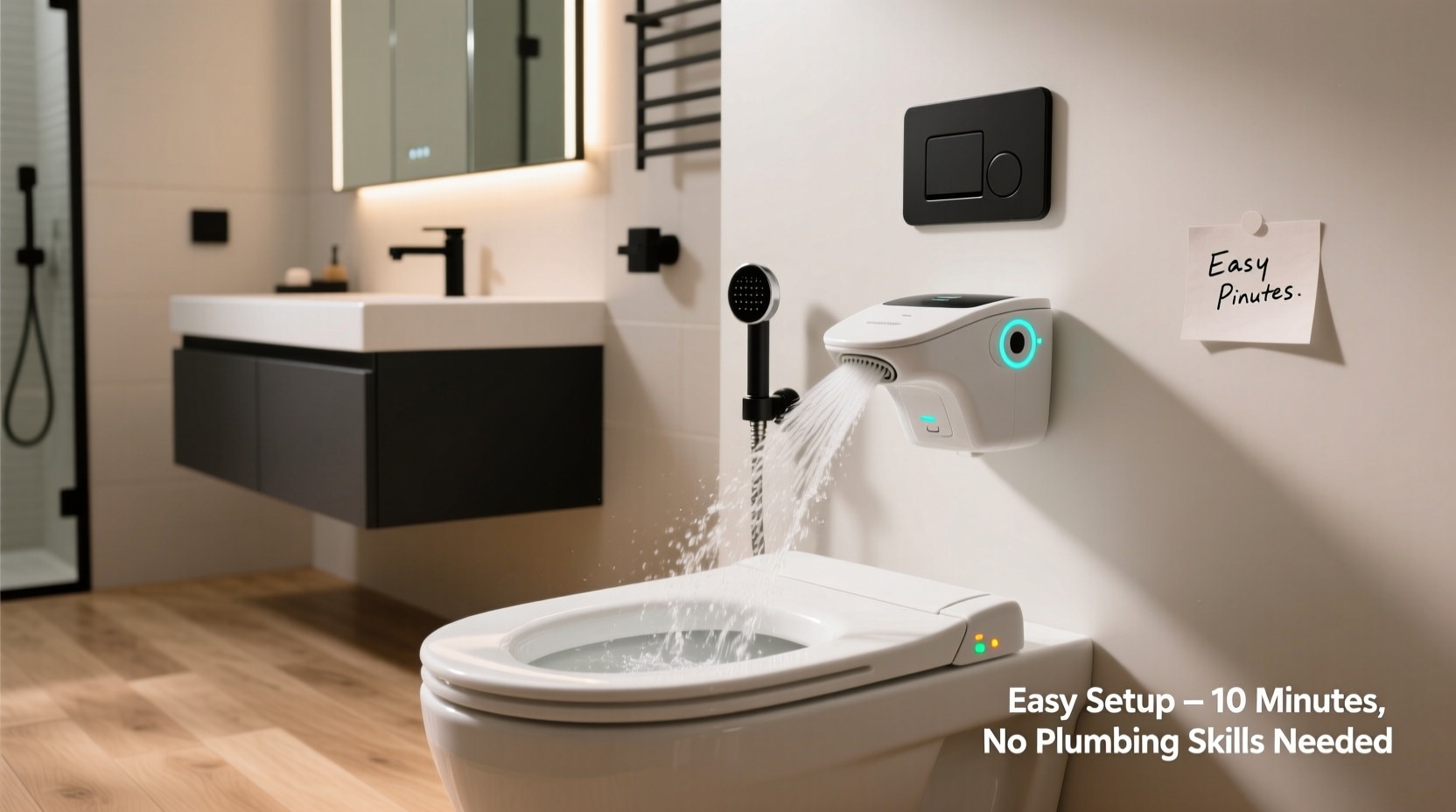
One of the biggest misconceptions about bidets is that they’re difficult to install. In reality, most non-electric models connect directly to your existing toilet’s water supply line and require only basic tools. Follow this timeline to complete the job efficiently.
- Turn Off Water Supply (2 min)
Closed the shutoff valve located behind the toilet. Flush once to empty the tank and bowl. - Remove Existing Connector (3 min)
Use an adjustable wrench to disconnect the water hose from the bottom of the tank. - Install T-Valve (5 min)
Attach the included T-valve to the toilet’s inlet. One end connects to the water supply, the other routes a secondary line to the bidet. - Mount Bidet Unit (7 min)
Slide the bidet onto the toilet bolts and secure with provided hardware. Align the nozzle beneath the rim for optimal positioning. - Connect Water Line (3 min)
Link the small tube from the bidet to the outlet on the T-valve. Ensure connections are snug but not over-tightened. - Test for Leaks (10 min)
Slowly reopen the shutoff valve. Check all joints for drips. Activate the spray lever to confirm water flow and adjust angle if needed.
No drilling, no electrical work, no plumber required. If you can assemble flat-pack furniture, you can install a bidet.
Checklist: Pre-Installation Preparation
- ✅ Confirm toilet shape (round or elongated)
- ✅ Measure clearance between seat and wall
- ✅ Gather tools: wrench, towel, bucket (for spills)
- ✅ Choose location for control knob (typically right-hand side)
- ✅ Read manufacturer instructions thoroughly
Common Concerns Addressed: Privacy, Cleanliness, and Compatibility
Despite growing adoption, some remain skeptical. Let’s address the most frequent concerns with clear facts.
“Isn’t it unhygienic to share a nozzle?”
Modern bidets feature retractable nozzles made from antimicrobial materials. Many include automatic self-cleaning cycles before and after use. The spray originates from fresh water, not the toilet bowl, so contamination risk is negligible.
“Will it fit my toilet?”
Over 90% of bidet attachments are designed for universal fit. They work with standard two-piece toilets, one-piece units, and even many wall-mounted models. Always verify dimensions and mounting style before purchasing.
“What about guests or kids?”
Controls are intuitive—usually a simple side lever or dial. Most users adapt within seconds. Families report that children learn faster than adults, often preferring the sensation over traditional wiping.
“Can I take it with me when I move?”
Absolutely. Unlike built-in fixtures, bidet attachments are removable. Disconnect the lines, pack the unit carefully, and reinstall in your next home. Renters especially appreciate this flexibility.
Frequently Asked Questions
Do bidet attachments require electricity?
No, most non-electric models operate purely through water pressure. Only advanced units with heated water, warm air drying, or remote controls need power. These typically plug into nearby outlets.
Can a bidet cause infections?
When used properly, bidets reduce infection risks by improving cleanliness. However, avoid high-pressure front sprays for feminine hygiene, as forceful streams may push bacteria toward the urethra. Use gentle rear-only modes or specialized feminine wash settings at low pressure.
How do I clean and maintain a bidet attachment?
Wipe the exterior with a soft cloth and mild soap weekly. For internal maintenance, flush the system occasionally by running water through the hose while detached from the nozzle. Replace filters every 6–12 months if your model includes them.
Conclusion: A Small Change With Lasting Benefits
Installing a bidet attachment isn’t about luxury—it’s about upgrading a fundamental part of daily life. The shift from dry wiping to water cleansing enhances personal hygiene, reduces environmental harm, and saves money over time. With straightforward installation, minimal upkeep, and broad compatibility, there’s little downside to trying one.
Millions worldwide already treat bidets as standard bathroom equipment. As awareness grows, that norm is shifting in North America too. Whether motivated by health, economy, or sustainability, the case for making the switch is strong.
🚀 Ready to upgrade your bathroom experience? Pick a trusted bidet model today, follow the simple steps, and feel the difference within days. Share your journey—or ask questions—in the comments below.








