You’ve been offered a promotion. A new project lands on your desk with high visibility. Or maybe you’re preparing for an interview, and suddenly, a quiet voice in the back of your mind asks: “Do I really belong here?” That feeling—where success feels like luck and failure looms around every corner—is familiar to millions. But is it imposter syndrome? Or is it humility? And more importantly, how can you tell if you’re genuinely underqualified or simply overwhelmed by self-doubt?
The line between healthy self-awareness and debilitating self-doubt is thinner than most realize. In professional environments that reward confidence, admitting uncertainty can feel like weakness. Yet true competence often begins with recognizing what you don’t know. The challenge lies in distinguishing genuine skill gaps from the psychological patterns of imposter syndrome.
What Is Imposter Syndrome—And Why It Feels So Real
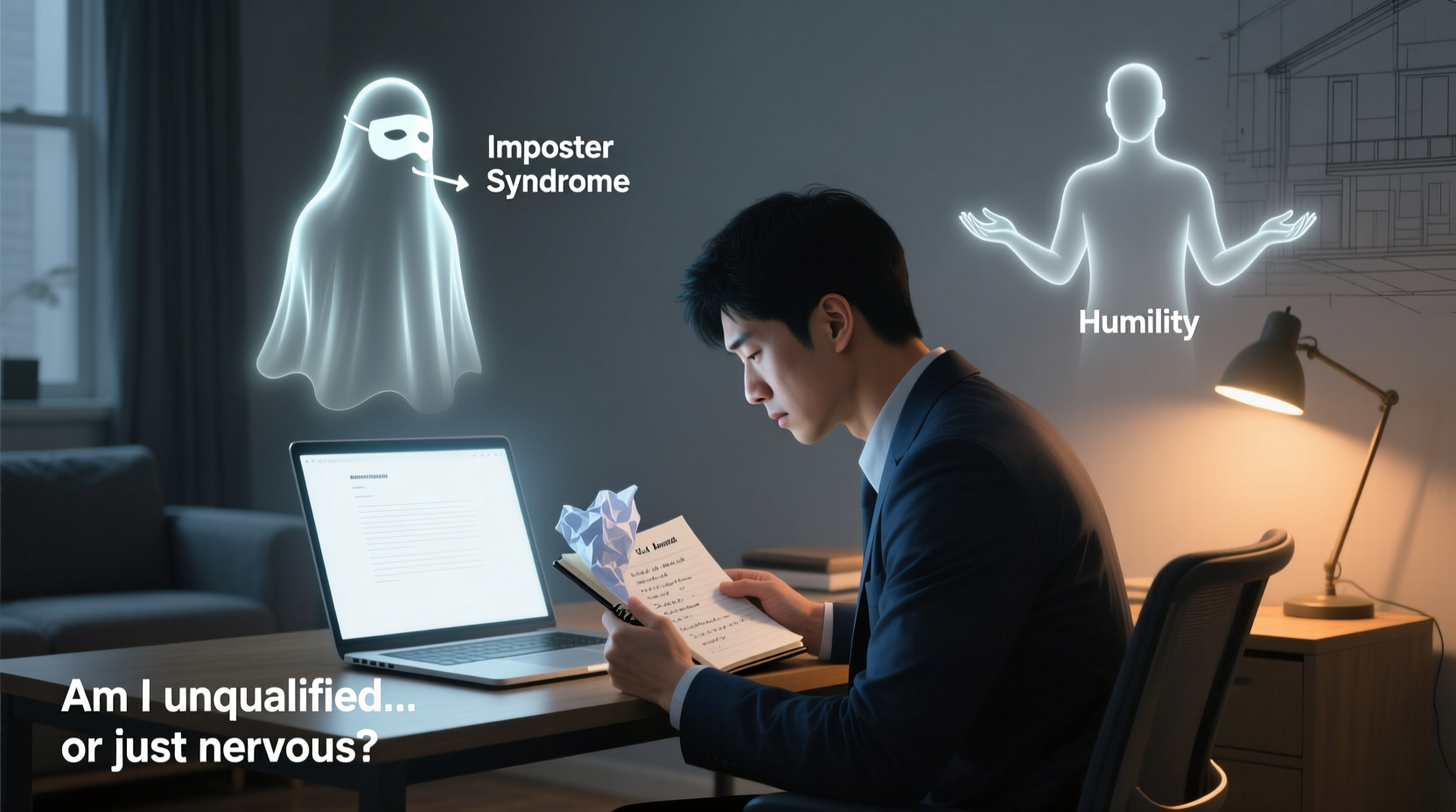
First identified in 1978 by psychologists Pauline Clance and Suzanne Imes, imposter syndrome refers to a persistent belief that one’s achievements are undeserved or due to luck, despite clear evidence of ability. People experiencing it often fear being exposed as a “fraud,” even when they have consistent performance records, qualifications, or peer recognition.
This isn’t just about nerves before a presentation. It’s a chronic internal narrative that distorts reality. You might:
- Credit success to timing, teamwork, or external factors rather than your own effort.
- Feel anxiety after positive feedback, worrying the praise was misplaced.
- Avoid applying for roles or speaking up in meetings because you assume others are more qualified.
- Overwork to compensate, trying to “prove” you belong.
Imposter syndrome thrives in high-pressure environments—tech startups, academia, creative industries—but it affects people at all levels, including executives and award-winning professionals. Its power comes not from logic, but from emotional resonance. The fear feels real, so the conclusion (“I must not be good enough”) seems valid.
Tip: When you catch yourself thinking, “I only got here because of luck,” ask: “What specific skills or actions contributed to this outcome?” Write them down.Humility: The Quiet Strength Behind Growth
Unlike imposter syndrome, humility is not rooted in fear. It’s a grounded awareness of your limitations—and an openness to learning. Humble people acknowledge gaps in knowledge without shame. They say, “I don’t know how to do that yet,” instead of “I shouldn’t be doing this at all.”
Research from the Journal of Applied Psychology shows that leaders who exhibit intellectual humility—defined as being open to new ideas and willing to admit mistakes—are rated higher in effectiveness and team trust. Humility fosters collaboration; imposter syndrome breeds isolation.
The key difference? Humility allows you to act despite uncertainty. You seek help, delegate, or learn on the job—not because you think you’re failing, but because you value results over ego.
“Humility is not thinking less of yourself, it’s thinking of yourself less.” — C.S. Lewis
Spotting the Difference: Imposter Syndrome vs. Humility
Telling these two apart requires honest self-assessment. Below is a comparison table to help identify where your thoughts fall:
| Factor | Imposter Syndrome | Humility |
|---|---|---|
| Motivation | Fear of exposure, rejection, or failure | Desire to improve, serve, or collaborate |
| Response to Praise | Dismissive (“They don’t know the truth”) | Grateful and reflective (“Thanks—I worked hard on that”) |
| View of Skill Gaps | Proof of inadequacy | Natural part of growth |
| Behavioral Pattern | Over-preparation, avoidance, secrecy | Asking questions, seeking mentorship, sharing credit |
| Emotional Tone | Anxious, defensive, isolated | Calm, curious, connected |
If your hesitation comes with dread, sleepless nights, or a sense of impending doom, it’s likely imposter syndrome. If it comes with curiosity and a plan to learn, it’s probably humility.
A Real-Life Example: Maria’s Promotion Dilemma
Maria, a mid-level marketing strategist, was promoted to lead a cross-functional campaign. Excitement quickly gave way to panic. “I’ve never managed a budget this big,” she told her mentor. “What if I mess up and waste company resources?”
She considered declining the role. But instead, she scheduled a meeting with her manager and said, “I’m honored, but I want to be transparent—I haven’t led a team this large before. Can we set up bi-weekly check-ins while I get up to speed?”
Her honesty wasn’t seen as weakness. It was seen as leadership. Over the next quarter, Maria delivered strong results—not because she had all the answers, but because she asked the right questions, delegated wisely, and leaned on her team.
In hindsight, Maria realized her fear wasn’t about capability—it was about stepping into visibility. She wasn’t unqualified; she was unaccustomed to seeing herself as capable. That shift—from “I can’t do this” to “I’ll figure this out”—was the turning point.
How to Respond When Doubt Creeps In
Doubt doesn’t disappear with success. Even Maya Angelou once said, “I have written eleven books, but each time I think, ‘Uh oh, they’re going to find out now. I’ve run a game on everybody.’” What matters is how you respond.
Here’s a step-by-step guide to assess whether you’re dealing with imposter syndrome or a legitimate gap in qualification:
- Pause and journal. Write down exactly what you’re afraid of. Is it failure? Judgment? Being “found out”?
- Review objective evidence. List your qualifications, past wins, and feedback from trusted colleagues.
- Ask: “Would I judge someone else this harshly?” Often, we apply double standards to ourselves.
- Identify specific concerns. Is it public speaking? Technical knowledge? Leadership presence? Pinpointing the issue makes it addressable.
- Create a learning plan. Enroll in a course, request shadowing opportunities, or find a mentor.
- Test the waters. Volunteer for a small version of the task to build confidence incrementally.
When You’re Actually Underqualified: What to Do
Sometimes, the fear isn’t irrational. You might be stepping into a role where you lack critical experience. That doesn’t mean you should back down—it means you need a strategy.
True unqualification isn’t permanent. It’s a starting point. The problem arises when organizations promote people without support, or when individuals take on roles they can’t sustain. But with the right mindset, even a skill gap becomes a roadmap.
Consider this checklist before accepting or continuing in a challenging role:
📋 **Qualification Readiness Checklist**- ✅ Do I understand the core responsibilities of this role?
- ✅ Can I identify 2–3 areas where I need development?
- ✅ Am I willing to ask for help without shame?
- ✅ Does my organization provide mentorship or training resources?
- ✅ Can I commit time weekly to skill-building?
- ✅ Have I succeeded in similar, smaller-scale challenges before?
If most answers are “yes,” you’re likely capable—with room to grow. If several are “no,” it may be wise to negotiate additional support or delay acceptance until you’re better prepared.
“We don’t have to be experts to begin, but we do have to begin to become experts.” — Eric Thomas, motivational speaker
FAQ: Common Questions About Self-Doubt and Competence
Isn’t feeling nervous just part of being professional?
Nervousness before a big meeting or presentation is normal—even beneficial. It sharpens focus. But if the anxiety persists long after success, or if it prevents you from taking action, it may be more than nerves. Chronic self-doubt that contradicts your track record points to imposter syndrome.
Can humility be mistaken for insecurity?
Yes—especially in cultures that equate confidence with competence. Saying “I don’t know, but I’ll find out” can be misread as weakness. But over time, consistent follow-through builds credibility. True insecurity avoids responsibility; humble professionalism embraces it—with preparation.
How do I stop comparing myself to others?
Comparison is natural, but it’s also distorted. You’re comparing your behind-the-scenes struggles to someone else’s highlight reel. Instead of asking, “Am I as good as them?” ask, “What can I learn from their journey?” Focus on your own trajectory, not someone else’s destination.
Conclusion: Move Forward With Purpose
Doubt doesn’t disqualify you. In fact, it might be a sign you care deeply about doing well. The question isn’t whether you feel nervous—it’s what you do with that feeling. Imposter syndrome tells you to hide. Humility invites you to grow.
You don’t need to have everything figured out to be capable. You need courage to try, honesty to assess, and resilience to keep going. Whether you’re stepping into a new role, launching a project, or simply questioning your place, remember: competence isn’t the absence of doubt. It’s the decision to act anyway.
🚀 Take one small step today. Send that email. Ask that question. Apply for the opportunity. Your future self won’t remember the fear—they’ll remember that you showed up.








