
Christmas lights are often packed away by January 2nd—tangled, dusty, and forgotten until next November. Yet these versatile strands hold untapped potential as intentional, year-round design elements. Unlike seasonal ornaments or inflatable snowmen, string lights possess inherent aesthetic qualities: soft ambient glow, rhythmic repetition, sculptural flexibility, and surprising adaptability across interior styles. Interior designers increasingly treat LED light strings not as temporary festivity tools, but as permanent lighting layers—complementing task lamps, architectural sconces, and natural light. The key lies in shifting perspective: from “holiday prop” to “design material.” This isn’t about repurposing leftovers—it’s about curating light intentionally, with attention to color temperature, scale, rhythm, and integration.
Why Year-Round Light Strings Work—Beyond Nostalgia
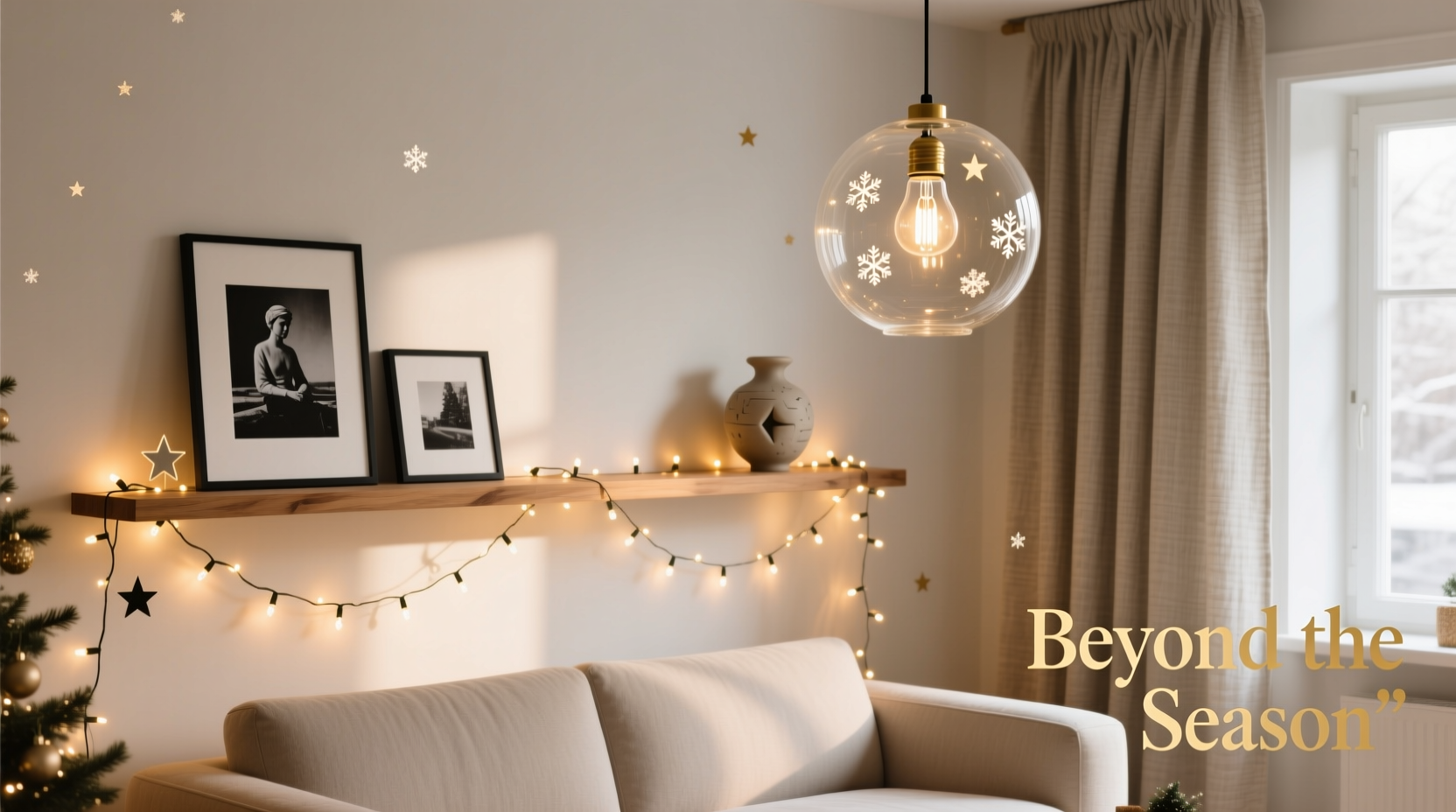
Modern LED micro-bulb strings (especially warm-white, copper-wire, or battery-operated varieties) offer distinct advantages over traditional overhead fixtures. They generate minimal heat, consume negligible energy (often under 2 watts per 100 bulbs), and emit a diffused, flattering light that reduces glare and visual fatigue. Unlike harsh recessed lighting, they create depth and dimension without demanding structural changes. Design psychologist Dr. Lena Torres notes:
“Humans respond biologically to rhythmic, low-intensity light sources—they lower cortisol levels and support circadian alignment when used thoughtfully. A well-placed string of warm-white LEDs mimics firelight or sunset, triggering calm without sacrificing functionality.”This physiological response explains why hotel lobbies, boutique cafes, and even therapy offices incorporate subtle string lighting—not for whimsy, but for measurable environmental wellness.
5 Thoughtful, Non-Holiday Applications
1. Ambient Wall Art & Backlighting
Mount warm-white fairy lights behind a floating shelf, inside an open-frame mirror, or along the perimeter of a gallery wall. The result is a soft halo effect that makes artwork appear luminous and dimensional. For best results, use battery-powered or USB-rechargeable strings with a remote dimmer—avoid visible cords by routing them behind drywall or through hollow shelving supports. Choose bulbs spaced 4–6 inches apart for even diffusion; tighter spacing creates sharper definition, wider spacing yields atmospheric haze.
Tip: Test light placement before mounting—tape strands temporarily with painter’s tape, then observe at dusk and nighttime. Adjust spacing and density based on how much “glow bleed” you want into the surrounding wall.2. Functional Task Lighting for Desks & Vanities
Wrap flexible copper-wire lights around the underside of a floating desk or vanity shelf to illuminate work surfaces without casting shadows. Unlike downward-facing desk lamps, this approach provides even, shadow-free illumination ideal for reading, sketching, or applying makeup. Pair with a warm-white (2700K–3000K) color temperature to avoid cool, clinical tones. Use adhesive clips or small silicone mounts to secure strands—never rely solely on tape, which degrades over time and leaves residue.
3. Textural Room Dividers & Canopy Elements
In open-plan spaces, drape sheer white or ivory curtains and weave string lights vertically between them at 8–12 inch intervals. When lit, the fabric glows softly, creating a luminous, breathable partition that defines zones without visual weight. For ceilings, suspend lights in loose, asymmetrical grids using clear monofilament fishing line—varying heights adds organic rhythm. This technique works especially well in studios, lofts, or bedrooms where spatial definition matters more than physical walls.
4. Botanical Integration: Lights + Greenery
Interweave lights with trailing pothos, ivy, or dried eucalyptus in tall floor vases, wall-mounted planters, or suspended macramé hangers. The combination blurs the line between artificial and organic—lights highlight leaf veins and texture while greenery softens their artificial precision. Avoid plastic-coated wires near live plants; opt for bare copper wire or silicone-jacketed strands rated for indoor humidity. Never wrap tightly—allow 1–2 inches of breathing room between bulb and foliage to prevent heat buildup or moisture trapping.
5. Accent Lighting for Architectural Features
Highlight what your space already has: crown molding, arched doorways, built-in bookshelves, or exposed brick. Run lights along the top edge of shelves to cast gentle downward washes onto spines; tuck them behind baseboards to create subtle “floating floor” illusions; or outline the curve of an archway to emphasize its form after dark. This approach celebrates existing architecture rather than competing with it—a hallmark of mature interior design.
What to Look For (and Avoid) in Year-Round Light Strings
Not all Christmas lights translate well to permanent decor. Selection hinges on three criteria: durability, aesthetics, and controllability. Below is a comparison of common types against year-round suitability:
| Light Type | Year-Round Suitability | Best For | Avoid If… |
|---|---|---|---|
| Warm-white LED micro-bulbs (copper wire) | ★★★★★ | Wall art, canopies, botanicals | You need bright task lighting |
| Battery-operated fairy lights with timer/dimmer | ★★★★☆ | Desks, nightstands, portable accents | You prefer hardwired reliability |
| Multi-color RGB strings (remote-controlled) | ★★★☆☆ | Mood lighting, creative studios, kids’ rooms | You prioritize cohesive, timeless design |
| Large C7/C9 bulbs on heavy-duty cord | ★☆☆☆☆ | Outdoor patios, garages | You value subtlety or indoor safety |
| Flicker-effect “flame” bulbs | ★★★☆☆ | Fireplace mantels, cozy nooks | You dislike motion-based light patterns |
Key selection criteria: Look for UL-listed or ETL-certified products (non-negotiable for safety), copper wire cores (more flexible and less prone to kinking), and replaceable batteries or USB-C rechargeability. Steer clear of strings with rigid plastic casings, non-dimmable circuits, or adhesive backs that degrade within months.
A Real Example: Transforming a Studio Apartment Bedroom
Maya, a graphic designer in Portland, lived in a 420-square-foot studio where her bed occupied half the space. She disliked the harsh glare of her overhead fixture but found standard lamps too bulky. Her solution? She installed warm-white copper-wire lights along the ceiling perimeter—just above the crown molding—using discreet mounting clips. She ran a second strand horizontally across the headboard wall, hidden behind a thin linen runner she hung like a tapestry. At night, both strands emitted a soft, even glow—illuminating the room without spotlighting clutter. During the day, the copper wire disappeared into the trim. She added a third strand wrapped loosely around a trailing monstera in a corner planter. “It stopped feeling like a dorm room and started feeling like *mine*,” she says. “The lights didn’t scream ‘festive’—they whispered ‘calm.’ And I haven’t touched my old lamp since March.”
Your Step-by-Step Integration Plan
- Assess your space at twilight. Turn off all lights and observe where shadows pool, where surfaces feel flat, and where architectural details vanish. Note 2–3 areas that would benefit from gentle illumination.
- Select one application (e.g., shelf backlighting or botanical accent) and choose lights matching your criteria: warm-white, copper wire, dimmable, UL-listed.
- Test layout temporarily using removable tape or reusable adhesive putty. Observe for 24 hours—day and night—to confirm scale and tone.
- Install permanently using appropriate hardware: clip mounts for shelves, clear monofilament for ceilings, silicone straps for plants. Conceal cords behind furniture or along baseboards.
- Integrate into daily rhythm. Set timers or smart plugs to activate 30 minutes before sunset. Dim to 40% intensity for background ambiance; raise to 80% for focused evening activity.
FAQ
Can I leave Christmas lights plugged in all year?
Yes—if they’re UL/ETL-listed, LED-based, and used indoors per manufacturer instructions. Modern LEDs generate negligible heat and draw so little power (often 0.5–1.5 watts per 50 bulbs) that annual electricity cost is typically under $2. Always unplug during extended absences or thunderstorms, and inspect cords quarterly for fraying or discoloration.
Won’t people think it’s still Christmas?
Only if the lights read as “seasonal.” Avoid red/green combinations, oversized bulbs, or overtly festive shapes (stars, candy canes). Warm-white micro-bulbs on copper wire, installed with clean lines and integrated purpose, read as intentional lighting—not holiday residue. Context matters more than the object itself.
How do I store unused strands properly?
Wind each strand around a cardboard spool (cut from a paper towel tube) or use labeled plastic reels. Store in a cool, dry drawer—not the attic or garage—where temperature swings and humidity won’t degrade wiring or adhesives. Keep remotes and spare batteries in the same container. Label each box with bulb count, color temperature, and length.
Conclusion
Christmas lights aren’t relics waiting for December—they’re quiet, adaptable tools for shaping atmosphere, guiding attention, and humanizing space. When chosen with intention and installed with care, they become part of your home’s enduring language: a whisper of warmth in the entryway, a gentle frame for your favorite bookshelf, a luminous companion to morning coffee or late-night reading. You don’t need to wait for snowfall or carols to begin. Pick one wall, one shelf, one plant—and let light do what it does best: reveal, soften, connect. Your space doesn’t need more objects. It needs better light.
💬 Have you transformed lights into year-round decor? Share your setup, challenges, or favorite brand in the comments—we’ll feature standout ideas in our next reader spotlight!








