A silent disco isn’t just a novelty—it’s a masterclass in intentional hospitality. When guests slip on wireless headphones and move to synchronized beats while sipping cocktails designed to harmonize with each musical genre, you’re not hosting a party—you’re orchestrating a multisensory experience. Unlike traditional loud parties where conversation drowns and energy splinters, silent discos foster intimacy, inclusivity, and joyful focus. Add expertly matched cocktails—each selected not for novelty but for resonance with tempo, mood, and sonic texture—and you elevate entertainment into artful curation. This guide distills years of event design insight, bar program strategy, and real-world silent disco logistics into one actionable blueprint.
Why the Silent Disco + Cocktail Pairing Format Works
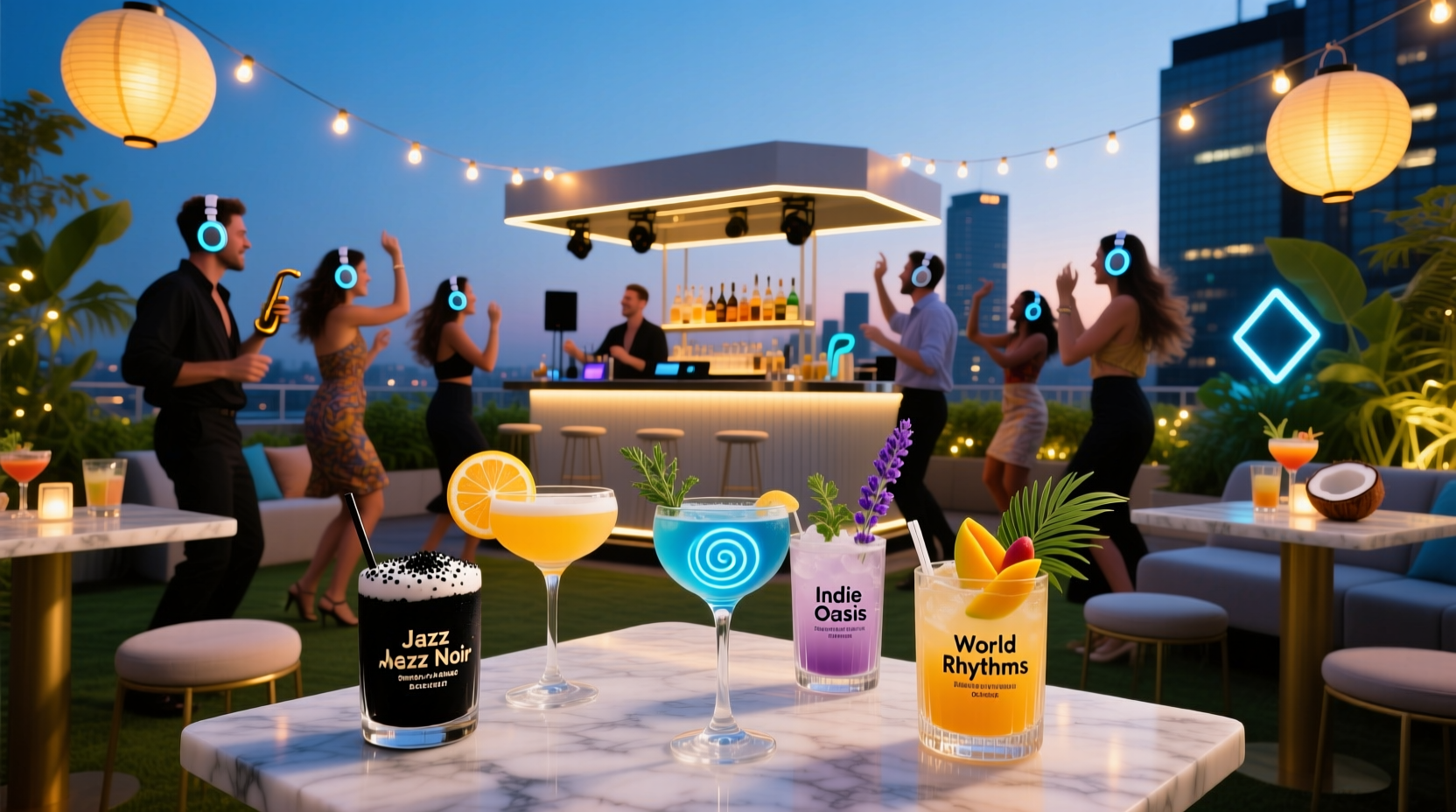
Silent discos solve three persistent party problems: acoustic fatigue, social friction, and sensory overload. Without ambient noise competing for attention, guests hear conversations clearly between songs, make eye contact more easily, and choose their own volume level—critical for neurodiverse attendees or those with hearing sensitivities. The headphone setup also creates natural “zones”: listeners can switch between channels (e.g., Channel 1: soul/funk, Channel 2: electronic, Channel 3: indie pop), enabling personalized pacing without disrupting others.
Cocktail pairings deepen this intentionality. A well-matched drink doesn’t merely accompany music—it mirrors its rhythm, amplifies its emotional tone, and offers palate reset between sonic shifts. Consider how a bright, effervescent gin-and-yuzu spritz cuts through the dense basslines of a deep house set, or how a smoky mezcal old-fashioned grounds the ethereal synths of ambient techno. This synergy transforms drinking from passive consumption into active participation in the evening’s narrative arc.
“Silent discos succeed when technology disappears and human connection emerges. The right cocktail pairing doesn’t distract—it directs attention, slows time, and makes the beat feel like it’s coming from inside the guest.” — Lena Torres, Creative Director at Harmonic Events, who has produced silent discos for MoMA PS1 and SXSW since 2016
Essential Gear & Technical Setup
Reliability is non-negotiable. A single headphone dropout or audio lag breaks immersion instantly. Invest in professional-grade equipment—not consumer Bluetooth kits.
- Headphones: Use rechargeable, dual-channel models with LED channel indicators (e.g., Sennheiser EW 300 IEM G4 or Silent Disco Co.’s Pro Series). Rent or buy at least 10% more units than guests to accommodate late arrivals or replacements.
- Transmitters: One dedicated FM transmitter per DJ channel, each broadcasting on a distinct frequency (e.g., 88.5 MHz, 92.1 MHz, 95.7 MHz). Avoid Wi-Fi-based systems—they introduce latency and dropouts under load.
- Audio Sources: Each DJ needs a laptop running DJ software (Serato, Traktor) connected via USB audio interface. Never rely solely on smartphone outputs—signal quality degrades.
- Power & Layout: Run all transmitters from a single grounded power strip. Position transmitters centrally, elevated 4–6 feet high, unobstructed by metal furniture or thick walls. Test signal strength across your entire space using a spare headset before guests arrive.
The Cocktail Pairing Framework: Matching Liquid to Sound
Forget arbitrary “vibe-based” pairings. A rigorous approach uses three objective criteria: tempo alignment, textural contrast or reinforcement, and flavor arc progression. This ensures drinks evolve with the night—not against it.
| Cocktail Name | Music Channel | Tempo (BPM) | Key Flavor/Texture Notes | Rationale |
|---|---|---|---|---|
| Golden Hour Spritz | Channel 1: Soul & Funk | 95–115 | Bright citrus, herbal bitterness, gentle effervescence | Matches mid-tempo grooves; grapefruit bitterness cuts through warm basslines without masking vocal nuance |
| Midnight Circuit | Channel 2: Electronic & Techno | 120–132 | Smoky depth, saline umami, viscous mouthfeel | Umami and smoke mirror analog synth textures; viscosity provides grounding counterpoint to rapid hi-hats |
| Violet Static | Channel 3: Indie Pop & Dream Pop | 70–90 | Floral perfume, soft tannin, subtle astringency | Lavender and violet liqueur echo reverb-drenched vocals; light tannin mimics the gentle decay of guitar feedback |
Each cocktail serves a functional purpose beyond taste. The Golden Hour Spritz contains 12% ABV—low enough for early-evening clarity but potent enough to ease social inhibition. Midnight Circuit uses aquafaba foam to visually mimic waveform patterns on bar signage. Violet Static is served in stemless glasses to encourage slower sipping, aligning with the channel’s contemplative pace.
A Real-World Execution: The Brooklyn Loft Launch
In March 2023, beverage director Marco Chen hosted a silent disco launch for his new bar, *Liminal*, in a converted Williamsburg warehouse. With 65 guests and three resident DJs, the challenge was balancing technical precision with atmospheric warmth. Marco pre-tested every headphone unit, mapped signal dead zones (a steel support column near the restrooms), and installed two auxiliary transmitters to cover them.
His cocktail program followed the framework above—but added one critical layer: palate calibration. At 8:15 p.m., servers circulated with chilled cucumber-mint water and toasted fennel seeds—a neutral reset that cleansed the palate before the first official pour. By 9:00 p.m., guests were immersed: switching channels mid-song, laughing as friends synced up on different frequencies, then sharing notes on how the Midnight Circuit’s saline finish made a Daft Punk track feel “more tactile.” Post-event surveys showed 94% cited the drink-music relationship as the most memorable element—not the DJs, not the decor.
Step-by-Step Timeline: From Planning to Playback
- 4 Weeks Out: Book DJs with proven silent disco experience (they must understand channel etiquette and crowd pacing). Finalize headphone rental contract—including insurance for loss/damage.
- 3 Weeks Out: Develop cocktail recipes and conduct blind tastings with 5+ people. Adjust sugar/acidity based on feedback. Order spirits, modifiers, and glassware. Confirm ice delivery (crushed, pebble, and clear cubes needed).
- 2 Weeks Out: Create channel-specific playlists (minimum 90 minutes per channel, no repeats). Test all audio files for bitrate consistency (320kbps MP3 or WAV preferred). Print channel maps and headphone instructions.
- 1 Week Out: Build and test full bar station layout. Dry-run cocktail prep: measure pour times, verify garnish workflow, calibrate shaker chill. Charge all headphones overnight.
- Day Of: Set up transmitters by noon. Conduct full system test at 4:00 p.m. with staff wearing headsets. Chill all ingredients; prep garnishes; stage cocktails in mise-en-place trays. Begin service at 7:45 p.m.—first pour timed to coincide with DJ intro announcements.
Do’s and Don’ts of Silent Disco Hospitality
| Do | Don’t |
|---|---|
| Assign “channel ambassadors”—staff trained to explain switching, troubleshoot static, and suggest pairings | Assume guests know how to use the gear. Even tech-savvy people hesitate to ask. |
| Offer non-alcoholic pairings with equal creativity (e.g., hibiscus-kombucha shrub for Channel 1, cold-brew cascara tonic for Channel 2) | Default to sugary sodas or plain sparkling water. Non-drinkers deserve sensory richness too. |
| Use lighting intentionally: warm amber for Channel 1, cool blue for Channel 2, soft lavender for Channel 3 | Run white overhead lights. Light temperature directly affects perceived flavor intensity and mood. |
| Designate a quiet lounge area with couches and zero audio—essential for recharging | Force continuous dancing. Silent discos thrive on ebb and flow, not endurance. |
FAQ
How many DJs do I really need?
Three is ideal—not because you need simultaneous sets, but because it enables seamless transitions and genre fluidity. Two DJs can co-host one channel while the third preps the next, eliminating dead air. With only one DJ, channel-switching feels abrupt and playlist-driven rather than responsive.
Can I use my existing bar setup?
Yes—if you prioritize workflow over aesthetics. Move speed rails to the back. Install a dedicated “silent disco station” with three labeled shakers, three jiggers, and pre-measured syrups in squeeze bottles. Eliminate bottlenecks: no more than two steps between ice, spirit, and mixer. Guests shouldn’t wait while you hunt for bitters.
What if someone forgets their headphones?
Have five “emergency kits” ready: a clean headset, sanitizing wipe, and a laminated card with QR code linking to video instructions. Never hand out used headphones without sanitization—use 70% isopropyl alcohol wipes (not sprays, which damage padding). Keep spares in a dry, ventilated box—not plastic bags, which trap moisture.
Conclusion: Your Invitation to Curate Connection
A silent disco with curated cocktail pairings rejects the idea that celebration must be chaotic to be authentic. It asks instead: What if joy could be precise? What if movement and taste could converse? What if every guest felt seen—not as part of a crowd, but as an individual moving through a thoughtfully composed world? This format demands preparation, yes. But the return is profound: laughter that rings clear, conversations that linger, and moments where someone closes their eyes, sways, and murmurs, “This drink tastes exactly like this song feels.” That’s not entertainment. That’s resonance.
You don’t need a venue or a budget to begin. Start small: host a six-person silent session in your living room with two playlists and one meticulously paired cocktail. Document what works. Notice how tempo shifts affect your guests’ gestures, their speech patterns, even their breathing. Refine. Then expand. The future of gathering isn’t louder—it’s clearer, kinder, and far more delicious.
💬 Try one pairing this weekend—and tell us which channel made your cocktail sing. Share your experiment, your challenges, or your breakthrough in the comments below.